The Guild 3 is the modern entry in THQ Nordic’s medieval life-simulation series: Purple Lamp and GolemLabs rebuilt the older Guild games’ dynasty-building formula, launched it into Early Access on 26 September 2017, and reached full release on 14 June 2022. It is a current, still-sold game with a living Steam Workshop — which makes its platform record the surprising part: it sells for exactly one operating system.
That record is unambiguous at every layer — flags, package, depots and requirements tabs all agree — and the one place the wider record disagrees, the game’s own family, turns out to be a soundtrack wearing a full set of platform flags. What Linux players get is a Proton route with a respectable community file and a Deck badge whose paperwork predates the final build.
As an Amazon Associate, we earn from qualifying purchases.
Quick answer
No. The Guild 3 has no native Linux build on any storefront. Steam’s flags, its only purchase package and every depot read Windows only, and the Mac and Linux requirements tabs are empty shells. The working route is Proton: ProtonDB’s summary reads Gold headline, Platinum best-reported and Gold trending across 25 reports, and Valve rates the game Playable on Steam Deck.
What the Steam record says
Start with the flags, because for once every deeper layer agrees with them. The app record (app 311260) reads windows true, mac false, linux false. The Windows requirements tab is genuinely populated — a 64-bit operating system, Windows 7 through 11 — while the Mac and Linux requirements fields are empty lists outright: headers with nothing under them, the shape of platforms never planned rather than ports removed.
The decisive layer is the purchase package, and there is only one of it: package 46764, which repeats the flags exactly, granting the base app alone. No second edition or bundle could carry a different mask.
The depot layer closes the question. SteamDB lists two depots: the content depot (311261), configured as Windows content at 4.47 GiB, and a second depot (311262) named as an unused Windows workshop depot with no size at all; the redistributables are the usual Windows set. There is no Linux or macOS depot, nothing emptied or stranded, and the registered icon set contains no LinuxClientIcon. The public branch stands at build 12036682, built 25 August 2023 — the game’s last update, and still the build on sale. The game also carries no drm_notice and no account notice, and declares no controller support: the app record has no controller field, and its package reads full_gamepad false. That gap matters for the Deck section below.
The soundtrack that claims every platform
The Guild 3’s family is exactly one app long, and it is the textbook trap this project keeps meeting. The base record’s DLC array holds a single entry: The Guild 3 Soundtrack (app 2022710), typed as music, with a fullgame pointer back to the base game. On its own record, the soundtrack’s flags read windows, mac and linux ALL TRUE — and its purchase package (730304) repeats the mask. A scanner that stops at the family layer will report that The Guild 3 supports Linux. It does not: the all-true flags belong to a music download, whose audio files any operating system can play, while the game reads Windows-only at every layer that sells or installs it. Any claim of a Linux version traces back to this record.
The Proton file: Gold, with a safe-mode footnote
ProtonDB’s summary for this app was read in full: headline Gold, best-reported Platinum, trending Gold, across 25 reports, with good confidence. A solid, current file — but its report texture has a recurring footnote. Filings from the Proton 6 generation repeat one instruction: launch the game in its safe mode, or it stops at a black screen; several add that, launched that way, it runs well, with multiplayer rated excellent. The newest filing, on Proton 10.0-3, runs without a forced compatibility tool. One Steam Deck filing, on Proton Experimental, reports a black screen with only the intro music playing — a single report at report weight, against Valve’s Playable test below, but part of the file and stated here rather than smoothed over.
One heading note: ProtonDB’s game page heads its requirements block “Natively Supports:”, a template artefact Steam’s record contradicts at every layer. This article follows Steam: the Gold tier describes the Windows build under Proton — the only build there is. On anti-cheat, three sources were checked and all three are silent, reported as silence rather than as a ruling: Steam names none, SteamDB’s detection finds only the FMOD audio SDK, and the AreWeAntiCheatYet index, checked in full, carries no entry for this app.
Steam Deck: Playable, on paperwork from an older build
Valve rates The Guild 3 Playable on Steam Deck, the middle category, and SteamOS separately Compatible — read directly from Valve’s own compatibility endpoint. Four checks carry deductions: the default controller configuration is not fully functional, the game shows controller glyphs that do not match the Deck, text input does not automatically invoke the on-screen keyboard, and some interface text is not legible. One check passes cleanly: the default graphics configuration performs well. The configuration notes add that supported input is classed as “other”, a manual keyboard invoke is required, and the recommended runtime is proton-experimental — the badge certifies the Windows build under Proton, because there is no other build to certify.
The paperwork, though, is stale, stated plainly. The test was recorded on 2 December 2022 against build 9409633; the public branch has since moved to build 12036682 (August 2023), so the final updates landed after the test. The badge still stands, and nothing suggests the later patches broke the Proton route, but the sheet does not grade the exact build on sale today — treat Playable as a verdict on a close ancestor of the current build.
The storefront ruling
There is a second copy to weigh, and it changes nothing. GOG sells The Guild 3: its product record (product API 1584560456, slug the_guild_3, identity-verified by title) reads content system compatibility windows true, osx false, linux false, and its soundtrack product reads Windows-only as well. The DRM-free edition is the same Windows build Steam sells — an alternative for buyers who want an offline installer, and no route to a native Linux copy, because none exists.
Gear that fits the record
The gear below follows the record’s shape: the handheld the Playable badge was written for, two pads for docked and desktop play, a mouse for the game’s menu-heavy screens, and library storage. Note the pads’ framing: this game declares no controller support, so they work through Steam’s input layer, not natively.
Valve Steam Deck OLED 512GB
The handheld the Playable badge was written for. Valve’s sheet gives the Windows build a performant pass under proton-experimental, with input deductions rather than performance ones — and the OLED’s brighter screen answers the small-text deduction better than the original LCD panel.
Specs
- Display: 7.4-inch HDR OLED, 1280 by 800, up to 90 Hz
- Processor: AMD Zen 2 and RDNA 2 custom APU
- Memory: 16 GB LPDDR5
- Storage: 512 GB NVMe, plus a microSD slot
- Wireless: Wi-Fi 6E and Bluetooth
- Channel note: Valve sells the Deck mainly through its own store, so Amazon listings are third-party sellers
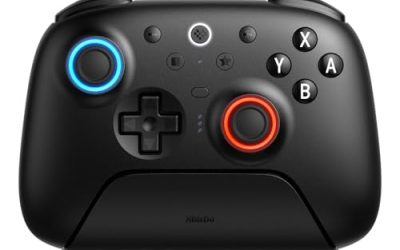
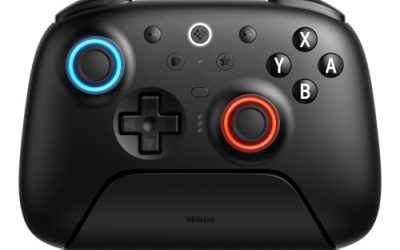
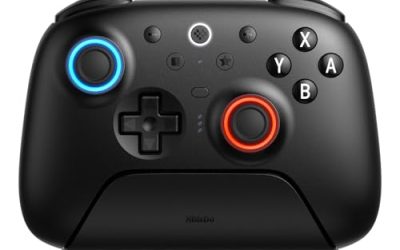
8BitDo Ultimate 2 Bluetooth Controller

The docked and desktop pad pick, for couch sessions driven through Steam Input; the back buttons cover the shortcuts a long dynasty session repeats.
Specs
- Connectivity: Bluetooth wireless and USB-C wired
- Joysticks: TMR electromagnetic, anti-drift design
- Triggers: Hall effect, with mode switching
- Extras: two remappable back buttons, motion control
- In the box: charging dock included
Xbox Wireless Controller, Carbon Black
The safest guest pad in PC gaming: Steam Input support is universal, and it pairs over Bluetooth or its own wireless standard. For this title it is a Steam Input device like any other.
- Connectivity: Xbox Wireless and Bluetooth
- Port: USB-C for wired play
- Controls: hybrid D-pad, dedicated Share button
- Power: AA batteries or optional rechargeable pack
Logitech G502 HERO
The honest primary input for this game on a desktop: menus, ledgers and town maps, where a precise wired mouse with eleven programmable buttons turns repeated inputs into single clicks.
Specs
- HERO optical sensor, up to 25,600 DPI
- 11 programmable buttons
- Adjustable weight system
- Wired USB connection
- On-board memory profiles
Samsung T9 Portable SSD 2TB
For moving a Linux game library between machines, or keeping an offline backup of installers. The headline figure needs a Gen 2×2 host port; on a lesser port the drive runs at that ceiling instead.
Specs
- Capacity: 2 TB portable SSD
- Interface: USB 3.2 Gen 2×2, USB-C connector
- Maker-rated speeds: up to 2,000 MB per second read, 1,950 MB per second write
- Features: Dynamic Thermal Guard, maker-rated drop resistance
How to choose
Choose the Steam copy for the build both compatibility records describe, the Steam Workshop the record lists, and Cloud saves. Choose the GOG copy if a DRM-free offline installer matters more; it is the same Windows build on the same Proton route. On desktop or laptop, install and launch under Proton, and if an older filing’s black screen appears, the community’s recurring answer is the game’s safe-mode launch. On Deck, expect input compromises: budget for the touchscreen or a community configuration where the default layout does not reach, and expect some small text. At a desk, lead with a mouse; pads are for the couch, through Steam Input.
Who should skip
Skip this one if you are shopping for a native Linux Guild game: neither storefront sells a Linux build. Skip it if the soundtrack trap caught you — a scan that said this game supports Linux was reading a music app’s flags. Skip the Deck plan if small text and a not-fully-functional default configuration are deal-breakers rather than deductions. And skip it if you need a Deck verdict graded on the build actually on sale: the test predates the final build.
FAQ
Is The Guild 3 native on Linux?
No. Steam’s flags read windows true, mac false, linux false; the only purchase package repeats that mask; every depot is Windows-configured; and the Linux requirements tab is an empty list. GOG’s edition is Windows-only too.
Why do some listings say The Guild 3 supports Linux?
Because its soundtrack does, on paper. The Guild 3 Soundtrack app carries windows, mac and linux flags all set true, and its package repeats them — audio files play anywhere. Scanners reading the family layer inherit the claim. The game app itself has never carried a Linux flag, depot or requirements tab.
How well does The Guild 3 run under Proton?
ProtonDB’s summary reads Gold headline, Platinum best-reported and Gold trending across 25 reports with good confidence. The recurring footnote is a safe-mode launch on older Proton generations; the newest filing runs on Proton 10.0-3 without a forced tool. One Deck filing reports a black screen at report weight, against Valve’s Playable test.
Is The Guild 3 good on Steam Deck?
Valve rates it Playable, SteamOS separately Compatible, read directly from Valve’s endpoint. The deductions are input-shaped: the default configuration is not fully functional, glyphs do not match, text input needs a manual keyboard invoke, and some text is small. The test dates to December 2022, on an earlier build than the one on sale.
Final verdict
The Guild 3 is the series’ modern game with an old-fashioned platform record: one operating system, sold identically by Steam and GOG, with an empty Linux tab and a soundtrack app whose all-platform flags are the only Linux-shaped thing in the family. What Linux players get instead is genuinely workable — a Gold Proton file whose best reports reach Platinum, and a Playable Deck badge with honest input deductions. Buy it as a Proton game with a safe-mode footnote in its history, on whichever storefront you prefer, and it is a reasonable purchase. Buy it expecting a native build and you will be disappointed: no layer of the record points anywhere but Windows.
Product and ASIN Reference
| Product | ASIN |
|---|---|
| Valve Steam Deck OLED 512GB | B0CQ3RWQQZ |
| 8BitDo Ultimate 2 Bluetooth Controller | B0F194QFT2 |
| Xbox Wireless Controller, Carbon Black | B08DF248LD |
| Logitech G502 HERO | B07GBZ4Q68 |
| Samsung T9 Portable SSD 2TB | B0CHFS9K14 |