Edna & Harvey: The Breakout is Daedalic Entertainment’s hand-drawn point-and-click adventure, first released in Germany in 2008 and brought to Steam on 25 October 2013. Edna wakes in a padded cell inside a psychiatric clinic with no memory of how she got there, and with only her plush rabbit Harvey to talk to, she sets out to escape. The clinic and its residents are played for comedy throughout: an escape caper built on dialogue, inventory puzzles and a talkative stuffed animal.
Because the game is small, old and still sold, Linux players keep asking whether a native build hides behind the store page. Steam’s own record answers, closed at every layer: the Linux flag reads false, the Linux requirements field is an empty list, and no Linux depot exists. The family’s single Linux flag belongs to the soundtrack, an audio product. What Linux players actually run is the Windows build under Proton, where the record is friendlier: a Gold headline on the community file and a Playable Deck rating.
As an Amazon Associate, we earn from qualifying purchases.
Quick answer
No. Steam’s record for Edna & Harvey: The Breakout is Windows-only: the Linux flag reads false, the Linux requirements field is an empty list, and no Linux depot exists. The family’s only Linux flag belongs to the soundtrack. Linux players run the Windows build under Proton, where the game page carries a Gold headline across 26 reports, and Valve rates it Playable on Steam Deck.
What Steam’s own record says
Start with the store record for app 255320, which names Daedalic Entertainment as both developer and publisher. The platform flags read windows true, mac false and linux false. The Linux requirements field is an empty list outright: no Linux tab in any form, not even a shell of headings. The Mac field is the same empty list, and the Windows side publishes a minimum tier only, so this record was never dressed up for a second platform.
The depot table on SteamDB settles the question the flags raise. The game ships three content depots, every one configured for Windows: the base depot at 1.38 GiB, a German language depot at 81.08 MiB, and a second content depot whose name carries the Unity label at 1.23 GiB. Total size on disk is 2.69 GiB. There is no Linux depot and no macOS depot in any branch. The public branch stands on a January 2021 build and has not moved since, so the table describes today’s download. SteamDB’s extracts publish no osextended value for this app, so none is claimed.
Two absences are worth naming exactly. The record carries no drm_notice and no ext_user_account_notice: a gap in the paperwork, not a promise. The store categories are Steam Achievements, Steam Trading Cards, Steam Cloud and Family Sharing. Notably, no controller-support category is listed at all, yet Valve’s testers found the default controller configuration fully functional.
The family sweep: the flag is on the music
The game’s own record carries a short family. Its full downloadable-content array holds exactly one app: the Edna & Harvey: The Breakout Soundtrack, released in November 2016 as a music product. Read individually, the soundtrack flags windows, mac and linux all true, while its own Linux requirements field is an empty list outright. A bare flag on an audio product proves nothing; the soundtrack has no Linux software to deliver.
That makes the family count one of two, with the flag on the music and the game flagging false on every layer: the recurring trap in its purest form, where the family’s only true flag belongs to a set of audio files. Two neighbouring apps are kept strictly separate: the Anniversary Edition is its own store app, and Harvey’s New Eyes is a different game entirely.
The anti-cheat and engine picture
Three sources, kept separate, all come back negative. Steam’s record names no anti-cheat, which matches a single-player-only adventure. SteamDB’s detected technologies list the Unity Engine alongside the LWJGL, Mono and OpenAL libraries: engine, runtime and audio plumbing, no anti-cheat product among them. The Are We Anti-Cheat Yet dataset, searched by name and by app number, carries no entry for this game.
The Proton file
The community compatibility file is thinner than the headline suggests. The summary feed for this app did not answer with a readable record in this session, so no tier split and no confidence figure is claimed. What the game’s page itself shows is a Gold headline across 26 reports, claimed at exactly that size.
The same page carries a classification header presenting the game as natively supported. Steam’s record contradicts that header on the flag, the empty field and the depot table, so this article follows Steam and names the contradiction: the header is drawn from store paperwork, not from a delivered Linux build.
Report texture, kept at report weight, splits by era. Recent reports on current Proton versions, including from Steam Deck hardware, describe the game running well. Older reports describe the Java-launcher era: renaming the wrapper executable, choosing a non-Java launch option, fighting a launcher that reinstalled its runtime. Those workarounds belong to a build the store no longer ships.
The Steam Deck sheet
Valve’s own compatibility record, read directly from the publisher’s endpoint in this session, rates the game Playable on Steam Deck, and desktop SteamOS separately Compatible. Three items pass: all functionality is accessible with the default controller configuration, interface text is legible, and the default graphics configuration performs well. The single note is that the game sometimes shows mouse, keyboard or non-Steam-Deck controller icons.
The dated paperwork comes from SteamDB’s republication of Valve’s compatibility data, disclosed here rather than hidden. The test is dated 14 May 2022, the recommended runtime is proton-stable, and the tested build is the very build the public branch still serves, so the paperwork is current. It describes the Windows build under Proton, not a native build, because there is no native build for it to describe.
The storefront ruling
A GOG edition of this game exists, ruled from GOG’s own live product page rather than its search: the page is this game, and its structured data names Windows as the only operating system. GOG’s catalogue search returned no products for the title in this session, a known blind spot in that storefront’s search; the ruling rests on the page itself. Neither storefront sells a Linux build, and Steam is the practical copy: it is the one wrapped in the Proton record and the Deck sheet.
Gear that fits the record
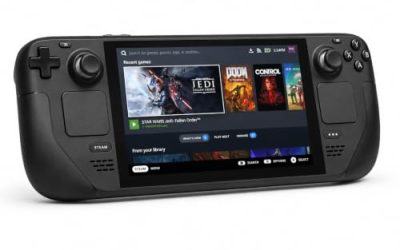
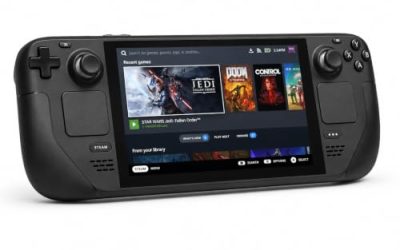
The gear below follows the record’s shape: the handheld the badge was written for, two pads, a mouse for a genre that lives on clicking, and library storage.
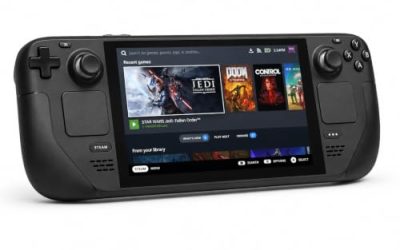
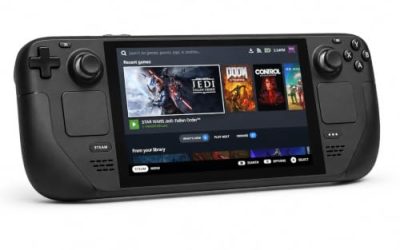
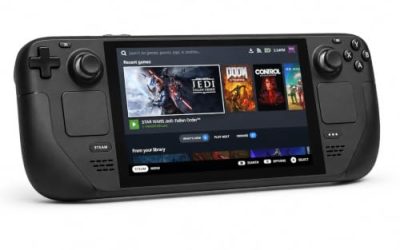
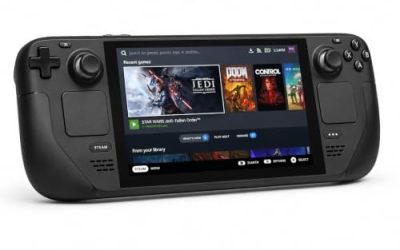
Valve Steam Deck OLED 512GB

The handheld on Valve’s test sheet. The badge is Playable with current paperwork, and an adventure of this size asks almost nothing of the APU; expect the occasional mouse or keyboard icon where a Deck glyph might be.
Specs
- Display: 7.4-inch HDR OLED, 1280 by 800, up to 90 Hz
- Processor: AMD Zen 2 and RDNA 2 custom APU
- Memory: 16 GB LPDDR5
- Storage: 512 GB NVMe, plus a microSD slot
- Wireless: Wi-Fi 6E and Bluetooth
- Channel note: Valve sells the Deck mainly through its own store, so Amazon listings are third-party sellers
8BitDo Ultimate 2 Bluetooth Controller

The docked and desktop pad pick. Valve’s sheet says the default controller configuration covers all functionality, and this pad’s back buttons suit a long pointing session’s shortcuts.
Specs
- Connectivity: Bluetooth wireless and USB-C wired
- Joysticks: TMR electromagnetic, anti-drift design
- Triggers: Hall effect, with mode switching
- Extras: two remappable back buttons, motion control
- In the box: charging dock included
Xbox Wireless Controller, Carbon Black

The safest guest pad in PC gaming: Steam Input support is universal, the glyphs match what most games display, and it pairs over Bluetooth or its own wireless standard.
- Connectivity: Xbox Wireless and Bluetooth
- Port: USB-C for wired play
- Controls: hybrid D-pad, dedicated Share button
- Power: AA batteries or optional rechargeable pack
Logitech G502 HERO

Point-and-click is the mouse’s home genre, and a precise wired mouse turns hotspot hunting and inventory shuffling into single clicks. Eleven programmable buttons cover the examine, use and skip inputs.
Specs
- HERO optical sensor, up to 25,600 DPI
- 11 programmable buttons
- Adjustable weight system
- Wired USB connection
- On-board memory profiles
Samsung T9 Portable SSD 2TB

For moving a Linux game library between machines, or keeping an offline backup of installers, a fast USB-C drive is the simple answer. The headline figure needs a Gen 2×2 host port; on a lesser port the drive runs at that ceiling.
Specs
- Capacity: 2 TB portable SSD
- Interface: USB 3.2 Gen 2×2, USB-C connector
- Maker-rated speeds: up to 2,000 MB per second read, 1,950 MB per second write
- Features: Dynamic Thermal Guard, maker-rated drop resistance
How to choose
Choose the Steam copy. It is the build both compatibility records describe, and its January 2021 branch is the Unity rebuild rather than the Java original the oldest reports wrestle with. Install it under Proton and leave the tool at its default; the Gold headline and recent reports say the current build behaves. On a Steam Deck, expect the Playable pattern: everything works on the default configuration, with occasional desktop icons as the only listed blemish.
Who should skip
Skip this app if a native Linux build is a condition of purchase: there is none here, and the soundtrack’s flag does not change that. Skip it if you are shopping for the Anniversary Edition instead, a separate store app this article does not cover. Skip it if you want matching on-screen glyphs throughout, since Valve’s sheet flags stray desktop icons. And skip the GOG copy if your plan was Proton through Steam, because the compatibility file and Deck sheet belong to the Steam build.
FAQ
Is Edna & Harvey: The Breakout native on Linux?
No. The Linux flag reads false, the Linux requirements field is an empty list, and the depot table holds only Windows content. The ProtonDB page’s native classification header contradicts that record and is not backed by any delivered Linux build.
Why does the soundtrack list Linux support?
Because the soundtrack app flags all three platforms true while its own Linux field is empty. It is a music product with no Linux software to deliver, so its flag describes nothing about the game. The family count is one of two, and the one is the music.
How well does the game run under Proton?
The community file shows a Gold headline across 26 reports, claimed at exactly that size because the summary feed did not answer in this session. Recent reports describe the game running well; the launcher workarounds in older reports belong to the Java-era build the store no longer ships.
Is the game playable on Steam Deck?
Yes. Valve rates it Playable: all functionality accessible on the default controller configuration, legible text, a performant default graphics configuration. The single note is occasional mouse or keyboard icons. The test paperwork is dated May 2022 and covers the same build the store still serves.
Final verdict
Edna & Harvey: The Breakout is a Windows-only record wearing one borrowed flag. The game is closed at every layer a Linux player can check: false flag, empty field, Windows-only depots. Its soundtrack flags Linux with nothing behind the flag, and the compatibility site’s native header repeats the mistake at headline size. Underneath that paperwork, the practical position is simple: the current Unity build runs under Proton at a Gold headline, carries a Playable Deck rating whose paperwork still matches the shipping build, and asks nothing beyond installation. Buy the Steam copy for what it is.
Product and ASIN Reference
| Product | ASIN |
|---|---|
| Valve Steam Deck OLED 512GB | B0CQ3RWQQZ |
| 8BitDo Ultimate 2 Bluetooth Controller | B0F194QFT2 |
| Xbox Wireless Controller, Carbon Black | B08DF248LD |
| Logitech G502 HERO | B07GBZ4Q68 |
| Samsung T9 Portable SSD 2TB | B0CHFS9K14 |