Haemimont Games built its name on Roman city builders, and Imperium Romanum is where the line starts: a province-governor game of insulae, aqueducts and senate task tablets, first released in October 2008 and sold on Steam since 25 November 2008. The Gold Edition folds the base game and the Emperor Expansion into a single app, which makes its Steam record unusually tidy — and easy to read at every layer.


That tidiness settles the Linux question fast. There is no native build, no hidden second platform and no add-on app leaking a Linux flag into family scans. What exists is one Windows build, one purchase package, four Windows depots and a small but positive Proton file.
As an Amazon Associate, we earn from qualifying purchases.
Quick answer
Imperium Romanum Gold Edition is not native on Linux. Steam’s record is Windows-only at every layer: the flags, the single purchase package and all four depots, with an empty Linux requirements field. The route in is Proton — ProtonDB files the game at Gold across five reports — and GOG sells the same Windows build.
The status at a glance
| Question | Answer from the record |
|---|---|
| Native Linux build | No — Windows-only at every layer |
| Linux requirements tab | Absent — the field is an empty list |
| Purchase packages | One, base app alone |
| Add-on apps | None; the expansion is folded into the app |
| ProtonDB record | Gold headline, Platinum best, 5 reports |
| Steam Deck verdict | None readable — none claimed |
| GOG edition | Exists — same Gold Edition, Windows build |
| Anti-cheat or account DRM | None named on any record |
What Steam’s own record says
The appdetails record for Imperium Romanum Gold Edition (app 23400) names Haemimont Games as developer and Kalypso Media Digital as publisher, with a Steam release date of 25 November 2008; SteamDB separates the original release, 30 October 2008. The platform flags read Windows true, Mac false, Linux false.
The requirements fields match the flags. The Windows field is genuinely populated with the 2008 specification — Windows XP or Vista, a 1.6 GHz processor, 512 MB of memory, a DirectX 9 card with 128 MB of video memory, 2 GB of drive space. The Mac and Linux fields are empty lists outright: no tab of any kind, so no Linux text exists on the record to mistake for support.
SteamDB flags the app NoServers, the marker for a game whose official server side is gone; the categories list single-player and Family Sharing only. There is no drm_notice, no ext_user_account_notice and no controller_support field — a mouse-driven builder, stated by omission. No anti-cheat is named by Steam, by SteamDB’s detection (HaemimontSol engine, Bink Video, FMOD, Granny 3D) or by the AreWeAntiCheatYet catalogue, which has no entry for this app among its 1,167 tracked games. That silence is reported as silence.
The package and depot layers agree
A flags-only verdict would be lazy, so the layers underneath were read directly. Steam sells exactly one purchase package (package 1193), and packagedetails reads it as granting the base app alone, with a platform mask of Windows true, Mac false, Linux false — the flags repeated exactly.
SteamDB’s depot list is just as plain. Four depots make up the install: the main content depot (23401, 860.96 MiB) and three language depots for English, French and German (275.20, 274.81 and 276.23 MiB), about 1.65 GiB in total. Every depot is Windows content. There is no Linux depot of any size — nothing emptied, nothing stranded — and the icon set is the plain Windows set, with no LinuxClientIcon registered. The public branch stands at build 5911028, assembled in December 2020, a housekeeping rebuild that changed no platform facts. When flags, package and depots all read the same way, the verdict is not a judgment call: as sold, this game is a Windows program.
A family of one app and a demo
The base record exposes no dlc field, and there is almost nothing to recover. The Emperor Expansion — four campaigns and 19 scenarios across Britannia, Germania, Africa and Caesar’s Civil War — is not a separate app: the store text states the app contains the full version of Imperium Romanum plus the expansion, so the content lives inside app 23400 and inherits its mask.
The one associated app is the demo (app 23410), typed as a demo with a fullgame pointer back to 23400, repeating the same mask. No soundtrack, artbook or guide app exists in the family, so the familiar all-true soundtrack trap — the shape that makes so many Windows-only games look Linux-capable in a family scan — cannot form here. The family is a single Windows game and its Windows demo.
The Proton file: Gold, thin, and honestly labelled
ProtonDB’s summary API returns a full record for app 23400: headline Gold, best-reported Platinum, trending Gold, confidence low, five reports in total. The low confidence is the honest part — five reports is a thin base, and the filings show why the headline reads as “runs well when it runs”: the Platinum filings describe full tutorial and scenario play without problems, while one older filing reports the game not starting at all. The claim is exactly what the summary returns, not a settled Platinum consensus.
The page’s heading check was completed, and it follows the familiar stray pattern. ProtonDB heads the requirements block “Natively Supports:”, a template artefact that Steam’s record contradicts at every layer. The heading describes nothing that exists for this app; this article follows Steam, and treats the tier as a grade for the Windows build under Proton.
Steam Deck: no verdict on the record
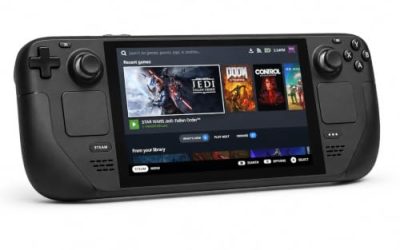
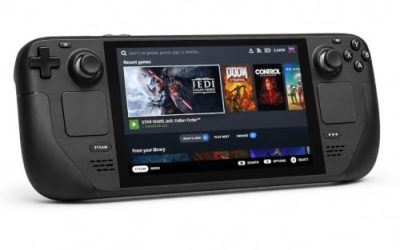
Valve’s Deck compatibility endpoint returned no usable sheet for this app in this session — empty or redirected through every route tried — and ProtonDB’s republication of Valve’s Deck status reads Unknown. Two routes agree on the only honest statement available: no published Deck verdict for this game could be read, and none is claimed here. There is no test date, tested build or deduction list to quote.
The practical reading is narrower than a badge. The game’s requirements are trivially small next to modern handheld hardware and its Proton file is Gold, so the missing badge is missing paperwork, not a negative result. But a badge is a promise about a tested configuration, and this series does not print promises the record does not contain: treat the title as untested, or lean on the Proton file knowingly.
The GOG ruling
GOG sells this game. The ruling rests on GOG’s own live product page for Imperium Romanum Gold Edition, identity-verified by its exact title and a description matching the Steam record’s text, showing the game in stock. GOG’s search and catalogue endpoints returned their known blind-spot results for this title — empty or fuzzy listings naming other games — and none was treated as evidence either way; the live page is the record.
The edition GOG sells is the same Gold Edition and the same Windows build: no Mac or Linux build exists on any storefront record. What the GOG copy changes is the wrapper, not the operating system — the DRM-free route to the identical program. There is no Linux copy to choose between the storefronts; only two ways to buy the Windows one.
Gear for a desktop city builder
Because no Deck verdict exists, the gear below is framed for the desktop: a keyboard for a hotkey-heavy builder, the mouse the game was designed around, two pads for the wider library — the record declares no controller support, so both are Steam Input picks — and library storage.
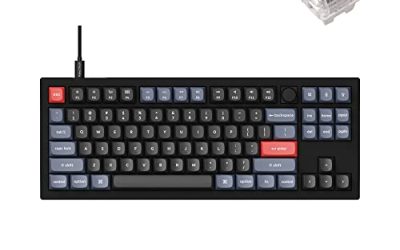
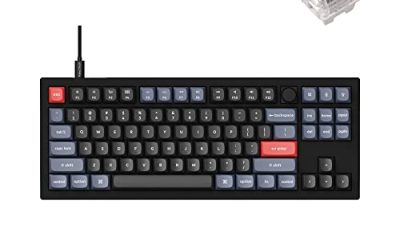
Keychron V3
The keyboard pick for long governor sessions: QMK and VIA support lets you remap keys at the keyboard level, working across every Linux install you plug it into.
Specs
- Tenkeyless layout with rotary knob
- QMK and VIA remapping support
- Hot-swappable K Pro Brown switches
- Wired USB-C connection
- Maker-rated 1,000 Hz polling
Logitech G502 HERO
Imperium Romanum is played entirely with the pointer — placing insulae, tracing aqueducts, answering task tablets — and a precise wired mouse is the upgrade this game feels most.
Specs
- HERO optical sensor, up to 25,600 DPI
- 11 programmable buttons
- Adjustable weight system
- Wired USB connection
- On-board memory profiles
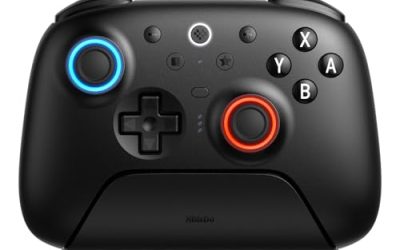
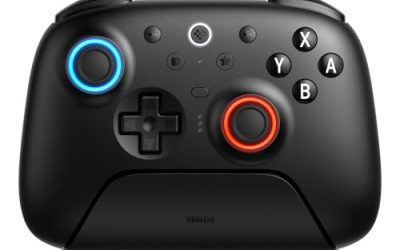
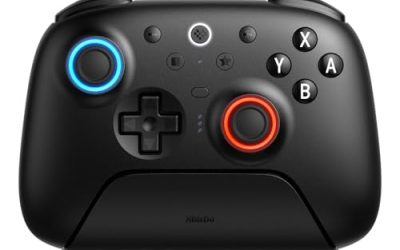
8BitDo Ultimate 2 Bluetooth Controller

The pad for the rest of the library rather than for this title: the record declares no controller support, so here it works only through Steam Input mapping — but as a general desktop and couch pad it covers modern sticks, triggers and back buttons.
Specs
- Connectivity: Bluetooth wireless and USB-C wired
- Joysticks: TMR electromagnetic, anti-drift design
- Triggers: Hall effect, with mode switching
- Extras: two remappable back buttons, motion control
- In the box: charging dock included
Xbox Wireless Controller, Carbon Black

The safest guest pad in PC gaming: Steam Input support is universal, the glyphs match what most games display, and it pairs over Bluetooth or its own wireless standard. For this game it is a Steam Input device only.
- Connectivity: Xbox Wireless and Bluetooth
- Port: USB-C for wired play
- Controls: hybrid D-pad, dedicated Share button
- Power: AA batteries or optional rechargeable pack
Samsung T9 Portable SSD 2TB

For moving a Linux game library between machines, or keeping an offline backup of installers, a fast USB-C drive is the simple answer. The headline figure needs a Gen 2×2 host port; on a lesser port it runs at that ceiling.
Specs
- Capacity: 2 TB portable SSD
- Interface: USB 3.2 Gen 2×2, USB-C connector
- Maker-rated speeds: up to 2,000 MB per second read, 1,950 MB per second write
- Features: Dynamic Thermal Guard, maker-rated drop resistance
How to choose
Choose either storefront copy on wrapper alone, because the build is identical: Steam if your library and Proton tooling already live there, GOG if you want the DRM-free installer. On a Linux desktop or laptop, install under Proton and start with the default compatibility tool; the Gold headline with a Platinum best-reported tier says the file expects the game to run, and its five-report thinness says to keep expectations proportionate. For input, buy for mouse and keyboard first, and treat any pad as a Steam Input experiment.
Who should skip
Skip this one if you are shopping for a native Linux city builder: no build exists, on either storefront, at any layer of the record. Skip it if a five-report Proton file is too thin for your comfort, or if you need a published Steam Deck verdict before buying for the handheld — there is none to read. And skip it if you want controller support promised on the box: the record declares none, in a pointer-driven game from an era before pad support was expected in the genre.
FAQ
Is Imperium Romanum Gold Edition native on Linux?
No. Steam’s flags read Windows only, the single purchase package repeats that mask, all four depots are Windows content, and the Linux requirements field is an empty list. No native build exists anywhere.
How well does it run under Proton?
ProtonDB’s summary rates the game Gold on its headline and trending tiers, Platinum on its best-reported tier, across five reports at low confidence. The filings describe clean tutorial and scenario play, with one older report of the game failing to start — a good but thin file.
Is there a Steam Deck verdict for it?
None that can be read. Valve’s endpoint returned no usable sheet for this app, and ProtonDB’s republication of the Deck status reads Unknown, so this article claims no verdict rather than guessing one.
Does GOG sell a Linux version?
No. GOG sells the same Gold Edition as a Windows build — verified from GOG’s own live product page, not from search results. No storefront sells a Linux copy.
Final verdict
Imperium Romanum Gold Edition is the plainest shape this series records: a Windows-only game whose flags, package, depots, requirements fields and demo all say the same thing, with no family trap and no stray build hiding anywhere. Linux players get one route — the Windows build under Proton, carrying a Gold headline on a thin five-report file — and two storefronts selling that build. Buy it as a Proton title, not a native one.
Product and ASIN Reference
| Product | ASIN |
|---|---|
| Keychron V3 | B0B2DMMMG2 |
| Logitech G502 HERO | B07GBZ4Q68 |
| 8BitDo Ultimate 2 Bluetooth Controller | B0F194QFT2 |
| Xbox Wireless Controller, Carbon Black | B08DF248LD |
| Samsung T9 Portable SSD 2TB | B0CHFS9K14 |