Digitalmindsoft’s Call to Arms mixes real-time strategy with direct third-person control of individual soldiers, and it is regularly mistaken for a game with Linux support: its Steam page carries a Linux requirements tab, and its ProtonDB page opens with a heading claiming native support. Both signals collapse once the record is read.


What the record holds is a Windows-only release, sold in three editions, with an empty Linux tab, no Linux depot in its tree, and a community compatibility file doing the heavy lifting instead.
As an Amazon Associate, we earn from qualifying purchases.
Quick answer
Call to Arms has no native Linux build: Steam’s app record, all three purchase packages and every DLC flag Windows only, and no Linux depot exists. Linux play runs through Proton, where ProtonDB’s file reads Gold across 33 reports with good confidence. Valve’s Deck sheet rates it Playable, tested on the build still current today.
What Steam’s record actually sells
The app record (app 302670, Digitalmindsoft) sets its platform flags to Windows true, Mac false and Linux false. The requirements block tells the same story in finer detail: the Windows field is genuinely written out, asking for 64-bit Windows, 4 GB of RAM, a DirectX 11 graphics card and 40 GB of storage, while the Mac and Linux fields exist only as headings over empty lists. A Linux tab on the page is not a Linux build; here it is a shell with nothing inside it.
The decisive layer is the purchase packages. Steam sells the game in three editions, and packagedetails reads the same mask on all three: package 44601 (Basic Edition), 71635 (Deluxe Edition) and 137245 (Ultimate Edition) each read Windows true, Mac false, Linux false. A separate upgrade package, 189208, repeats the mask. No edition or upgrade path on Steam grants a Linux build, because none was ever packaged.
The depot tree and the frozen public branch
SteamDB’s depot listing confirms the flags at the delivery layer. The content sits in a single main depot of 41.12 GiB with no operating-system split, plus language and edition depots. The only shared redistributable is the Windows Visual C++ 2019 runtime. No depot carries a Linux configuration, and no emptied or stranded Linux depot hides in the tree: the port was never built and withdrawn, it never existed. The icon set agrees, registering a client icon, an icon and logos, but no Linux client icon.
The branch table adds a useful quirk. The public branch still runs build 7594851, built in October 2021, although the branch was touched again in August 2025; an open beta from April 2022 sits at a newer build but never became the default. That frozen build matters below: Valve’s Deck test ran against exactly the code a buyer downloads today.
The edition family sweep
The base record’s DLC array holds three apps, each read individually. App 487170, the Basic Edition content app, flags Windows only. App 374390, the Deluxe Edition upgrade, flags Windows only. App 561140, the Season Pass, flags Windows only. None carries even an empty Linux requirements field; on the family records the field is absent outright. There is no soundtrack app in the family, so the familiar all-true soundtrack trap cannot form here.
One more app sits outside the array: SteamDB’s depot listing associates app 475170, a Deluxe Edition depot, with the game, but that app returns no store record when queried. It publishes no flags and votes on nothing; the verdict rests on the three readable DLC records, and they are unanimous.
Anti-cheat and account layers: three sources, all silent
Call to Arms is a multiplayer game, so the anti-cheat question matters. Three sources were checked. Steam’s record names nothing: no DRM notice, no external account notice, no anti-cheat category. SteamDB’s technology detection finds only the Miles Sound System SDK, an audio library. The AreWeAntiCheatYet catalogue, tracking anti-cheat behaviour under Proton across more than a thousand games, carries no entry for this app.
Silence from all three is not a ruling that multiplayer is safe under Proton, and this article does not present it as one: no anti-cheat system is declared anywhere a declaration would normally appear. The practical evidence lives in the ProtonDB file, where recent filings rate online play Good overall alongside an older strand of co-op crash reports; that is report texture, not a guarantee.
The Proton file
ProtonDB’s summary for app 302670 was read in full. The headline tier is Gold, the best-reported tier is Platinum, the trending tier is Gold, across 33 reports with good confidence. Most filers run the game with at most minor issues; the recurring complaints are texture rather than blockers — occasional crashes around heavy destruction, menu quirks on older Proton builds, and performance dips in large battles.
One part of the page needs correcting rather than quoting. Its requirements block is headed with a claim of native support. Steam’s record contradicts that heading at every layer: false flags, Windows-only packages, an empty Linux requirements shell and no Linux depot. The heading is a labelling artefact, most plausibly inherited from the same empty Linux tab on the Steam page. The Gold file describes the Windows build running through Proton, and doing so well.
The Steam Deck sheet
Valve’s own compatibility endpoint returned a generic landing page rather than data in this session, so the verdict was read through SteamDB’s republication of Valve’s sheet, and that route is stated openly. The sheet rates the game Playable on the Deck, with SteamOS separately Compatible, and names the stable Proton branch as the recommended runtime.
The paperwork is current in the way that matters. Valve’s test is dated 19 March 2022 and was run on build 7594851, still the public branch build today, so the badge grades the exact code now on sale. The passes are meaningful: controller glyphs match the device, the default graphics configuration performs well, and interface text is legible. The deduction is the expected one for this genre: the default controller configuration is not fully functional, so some actions need the touchscreen, the virtual keyboard or a community configuration, and an external pad needs a manual Quick Access Menu switch before it takes over. The record’s partial controller support rating agrees.
The storefront ruling
Steam is the only storefront in this ruling. GOG was checked four ways: the natural product address redirects to the general catalogue instead of resolving to a product, the game search returns nothing for the title, the product API returns an empty result, and the catalogue API’s single match is an expansion for an unrelated mech game sharing the name. No GOG edition exists, and no community wishlist entry is treated here as one.
Gear that fits the record
The picks follow the sheet: the handheld the badge was written for, two pads for the controller gaps it names, a mouse for the genre’s real home, and storage for a 41 GB install.
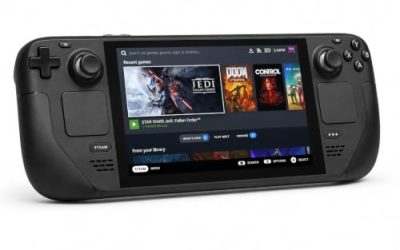
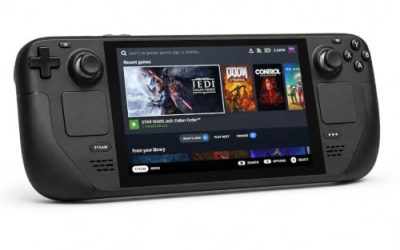
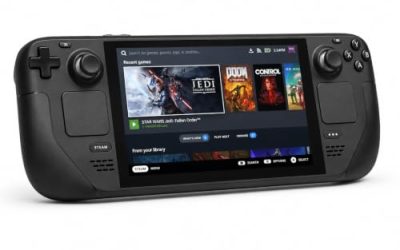
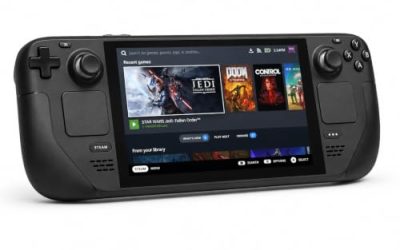
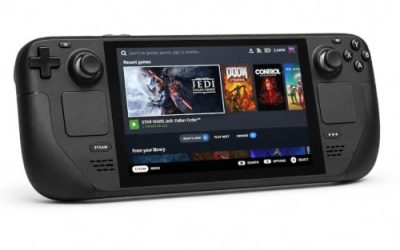
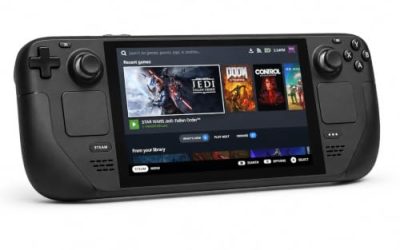
Valve Steam Deck OLED 512GB
The handheld Valve tested, on the current build under the stable Proton branch; its controls cover the game once a community configuration fills the gaps the sheet flags.
Specs
- Display: 7.4-inch HDR OLED, 1280 by 800, up to 90 Hz
- Processor: AMD Zen 2 and RDNA 2 custom APU
- Memory: 16 GB LPDDR5
- Storage: 512 GB NVMe, plus a microSD slot
- Wireless: Wi-Fi 6E and Bluetooth
- Channel note: Valve sells the Deck mainly through its own store, so Amazon listings are third-party sellers
8BitDo Ultimate 2 Bluetooth Controller
The docked pad pick. Once the manual switch the sheet warns about is made, the back buttons earn their keep on camera and selection shortcuts.
Specs
- Connectivity: Bluetooth wireless and USB-C wired
- Joysticks: TMR electromagnetic, anti-drift design
- Triggers: Hall effect, with mode switching
- Extras: two remappable back buttons, motion control
- In the box: charging dock included
Xbox Wireless Controller, Carbon Black

The guest pad and the glyph reference: controller prompts are almost always drawn in this layout, which matters when the default configuration already asks for improvisation.
- Connectivity: Xbox Wireless and Bluetooth
- Port: USB-C for wired play
- Controls: hybrid D-pad, dedicated Share button
- Power: AA batteries or optional rechargeable pack
Logitech G502 HERO

Call to Arms is a mouse game at heart: unit selection, waypoints and direct-control aiming reward a precise wired mouse with buttons to spare.
Specs
- HERO optical sensor, up to 25,600 DPI
- 11 programmable buttons
- Adjustable weight system
- Wired USB connection
- On-board memory profiles
Samsung T9 Portable SSD 2TB

A 41 GB install plus Workshop content makes library juggling a chore; a fast portable drive keeps game and mods together between machines.
Specs
- Capacity: 2 TB portable SSD
- Interface: USB 3.2 Gen 2×2, USB-C connector
- Maker-rated speeds: up to 2,000 MB per second read, 1,950 MB per second write
- Features: Dynamic Thermal Guard, maker-rated drop resistance
How to choose
On a Linux desktop, the Proton route is the whole story: install the Windows build, leave the compatibility layer on the stable branch Valve recommends, and expect Gold-grade behaviour with occasional crash texture in the largest battles. A desktop with mouse and keyboard is the natural home for this game, since it sidesteps every deduction on the Deck sheet.
On the Deck, treat it as a secondary screen rather than a primary one. The Playable badge is honest and its paperwork is current, but the default controller configuration is incomplete, so budget a few minutes for a community layout before a campaign. For editions, the record gives no Linux reason to climb tiers: Basic, Deluxe and Ultimate are identical at the platform layer, so the choice is purely about content.
Who should skip
Skip this game on Linux if you only buy native builds on principle: there is none, there never was, and the filled-looking Linux tab is an empty shell rather than a promise. Skip it if your main interest is serious co-op play and you need a declared, supported multiplayer stack; no anti-cheat position is published anywhere, and the co-op crash strand in the report file is real. Skip the Deck as your only copy if controller-only play is non-negotiable: the default configuration is officially not fully functional.
FAQ
Is Call to Arms native on Linux?
No. The app record flags Linux false, all three purchase packages and the upgrade package read Windows only, the Linux requirements field is an empty shell, and the depot tree contains no Linux depot. The native-support heading on the ProtonDB page is a labelling artefact contradicted by every layer of Steam’s record.
How well does Call to Arms run through Proton?
ProtonDB’s full summary reads Gold as the headline and trending tier, with Platinum as the best-reported tier, across 33 reports at good confidence. Reports describe minor texture only: occasional crashes in heavy destruction scenes, older-build menu quirks, and dips in very large battles.
Is Call to Arms playable on Steam Deck?
Yes, with caveats. Valve’s sheet, read through SteamDB’s republication, rates it Playable with SteamOS Compatible, tested in March 2022 on the build still current today. The default controller configuration is not fully functional, so expect touchscreen use or a community layout, and switch external pads manually.
Does Call to Arms use anti-cheat that blocks Proton?
Nothing is declared. Steam’s record carries no DRM or account notice and no anti-cheat category, SteamDB detects only an audio SDK, and the AreWeAntiCheatYet catalogue has no entry for the game. That silence is not a guarantee; the multiplayer evidence rests on player reports, which rate online play Good overall.
Final verdict
Call to Arms on Linux is a Proton game, full stop: Windows-only at the flag, package, family and depot layers, with an empty Linux tab and a stray native heading doing the misleading. As a Proton title it carries a Gold file at good confidence and a Playable Deck badge whose test build is still the build on sale. Buy it for a Linux desktop with a mouse, treat the Deck as a bonus screen, and ignore the Linux tab.
Product and ASIN Reference
| Product | ASIN |
|---|---|
| Valve Steam Deck OLED 512GB | B0CQ3RWQQZ |
| 8BitDo Ultimate 2 Bluetooth Controller | B0F194QFT2 |
| Xbox Wireless Controller, Carbon Black | B08DF248LD |
| Logitech G502 HERO | B07GBZ4Q68 |
| Samsung T9 Portable SSD 2TB | B0CHFS9K14 |