Unity of Command II, the 2019 operational wargame from 2×2 Games and Croteam, carries one of the more lopsided Linux records in the catalogue. Read the base game on its own and every layer lines up behind a native build: the flags, the purchase package, the requirements tab, the depot table and Valve’s own Deck test. Read the family around it and the picture fractures, because not one of its ten campaign expansions carries the Linux flag.


That split is what a buyer needs before paying: the base campaign is a genuine native purchase, while the long tail of add-on campaigns sits behind flags that stop at Windows and Mac. This article reads the record in that order — base game first, then the family’s dissent, the community file, the Deck sheet, the anti-cheat silence and the storefront ruling.
As an Amazon Associate, we earn from qualifying purchases.
Quick answer
Unity of Command II is native on Linux at the base-game layer: the purchase package reads Linux true, a dedicated Linux binary depot ships with the game, and Valve’s Deck test ran on the native runtime. The catch is the family: all ten campaign expansions flag Windows and Mac only. ProtonDB’s file reads Gold headline, Platinum best-reported.
The base game, layer by layer
Start with identity. The record names the game Unity of Command II, developed by 2×2 Games and Croteam, published by 2×2 Games, released 12 November 2019 — a separate app from the original Unity of Command, whose record nothing here borrows. The platform flags read Windows, Mac and Linux all true, and unusually, the layers underneath mostly hold up.
The purchase package is the decisive layer, and it agrees. The game’s single default package, the one the buy button sells, reads Windows, Mac and Linux all true on packagedetails and grants the base app alone. No second bundle mask contradicts it; the one package that exists carries the Linux flag plainly.
The Linux requirements field is genuinely populated, though in an unusual shape. Instead of a distribution and a desktop specification, the tab names the Steam Deck itself: operating system Steam Deck, a quad-core CPU, 16 GB of memory, the Steam Deck APU for graphics, and 5 GB of storage, identical across both tiers. A desktop reader must translate that into Deck-equivalent hardware, but the field is a real specification, not a heading over an empty list.
SteamDB’s depot table shows the build behind the paperwork. A dedicated Linux binary depot of about 175 MB ships with the game, alongside a Windows content depot of about 3.4 GB, macOS depots, and a game-data depot of about 2.1 GB whose configuration names both macOS and Linux. The public branch is current, rebuilt in October 2026, so the Linux depot belongs to the build sold today rather than a stranded older branch. One layer does stay silent: the icon set registers no dedicated Linux client icon — the inverse of the leftover-icon trap, a real build behind an icon set that never advertises it. The depot and package outrank the icon layer, and both say the build exists.
The expansion shelf disagrees
The base record lists twelve add-on apps, each read individually, and the family splits cleanly. All ten campaign expansions — Blitzkrieg, Barbarossa, Moscow 41, Stalingrad, Don 42, Desert Rats, Desert Fox, Kursk, Berlin and Ardennes 44 — flag Windows and Mac true and Linux false. Not one campaign carries the base game’s Linux flag.
The two remaining apps are the soundtracks, and both flag all three platforms true: the familiar soundtrack shape, a full platform mask on music apps that says nothing about any build and would flatter the game’s Linux count if read as content. The family verdict is ten dissents and two non-votes.
The depot table adds a wrinkle: the campaign content depots exist inside the base app’s depot listing, sized between roughly 26 and 100 MB each, but carry no operating-system configuration, and the expansion apps’ flags are the only platform statement the record makes about them. So the base game is the verified native purchase, the expansions are not certified for Linux, and the long campaign shelf should be treated as unproven.
What ProtonDB adds
ProtonDB’s summary record was read in full: Gold on the headline tier, Platinum on the best-reported tier and Platinum on the trending tier, across 38 reports with strong confidence. Because the base game ships a native build, that file largely grades the Windows version run through Proton by players who chose or fell back to that route; the Gold headline against Platinum best reports is the usual signature of older filings dragging on newer ones.
One check could not be completed in this session: the game page itself did not render for reading, so whether its requirements block carries a native-support heading, and whether any such heading agrees with Steam’s record, is left unstated rather than guessed.
The Deck sheet, and its age
Valve’s own compatibility endpoint returned an unreadable response in this session, so the test sheet was read through SteamDB’s republication of Valve’s data. The category is Verified, the strongest badge Valve gives, and the recommended runtime is listed as native: the test ran the Linux build itself, not a Proton fallback. SteamOS compatibility is separately marked Compatible. Every check passes — full functionality under the default controller configuration, Deck glyphs, legible text, default graphics performing well — and the single note is that external Bluetooth or USB controllers do not take over by default and may need a manual Quick Access Menu switch.
The paperwork carries one qualification: the test is dated December 2025 and names a tested build that predates the current public branch, rebuilt in October 2026. The badge was earned on the native build, but on an earlier build than the one the store serves today.
Anti-cheat and account layers
Three sources were checked, and all three are silent, reported here as silence rather than a ruling. Steam’s record names no anti-cheat: no anti-cheat category, no DRM notice, no external account notice. SteamDB’s technology detection lists middleware and libraries — FluidSynth, Intel oneTBB, CUDA and texture tools, Ogg, Python, SDL and Vorbis — with no anti-cheat component among them. The AreWeAntiCheatYet dataset, all 1,167 games on its master branch, carries no entry for this game. Nothing stronger can be said from these sources.
The storefront question
There is no second copy to weigh. GOG’s catalogue search returns no Unity of Command II product — the results are other wargames entirely — and the game’s natural product addresses redirect to GOG’s general catalogue rather than resolving to a product page. No GOG edition exists, so the Steam copy is the only PC edition and the buy: the build the package, depot and Deck records describe, with the Steam Workshop and cloud saves the store record lists.
Gear that fits the record
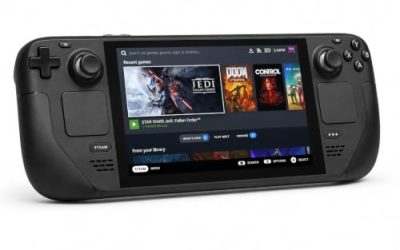
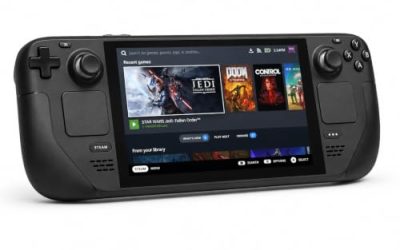
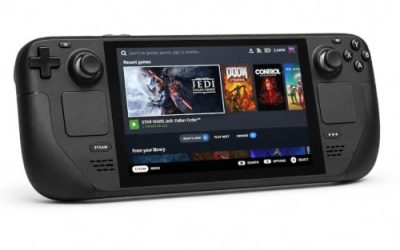
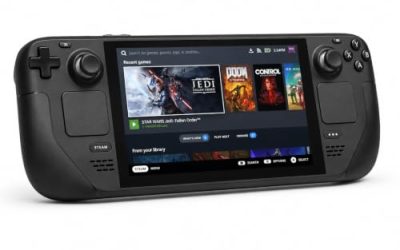
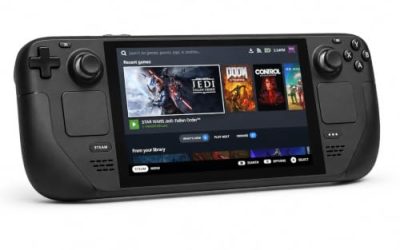
Valve Steam Deck OLED 512GB
The handheld the Verified badge was written for. Valve’s test ran this game’s native build, and the Linux requirements tab is written against the Deck’s hardware.
Specs
- Display: 7.4-inch HDR OLED, 1280 by 800, up to 90 Hz
- Processor: AMD Zen 2 and RDNA 2 custom APU
- Memory: 16 GB LPDDR5
- Storage: 512 GB NVMe, plus a microSD slot
- Wireless: Wi-Fi 6E and Bluetooth
- Channel note: Valve sells the Deck mainly through its own store, so Amazon listings are third-party sellers
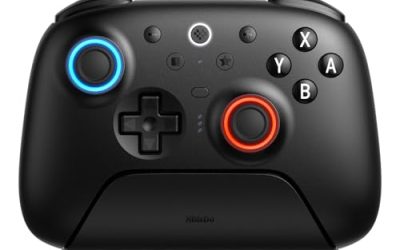
8BitDo Ultimate 2 Bluetooth Controller
The docked and desktop pad pick. The Deck sheet confirms the default controller configuration covers all functionality, and this pad adds back buttons for menu shortcuts.
Specs
- Connectivity: Bluetooth wireless and USB-C wired
- Joysticks: TMR electromagnetic, anti-drift design
- Triggers: Hall effect, with mode switching
- Extras: two remappable back buttons, motion control
- In the box: charging dock included
Xbox Wireless Controller, Carbon Black

The safest guest pad in PC gaming: Steam Input support is universal, the glyphs match what most games display, and it pairs over Bluetooth or its own wireless standard. On the handheld, an external pad may need a manual Quick Access switch first.
- Connectivity: Xbox Wireless and Bluetooth
- Port: USB-C for wired play
- Controls: hybrid D-pad, dedicated Share button
- Power: AA batteries or optional rechargeable pack
Logitech G502 HERO

A hex-map game of menus, supply lines and unit panels, played at a desk with a precise wired mouse. Eleven programmable buttons cover the confirm, cancel and camera inputs a long operation repeats.
Specs:
- HERO optical sensor, up to 25,600 DPI
- 11 programmable buttons
- Adjustable weight system
- Wired USB connection
- On-board memory profiles
Samsung T9 Portable SSD 2TB

For moving a Linux game library between machines, or keeping an offline backup of installers, a fast USB-C drive is the simple answer. The headline figure needs a Gen 2×2 host port; on a lesser port it runs at that ceiling.
Specs
- Capacity: 2 TB portable SSD
- Interface: USB 3.2 Gen 2×2, USB-C connector
- Maker-rated speeds: up to 2,000 MB per second read, 1,950 MB per second write
- Features: Dynamic Thermal Guard, maker-rated drop resistance
How to choose
Choose the Steam copy, because it is the only PC edition on sale and the exact build every record describes. Buy it for the base game with confidence: package flag, Linux binary depot and a native-runtime Deck test all agree, and on a desktop the install should simply run. Treat the expansion shelf as a separate decision: all ten campaigns flag Windows and Mac only, so a buyer whose real interest is the full Barbarossa-to-Berlin arc is buying content the record does not certify for Linux. On Steam Deck, install and play; the only homework is the manual switch if an external controller should take over.
Who should skip
Skip the expansion-led purchase if you play only on Linux and the campaigns are the point: their flags stop at Windows and Mac, and no layer of the record upgrades them. Skip this one if you want a DRM-free offline installer, because no GOG edition exists. Skip it if a Deck badge only counts when tested on the current build — this sheet predates the October 2026 branch. And skip it if you were shopping for the original Unity of Command: a different app, a different record.
FAQ
Is Unity of Command II native on Linux?
The base game is. Its purchase package reads Linux true, a dedicated Linux binary depot of about 175 MB ships in the depot table, the Linux requirements tab is populated, and Valve’s Deck test used the native runtime. The ten campaign expansions are a separate story: every one flags Windows and Mac only.
Do the DLC campaigns work on Linux?
The record does not certify them. Each expansion app flags Linux false, even though the campaign content depots appear in the base game’s depot table without an operating-system label. The soundtrack apps flag all three platforms, but music apps carry no build and prove nothing.
Is Unity of Command II Steam Deck Verified?
Yes. Valve’s sheet, read through SteamDB’s republication after the direct endpoint returned an unreadable response, gives the game the Verified category with every check passing and the native runtime recommended. One caution: the test is dated December 2025 and names a build older than the current branch from October 2026.
Can I buy Unity of Command II on GOG instead?
No. GOG’s catalogue search returns no product for this game, and its natural product addresses redirect to the general catalogue. The Steam copy is the only PC edition on sale.
Final verdict
Unity of Command II is two purchases wearing one store page. The first is a genuinely native base game: package, depot, requirements tab and a native-runtime Verified badge all agree, and ProtonDB’s Gold-and-Platinum file stands behind the fallback route. The second is an expansion shelf of ten campaigns whose flags never left Windows and Mac, flanked by two soundtrack apps whose full masks flatter any careless family scan. Buy the base game without hesitation; buy the campaigns knowing the record leaves them unproven.
Product and ASIN Reference
| Product | ASIN |
|---|---|
| Valve Steam Deck OLED 512GB | B0CQ3RWQQZ |
| 8BitDo Ultimate 2 Bluetooth Controller | B0F194QFT2 |
| Xbox Wireless Controller, Carbon Black | B08DF248LD |
| Logitech G502 HERO | B07GBZ4Q68 |
| Samsung T9 Portable SSD 2TB | B0CHFS9K14 |