- Top Pick: SANDISK 256GB Extreme PRO SD Memory Card, Up to 200MB/s Read Speeds, UHS-I | V30, U3, C10, 4K UHD, Up to 140MB/s Write Speeds, SANDISK QuickFlow Technology – SDSDXXD-256G-GN4IN
- Best Value: 【5-Years Data Recovery】GIGASTONE 128GB SD Card 4K Camera Pro, 150MB/s Read | UHS-I A1 V30 U3 Class 10 SDXC Memory Card 4K UHD Video Compatible with Digital Camera, Full-Sized SD Card, with 1 Mini Case
- Premium Choice: 【5-Yrs Free Data Recovery】 GIGASTONE 256GB SD Card, 4K Camera Pro, UHS-I A1 V30 SDXC Memory Card 4K UHD Video Speed up to 170MB/s Compatible with Digital Camera, with 1 Mini Case
Recording 4K video punishes memory cards in a way that photo shooting never does. A still camera writes in short bursts and rests; a 4K clip writes a steady stream for minutes at a time, and a card that cannot keep up drops frames or stops the recording. That is why the decision behind this keyword is not “which card is fastest” but “which card sustains a high enough write speed for the camera in question, at a capacity that fits a day of shooting.”
This guide is for vloggers, drone and action-camera users, and hybrid shooters setting up their kit in 2026. It compares nine listings, seven full-size SD cards and two microSD cards with different form factors, on the specs their titles state: capacity, read and write figures, UHS speed class, video speed class, and any bundled extras. Read the video-class markings first. The headline megabytes-per-second number comes second.
Quick Picks
As an Amazon Associate we earn from qualifying purchases at no extra cost to you.





| Product | Best for | Key spec from the listing |
|---|---|---|
| SanDisk 256GB Extreme PRO SD | Long 4K sessions | 200MB/s read, 140MB/s write, V30 |
| Gigastone 128GB SD 4K Camera Pro | Entry-level 4K camera | 150MB/s read, A1, V30, U3 |
| Gigastone 256GB SD 4K Camera Pro | Larger capacity, same class | Up to 170MB/s, A1, V30 |
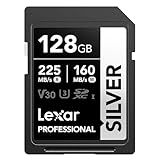
| Lexar 128GB Silver SD | DSLR and mirrorless users | 225MB/s read, V30, U3 |
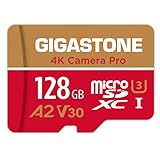
| Gigastone 128GB microSD | Action cams and drones | R/W up to 100/50 MB/s, A2, V30 |
| SanDisk Extreme microSD with adapter | 5K and 4K action footage | 245MB/s read, 170MB/s write |
| Lexar 256GB Silver SD | Longer clips on one card | 225MB/s read, V30, U3 |
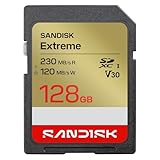
| SanDisk 128GB Extreme SD | Mid-capacity all-rounder | 230MB/s read, 120MB/s write |
| SanDisk 64GB Extreme PRO SD | Short shoots, second card | 200MB/s read, 90MB/s write |
How to Choose
Start with V30, U3, and the write number
The V30 marking promises a minimum sustained write speed of 30MB/s, and U3 means the same floor for UHS cards. That covers standard 4K recording on most cameras. If your camera records at very high bitrates, such as the 4K 10-bit modes on some mirrorless bodies, check its manual and consider a V60 or V90 card instead. All nine cards in this guide are V30-class, so none of them is aimed at the heaviest codecs.
Read speed helps offloading, write speed helps recording
A 225MB/s or 245MB/s read figure shortens the time to copy footage to your computer, provided you use a fast reader. It does nothing for recording itself, which depends on write speed. Several listings state only a read number, so compare the ones that publish both, like the SanDisk Extreme PRO cards and the microSD model.
Choose capacity by shooting hours
4K footage commonly consumes a few hundred megabytes per minute, depending on bitrate. A 64GB card fills in a couple of hours of footage at typical settings, while 128GB or 256GB suits a full day of shooting. Using one big card concentrates risk, so many shooters rotate two 128GB cards instead of one 256GB card. Label each card and format it in the camera, not on a computer, so the file structure matches what the body expects.
Form factor and extras
Check whether your camera takes full-size SD or microSD. A microSD card with an adapter fits both, but a microSD without an adapter will not slot into a full-size reader. Bundled data-recovery offers, as on the Gigastone listings, are a nice extra but not a replacement for copying files off the card promptly. Ignore marketing about overall camera compatibility; check your camera’s supported-card list instead. Also remember that the card is only one link in the chain: the camera, the reader, and the cable all have to support the speeds you are paying attention to.
The 9 Best Options
SanDisk 256GB Extreme PRO SD
A high-capacity full-size card for long 4K sessions. The listing shows up to 200MB/s read, up to 140MB/s write, UHS-I, V30, U3, C10, 4K UHD, and QuickFlow Technology, with a large 256GB capacity. The Extreme PRO name and the stated write speed make it the card to look at first for sustained 4K clips from a camera body or a gimbal setup.
- Strength: a 140MB/s write figure is the highest labeled write speed among the full-size cards here.
- Strength: 256GB holds a long day of footage without a swap.
- Trade-off: putting that much footage on one card concentrates the risk of a failure.
Skip it if you prefer to spread footage across two smaller cards.
Gigastone 128GB SD Card 4K Camera Pro
A value-focused full-size card marketed for 4K cameras. The listing mentions 150MB/s read, UHS-I, A1, V30, U3, Class 10, SDXC format, a mini case, and a five-year data recovery offer. It is a reasonable starter card for someone moving into 4K from Full HD and wanting a few conveniences in the box.
- Strength: V30 and U3 markings match what most 4K cameras need.
- Strength: the included case and recovery offer add practical extras.
- Trade-off: no write speed is stated beyond the class markings.
Skip it if you want a published write figure.
Gigastone 256GB SD Card 4K Camera Pro
The larger sibling, for longer recordings on one card. The listing states up to 170MB/s, UHS-I, A1, V30, SDXC format, a mini case, and five years of free data recovery. It suits a longer shoot on a camera that takes full-size SD, where changing cards mid-event is awkward.
- Strength: 256GB doubles the capacity of the 128GB version.
- Strength: it carries the same V30 class and extras.
- Trade-off: it does not say whether 170MB/s refers to read or write.
Skip it if you need explicit read and write numbers.
Lexar 128GB Silver SD
A full-size card aimed at photographers and videographers who shoot with Canon, Sony, or Nikon bodies. The listing names 225MB/s read, 4K, V30, U3, and UHS-I. The title also frames it for professional stills and video work, which makes it a sensible fit for a hybrid shooter.
- Strength: 225MB/s read speeds up offloading on a fast reader.
- Strength: brand-specific compatibility is named in the title.
- Trade-off: no write speed appears in the title.
Skip it if recording speed figures matter more than offload speed.
Gigastone 128GB Micro SD Card
A microSD card for action cameras, drones, and the Nintendo Switch. The listing gives read and write speeds up to 100/50 MB/s, microSDXC, UHS-I, U3, A2, V30, and Class 10. That mix of A2 and V30 makes it a flexible choice if one card has to serve a drone, a handheld console, and an action camera.
- Strength: it publishes both read and write figures.
- Strength: the A2 marking helps with app loading on devices such as the Switch.
- Trade-off: the title shows no adapter, so it will not fit a full-size SD slot.
Skip it if your camera uses a full-size SD slot.
SanDisk Extreme microSD with Adapter (256GB class)
A microSD card with an included adapter, aimed at action cams and drones. The listing mentions up to 245MB/s read, up to 170MB/s write, UHS-I, V30, U3, C10, A2, and use for 5K and 4K UHD. It is the stronger of the two microSD cards on paper and suits anyone who needs a single card for a drone and a phone.
- Strength: the adapter lets it work in both microSD and full-size slots.
- Strength: 170MB/s write is the highest labeled write speed in the guide.
- Trade-off: the title has a typo in the capacity, so verify it before buying.
Skip it if you only use full-size SD slots and want a listing with no ambiguity in the capacity line.
Lexar 256GB Silver SD
The larger Lexar full-size card, for long documentary or event shoots. It shares the 225MB/s read, 4K, V30, U3, and UHS-I markings with the 128GB model, with 256GB capacity. It makes sense for event, wedding, or travel footage where you would rather not stop to change media.
- Strength: 256GB reduces mid-shoot swaps.
- Strength: it keeps the Canon, Sony, and Nikon compatibility language.
- Trade-off: write speed is not stated in the title.
Skip it if you prefer two smaller cards for redundancy.
SanDisk 128GB Extreme SD
A mid-capacity card suited to cameras and camcorders. The listing shows up to 230MB/s read, up to 120MB/s write, UHS-I, V30, U3, C10, and 4K UHD video recording. It lands in the middle of the range and is a practical choice for most single-day shoots.
- Strength: both read and write speeds are published.
- Strength: 120MB/s write beats several cards in this guide.
- Trade-off: it is lower in write speed than the Extreme PRO 256GB.
Skip it if you want the highest write figure among full-size cards.
SanDisk 64GB Extreme PRO SD
A smaller Extreme PRO card, useful as a second or backup card. The listing shows up to 200MB/s read, up to 90MB/s write, UHS-I, V30, U3, C10, 4K UHD, Full HD, and the SanDisk app for backup and transfer. Think of it as the card you keep in the bag for short clips and as a spare when the main card fills.
- Strength: it links to an app for backup and transfer.
- Strength: it is the compact capacity for short shoots.
- Trade-off: 64GB fills quickly at 4K.
Skip it if you want a day of footage on one card.
Which One Fits Your Situation
You vlog or shoot events for hours
Choose the SanDisk 256GB Extreme PRO. Its 140MB/s write figure and 256GB capacity cover long takes.
You fly a drone or mount an action camera
The SanDisk Extreme microSD with adapter or the Gigastone 128GB microSD fits these devices, with the SanDisk offering far higher stated speeds. Choose the Gigastone only if its A2 and V30 markings cover everything the device asks for.
You shoot with a Canon, Sony, or Nikon body
The Lexar Silver cards name those brands, with 128GB for lighter use and 256GB for longer sessions.
You want a simple, well-equipped card for a basic 4K camera
The Gigastone 128GB SD Camera Pro includes a case and a recovery offer, with V30 and U3 markings. The Lexar 128GB is the step up if you also want a faster offload.
Common Mistakes
- Buying on read speed alone when recording depends on write speed.
- Choosing a microSD card with no adapter for a full-size slot.
- Using a V30 card for a camera that records very high bitrates.
- Filling one huge card instead of rotating two.
- Skipping the camera’s supported-card list.
Related guides
- Aio Liquid Coolers For High Performance Gaming
- How To Lower Input Delay In Competitive Shooters
- Wireless Gaming Headsets Under 100 For Pc
Frequently Asked Questions
Is V30 enough for 4K video?
For standard 4K modes on most cameras, yes. Very high bitrates may require V60 or V90, so confirm in your camera manual.
Does a higher read speed improve recording?
No. Read speed helps transfer footage to a computer. Recording quality depends on write speed.
Can I use microSD in a full-size slot?
Only with an adapter. The SanDisk Extreme microSD listing includes one, while the Gigastone microSD title does not mention it.
Which capacity should I buy?
128GB works for most day shoots; choose 256GB for long sessions, and keep a spare card.