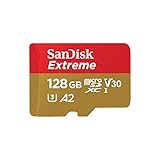
- Top Pick: SANDISK 128GB Extreme microSD Card + Adapter, Up to 245MB/s Read Speeds | UHS-I, V30, 5K & 4K UHD, U3, C10, A2, Up to 120MB/s Write Speeds, Ideal for Action Cams+Drones, Android- SDSQXH9-128G-GZ6MA
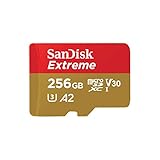
- Best Value: SANDISK 256B Extreme microSD Card + Adapter, Up to 245MB/s Read Speeds | UHS-I, V30, 5K & 4K UHD, U3, C10, A2, Up to 170MB/s Write Speeds, Ideal for Action Cams+Drones, Android- SDSQXH9-256G-GZ6MA
- Premium Choice: SANDISK 128GB Extreme microSD Card + Adapter, Up to 190MB/s Read Speeds | UHS-I, V30, 5K, 4K UHD, U3, C10, A2, Up to 90MB/s Write Speeds, Ideal for Action Cams, Drones, Smartphones-SDSQXAA-128G-GN6MA
Most people shopping for an A2 card are not chasing a headline speed number. They are trying to stop a handheld gaming PC, a retro console or a phone from stuttering when apps and game files load from the card. The A2 mark is the one class mark that speaks to that job, because it promises a minimum level of random read and write operations rather than just long sequential transfers. If your card holds a game library or installed apps, A2 is the filter that matters first, and everything else is a tiebreaker.
This 2026 guide is built for three kinds of buyers: handheld and console owners who install games straight to a microSD slot, drone and action camera users who need V30 video speeds as well as A2, and anyone who wants one card that works in phones and tablets too. Every card below carries A2 in its listing, and the comparisons rely only on what each listing states, so you can match the numbers on the spec sheet against your own device.
Quick Picks
As an Amazon Associate we earn from qualifying purchases at no extra cost to you.






| Product | Best for | Key spec from the title |
|---|---|---|
| Basics microSDXC 128GB | Everyday phone or tablet storage | A2, U3, up to 100 MB/s read |
| SanDisk Extreme 128GB (245 MB/s) | Fast handheld game library | Up to 245 MB/s read, 120 MB/s write |
| SanDisk Extreme 256GB (245 MB/s) | Bigger library, highest write speed in the family | Up to 245 MB/s read, 170 MB/s write |
| SanDisk Extreme 128GB (190 MB/s) | Action cameras and drones | Up to 190 MB/s read, 90 MB/s write |
| SanDisk Extreme PRO 512GB | Large library plus recovery software | 200 MB/s transfer, RescuePRO Deluxe |
| SanDisk Extreme 256GB (190 MB/s) | Balanced capacity and write speed | Up to 190 MB/s read, 130 MB/s write |
| PNY PRO Elite 256GB | Budget 256GB with V30 | V30, up to 100 MB/s read, 90 MB/s write |
| SanDisk Extreme 512GB (190 MB/s) | Maximum capacity for 4K and games | 512GB, up to 130 MB/s write |
| Lexar 256GB Blue | Mid-range 256GB all-rounder | Up to 160 MB/s, A2, V30 |
How to Choose
Understand what A2 actually promises
The A1 and A2 marks are application performance classes. A2 requires higher minimum random read and write operations per second than A1, which is what helps when a console or handheld is pulling lots of small files while a level loads. A card can post a huge sequential read figure and still lack the mark, so treat A2 as a requirement rather than a bonus. Also check that your device supports the feature; older slots simply run an A2 card like any other.
Match capacity to the library you plan to keep
128GB fills quickly once a few modern titles are installed, so it suits phones, cameras and light handheld use. 256GB is the practical middle for a rotating game library. 512GB is for people who want everything installed at once or shoot long 4K clips. Remember that formatted capacity is slightly lower than the label, and that one large card concentrates your data in a single point of failure, so keep backups of game progress files and footage.
Read the write speed, not just the read speed
Listings lead with read speed because the number is larger. Installing games, copying footage and recording video depend on write speed, and the difference between listings is wide: some of the cards here list 170 MB/s writes, others stop at 90 MB/s. For 4K recording, look for V30 and U3 together, which signals a sustained minimum of 30 MB/s. Ignore the 5K and 8K badges unless your camera actually records in those formats.
Check the bus, the adapter and the seller
Every card in this roundup is UHS-I, so it runs at the limits of that bus regardless of what the packaging implies. A card slot that is slower than UHS-I will cap the speeds you see. Several listings include a full-size adapter, handy for laptops and cameras with SD slots. Counterfeit memory cards exist, so buy from the brand storefront or an authorized seller, and check the real capacity with a free capacity-checking utility after you receive the card.
The 9 Best Options
Basics microSDXC 128GB
This is the plain, no-frills entry: 128GB, A2, U3, with a full-size adapter in the box and a read speed listed up to 100 MB/s. It suits a phone, a tablet or a Nintendo-style handheld where the main job is holding apps and a modest game collection. The listing does not state a write speed, so do not plan on it for heavy 4K recording.
- Strength: carries the A2 and U3 marks at the entry tier.
- Strength: includes a full-size adapter for laptops and cameras.
- Trade-off: no write speed or V30 mark is listed.
Skip it if you shoot video on a drone or need a steady write rate for long clips.
SanDisk Extreme 128GB (245 MB/s)
The listing promises up to 245 MB/s reads and up to 120 MB/s writes on UHS-I, with V30, U3, C10 and A2 all on the label. It is aimed at action cameras and drones as well as Android devices, which makes it a flexible pick if one card has to move between a handheld and a camera. Capacity is the limiting factor at 128GB.
- Strength: top-tier read figure in the family plus 5K and 4K video support.
- Strength: 120 MB/s listed write rate helps with game installs.
- Trade-off: 128GB fills fast with large modern games.
Skip it if you already know your library will exceed 100GB.
SanDisk Extreme 256GB (245 MB/s)
This listing pairs the same up to 245 MB/s read speed with up to 170 MB/s writes, the highest write figure among the cards here. The title spells the capacity “256B”, but the model code ends in 256G, so confirm the capacity on the product page before buying. It is the card for someone who wants a roomy library and quick installs.
- Strength: 170 MB/s listed write rate leads this roundup.
- Strength: V30, U3, C10 and A2 all listed.
- Trade-off: the capacity typo in the title is a small flag that deserves a second look.
Skip it if you only need a spare card for a phone.
SanDisk Extreme 128GB (190 MB/s)
A step down in speed from the 245 MB/s version, this one lists up to 190 MB/s reads and up to 90 MB/s writes, plus 5K and 4K UHD support and the V30, U3, C10 and A2 marks. The 128GB size and the focus on action cameras, drones and smartphones make it a sensible camera card first and a game card second.
- Strength: carries the full set of A2 and V30 marks.
- Strength: written for action cameras, drones and smartphones.
- Trade-off: 90 MB/s write is the lowest in the Extreme line shown here.
Skip it if you want the quickest game installs; the other Extreme cards write faster.
SanDisk Extreme PRO 512GB
This is the only PRO card in the group: 512GB microSDXC UHS-I with an adapter, listed at 200 MB/s transfer, A2, Class 10, V30 and U3. It also bundles RescuePRO Deluxe recovery software, which can matter when a card holds footage you cannot reshoot. It is aimed at smartphones, action cameras and drones.
- Strength: 512GB capacity with the A2 mark.
- Strength: includes recovery software in the listing.
- Trade-off: a single transfer number is given, with no separate write speed.
Skip it if a smaller card covers your needs, since a lost card means more data lost at once.
SanDisk Extreme 256GB (190 MB/s)
Up to 190 MB/s reads and up to 130 MB/s writes make this 256GB card the balanced choice of the Extreme family. The write rate sits well above the 128GB 190 MB/s sibling, and the capacity is the sweet spot for a handheld library or a weekend of 4K clips. V30, U3, C10 and A2 are all on the label.
- Strength: 130 MB/s listed write rate at 256GB.
- Strength: aimed at action cameras, drones and smartphones.
- Trade-off: reads trail the 245 MB/s models.
Skip it if you only want the highest read number available.
PNY PRO Elite 256GB
PNY lists C10, U3, V30 and A2 on this 256GB microSDXC card, with reads up to 100 MB/s and writes up to 90 MB/s and 4K UHD support. The figures are modest next to the SanDisk cards, but the full set of marks means it meets every requirement a game library or 4K camera asks for. It sits in the budget tier.
- Strength: 256GB with A2 and V30 together.
- Strength: write speed of 90 MB/s matches the slower Extreme cards.
- Trade-off: the lowest read speed among the 256GB options.
Skip it if install and copy times are your priority.
SanDisk Extreme 512GB (190 MB/s)
The largest card in the Extreme line shown here lists up to 190 MB/s reads and up to 130 MB/s writes, with 5K and 4K UHD support and an adapter. Pair that capacity with A2 and you can keep a full handheld library installed and still have room for footage. The title positions it for action cams, drones and Android.
- Strength: 512GB capacity with 130 MB/s writes.
- Strength: A2, V30, U3 and C10 all listed.
- Trade-off: capacity sits in one card, so back up what matters.
Skip it if 256GB already exceeds what you store.
Lexar 256GB Blue
Lexar lists up to 160 MB/s on this 256GB microSDXC UHS-I card, with C10, U3, A2 and V30, Full HD and 4K UHD support, and an SD adapter. No separate write speed appears in the title, so it is best seen as a straightforward capacity-and-marks card for a handheld or phone. It lands between the PNY and the SanDisk cards on speed.
- Strength: 160 MB/s listed speed with A2 and V30.
- Strength: adapter included for SD slots.
- Trade-off: no write speed is stated.
Skip it if you need a documented write rate for sustained recording.
Which One Fits Your Situation
You own a handheld gaming PC
The SanDisk Extreme 256GB (245 MB/s) offers the best write rate on the list and enough room for a rotating library. If you want everything installed, step up to the SanDisk Extreme 512GB.
You fly a drone or carry an action camera
The SanDisk Extreme 128GB (190 MB/s) is written for those devices, with V30 and 5K and 4K support. Move to the Extreme PRO 512GB if recovery software and capacity both matter.
You want a 256GB card on a tighter allowance
The PNY PRO Elite 256GB meets the A2 and V30 requirements at a budget tier, and the Lexar 256GB Blue adds a higher listed speed in the mid-range.
You just need extra phone storage
The Basics microSDXC 128GB covers apps and photos without chasing speeds a phone slot may never use.
Common Mistakes
- Choosing by read speed alone and ignoring the write figure.
- Assuming every card with fast speeds carries the A2 mark; check the label.
- Buying a UHS-I card and expecting UHS-II speeds from the device.
- Skipping a capacity check on arrival, which is how counterfeits slip through.
- Putting every game file and clip on one large card with no backup.
Related guides
- Battery Operated Smoke And Carbon Monoxide Detectors
- Combination Smoke And Carbon Monoxide Detectors
- Aio Liquid Coolers For High Performance Gaming
Frequently Asked Questions
Is A2 necessary for a handheld gaming device?
It is not mandatory, but A2 targets the small random file operations that game loading depends on. If the slot supports the feature, an A2 card is the safer choice.
Do I need V30 as well?
Only for video. V30 guarantees a sustained minimum write speed for 4K recording, so it matters for drones and action cameras but not for storing games.
Will a full-size adapter work in a laptop?
Yes, any card sold with an adapter can sit in a standard SD slot. Check that the slot is UHS-I or newer to get the listed speeds.
How much capacity is enough?
128GB handles phones and a small library, 256GB fits most handheld owners, and 512GB suits people who keep a large collection installed or record long clips.