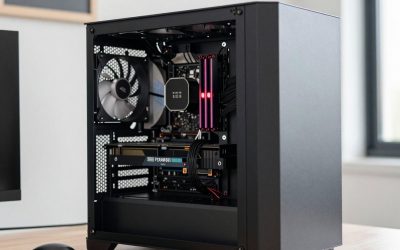
- Top Pick: CyberPowerPC Gaming PC, Intel Core i7-14700F, GeForce RTX 5060 Ti 8GB
- Best Value: CyberPowerPC Gaming PC, AMD Ryzen 9 9900X, GeForce RTX 5070 12GB
- Premium Choice: GlitchLens PC Gaming & Computer Glasses | 100% UV400 Protection (99.8% Lab Verified) | Ultra-Light Swiss-Designed Polycarbonate Frame
Chasing the “best PC specs for gaming” can send you down a rabbit hole of benchmarks and forum arguments, but the fundamentals are simpler than they look. A strong graphics card, a capable modern CPU, enough fast memory, and speedy storage cover the vast majority of what matters. The right balance beats any single headline number.
Quick answer: The best PC specs for gaming start with a strong graphics card, followed by a modern multi-core CPU, 32GB of fast RAM, and an NVMe SSD. Balance matters more than any one headline number. Match the GPU to your monitor’s resolution and refresh rate, then size the other parts to avoid bottlenecks.
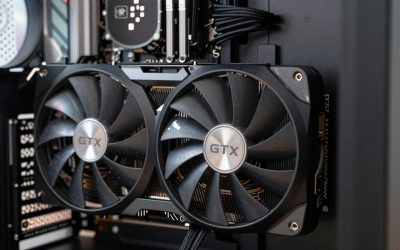
- The graphics card sets the frame-rate ceiling for most games, especially at 1440p and 4K.
- A fast NVMe SSD cuts load times compared with a hard drive or older SATA drive.
- Dual-channel memory, meaning two matched sticks, generally performs better than a single stick of the same capacity.
- Your monitor’s resolution and refresh rate determine how much GPU power you can actually use.
- A power supply should cover the graphics card’s recommended system wattage with some headroom.
Below I’ve gathered machines that showcase well-chosen gaming specs in 2026, plus one accessory that quietly improves every session. A buying guide and FAQ follow to help you understand which specs deserve your budget.

As an Amazon Associate we earn from qualifying purchases at no extra cost to you.





🎮 Get More From Your Setup — Free
Prime Gaming gives you free PC games every month, in-game loot, and a free Twitch channel sub — plus fast free shipping on all the gear above. New members get a 30-day free trial.
Watch: Best PC Specs For Gaming — Video Review
How to Choose the Best Gaming Specs
- Graphics card: The GPU has the biggest impact on frame rate; prioritize it above all else.
- Processor: A modern multi-core CPU prevents bottlenecks and keeps frame times smooth.
- Memory: 32GB of RAM is the comfortable sweet spot for gaming and multitasking in 2026.
- Storage: A fast NVMe SSD of 1TB or more shortens load times and holds a growing library.
- Balance over extremes: A well-matched build outperforms one with a great GPU starved by weak supporting parts.
The Best Gaming Spec Builds Reviewed
CyberPowerPC Ryzen 9 9900X + RTX 5070
This CyberPowerPC pairs a 12-core Ryzen 9 with an RTX 5070 for a genuinely high-end spec sheet. It’s built for high-refresh 1440p and demanding productivity alike.
CyberPowerPC i7-14700F + RTX 5060 Ti
A superbly balanced machine, this build teams a Core i7-14700F with an RTX 5060 Ti. It’s an excellent all-rounder for smooth 1080p and 1440p gaming.
Skytech Shadow 5 (RTX 5060 Ti)
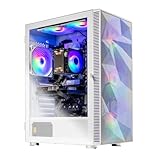
The Shadow 5 hits the mainstream sweet spot with a Ryzen 7, RTX 5060 Ti, and 1TB SSD. It’s a well-rounded pick that nails the essentials without overspending.
Skytech Storm (Ryzen 5 5500 + RTX 5060 Ti)
The Storm offers a Ryzen 5 5500, RTX 5060 Ti, and a quality Gold PSU at a friendly price. It’s a smart entry into strong high-refresh gaming specs.
GlitchLens Gaming Glasses
Not a component, but the GlitchLens glasses reduce eye strain during long sessions with UV400 protection. They’re an affordable comfort upgrade for marathon players.
Related Guides
- Best Buy Gaming TV (2026)
- Best Gaming Best Teams (2026)
- Best Windows 11 Settings For Gaming (2026)
- Best Gaming Head Phones (2026)
- How to Safely Clean Your Gaming PC
What are the best PC specs for gaming for your setup?
The right specs depend on what you play and how you play it. Start with the monitor, then work backward to the graphics card, and fit the other parts around that choice.
- Competitive esports at high refresh: a strong CPU and fast RAM help maintain high frame rates, and the GPU can be mid-tier.
- Single-player AAA at 1440p: put the largest share of the budget into the graphics card, and pick enough video memory for high textures.
- Streaming or multitasking: add more RAM and a CPU with extra cores.
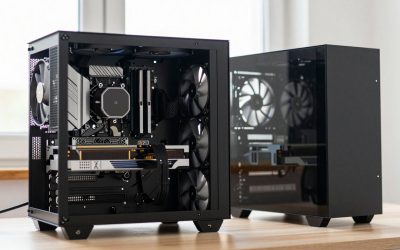
- Compact or quiet builds: check the cooler, case airflow, and power supply size.
Common mistakes include pairing a high-end GPU with a very old CPU, running a single memory stick, and buying a small SSD that fills quickly. Read the spec sheet line by line, confirm the parts work together, and leave room for one future upgrade. If two builds look similar, choose the one with the better graphics card and a more reliable power supply. Finally, remember that software matters too: current drivers, a clean Windows install, and sensible in-game settings often unlock more smoothness than a minor hardware upgrade.
Spec priorities for gaming
| Component | What it affects | Priority |
|---|---|---|
| Graphics card | Frame rate and resolution | Highest |
| CPU | Minimum frames and CPU-heavy games | High |
| RAM | Multitasking and smooth loading | Medium |
| NVMe SSD | Load times | Medium |
More quick answers
How do I check my PC specs for gaming? On Windows, open Settings, then System and About for CPU and RAM, and use Task Manager’s Performance tab to see the GPU and storage. The DirectX diagnostic tool, run from the Start menu, also lists the graphics card and memory. Compare these against a game’s published requirements.
Do monitor specs count as gaming PC specs? In practice, yes. Resolution and refresh rate decide how hard the GPU works and what frame rates you can see. A fast graphics card on a basic 60Hz screen wastes its potential, so pair the display and graphics card thoughtfully when you plan a build.
Is a higher clock speed always better for gaming? Not always. Clock speed is one factor, but architecture, core design, cache size, and cooling also shape real performance. Compare processors within the same generation using independent gaming results rather than clock numbers alone, and confirm that your cooler can sustain the boost speeds.
Should I choose specs for today’s games or future ones? Aim a little above your current needs, mainly on the graphics card, memory capacity, and power supply. Those are the areas that age fastest or limit upgrades. Avoid overbuying on parts you can swap later, such as extra storage or lighting, and keep the platform upgradeable.
Frequently Asked Questions
What is the most important spec for gaming?
The graphics card. It determines your frame-rate ceiling more than any other single component.
How much RAM do I need?
32GB is the comfortable sweet spot in 2026, giving headroom for games and background applications.
Do I need the latest CPU?
No. Any capable modern multi-core chip avoids bottlenecks; spend savings on a stronger GPU for more frames.
Is an SSD really necessary?
Yes. A fast NVMe SSD dramatically cuts load times and is essential for a modern gaming experience.
Final Thoughts
For high-end specs, the CyberPowerPC Ryzen 9 9900X + RTX 5070 is the standout, while the i7-14700F + RTX 5060 Ti build is the best-balanced all-rounder. Budget-focused players will find the Skytech Storm a smart, capable foundation.