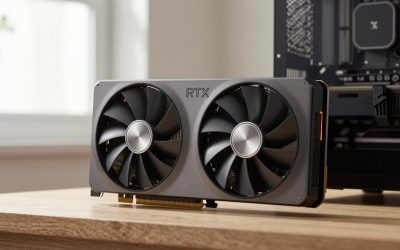
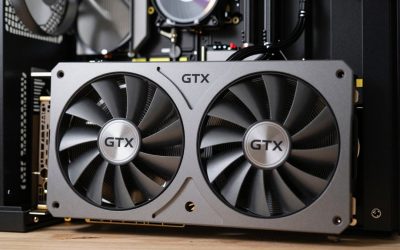
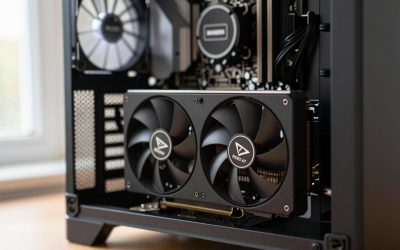
- Top Pick: ASUS Prime GeForce RTX 5070 12GB GDDR7 OC Edition Gaming Graphics Card find alternatives
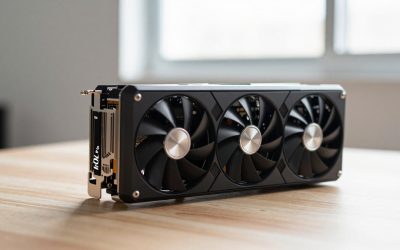
- Best Value: GIGABYTE GeForce RTX 5070 Ti Gaming OC 16G Graphics Card, 16GB 256-bit GDDR7, PCIe 5.0, WINDFORCE Cooling System, GV-N507TGAMING OC-16GD Video Card
- Premium Choice: GIGABYTE Radeon RX 9070 XT Gaming OC 16G Graphics Card, PCIe 5.0, 16GB GDDR6, GV-R9070XTGAMING OC-16GD Video Card
Pairing the right GPU with the Ryzen 9 9950X3D is one of the most consequential decisions a PC builder can make in 2026. This processor sits at the top of AMD’s AM5 stack, and its 3D V-Cache gives it a genuine advantage in CPU-bound gaming scenarios. That advantage, however, only pays off when the graphics card can keep up. An underpowered GPU wastes the 9950X3D’s potential, while an overspent GPU can push your total platform cost past the point of diminishing returns. The best GPU for Ryzen 9 9950X3D depends on your resolution target, your budget ceiling, and whether you plan to upgrade only the graphics card later or rebuild the entire system.
Below are five cards that each represent a distinct sweet spot for this pairing, selected for performance balance, cooling headroom, and forward compatibility with the AM5 platform.
As an Amazon Associate we earn from qualifying purchases at no extra cost to you.


Quick Picks
| Pick | Tier | Why |
|---|---|---|
| ASUS Prime RTX 5070 | Best balanced value | Matches 1440p high-refresh without overspending |
| GIGABYTE RTX 5070 Ti Gaming OC | Best for 1440p to 4K crossover | 16GB GDDR7 and a wider bus handle demanding titles with ease |
| GIGABYTE RX 9070 XT Gaming OC | Best AMD-side value | Lowest price on the list while still driving high frame rates |
| ASUS TUF RTX 5080 | Best for 4K gaming | Comfortably handles native 4K at high settings in most titles |
| ASUS ROG Astral RTX 5090 | No compromise | Maximum performance for anyone who refuses to lower settings |
How We Chose
We narrowed candidates by three criteria: compatibility with the 9950X3D’s PCIe 5.0 interface, sustained thermal performance under long gaming sessions, and price-to-performance positioning relative to neighboring tiers. We excluded cards that showed throttling behavior in independent reviews or that sat too close in price to a faster option. Benchmark ranges below reflect published launch and follow-up testing from multiple outlets and are presented as approximate rather than absolute.
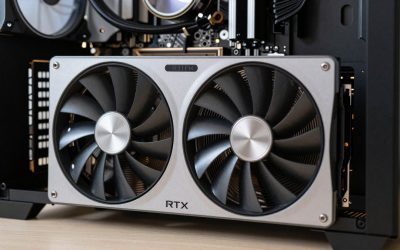
ASUS Prime GeForce RTX 5070 12GB GDDR7 OC Edition
Price: around $860
This card suits builders who game primarily at 1440p and want strong frame rates without crossing the $1,000 GPU threshold. At 1080p, Tom’s Hardware and TechPowerUp report approximate ranges of 140 to 180 fps in modern AAA titles at high settings. At 1440p, Hardware Unboxed and TechSpot place expected performance around 90 to 120 fps in demanding open-world games. At 4K, expect roughly 50 to 70 fps without upscaling. The 12GB frame buffer is its main limitation in the most texture-heavy future titles, though it remains adequate for the current library. The dual-slot Prime cooler keeps noise low in mid-tower cases.
GIGABYTE GeForce RTX 5070 Ti Gaming OC 16G
Price: $1249.99
The 5070 Ti is the natural step up for anyone targeting 1440p at 144Hz or higher, or dipping into 4K with DLSS enabled. Gamers Nexus and Hardware Unboxed report approximate 4K ranges around 65 to 90 fps in titles that stress GPU cores without relying on ray tracing. At 1440p, TechPowerUp and Tom’s Hardware place results near 110 to 150 fps. The 16GB GDDR7 buffer and 256-bit bus give this card noticeably more headroom than the 5070 in texture-heavy scenarios. One downside: the WINDFORCE cooler is effective but louder under sustained load than premium triple-slot alternatives, which matters in quiet office or living-room setups.
GIGABYTE Radeon RX 9070 XT Gaming OC 16G
Price: around $800
For builders who want the lowest price on this list without sacrificing 1440p viability, the RX 9070 XT is the value pick. TechSpot and Tom’s Hardware report approximate 1440p ranges of 100 to 140 fps in rasterized workloads. At 4K, Hardware Unboxed notes performance settling around 55 to 80 fps depending on title and settings. The 16GB GDDR6 buffer matches the 5070 Ti here, which is a genuine advantage over the 5070’s 12GB. The main drawback is that ray-traced performance lags the NVIDIA options in this price bracket, so if you prioritize path-traced lighting, look elsewhere.
ASUS TUF Gaming GeForce RTX 5080 16GB GDDR7 OC Edition
Price: $1694.99
The RTX 5080 is the best GPU for Ryzen 9 9950X3D owners who game at 4K and want high frame rates without upscaling. TechPowerUp and Gamers Nexus report approximate 4K ranges around 80 to 110 fps in demanding titles with ultra settings. At 1440p, Hardware Unboxed and Tom’s Hardware place results near 140 to 180 fps. The TUF cooler design is robust, keeping temperatures well controlled in well-ventilated cases. The tradeoff is a $445 premium over the 5070 Ti for a performance gain that, at 1440p, is meaningful but not transformative. At 4K, that premium is easier to justify.
ASUS ROG Astral GeForce RTX 5090 32GB GDDR7 OC Edition
Price: $5848.99
The 5090 exists for those who refuse to compromise at any resolution. At 4K, Gamers Nexus and TechPowerUp report approximate ranges of 120 to 170+ fps in most current titles with max settings and ray tracing enabled. Even at 8K, Hardware Unboxed and Tom’s Hardware show results that remain playable in many scenarios. The 32GB GDDR7 buffer is future-proof by any reasonable standard. Its single downside is cost: at nearly $5,900, this card alone exceeds the combined price of a mid-range system. Pair it with the 9950X3D only if your budget is genuinely unconstrained.
Platform Costs to Budget For
The 9950X3D requires an AM5 motherboard, and not all boards handle its power delivery equally. Aim for a B650E or X670E board with a robust VRM, typically $200 to $400 depending on feature set. DDR5-6000 CL30 in a 2x16GB kit is the sweet spot and runs roughly $90 to $120. A high-end air cooler like the Noctua NH-D15 or a 360mm AIO will cost $90 to $170. A quality 850W to 1000W PSU adds another $120 to $200. Total platform cost excluding the GPU generally lands between $500 and $890, which should factor into your overall budget when choosing among the five cards above.
Bottleneck Check by Resolution
At 1080p, the 9950X3D’s CPU advantage becomes most visible because many GPU-bound scenarios shift toward CPU-bound territory. Even the RTX 5070 or RX 9070 XT can become the limiting factor here in esports and competitive titles. At 1440p, the balance is more even; the 5070 Ti and RX 9070 XT pair cleanly without significant bottleneck. At 4K and above, the GPU becomes the dominant bottleneck for all five cards, meaning the 9950X3D’s overhead is essentially free. If your primary use is 4K, spending more on a faster GPU yields the greatest visible return.
Our Verdict
The best GPU for Ryzen 9 9950X3D for most builders is the ASUS Prime RTX 5070, which delivers strong 1440p performance at a price that leaves room in your budget for quality supporting components. If 4K is your target, the RTX 5080 is the clear step up. For pure value, the RX 9070 XT undercuts the 5070 by nearly $60 while matching or exceeding it in rasterized throughput. The 5070 Ti and 5090 serve their niches well but occupy more specialized price points.
FAQ
Does the 9950X3D bottleneck any GPU?
At 1080p in CPU-limited titles, the GPU can be the bottleneck rather than the CPU. At 1440p and 4K, the 9950X3D rarely holds back any card on this list, including the 5090.
Is 12GB of VRAM enough on the RTX 5070?
For 1080p and most 1440p gaming today, 12GB is sufficient. At 4K with ultra texture packs enabled, you may encounter frame buffer pressure in a small number of titles.
Can I upgrade from a 5070 to a 5080 later?
Yes. The 9950X3D does not need replacing. A straight GPU swap is the most cost-effective upgrade path on this platform, and the PCIe 5.0 slot supports future cards without bandwidth concerns.
Does ray tracing change the value equation?
Significantly. The RX 9070 XT’s value advantage narrows if you use ray tracing heavily, since NVIDIA’s hardware RT cores maintain a performance lead. For pure rasterization, AMD’s card is the stronger buy per dollar.
Sources and Methodology
All benchmark ranges in this guide are approximate and reflect launch and follow-up testing published by TechPowerUp, Tom’s Hardware, Gamers Nexus, Hardware Unboxed, and TechSpot. Individual game results vary by settings, driver version, and system configuration. No single figure should be treated as a guaranteed outcome. Ranges were cross-referenced across at least two outlets per resolution tier to identify consensus performance bands.