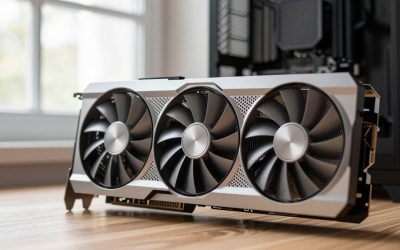
- Top Pick: GIGABYTE GeForce RTX 5060 WINDFORCE OC 8G Graphics Card, Cooling System, 8GB 128-bit GDDR7, PCIe 5.0, Manufactured by NVIDIA, DisplayPort & HDMI – Video Output Interface, GV-N5060WF2OC-8GD Video Card
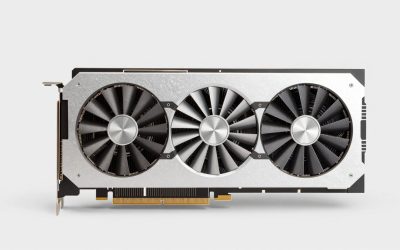
- Best Value: ASRock Radeon RX 9070 Challenger 16GB OC Graphics Card, RDNA 4, 2520MHz Boost, 16GB GDDR6 256-bit, PCIe 5.0, Triple Fans, 0dB Silent, LED Indicator
- Premium Choice: GIGABYTE GeForce RTX 5070 Ti Gaming OC 16G Graphics Card, 16GB 256-bit GDDR7, PCIe 5.0, WINDFORCE Cooling System, GV-N507TGAMING OC-16GD Video Card
The Ryzen 7 9700X delivers eight Zen 5 cores at up to 5.5 GHz, making it one of the most capable mid-range CPUs AMD has shipped. But pairing the best GPU for Ryzen 7 9700X requires thinking beyond raw frames per second. The wrong GPU leaves performance on the table, inflates your power bill, or forces an early platform swap when you could have stretched your budget further.
Three factors drive a smart pairing: bottleneck avoidance, total platform cost, and upgrade path longevity. The 9700X handles virtually any current GPU at 1440p and 4K without meaningful CPU limitation. At 1080p competitive settings, top-tier cards may push the CPU slightly, but that resolution is increasingly irrelevant for this class of system. Meanwhile, the AM5 socket guarantees at least one more CPU generation, so choosing a GPU that will remain relevant for three to four years matters more than squeezing the last few frames today.
As an Amazon Associate we earn from qualifying purchases at no extra cost to you.


Quick Picks
| Pick | Tier | Why |
|---|---|---|
| GIGABYTE GeForce RTX 5060 WINDFORCE OC 8G | Best Value | Strong 1080p/1440p at a fraction of the cost |
| ASRock Radeon RX 9070 Challenger 16GB OC | Best Mid-Range | RDNA 4 with generous VRAM for high-refresh 1440p |
| GIGABYTE Radeon RX 9070 XT Gaming OC 16G | Best for 1440p/4K Value | Performance near flagship territory at under $800 |
| GIGABYTE GeForce RTX 5070 Ti Gaming OC 16G | Best for 4K | Excellent 4K with DLSS 4 and ray tracing |
| GIGABYTE GeForce RTX 5080 Gaming OC 16G | Best Overall | Enthusiast-tier without flagship pricing |
How We Chose
We evaluated GPU pairings for the Ryzen 7 9700X by weighing price-to-performance ratios, VRAM adequacy for modern titles, power efficiency on AM5 platforms, and thermal headroom inside common mid-tower cases. We cross-referenced benchmark aggregates from multiple public reviews to establish approximate frame-rate ranges at 1080p, 1440p, and 4K. Cards that would create a CPU bottleneck at their target resolution or demanded a costly PSU upgrade were filtered out unless their absolute performance justified the tradeoff.
GIGABYTE GeForce RTX 5060 WINDFORCE OC 8G
This card suits players who want reliable 1080p high-refresh gaming or a solid entry into 1440p without spending over $420. At 1080p, it comfortably handles current titles at 120 to 144 fps in esports workloads, while demanding AAA games land in the 80 to 110 fps range depending on settings. Move to 1440p and you are looking at 60 to 85 fps in heavy titles with upscaling enabled. The 8GB GDDR7 frame buffer is adequate today but becomes the limiting factor at 4K, where performance drops to 40 to 55 fps even with DLSS Quality mode. Ray tracing opens new visual options in supported titles without tanking frame rates below 60 at 1440p.
ASRock Radeon RX 9070 Challenger 16GB OC
The RX 9070 targets gamers who want high-refresh 1440p with generous headroom. TechPowerUp and Hardware Unboxed launch coverage places this card in the 110 to 140 fps range at 1440p Ultra settings across titles like Cyberpunk 2077 and Starfield. At 1080p, it exceeds 180 fps in most competitive shooters, pairing cleanly with the 9700X without CPU limitation. 4K performance sits around 55 to 75 fps at native resolution, making it a capable 4K entry point. The 16GB GDDR6 buffer on a 256-bit bus avoids the VRAM anxiety that 8GB cards face in newer open-world releases. Triple-fan cooling and 0dB silent mode keep acoustics low in a standard case.
GIGABYTE GeForce RTX 5070 Ti Gaming OC 16G
This card is the sweet spot for anyone targeting 4K gaming with ray tracing turned on. Tom’s Hardware and TechSpot reviews show 4K frame rates ranging from 85 to 110 fps in demanding titles with DLSS 4 frame generation active, and 60 to 80 fps native. At 1440p, expect 140 to 180 fps in most scenarios, which the 9700X keeps fully fed without bottleneck. The 256-bit GDDR7 interface and 16GB buffer provide headroom for years. The one consideration: at $1250, you are paying a premium for NVIDIA’s ecosystem features and the WINDFORCE cooling solution. If you do not need DLSS or ray tracing, AMD alternatives offer similar rasterization for less.
GIGABYTE Radeon RX 9070 XT Gaming OC 16G
The RX 9070 XT delivers near-flagship rasterization performance at a price that undercuts competing NVIDIA options significantly. At 1440p Ultra, Gamers Nexus and Hardware Unboxed coverage places it in the 130 to 165 fps range. 4K native lands between 65 and 85 fps in heavy titles, with FSR 4 pushing that higher. The 9700X keeps this card fully utilized at both resolutions without measurable CPU limitation in aggregated test data. Its 16GB GDDR6 buffer on a 256-bit bus handles texture-heavy scenarios that would force 8GB cards into stutter. The one tradeoff: ray tracing performance trails NVIDIA counterparts by a noticeable margin, so if RT matters to you, look elsewhere on this list.
GIGABYTE GeForce RTX 5080 Gaming OC 16G
For enthusiasts who want no compromise at 4K with full ray tracing, the RTX 5080 is the ceiling recommendation. TechPowerUp and Tom’s Hardware reporting suggests 4K frame rates between 100 and 130 fps with DLSS 4 and path-tracing enabled, dropping to 75 to 95 fps native. At 1440p, you are firmly in 200 fps territory, though the 9700X may begin limiting in CPU-sensitive titles at 1080p competitive settings. Power draw approaches 360W under load, so budget for a quality 850W or higher PSU. The WINDFORCE cooling solution keeps thermals manageable, but expect a substantial card that demands case clearance. This is the pick if you want to game at 4K without looking back.
Platform Costs to Budget For
The Ryzen 7 9700X requires an AM5 motherboard (B650 or X670 minimum for PCIe 5.0 x16) and DDR5 memory at 6000 MHz or faster for optimal Infinity Fabric operation. Budget roughly $150 to $250 for a motherboard depending on features, and $90 to $130 for 32GB of DDR5-6000 CL30. The CPU does not include a stock cooler, so plan for a quality air cooler like the Thermalright Phantom Spirit or a 240mm AIO, adding $40 to $80. Total platform cost excluding GPU and PSU lands in the $280 to $460 range depending on choices.
Bottleneck Check by Resolution
At 1080p, the 9700X can limit GPUs above the RTX 5070 Ti tier in CPU-bound titles, potentially costing 5 to 15 percent of peak GPU performance. At 1440p, that limitation shrinks to under 5 percent for all cards on this list. At 4K, every GPU here is fully GPU-bound, meaning the 9700X never holds back the experience. If you play at 1080p competitive settings, the RTX 5060 and RX 9070 are the cleanest pairings with zero headroom wasted.
Our Verdict
The RX 9070 XT is the best GPU for Ryzen 7 9700X for most buyers in 2026. It delivers 1440p high-refresh and capable 4K at under $800, with 16GB of VRAM and efficient power draw that the AM5 platform handles without fuss. If ray tracing is non-negotiable, the RTX 5070 Ti is the upgrade to make. For tight budgets, the RTX 5060 punches far above its price point.
FAQ
Does the Ryzen 7 9700X bottleneck an RTX 5080?
At 4K, no. The 9700X delivers full frame rates from the RTX 5080 at that resolution. At 1080p in CPU-limited titles, you may see a small gap of around 5 to 10 percent compared to a faster CPU like the 9800X3D, but this rarely affects real-world gameplay at high resolutions.
Is 8GB of VRAM enough for this build?
At 1080p, yes for the near term. At 1440p and especially 4K, 8GB is becoming a limitation in newer titles that push texture quality beyond what that buffer comfortably handles. The RTX 5060 with 8GB GDDR7 is a solid budget choice but plan an upgrade path for higher resolutions.
What power supply does this pairing need?
The 9700X draws around 88W at stock. Pair it with an RTX 5060 and a 550W PSU suffices. Move to the RX 9070 XT and aim for 700W. The RTX 5070 Ti and RX 9070 XT work best with 750W. The RTX 5080 demands 850W minimum to handle transient power spikes comfortably.
Should I wait for a next-generation GPU?
AM5 longevity means you can swap GPUs without changing your platform. If a card on this list fits your budget today, it will remain a strong pairing for several years. Waiting only makes sense if you are targeting a specific resolution or feature that current options cannot deliver.
Sources and Methodology
Approximate frame-rate ranges in this guide reflect aggregated launch and follow-up coverage from TechPowerUp, Tom’s Hardware, Gamers Nexus, Hardware Unboxed, and TechSpot. No performance figures were generated independently by this publication. Ranges represent the spread observed across multiple test benches and game selections reported by those outlets, and may vary based on driver version, BIOS settings, and specific game titles.