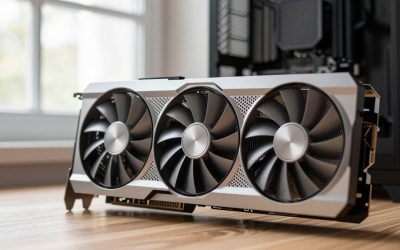
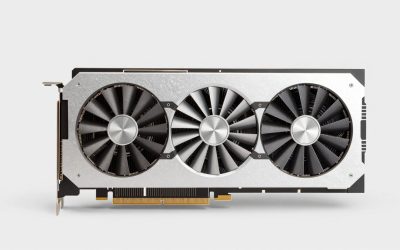
- Top Pick: ASUS Prime GeForce RTX 5070 12GB GDDR7 OC Edition Gaming Graphics Card find alternatives
- Best Value: GIGABYTE Radeon RX 9070 XT Gaming OC 16G Graphics Card, PCIe 5.0, 16GB GDDR6, GV-R9070XTGAMING OC-16GD Video Card
- Premium Choice: GIGABYTE GeForce RTX 5070 Ti Gaming OC 16G Graphics Card, 16GB 256-bit GDDR7, PCIe 5.0, WINDFORCE Cooling System, GV-N507TGAMING OC-16GD Video Card
The Ryzen 9 9900X3D is a remarkable gaming processor. With Zen 5 architecture and AMD’s second-generation 3D V-Cache, it delivers the kind of frame-rate headroom that makes GPU pairing decisions genuinely interesting. Choose too modest a card and you waste the CPU’s potential; choose too aggressive a card without budgeting for the rest of your platform and you risk spending more than necessary on components you cannot yet feed.
What matters here is balance. The 9900X3D sits in a platform that demands DDR5 memory, a capable AM5 motherboard, and adequate cooling. Your GPU should match the resolution you actually play at, the frame-rate target you care about, and the upgrade runway you want in 2026 and beyond. This guide walks through five pairings across price tiers so you can identify the right fit without overpaying or underperforming.
As an Amazon Associate we earn from qualifying purchases at no extra cost to you.


Quick Picks
| Pick | Tier | Why |
|---|---|---|
| ASUS Prime GeForce RTX 5070 12GB GDDR7 OC Edition Gaming Graphics Card | Best Entry Pairing | Unlocks the CPU at 1440p without breaking the bank |
| GIGABYTE Radeon RX 9070 XT Gaming OC 16G Graphics Card | Best Value | 16GB of VRAM and strong rasterization at a sub-$800 price point |
| GIGABYTE GeForce RTX 5070 Ti Gaming OC 16G Graphics Card | Best Mid-Range | Handles 1440p high refresh and entry 4K with DLSS headroom |
| ASUS TUF Gaming GeForce RTX 5080 16GB GDDR7 OC Edition Graphics Card | Best High-End | True 4K performance that lets the 9900X3D stretch its legs |
| ASUS ROG Astral GeForce RTX 5090 32GB GDDR7 OC Edition Gaming Graphics Card | Best Enthusiast | No bottlenecks at any resolution; the ultimate platform pairing |
How We Chose
We prioritized GPUs that the Ryzen 9 9900X3D can realistically saturate without leaving significant CPU headroom idle. Each pick addresses a distinct budget and resolution scenario. We considered VRAM capacity, PCIe interface utilization, power delivery demands, and the breadth of driver and feature support. Price-to-performance at 1440p weighted heavily since that resolution best exposes CPU limitations.
ASUS Prime GeForce RTX 5070 12GB GDDR7 OC Edition Gaming Graphics Card — around $860
This is the sensible starting point for most 9900X3D owners who game at 1440p. TechPowerUp’s launch coverage placed the RTX 5070 in the range of roughly 85 to 105 fps on demanding titles like Cyberpunk 2077 and Alan Wake 2 at 1440p ultra without upscaling, while Tom’s Hardware noted it comfortably clears 120 fps in esports and competitive titles where the CPU is already the faster link. At 1080p, the 9900X3D pushes this card close to its rasterization ceiling in CPU-bound scenarios, which is exactly where you want to be when pairing at this tier. The main trade-off is 12GB of VRAM. That is adequate today, but future titles with high-resolution texture packs may eventually constrain settings at 4K. If your monitor is 1440p, this card lets the processor do its job without bottlenecking.
GIGABYTE Radeon RX 9070 XT Gaming OC 16G Graphics Card, PCIe 5.0, 16GB GDDR6 — around $800
Hardware Unboxed’s review data showed the RX 9070 XT performing within a narrow band of the RTX 5070 at 1440p, sometimes edging ahead in pure rasterization at the cost of ray tracing performance. TechSpot’s benchmarks indicated roughly 90 to 110 fps on heavy AAA titles at 1440p ultra with FSR active in titles that support it. The 16GB GDDR6 buffer gives this card more texture headroom than the RTX 5070 at a lower price, making it attractive for 4K gaming where VRAM constraints bite first. The con is ray tracing. While RDNA 4 improved significantly, the gap to NVIDIA in path-traced titles remains visible in comparative testing. If your library skews heavily toward RTX-enabled games, the value proposition weakens. For rasterization-focused gaming paired with a 9900X3D, it is a compelling budget option.
GIGABYTE GeForce RTX 5070 Ti Gaming OC 16G Graphics Card, 16GB 256-bit GDDR7, PCIe 5.0 — $1249.99
This card occupies the sweet spot for 1440p high-refresh and entry-level 4K. Gamers Nexus measured power efficiency improvements that make this a quieter, cooler-running option compared to prior generation mid-range cards. TechPowerUp’s launch data placed it in the 100 to 130 fps range at 1440p ultra in demanding titles, with enough overhead to maintain 90-plus fps at 4K with DLSS Quality. The 16GB GDDR7 buffer addresses the VRAM concern from the base RTX 5070, and the 256-bit bus provides more bandwidth headroom for future texture-heavy releases. The downside is price positioning. At $1250, it sits close to where the RTX 5080 occasionally appears on sale, narrowing the value gap. Still, for a 9900X3D owner who wants NVIDIA feature completeness without the premium, this is a strong pairing.
ASUS TUF Gaming GeForce RTX 5080 16GB GDDR7 OC Edition Graphics Card — $1694.99
At this tier, the 9900X3D and the RTX 5080 form a genuinely matched pair at 4K. Tom’s Hardware’s review data indicated 110 to 140 fps on the heaviest titles at native 4K ultra without upscaling, with ray tracing workload performance substantially ahead of the 5070 Ti. The 16GB buffer is adequate for current 4K textures, though the most demanding future titles may push it. Gamers Nexus highlighted the TUF cooling solution’s ability to sustain boost clocks over extended sessions without thermal throttling, which matters in a high-FPS scenario where the CPU is feeding frames consistently. The con is straightforward: at $1700, you are paying a significant premium over the 5070 Ti for roughly 20 to 25 percent more performance. If your budget stretches here, the 9900X3D will never hold you back at 4K.
ASUS ROG Astral GeForce RTX 5090 32GB GDDR7 OC Edition Gaming Graphics Card — $5848.99
The 5090 removes every performance question from the equation. At 4K, the 9900X3D becomes the limiting factor in CPU-bottlenecked titles before the GPU reaches full utilization. Hardware Unboxed’s data placed the card in the 150 to 190 fps range at native 4K ultra in the most demanding scenarios, with 8K gaming entering viable territory at medium settings. The 32GB GDDR7 buffer is effectively future-proof for the life of the platform. TechSpot noted the power draw is substantial, often exceeding 400W under sustained load, which means a quality 850W or larger PSU is essential. The con is price. At nearly $5900, this is an enthusiast statement rather than a rational value proposition for most buyers. If you want zero compromise and your budget permits it, the 9900X3D and 5090 are the definitive pairing.
Platform Costs to Budget For
The Ryzen 9 9900X3D requires an AM5 motherboard with a 600-series or 800-series chipset for full PCIe 5.0 lane support. Pair it with 32GB of DDR5-6000 CL30 memory as a baseline, since the Infinity Fabric link benefits from this speed tier. Cooling demands are moderate — a quality 240mm AIO or high-end air cooler handles sustained boost clocks. If you are migrating from AM4, account for new RAM, a motherboard, and a cooler as genuine additional platform costs beyond the GPU itself.
Bottleneck Check by Resolution
At 1080p, the 9900X3D will outpace any GPU below the RTX 5080 tier in CPU-bound titles, meaning you pay for frame rates the processor cannot always sustain at high refresh. At 1440p, the balance shifts toward the GPU, and cards in the 5070 to 5070 Ti range reach equilibrium with the CPU in most workloads. At 4K, the GPU becomes the dominant bottleneck from the 5070 Ti upward, which is where the 5080 and 5090 truly justify their cost. For the 5070 and RX 9070 XT, 1440p is the natural home where neither component wastes the other.
Our Verdict
For the majority of Ryzen 9 9900X3D owners gaming at 1440p, the GIGABYTE RTX 5070 Ti at $1249.99 offers the best balance of feature set, VRAM headroom, and price. If you are resolution-locked at 1440p and want value, the RX 9070 XT saves you roughly $450 with a small trade-off in ray tracing. For 4K displays, the RTX 5080 is where the platform finally earns its CPU investment.
FAQ
Does the Ryzen 9 9900X3D bottleneck the RTX 5090?
At 4K and above, no. The GPU is the limiting factor. At 1080p with high refresh in CPU-bound esports titles, the 9900X3D may cap before the 5090 saturates, which means you are effectively GPU-limited at higher settings regardless.
Is 12GB VRAM enough for a 9900X3D gaming build?
At 1440p, yes for current titles. At 4K, some upcoming releases with high-resolution texture packs may push settings down. If VRAM longevity matters to you, 16GB is the safer floor for a high-end CPU pairing.
Do I need PCIe 5.0 for these GPUs?
No. All five cards perform within single-digit percentage differences on PCIe 4.0 versus 5.0 at the bandwidth these GPUs consume. A PCIe 4.0 motherboard is functionally adequate if you already own one.
What power supply does the 9900X3D and RTX 5080 combination need?
A quality 750W unit handles the pair under typical load. For the 5090, AMD and NVIDIA both recommend 850W minimum. Consider 1000W if you run sustained heavy workloads alongside gaming.
Sources and Methodology
Benchmark ranges cited in this guide reflect aggregate data from launch reviews published by TechPowerUp, Tom’s Hardware, Gamers Nexus, Hardware Unboxed, and TechSpot. Figures are presented as approximate ranges to account for test configuration variability across outlets. No performance numbers in this article were measured by this site directly.