Baby Steps, the physics-driven walking game from Gabe Cuzzillo, Maxi Boch and Bennett Foddy, published by Devolver Digital in September 2025, arrived on Steam as a Windows release. Nothing since has added a second platform: Steam’s record still flags one operating system, and every delivery layer underneath tells the same story. There is no Linux build of this game to buy, on Steam or anywhere else.
The practical question is therefore the Proton one, and there the news is unusually good for a Windows-only release: Valve has tested the game and awarded its strongest Steam Deck badge, and the community compatibility file headlines at the top tier. This piece reads each record on its own terms — flags, requirements, depots, launch configuration, the ProtonDB file, the Deck sheet and the second storefront.
As an Amazon Associate, we earn from qualifying purchases.
Quick answer
Baby Steps is not native on Linux. Steam’s record flags the game Windows only, its Linux requirements tab is an empty shell, and both depots are Windows builds, so the route in is Proton. That route is strong: ProtonDB headlines the game Platinum across 14 reports, and Valve rates it Verified on Steam Deck.
The status at a glance
| Question | Answer from the record |
|---|---|
| Native Linux build | No — Steam flags read Windows only |
| Linux requirements tab | Empty shell — blank lists |
| Add-on apps | None — the record carries no DLC array |
| ProtonDB record | Platinum headline, 14 reports (summary not read) |
| Steam Deck verdict | Verified, tested September 2025, pre-release build |
| GOG edition | Exists, Windows only |
| Anti-cheat or account layer | None named on any layer |
What Steam’s own record says
Steam’s appdetails record for Baby Steps (app 1281040) lists the platforms as Windows true, Mac false, Linux false. The Windows requirements are genuinely populated at both tiers: the minimum asks for Windows 10 64-bit, a Core i7-7700K or Ryzen 5 1500X, 8 GB of memory and a GTX 1650, RX 570 or Arc A380 class GPU, while the recommended tier raises that to Windows 11, a Core i7-10700 or Ryzen 7 2700X, 16 GB and an RTX 2060 Super class card. A real spec sheet for exactly one platform.
The Linux requirements field follows the empty-shell pattern: it renders Minimum and Recommended headings, but the lists under them are blank, and the Mac field is identical. An empty shell is a template the developer never filled in, not a spec — there is no distribution or driver line in it a Linux build could be installed against. That template is also the artefact behind the stray heading on the game’s ProtonDB page, covered below.
Depots, launch entry and icons
The depot census is decisive. SteamDB’s table lists exactly two content depots, 1281041 and 1281042, both configured Windows 64-bit at roughly 18.17 GiB each, some 36.34 GiB on disk in total. No Linux or Mac depot sits beside them; a native build would have to ship through a depot of its own, and none exists.
The launch configuration holds exactly one entry: BabySteps.exe, scoped to Windows. The icon registry holds clienticon, clienttga and icon entries only — no LinuxClientIcon is registered — and the osextended string is empty. Every delivery layer agrees with the flags: one Windows build, with no Linux paperwork behind it.
The family is one app
The base record carries no DLC array at all, so the family count is simple: zero of one family apps flag Linux, and the one is the Windows-only base game. No soundtrack or artbook app exists in the family, so the familiar trap of this series — a music app flagging Linux beside a Windows-only game — cannot fire here, and no stray flag exists for a scanner to mistake for support.
ProtonDB: a Platinum headline, honestly labelled
ProtonDB’s summary endpoint did not answer for this app during this session — it errored for Baby Steps and for a control app alike, an endpoint-level failure rather than missing data. This article therefore claims only what the game’s ProtonDB page displays: a Platinum headline across 14 reports, with the summary-level breakdown not read and not claimed.
The filing colour is encouraging. Desktop reports on stock Proton 10.0-3 mostly describe out-of-the-box runs with no tinker steps, on NVIDIA and AMD hardware alike. One Steam Deck filing on a community Proton build reports frame rates in the high thirties to high forties, and the weakest filings come from a laptop on integrated Intel graphics, where the slowness tracks the hardware rather than the layer.
One correction belongs here. The game’s ProtonDB page carries a “Natively Supports” heading above its requirements display, generated from the empty-shell Linux requirements field described earlier. It contradicts Steam’s record, which flags the game Windows only. The heading is wrong; this article follows Steam.
The Steam Deck sheet
Valve’s own compatibility endpoint redirected away from the report during this session, so the test sheet quoted here is SteamDB’s republication of Valve’s data. The verdict is Verified, the strongest badge: the default controller configuration is fully functional, the game shows Steam Deck controller icons, interface text is legible, and the default graphics configuration performs well. SteamOS is separately rated Compatible, supported input is gamepad, no internet is required for setup or single-player, and the recommended runtime is proton-10.0-beta.
One caveat rides on the badge. Valve tested the game on 5 September 2025 against build 19817802 — a pre-release build, eighteen days before launch. The current public build is 21168055, published in December 2025, so the paperwork grades code that predates the shipping game. That makes this a paperwork-supplement candidate: the badge is real, but earned by a build nobody can download today. The ProtonDB Deck filing above is the more current handheld evidence.
Accounts, anti-cheat and the second storefront
The record carries no DRM notice and no third-party account notice, and SteamDB’s detected-technology list is engine and middleware only — Unity with its Burst and IL2CPP tooling, FMOD and audio SDKs — with no anti-cheat named. The community anti-cheat database, read in full for this piece, holds no entry for the game by store ID or name. For a single-player title that silence is the expected shape: reported as silence, not clearance.
GOG does sell this game — and sells the same Windows build. The ruling rests on GOG’s own product record (product 1103818610, identity verified against the live page), whose system compatibility reads Windows true, Mac false, Linux false. GOG’s search endpoints returned nothing for the title, the known blind spot, so the product record decided it. A DRM-free copy exists; a Linux copy does not.
Gear that fits the record
The record points at a short list: the handheld Valve tested, pads for docked and desktop play — the record lists full controller support, gamepad recommended — a mouse for desktop sessions, and fast storage for a 36 GiB install.
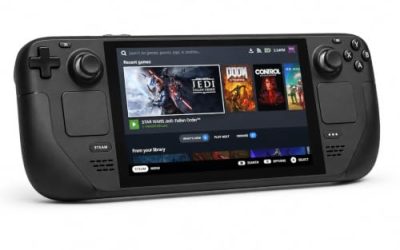
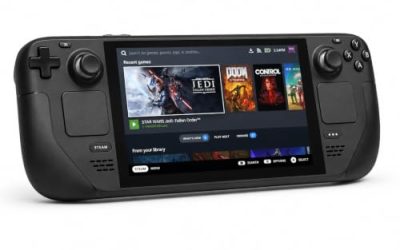
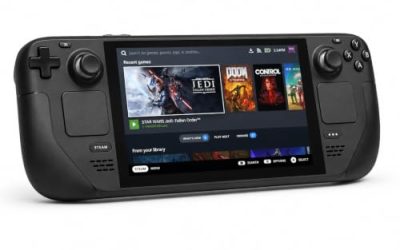
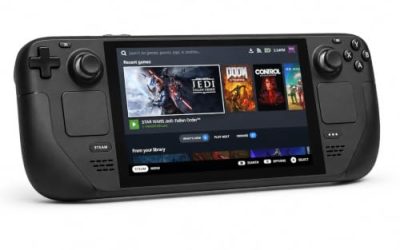
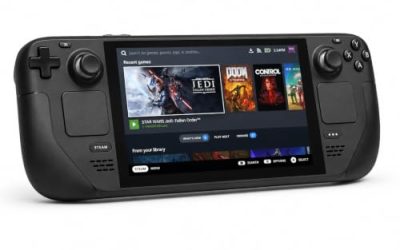
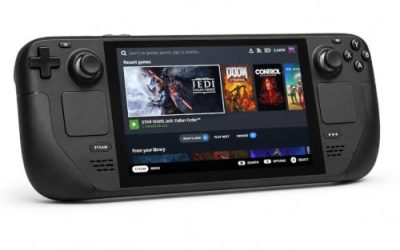
Valve Steam Deck OLED 512GB

The handheld the Verified badge was written for. Valve’s sheet passes the game on every check with a Proton 10 beta runtime, and the Windows requirements sit far below what the Deck’s APU delivers.
Specs
- Display: 7.4-inch HDR OLED, 1280 by 800, up to 90 Hz
- Processor: AMD Zen 2 and RDNA 2 custom APU
- Memory: 16 GB LPDDR5
- Storage: 512 GB NVMe, plus a microSD slot
- Wireless: Wi-Fi 6E and Bluetooth
- Channel note: Valve sells the Deck mainly through its own store, so Amazon listings are third-party sellers
8BitDo Ultimate 2 Bluetooth Controller
The docked and desktop pad pick. Steam lists full controller support, and this pad covers the couch case with modern sticks and triggers plus back buttons for menu shortcuts.
Specs
- Connectivity: Bluetooth wireless and USB-C wired
- Joysticks: TMR electromagnetic, anti-drift design
- Triggers: Hall effect, with mode switching
- Extras: two remappable back buttons, motion control
- In the box: charging dock included
Xbox Wireless Controller, Carbon Black
The safest guest pad in PC gaming: Steam Input support is universal, the glyphs match what most games display, and it pairs over Bluetooth or its own wireless standard. On the handheld, an external pad may need a manual Quick Access Menu switch before it takes over.
- Connectivity: Xbox Wireless and Bluetooth
- Port: USB-C for wired play
- Controls: hybrid D-pad, dedicated Share button
- Power: AA batteries or optional rechargeable pack
Logitech G502 HERO
Baby Steps is gamepad-first, but desktop players still live in its menus between climbs, and a precise wired mouse makes that layer painless, with eleven programmable buttons for the inputs a session repeats.
Specs
- HERO optical sensor, up to 25,600 DPI
- 11 programmable buttons
- Adjustable weight system
- Wired USB connection
- On-board memory profiles
Samsung T9 Portable SSD 2TB
For moving a Linux game library between machines or backing up installers, a fast USB-C drive is the simple answer. The headline figure needs a Gen 2×2 host port; on a lesser port the drive runs at that ceiling.
Specs
- Capacity: 2 TB portable SSD
- Interface: USB 3.2 Gen 2×2, USB-C connector
- Maker-rated speeds: up to 2,000 MB per second read, 1,950 MB per second write
- Features: Dynamic Thermal Guard, maker-rated drop resistance
How to choose
Choose the Steam copy if you want the edition both compatibility records describe: the build Valve tested and the build the ProtonDB file grades. On desktop or laptop, install under Proton and start with the stock build the filings use — most reports describe out-of-the-box runs with no tinker steps. On Steam Deck, install and launch; the Verified badge promises a working default configuration, and the one manual step in the picture is switching an external pad over through the Quick Access Menu if you dock. Choose the GOG copy only if a DRM-free installer matters more than the tested record — it is the same Windows build, with no separate Linux testing behind it. For input, follow the record: full controller support, gamepad recommended.
Who should skip
Skip this one if you are shopping for a native Linux release: there is none, and the empty Linux tab is an unfilled template, not a promise. Skip it if you need a settled, summary-grade ProtonDB verdict rather than a headline — the file is 14 reports deep and its summary did not read this session. Skip the Deck plan if a badge earned by a pre-release build is not assurance enough and you would rather wait for a retest of shipping code. And skip it entirely if physics-driven movement built around repeated falling is not your idea of an evening.
FAQ
Is Baby Steps native on Linux?
No. Steam flags the game Windows only, the Linux requirements field is an empty shell, both depots are Windows 64-bit builds, and the single launch entry is a Windows executable. No storefront sells a Linux build.
How well does Baby Steps run under Proton?
ProtonDB headlines the game Platinum across 14 reports, and the filings beneath it mostly describe out-of-the-box runs on stock Proton 10.0-3. The summary-level breakdown did not read this session, so treat the headline as a headline: encouraging, moderate in depth, strongest on discrete-graphics desktops.
Is Baby Steps Verified on Steam Deck?
Yes. Valve’s sheet passes all four checks and rates SteamOS Compatible separately. The caveat is the date: the test ran on 5 September 2025 against a pre-release build, while the current build is 21168055 from December 2025, so the badge grades superseded paperwork.
Can I buy a DRM-free or Linux copy on GOG?
A DRM-free copy, yes; a Linux copy, no. GOG’s product record (product 1103818610) reads Windows true, Mac false, Linux false — the same Windows build Steam sells.
Final verdict
Baby Steps is a Windows game by every layer of its own record: one platform flag, an empty-shell Linux tab, two Windows depots, one Windows launch entry, no Linux icon. What makes it an easy recommendation anyway is the Proton route — a Platinum headline over a moderate file of mostly out-of-the-box reports, and a Verified badge whose only weakness is that Valve earned it on pre-release code. Buy the Steam copy, play it on a pad, and let the record, not the stray heading, set expectations.
Product and ASIN Reference
| Product | ASIN |
|---|---|
| Valve Steam Deck OLED 512GB | B0CQ3RWQQZ |
| 8BitDo Ultimate 2 Bluetooth Controller | B0F194QFT2 |
| Xbox Wireless Controller, Carbon Black | B08DF248LD |
| Logitech G502 HERO | B07GBZ4Q68 |
| Samsung T9 Portable SSD 2TB | B0CHFS9K14 |