Point-and-click adventures live or die on atmosphere, and The Drifter — a pulp thriller from Powerhoof and Dave Lloyd, released on July 17, 2025 — earned its audience with a voiced lead, a murder-mystery hook and gritty pixel art. For Linux players the first question is never the story, though: it is whether the store page’s Linux flag describes a real build or just paperwork, because plenty of listings carry the flag while shipping nothing a Linux machine can run.
This one ships the real thing. Steam’s record for app 1170570 flags Windows, Mac and Linux all true, and every delivery layer underneath agrees: a dedicated Linux depot, a Linux launch entry with its own executable, a written-out Linux requirements list and a registered Linux client icon. Valve’s Steam Deck testing even graded the native build rather than a Proton run.
As an Amazon Associate, we earn from qualifying purchases.
Quick answer
Yes — The Drifter is genuinely native on Linux. Steam’s record carries a real Linux depot of about 1.20 GiB in the sold package, a Linux launch entry running TheDrifter.x64, populated Linux minimum requirements and a registered Linux client icon. Valve rates it Steam Deck Verified, tested on the native runtime, and GOG sells an edition with Linux support as well. No compatibility layer is required to play it.
The delivery layers, one by one
A flag on its own proves little, so the ruling rests on what the package delivers. The depot census is decisive: three platform depots of the same weight class — Windows at roughly 1.16 GiB, macOS at roughly 1.18 GiB and Linux at roughly 1.20 GiB. The Linux depot is the largest of the three, the opposite of the stub shape seen where a Linux entry sits as an empty shell beside a full Windows build.
The launch configuration matches the census: three entries, one per platform — TheDrifter.exe for Windows, TheDrifter.app for macOS and TheDrifter.x64, scoped to Linux and 64-bit. The paperwork agrees: the platform list reads windows, macos, linux, the architecture field reads 64, and a Linux client icon is registered in the icon set — the small entry that only exists when a Linux build is wired into the package. The extended platform string names the 64-bit Mac variant, covering the Mac leg.
One honest gap deserves naming: the Linux requirements are fully written out at the minimum tier — Ubuntu 20.04, Ubuntu 18.04 and CentOS 7, an x64 processor with SSE2 support, 4 GB of memory, OpenGL 3.2 or Vulkan-capable graphics, 4 GB of storage — but the recommended tier underneath is an empty list. The Mac recommended tier is equally blank, so this is a developer who filled in one tier and stopped, not a Linux-specific omission, and it does not outweigh a populated minimum backed by a real depot.
The family sweep: one album, no trap
The base record’s add-on array holds exactly one entry, read on its own record: The Drifter Original Soundtrack, app 3857280, a music product flagging all three platforms true, its full-game pointer naming app 1170570. The family Linux-flag count is 2 of 2.
That shape needs care, because in other families an all-true soundtrack flag beside a Windows-only game is a known trap: the album’s flags describe audio-file delivery, not a game build, and counting them would invent support the game never had. No correction is needed here — the base game proves its own Linux support on its own layers, so the album’s flags are consistent paperwork, and the ruling above borrows nothing from the soundtrack.
The Steam Deck sheet: Verified on the native runtime
Valve’s compatibility block sits on the game’s own record and resolves to category 3 — Steam Deck Verified. All four graded checks pass: the default controller configuration is fully functional, the glyphs match the Deck, the interface text is legible with no small-text deduction, and the default configuration is performant. SteamOS compatibility is separately marked Compatible. One note rides along: external controllers do not take over as the primary player’s pad by default.
The detail that matters most for a Linux reader is the runtime line: the test configuration names the recommended runtime as native, meaning the badge was earned by the Linux build itself, not the Windows build under Proton. The record backs the pad-first framing independently — its controller-support field reads full, with DualShock and DualSense support and a mouse-only option in its categories.
The paperwork has one limit. Valve tested on July 23, 2025 against build 19282104, a launch-window build from the game’s first week; the current public build is 22758595, so the badge grades earlier code than the one sold today — a supplement candidate in the standing sense. Nothing suggests the native build was withdrawn since: the Linux depot’s current manifest remains the largest of the three.
The ProtonDB file
ProtonDB’s summary was read in full: settled Platinum, best-reported Platinum, trending Platinum, across 16 reports at moderate confidence — a healthy file for a niche adventure title. With a native build in the package, many filings are native runs rather than Proton runs at all.
The filing colour is mostly clean: Deck owners file the native build as running with no changes required, and desktop Ubuntu filings describe the native version working. One filing cuts the other way — a player on an Arch-based system reported random crashes when clicking with the mouse in the native build, and found the Windows build stable instead through Proton Experimental. One report does not overturn a depot-level ruling, but forcing Proton is a documented fallback if the native build misbehaves on a rolling-release system.
ProtonDB’s own game page classifies The Drifter as Native and carries its “Natively Supports” heading — usually a stray generated from an empty-shell requirements field on a Windows-only record, but here simply correct, agreeing with Steam’s record in every particular.
The storefront ruling
Steam is not the only shelf. GOG’s catalogue record for The Drifter, product 1629486561, was read directly: its system-compatibility fields read Windows true, Mac true and Linux true, and the natural product address resolves to a live page for the same title and release date. A bundle pairing the game with its soundtrack carries the same support. The DRM-free edition is a genuine second route to the native build.
On the anti-cheat and account layers there is nothing to report, stated plainly rather than dressed up as a finding. The record carries no DRM notice and no account notice, and the AreWeAntiCheatYet database — read in full at 1,167 entries, matched by store ID and by name — holds no entry for this game, as expected for a single-player adventure.
Gear that fits the record
The picks below follow the record’s shape: the handheld whose native-runtime test this game passed, two pads for docked and desktop play, a mouse for desk play, and fast storage for a moving library.
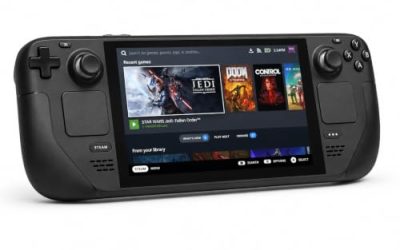
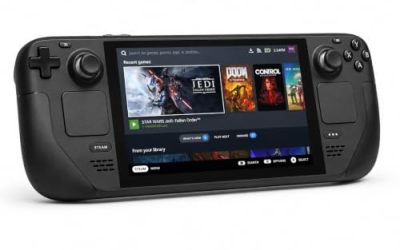
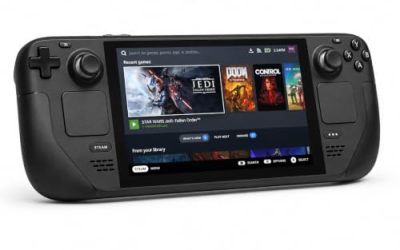
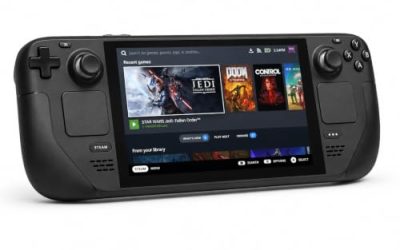
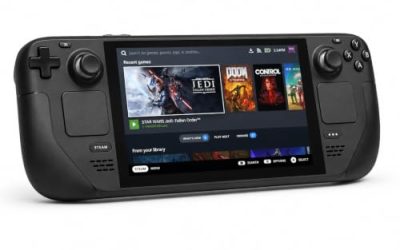
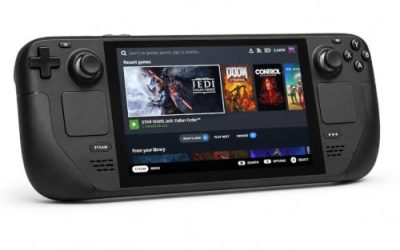
Valve Steam Deck OLED 512GB

The handheld the Verified badge was written for — and here Valve graded the native Linux build, so the Deck runs the same code a Linux desktop installs. The 4 GB footprint sits far inside the hardware.
Specs
- Display: 7.4-inch HDR OLED, 1280 by 800, up to 90 Hz
- Processor: AMD Zen 2 and RDNA 2 custom APU
- Memory: 16 GB LPDDR5
- Storage: 512 GB NVMe, plus a microSD slot
- Wireless: Wi-Fi 6E and Bluetooth
- Channel note: Valve sells the Deck mainly through its own store, so Amazon listings are third-party sellers
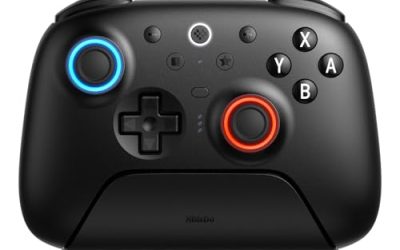
8BitDo Ultimate 2 Bluetooth Controller
The docked and desktop pad pick. The record lists full controller support, so a pad is a first-class way to play from the couch.
Specs
- Connectivity: Bluetooth wireless and USB-C wired
- Joysticks: TMR electromagnetic, anti-drift design
- Triggers: Hall effect, with mode switching
- Extras: two remappable back buttons, motion control
- In the box: charging dock included
Xbox Wireless Controller, Carbon Black
The safest guest pad in PC gaming: Steam Input support is universal, the glyphs match what most games display, and it pairs over Bluetooth or its own wireless standard. On the handheld, the sheet’s note applies: an external pad may need a manual Quick Access Menu switch before it takes over.
- Connectivity: Xbox Wireless and Bluetooth
- Port: USB-C for wired play
- Controls: hybrid D-pad, dedicated Share button
- Power: AA batteries or optional rechargeable pack
Logitech G502 HERO
The Drifter is a point-and-click first, and at a desk a precise wired mouse is the natural instrument for hotspot hunting and inventory work. Eleven programmable buttons cover the inputs a long session repeats.
Specs
- HERO optical sensor, up to 25,600 DPI
- 11 programmable buttons
- Adjustable weight system
- Wired USB connection
- On-board memory profiles
Samsung T9 Portable SSD 2TB
For moving a Linux game library between machines, or keeping an offline backup of installers, a fast USB-C drive is the simple answer; the headline figure needs a Gen 2×2 host port.
Specs
- Capacity: 2 TB portable SSD
- Interface: USB 3.2 Gen 2×2, USB-C connector
- Maker-rated speeds: up to 2,000 MB per second read, 1,950 MB per second write
- Features: Dynamic Thermal Guard, maker-rated drop resistance
How to choose
Start with the storefront. On Steam the native build installs by default with no compatibility tool at all; on GOG the same support is sold as a DRM-free edition. Either route carries the one documented wobble, which is distribution-specific: if a rolling-release desktop hits the mouse-click crashes one filer reported, forcing Proton Experimental on the Steam copy is the recorded workaround, and ProtonDB’s Platinum file says the Windows build behaves there.
For hardware, match the input to the genre. Full controller support makes Deck and docked pad play legitimate first choices, backed by Valve’s native-runtime Verified grade; at a desk, the mouse remains the precision tool the genre was designed around. Storage is a non-issue here — the install is about 4 GB.
Who should skip
Skip the native-first framing if your system is the exception in the file: players on rolling-release distributions who hit instability in native builds may end up on the Proton route anyway — the fallback exists and is well-rated, but the native build is not universal. Skip the Deck pitch if a dialogue-heavy, hotspot-driven adventure on a small screen with a pad sounds wrong; mouse play is fully supported. And skip the title if a voiced, slow-burn murder mystery is not your genre — Linux status cannot change what the game is.
FAQ
Is The Drifter native on Linux?
Yes. Steam’s record flags Linux true and the delivery layers confirm it: a Linux depot of about 1.20 GiB in the sold package, a Linux launch entry running TheDrifter.x64, populated Linux minimum requirements and a registered Linux client icon.
Is The Drifter Steam Deck Verified?
Yes, with all four checks passing — and the test configuration’s recommended runtime is native, meaning the badge grades the Linux build itself. The test dates from July 23, 2025 against a launch-window build, predating the current public build.
Does the soundtrack’s Linux flag mean anything here?
No correction is needed. The Original Soundtrack flags all three platforms true and the family count is 2 of 2, but the base game proves its own Linux support on its own depots and launch entry, so the album’s flags are consistent paperwork, not borrowed evidence.
Can I buy The Drifter on GOG for Linux?
Yes. GOG’s product record reads Windows, Mac and Linux all true, so the DRM-free edition carries the same platform support as the Steam copy.
Final verdict
The Drifter is one of the clean cases. Its Linux flag is backed by a full-size Linux depot, a dedicated launch entry, written-out minimum requirements and a registered client icon; Valve graded that native build itself and marked it Verified; ProtonDB’s full summary settles at Platinum on 16 reports at moderate confidence, with one documented native-build wobble and a working Proton fallback behind it; and GOG sells a second edition with Linux included. The two caveats — a blank recommended tier and a Deck test predating the current build — are paperwork-grade.
Product and ASIN Reference
| Product | ASIN |
|---|---|
| Valve Steam Deck OLED 512GB | B0CQ3RWQQZ |
| 8BitDo Ultimate 2 Bluetooth Controller | B0F194QFT2 |
| Xbox Wireless Controller, Carbon Black | B08DF248LD |
| Logitech G502 HERO | B07GBZ4Q68 |
| Samsung T9 Portable SSD 2TB | B0CHFS9K14 |