BOOK OF HOURS, Weather Factory’s 2023 occult-library management game, is one of the rare titles where the hopeful answer is correct. Steam’s record flags the game for Windows, macOS and Linux alike, and for once the flags are the least of the evidence: the build itself is sitting in the delivery data, sized, packaged and still being updated alongside the other two platforms.
That matters because this cluster has seen every flavour of false positive, from populated requirement tabs attached to no build at all to Linux flags that live only on a soundtrack app. So this piece reads the requirements tabs, the depot census, the package the money actually buys, the add-on family, Valve’s Deck test sheet, the ProtonDB file and the GOG product record, and checks that they all tell the same story.
As an Amazon Associate, we earn from qualifying purchases.
Quick answer
Yes. BOOK OF HOURS ships a genuine native Linux build: Steam’s record flags all three platforms, the sold package contains a dedicated Linux depot, the Linux requirements are published in full, and GOG sells a Linux installer too. Valve rates it Verified on Steam Deck with a native runtime, and ProtonDB classifies it Native with a Platinum headline.
The verdict at a glance
| Layer | What the record shows |
|---|---|
| Platform flags | Windows, macOS and Linux all true |
| Linux requirements | Populated, minimum tier, with named distros |
| Linux depot | Depot 1028313, 2.53 GiB, inside the sold package |
| Deck verdict | Verified, recommended runtime native |
| ProtonDB | Native classification, Platinum headline |
| GOG | Sold there too, with a Linux installer |
Four layers of delivery evidence
The flags are where most checks stop, and they are unambiguous: app 1028310 lists windows, mac and linux all true. The first real test is the requirements tabs. The Linux tab is populated with a genuine minimum specification, not a heading over an empty list: Ubuntu 22.04 and 24.04 are named as the standard Unity Player targets, the developers note they test on Mint Cinnamon, and the hardware floor is a 2 GHz x64 processor with SSE2, 1 GB of RAM, 4 GB of VRAM with OpenGL 3.2 at 1600 by 1024, and 5 GB of storage. The macOS tab is populated too, naming macOS 12 or later. No platform carries a recommended tier; the minimum is the whole published spec.
The second test is the depot census, and it is decisive. The record carries three content depots, one per platform: 1028311 for Windows at 2.52 GiB, 1028312 for macOS at 2.55 GiB and 1028313 for Linux at 2.53 GiB. The Linux depot is not a stub or a leftover: at 2.53 GiB it is marginally larger than the Windows depot, and the package a purchase actually delivers, package 341811, lists all three depots as its contents. The Linux depot’s manifest was updated on the same day as its Windows and macOS siblings, the maintenance pattern of a build still being shipped. A dedicated LinuxClientIcon is registered as well.
The third test is the add-on family, where this cluster usually finds the trap. Both store-listed add-ons were read individually. The HOUSE OF LIGHT expansion, app 2834350, flags all three platforms and its inner depots include a Linux depot of its own. The Original Soundtrack, app 2340780, also flags all three platforms true. In a Windows-only family that soundtrack flag would be the classic all-true trap; here it is simply consistent, because the base game genuinely ships that build. The depot census also shows a third content app, the Perpetual Edition Aspect, whose inner depots likewise come in all three configurations at identical sizes.
The fourth layer is Valve’s own test configuration, covered below: the recommended runtime on the record is native, a value Steam does not set for a game it expects to launch through Proton.
The community file, read honestly
ProtonDB’s summary record for the game reads Platinum on the settled tier, Platinum on the best-reported tier and Platinum on the trending tier, across 22 reports with moderate confidence. Its game page classifies the title as Native, and its “Natively Supports:” heading was checked directly for this piece: it agrees with Steam’s record. For once that heading is telling the truth, worth stating plainly in a cluster where it is wrong on page after page.
The filings underneath the headline are mostly native reports describing an out-of-the-box run, and the colour should be reported whole. A minority of filings describe rough edges on the native build: audio that fails to play on some systems until the reporter forced the Windows build through Proton, an occasional crash, and clipboard-related instability one reporter learned to avoid. None of that changes the classification, but a reader choosing between the native build and a forced Proton run deserves to know the fallback exists.
The Steam Deck sheet
Valve rates BOOK OF HOURS Verified on Steam Deck, its top category, with all four checks passing: the default controller configuration is fully functional, the game shows Steam Deck controller icons, interface text is legible, and the default graphics configuration performs well. SteamOS is separately rated Compatible, with game startup confirmed functional. The sheet’s configuration block lists the recommended runtime as native and the supported input as gamepad, so the Deck’s own controls carry the pointer work in this mouse-driven game.
One currency caveat belongs on the record. The test behind the badge ran in February 2025 against build 17452375, while the current public branch has moved on to a newer build, so the verdict is real but predates the current branch. One ProtonDB Deck filing also found some in-game text hard to read at the handheld’s size despite the legibility pass; the game’s adjustable text size setting is the fix.
The GOG ruling
GOG sells BOOK OF HOURS as well, and the ruling there rests on GOG’s own product record, not on search results. The product record lists content system compatibility as windows true, osx true and linux true, with a dedicated Linux installer at the same version as the Windows and macOS installers. The HOUSE OF LIGHT expansion carries the same three-platform compatibility on its own GOG record. So the DRM-free edition is no Windows-only consolation prize: GOG buyers get the same native Linux build at the same version.
Gear that fits the record
The gear follows the record’s shape: the handheld itself, two pads for docked and couch sessions, a precise mouse for the desk, and fast storage for a travelling library.
Valve Steam Deck OLED 512GB

The handheld the Verified badge was written for, and the rare case where the badge certifies the native build rather than a Proton run. The game’s published minimums are far below the Deck’s hardware, so the hardware will never be the limit in a session.
Specs
- Display: 7.4-inch HDR OLED, 1280 by 800, up to 90 Hz
- Processor: AMD Zen 2 and RDNA 2 custom APU
- Memory: 16 GB LPDDR5
- Storage: 512 GB NVMe, plus a microSD slot
- Wireless: Wi-Fi 6E and Bluetooth
- Channel note: Valve sells the Deck mainly through its own store, so Amazon listings are third-party sellers
8BitDo Ultimate 2 Bluetooth Controller
A docked-Deck and desktop pad for players who prefer a controller in hand, with modern sticks, triggers and back buttons that suit menu shortcuts. The game’s record makes no controller-support claim, so treat any pad here as a Steam Input device.
Specs
- Connectivity: Bluetooth wireless and USB-C wired
- Joysticks: TMR electromagnetic, anti-drift design
- Triggers: Hall effect, with mode switching
- Extras: two remappable back buttons, motion control
- In the box: charging dock included
Xbox Wireless Controller, Carbon Black
The default second pad: it pairs over Bluetooth or its own wireless standard, and on the Deck it covers the couch case when the handheld is docked. As with the pad above, support flows through Steam Input, not through any promise on the game’s record.
- Connectivity: Xbox Wireless and Bluetooth
- Port: USB-C for wired play
- Controls: hybrid D-pad, dedicated Share button
- Power: AA batteries or optional rechargeable pack
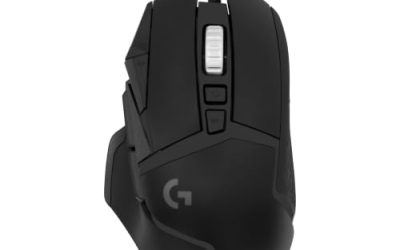
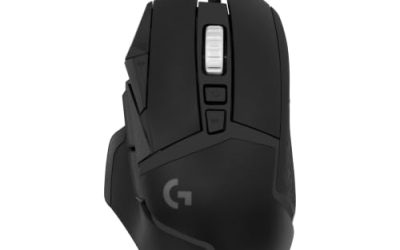
Logitech G502 HERO
The natural input for this game at a desk: a game of dragging cards, books and visitors around a library table assumes a precise wired mouse, with programmable buttons for the repeated confirm and collect actions.
Specs
- HERO optical sensor, up to 25,600 DPI
- 11 programmable buttons
- Adjustable weight system
- Wired USB connection
- On-board memory profiles
Samsung T9 Portable SSD 2TB
For keeping a Linux library, or the GOG offline installers, on one fast drive that moves between machines. The headline figure needs a Gen 2×2 host port; on a lesser port the drive runs at that ceiling.
Specs
- Capacity: 2 TB portable SSD
- Interface: USB 3.2 Gen 2×2, USB-C connector
- Maker-rated speeds: up to 2,000 MB per second read, 1,950 MB per second write
- Features: Dynamic Thermal Guard, maker-rated drop resistance
How to choose
Choose either storefront, because both sell the native build: Steam if the library and the Deck badge matter, GOG if DRM-free offline installers matter. On a Linux desktop or laptop, install and launch; no compatibility tool is part of the default path, and the published requirements name Ubuntu 22.04 and 24.04 as the target ground. Keep Proton in reserve as a preference, not a necessity: a minority of community filings run the Windows build that way to sidestep native audio quirks. On Steam Deck, the Verified badge means the default configuration is the expected one, with the text size setting worth raising for long sessions. Plan on a mouse at a desk and Steam Input pads only where a couch setup demands one.
Who should skip
Skip the native-first plan if your system falls outside the published shape: the Linux spec assumes an x64 processor with SSE2 and a card with 4 GB of VRAM and OpenGL 3.2, and the developers only name Ubuntu and Mint as their tested ground. Skip it if you require a recommended-tier specification before buying, because the record publishes a minimum tier only. Skip it if small handheld text is a deal-breaker. And skip it entirely if a slow, text-heavy game about cataloguing an occult library holds no appeal, because no platform verdict changes what the game is.
FAQ
Is BOOK OF HOURS native on Linux?
Yes. Steam’s record flags Linux true, the Linux requirements tab is populated with named distros, the sold package contains a Linux depot of 2.53 GiB, and a LinuxClientIcon is registered. ProtonDB classifies the game as Native, and its heading agrees.
Is BOOK OF HOURS Steam Deck Verified?
Yes, with all four checks passing and a native recommended runtime. The test ran in February 2025 against an earlier build than the current branch, so the badge is genuine but grades a superseded build.
Can I buy BOOK OF HOURS on GOG with Linux support?
Yes. GOG’s own product record lists Linux in its content system compatibility and offers a dedicated Linux installer at the same version as the Windows and macOS installers. The HOUSE OF LIGHT expansion carries the same three-platform compatibility there.
Does BOOK OF HOURS need Proton on Linux?
No. The native build is the default path on both storefronts. Some filings force the Windows build through Proton to work around native audio quirks, but that is a preference in the file, not a requirement in the record.
Final verdict
BOOK OF HOURS is native on Linux in every way that can be checked: the flags, the published requirements, a full-size Linux depot in the sold package, a registered Linux client icon, a native recommended runtime on Valve’s test sheet, a Native classification with a Platinum headline on ProtonDB, and a Linux installer on GOG at version parity. The honest caveats are small ones: the Deck badge grades a build from February 2025 rather than the current branch, and a minority of filings report native audio quirks that a forced Proton run avoids. Buy it on Steam or GOG, install it, and play the build that is actually there.
Product and ASIN Reference
| Product | ASIN |
|---|---|
| Valve Steam Deck OLED 512GB | B0CQ3RWQQZ |
| 8BitDo Ultimate 2 Bluetooth Controller | B0F194QFT2 |
| Xbox Wireless Controller, Carbon Black | B08DF248LD |
| Logitech G502 HERO | B07GBZ4Q68 |
| Samsung T9 Portable SSD 2TB | B0CHFS9K14 |