Kunitsu-Gami: Path of the Goddess is CAPCOM’s Kagura action strategy game: by day you purge defilement from the villages of Mt. Kafuku and assign roles to rescued villagers, and by night you defend the maiden Yoshiro against waves of the Seethe. It is a single-player game built on the RE Engine, and its unusual day-and-night structure makes it a natural question for Linux players: did CAPCOM ship a native build, or is Proton the only door in?
The short answer is that there is no native Linux version, and nothing in the record is ambiguous about it. What follows reads that record layer by layer: the platform flags, the requirements tabs, the depot census, the one downloadable extra that does carry a Linux flag, the ProtonDB file, Valve’s Deck sheet, and the GOG catalogue.
As an Amazon Associate, we earn from qualifying purchases.
Quick answer
No native Linux build exists. CAPCOM’s Steam record flags Kunitsu-Gami: Path of the Goddess for Windows only, ships two Windows depots, and leaves the Linux requirements tab an empty shell. The Windows build runs under Proton instead: ProtonDB settles it at Platinum across 17 reports, and Valve rates it Steam Deck Verified.
What CAPCOM’s Steam record actually ships
The platform flags on the store record read windows true, mac false, linux false. That is the first layer, and every deeper layer agrees with it.
The requirements tabs tell the same story. The Windows tab is genuinely populated at both tiers: Windows 10 or 11 in 64-bit, a Core i5-7500 or Ryzen 3 1200 at minimum, a GeForce GTX 1050 Ti or Radeon RX 560, DirectX 12, and 16 GB of storage. The Mac and Linux tabs, by contrast, are empty shells: each carries a Minimum heading and a Recommended heading over completely empty lists. A shell like that is formatting, not a port.
The depot census is decisive. The sold package delivers exactly two content depots: a main depot of 22.08 GiB and a second depot of 352.90 MiB, and SteamDB’s size total filtered to Windows matches the unfiltered total, which means both depots are the Windows build and its data. There is no Linux depot, no Mac depot, and no shared depot in any form. The registered store assets are the ordinary clienticon, clienttga and icon set; there is no LinuxClientIcon, not even a leftover one. The record names no third-party account requirement and carries no DRM notice. It does list full controller support, a point the gear section below returns to.
The one Linux flag in the family belongs to the soundtrack
Anyone filtering the store by platform can trip over this game’s family, because exactly one related record flags Linux, and it is not the game. The base record’s downloadable content list contains a single entry: the Kunitsu-Gami: Path of the Goddess Original Soundtrack, a music app released in October 2024, and it flags windows, mac and linux all true beside the linux-false base game. A soundtrack is audio files; its flags say nothing about a playable build, and this is the classic form of the trap, an all-true music app sitting next to a Windows-only game.
The rest of the family agrees with the base. SteamDB’s depot table shows three further small content depots tied to the game, an artbook and two Mazo Talisman items, all of them Windows content in the same package structure; none of those apps exposes a separate readable store record, and none carries a Linux build. So the family’s Linux-flag count is one of one in the store list, and it belongs to the music.
Proton is the route, and the file is strong
ProtonDB’s summary for this app is fully readable and unusually settled. The settled tier is Platinum, the best-reported tier is Platinum, the trending tier is Gold, and the file rests on 17 reports with a good confidence rating. One correction is needed before anyone quotes the game’s ProtonDB page itself: the page renders a “Natively Supports” heading, and that heading is wrong. Steam’s record contradicts it on every layer checked above, so this article follows Steam and treats the heading as the stray label it has proven to be on many other titles.
The filings underneath the medal are mostly calm. Players describe full playthroughs, into New Game Plus, running smoothly on the default Proton 9.0 generation with no tinkering, and the Deck filings are positive while warning that the game eats through battery and benefits from a frame-rate cap around 45 to 50. Three rough edges recur. Pre-rendered cutscenes can play at half speed with desynced audio above Full HD; setting the in-game video resolution to Full HD is the documented fix, and at 1080p the problem does not appear. Ray tracing was not detected by the game on at least one Mesa system. And one desktop filing on an Intel Arc card describes repeated restarts during troubleshooting ending in a Denuvo activation lockout; Steam’s own record carries no DRM notice, so that lockout stands as a single filing’s account rather than something the store page discloses.
The Steam Deck sheet: Verified, on an older build
Valve’s compatibility sheet rates the game Verified, with SteamOS separately marked Compatible. All four checks pass: the default controller configuration is fully functional, the game shows Steam Deck controller icons, interface text is legible, and the default graphics configuration performs well. The configuration block names gamepad as the supported input, and the recommended runtime is proton-experimental. Two notes ride along: first-time setup requires an active internet connection, and the game does not default to external Bluetooth or USB controllers, so a docked pad may need a manual switch through the Quick Access Menu before it takes over.
One currency caveat matters. The test behind the badge ran on 3 August 2024 against build 14494285, while the current public build is 19024694, published in the summer of 2025. The Verified verdict therefore grades a superseded build, not the one on sale today. Nothing in the ProtonDB file suggests the newer build broke anything, and recent filings remain positive, but the paperwork itself predates the current branch and readers should know that.
The storefront ruling
There is no GOG edition to fall back on. The natural product address on GOG redirects to the general catalogue, GOG’s product API search returns nothing for the title, and the store’s filtered search finds no match. Kunitsu-Gami is, on current evidence, a Steam-only PC release, which makes the Proton route above the whole story for Linux players.
Gear that fits this record
The game’s own record lists full controller support, with DualShock and DualSense support named in its store categories, and Steam’s categories also call a gamepad recommended. The five picks below are framed around that record and around the Verified Deck sheet.
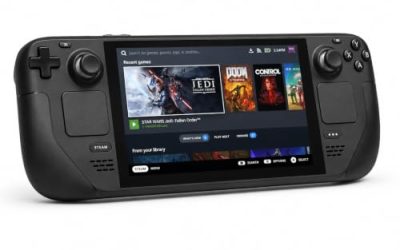
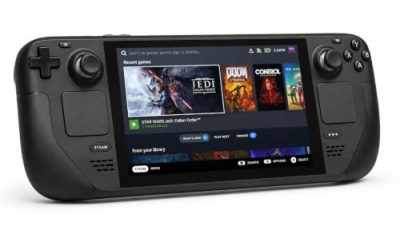
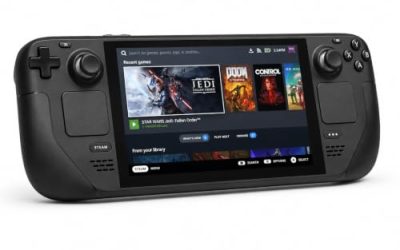
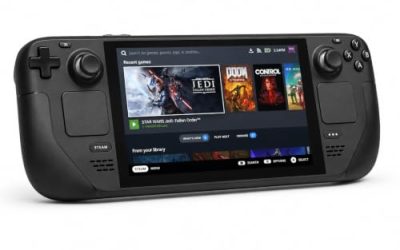
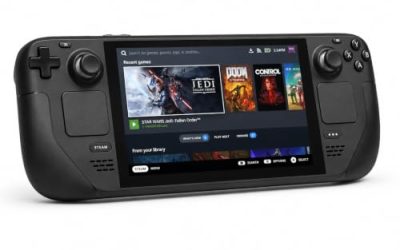
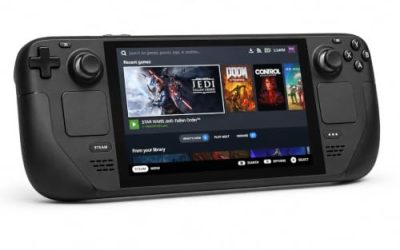
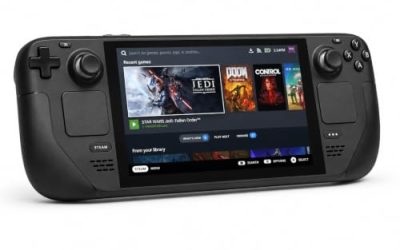
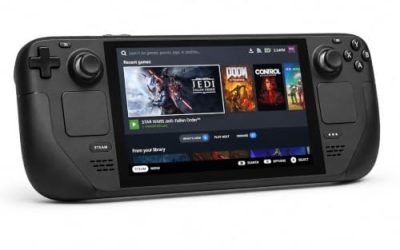
Valve Steam Deck OLED 512GB

The handheld the Verified badge was written for. Valve’s test sheet gives the Windows build a clean pass on all four checks with proton-experimental as the recommended runtime, and the game’s published requirements sit comfortably inside what the Deck’s APU delivers.
Specs
- Display: 7.4-inch HDR OLED, 1280 by 800, up to 90 Hz
- Processor: AMD Zen 2 and RDNA 2 custom APU
- Memory: 16 GB LPDDR5
- Storage: 512 GB NVMe, plus a microSD slot
- Wireless: Wi-Fi 6E and Bluetooth
- Channel note: Valve sells the Deck mainly through its own store, so Amazon listings are third-party sellers
8BitDo Ultimate 2 Bluetooth Controller
The docked and desktop pad pick. Steam lists full controller support for the game, and this pad covers the couch case with modern sticks and triggers plus back buttons for menu shortcuts.
Specs
- Connectivity: Bluetooth wireless and USB-C wired
- Joysticks: TMR electromagnetic, anti-drift design
- Triggers: Hall effect, with mode switching
- Extras: two remappable back buttons, motion control
- In the box: charging dock included
Xbox Wireless Controller, Carbon Black
The safest guest pad in PC gaming: Steam Input support is universal, the glyphs match what most games display, and it pairs over Bluetooth or its own wireless standard. On the handheld, the test sheet’s note applies: an external pad may need a manual Quick Access Menu switch before it takes over.
- Connectivity: Xbox Wireless and Bluetooth
- Port: USB-C for wired play
- Controls: hybrid D-pad, dedicated Share button
- Power: AA batteries or optional rechargeable pack
Logitech G502 HERO
The daytime half of this game is village management and role assignment, and at a desk a precise wired mouse turns those menus into single clicks. Eleven programmable buttons cover the confirm, cancel and camera inputs a long session repeats.
Specs
- HERO optical sensor, up to 25,600 DPI
- 11 programmable buttons
- Adjustable weight system
- Wired USB connection
- On-board memory profiles
Samsung T9 Portable SSD 2TB
For moving a Linux game library between a desktop and a laptop, or keeping an offline backup of installers, a fast USB-C drive is the simple answer. The headline figure needs a Gen 2×2 host port; on a lesser port the drive runs at that ceiling instead.
Specs
- Capacity: 2 TB portable SSD
- Interface: USB 3.2 Gen 2×2, USB-C connector
- Maker-rated speeds: up to 2,000 MB per second read, 1,950 MB per second write
- Features: Dynamic Thermal Guard, maker-rated drop resistance
How to choose
Start from the route, not the hardware. On a Linux desktop, the default Proton build is the configuration most filings describe succeeding with, and Proton Experimental is the runtime Valve’s own Deck sheet recommends. Keep the video resolution at Full HD if pre-rendered cutscenes stutter or desync above it. Any of the pads above works with the game’s full controller support; on the handheld itself, budget battery for long night phases and consider the frame-rate cap the filings suggest. Storage is a non-issue: the install is a little over 22 GiB.
Who should skip
Skip this one if you only buy games with native Linux builds on principle: there is none here, and the soundtrack’s platform flags do not change that. Skip it if ray tracing is a feature you specifically want, since the game failed to detect it on at least one Mesa setup. And if you are sensitive to activation friction, weigh the single filing describing an activation lockout during heavy troubleshooting, even though the store record itself names no DRM.
FAQ
Is Kunitsu-Gami: Path of the Goddess native on Linux?
No. Steam’s record flags the game for Windows only, the Linux requirements tab is an empty shell, and the sold package contains two Windows depots and no Linux build. The only Linux flag in the family sits on the separate soundtrack app.
How well does Kunitsu-Gami run under Proton?
ProtonDB settles the game at Platinum, with Platinum as the best-reported tier and Gold trending, across 17 reports at good confidence. Most filings describe complete playthroughs on default Proton; the recurring fix is setting the video resolution to Full HD if cutscenes desync above 1080p.
Is Kunitsu-Gami Steam Deck Verified?
Yes. Valve rates it Verified with all four checks passing and SteamOS marked Compatible. The test was run in August 2024 against an older build than the one currently on sale, and the sheet recommends proton-experimental.
Can I buy Kunitsu-Gami on GOG instead?
No. GOG’s catalogue, product API and filtered search all come back empty for this title, and the natural product address redirects to the general catalogue. Steam is the only PC storefront carrying the game.
Final verdict
Kunitsu-Gami: Path of the Goddess is a Windows-only release with no native Linux build hiding anywhere in its record: the flags, the empty-shell tabs, the depot census and the missing Linux icon all say the same thing, and the family’s single Linux flag belongs to a soundtrack. What Linux players get instead is one of the stronger Proton files in this cluster, a settled Platinum across 17 reports, plus a Deck Verified badge whose only weakness is its age. Buy it on Steam, run it through Proton, keep cutscenes at Full HD, and it should behave.
Product and ASIN Reference
| Product | ASIN |
|---|---|
| Valve Steam Deck OLED 512GB | B0CQ3RWQQZ |
| 8BitDo Ultimate 2 Bluetooth Controller | B0F194QFT2 |
| Xbox Wireless Controller, Carbon Black | B08DF248LD |
| Logitech G502 HERO | B07GBZ4Q68 |
| Samsung T9 Portable SSD 2TB | B0CHFS9K14 |