Hero’s Hour is Benjamin “ThingOnItsOwn” Hauer’s fast turn-based strategy RPG with real-time battles, published by Goblinz Publishing and Maple Whispering Limited and released on 1 March 2022. Its demands are tiny and its Heroes-style campaign loop looks tailor-made for a handheld or an old laptop, so Linux players ask about it constantly. The question here is narrower than whether the game is good: what does Steam actually sell you for Linux, and what do the compatibility records say about running it?
The short version is a strange one. There is no native Linux build of Hero’s Hour on sale: Steam’s depot table contains a Linux-named depot holding no content at all, which is why Linux installs attempted without Proton arrive empty. The working route is the Windows build under Proton, where the report file is healthy, and Valve’s Steam Deck sheet carries a Verified badge. Every claim below is read from the game’s own Steam record, its depot table, Valve’s test sheet and the ProtonDB summary.
As an Amazon Associate, we earn from qualifying purchases.
Quick answer
Hero’s Hour has no native Linux build to install: Steam’s record flags Windows only, and its one Linux-named depot is an unused shell with no content, which is why native installs arrive empty. Linux players run the Windows build through Proton instead, where 22 reports settle at Gold, and the Steam Deck badge is Verified.
The zero-byte install, explained
The record flags Windows true, Mac false and Linux false. The Windows requirements tab is genuinely populated at both tiers — a dual-core 2 GHz processor, 512 MB of RAM and 100 MB of storage at minimum, a Core i5 class processor and 2 GB of RAM recommended — while the Mac and Linux requirements fields are empty shells: Minimum and Recommended headings over completely empty lists.
The depot census settles the native question on its own. The sold package contains exactly one content depot for the base game: depot 1656781, configured as Windows content, at 380.55 MiB. There is no Linux or Mac content depot in the package in any form. What the record does contain is a third base-game depot, 1656783, named “Linux Unused”: no size, no downloadable content, in no package a buyer receives — a leftover placeholder, not a build. A depot with no bytes delivers no game, whatever a store filter suggests. Two smaller checks point the same way: no Linux client icon is registered among the store assets, and the extended OS string is an empty string.
Players have been tripping over that empty depot for years. Several ProtonDB filings describe the same experience: the game installs with zero bytes on Linux by default, the native installation was empty, and the fix in every case was to switch the compatibility tool to Proton so the Windows depot downloads instead. Those filings corroborate the depot table exactly: Steam keeps offering the Linux install path because the unused depot exists, and the path leads to an empty folder.
The add-on sweep agrees. Both add-ons were read individually, because add-on records are where stray platform flags hide: the Supporter Pack (app 1783690) flags Windows true, Mac false and Linux false with a Windows-configured depot, and the Rogue Realms expansion (app 2007040) flags the same three values. There is no soundtrack app in this family, so the familiar trap in which a music app flags every platform true beside a Windows-only base game had nothing to attach to. The base record also names no third-party account requirement, and it carries no controller-support field or category at all — a silence that matters for the gear section below, kept separate from Valve’s Deck test configuration, which does name gamepad as its test setup’s supported input.
The Proton file
ProtonDB’s summary for app 1656780 reads in full: settled tier Gold, best-reported tier Platinum, trending tier Gold, across 22 reports, with confidence rated good. One correction belongs alongside it: the game page carries a “Natively Supports” heading above its requirements panel, and on this record that heading is wrong. Steam’s flags, its empty Linux requirements shell and its content-free Linux depot all say the opposite, and the page’s own filings describe empty native installs. The heading is a stray tag the page template attaches, not a reading of the record, and this article follows Steam.
The filing colour matches the Gold headline honestly. The recurring success story is simple: force Proton, and the game installs and plays, with online multiplayer repeatedly rated Excellent. The recurring complaint is input, not performance: two filings on Wayland setups report the keyboard not reaching the game under GE-Proton builds, leaving menus unreachable until the setup changed.
The Steam Deck sheet
Valve’s verdict for Hero’s Hour is Verified. The test sheet, read via SteamDB’s republication of Valve’s data (Valve’s own endpoint returned unusable output this session), shows every check passing: all functionality accessible with the default controller configuration, in-game text legible, and the default graphics configuration performing well. SteamOS is separately rated Compatible, the recommended runtime is proton-stable, and the configuration block lists gamepad as the supported input.
The one caveat is age. Valve’s test ran on 28 April 2022 against build 8329664, weeks after launch; the current public build is 21161460, dated December 2025, after several versioned updates. The badge therefore grades a 2022 build of a game that kept evolving — still the only official Deck verdict on record, but predating the build you would download today.
Multiplayer, anti-cheat and the GOG edition
Hero’s Hour is not single-player-only: its categories list online PvP, online co-op, shared and split screen play, and Remote Play Together. No anti-cheat is named anywhere on the Steam record, and a full read of the AreWeAntiCheatYet database at its repository root holds no entry for this game in either direction — the expected shape for multiplayer running through Steam’s own networking, reported as documentation silence, not a clearance certificate.
GOG does sell Hero’s Hour: its catalogue holds the game under product 1547269859 and the live product page shows it in stock. GOG’s own product record, however, reads Windows true, macOS false and Linux false in its system compatibility block, so the DRM-free edition is the same Windows build with the same limits. (GOG’s embed search returned zero for this title; the ruling rests on the product record, not search.)
Gear that fits the record
The five picks follow from the record: a Verified Deck badge that makes the handheld the natural home, an input story of mouse-and-menus at a desk and Valve’s gamepad test configuration on the handheld, and a build small enough that storage speed beats capacity.
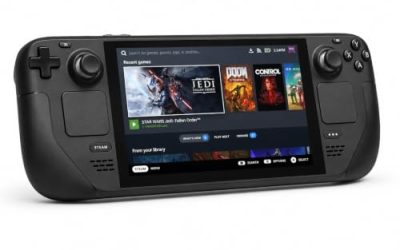
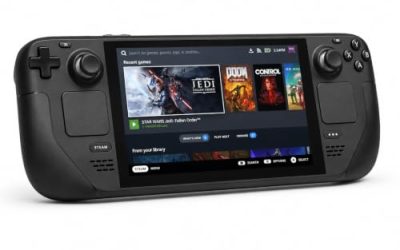
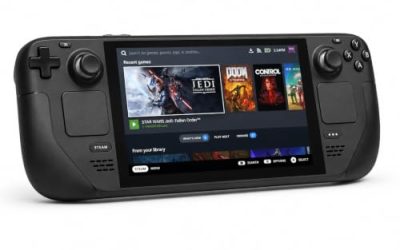
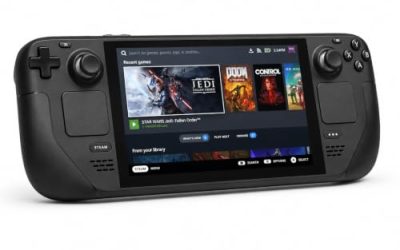
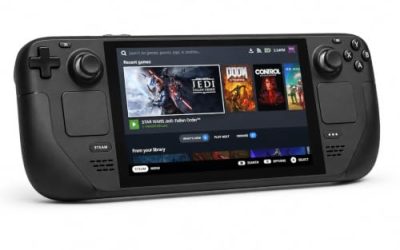
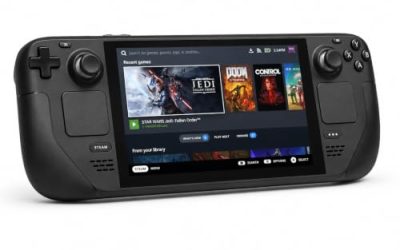
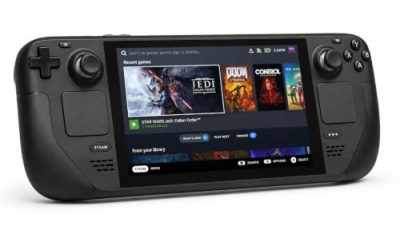
Valve Steam Deck OLED 512GB
The handheld the Verified badge was written for. The game’s requirements are a rounding error next to the Deck’s APU, and Valve’s test sheet gives the Windows build a clean pass under proton-stable.
Specs
- Display: 7.4-inch HDR OLED, 1280 by 800, up to 90 Hz
- Processor: AMD Zen 2 and RDNA 2 custom APU
- Memory: 16 GB LPDDR5
- Storage: 512 GB NVMe, plus a microSD slot
- Wireless: Wi-Fi 6E and Bluetooth
- Channel note: Valve sells the Deck mainly through its own store, so Amazon listings are third-party sellers
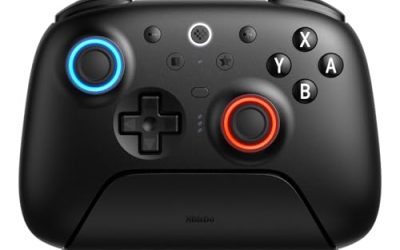
8BitDo Ultimate 2 Bluetooth Controller
The docked pad pick. Valve’s Deck test configuration names gamepad as the supported input, and this pad covers the couch case with modern sticks, triggers and back buttons.
Specs
- Connectivity: Bluetooth wireless and USB-C wired
- Joysticks: TMR electromagnetic, anti-drift design
- Triggers: Hall effect, with mode switching
- Extras: two remappable back buttons, motion control
- In the box: charging dock included
Xbox Wireless Controller, Carbon Black
The safest guest pad in PC gaming: Steam Input support is universal, the glyphs match what most games display, and it is the natural second pad for shared-screen and Remote Play Together modes.
- Connectivity: Xbox Wireless and Bluetooth
- Port: USB-C for wired play
- Controls: hybrid D-pad, dedicated Share button
- Power: AA batteries or optional rechargeable pack
Logitech G502 HERO

Hero’s Hour is a menu-and-map game, and at a desk a precise wired mouse turns town management, army stacking and shop trips into single clicks. Eleven programmable buttons cover the inputs a long campaign repeats.
Specs
- HERO optical sensor, up to 25,600 DPI
- 11 programmable buttons
- Adjustable weight system
- Wired USB connection
- On-board memory profiles
Samsung T9 Portable SSD 2TB
For moving a Linux game library between machines, or keeping an offline backup of installers, a fast USB-C drive is the simple answer. The headline figure needs a Gen 2×2 host port; on a lesser port the drive runs at that ceiling instead.
Specs
- Capacity: 2 TB portable SSD
- Interface: USB 3.2 Gen 2×2, USB-C connector
- Maker-rated speeds: up to 2,000 MB per second read, 1,950 MB per second write
- Features: Dynamic Thermal Guard, maker-rated drop resistance
How to choose
Choose the Steam copy if you want the edition both compatibility records describe, and install it under Proton from the start: set the compatibility tool before the first download, because the default native path delivers the empty depot, and switching afterwards is the extra step every frustrated filing describes. On a Steam Deck, the Verified badge means the default configuration is the intended one; install, leave proton-stable in place, and play. At a desk, treat the mouse as primary and a pad as the couch option, since the store record rates no controller support.
Who should skip
Skip this game on Linux if you buy only native ports on principle: there is none here, the placeholder depot is never going to be filled by a purchase, and nothing on the record suggests one is coming. Skip it if your setup depends on a keyboard under a Wayland compositor with custom Proton builds and you are unwilling to adjust, since the input complaints cluster exactly there. Skip the badge as your sole Deck evidence if you need a verdict on the current build rather than the 2022 one. And skip it entirely if real-time auto-battler combat over turn-based strategy is not your game.
FAQ
Is Hero’s Hour native on Linux?
No. Steam’s record flags Windows only, the Linux requirements field is an empty shell, and the only Linux-named depot is an unused placeholder with no content in any package. Native installs arrive empty, as ProtonDB filings confirm; the Windows build under Proton is the only route.
How well does Hero’s Hour run under Proton?
Well, with texture. ProtonDB settles the game at Gold with a Platinum best-reported tier across 22 reports and good confidence. Most filings describe a straightforward run once Proton is forced, multiplayer is repeatedly rated Excellent, and the recurring complaints are keyboard input failing on some Wayland and GE-Proton setups, not performance.
Is Hero’s Hour Steam Deck Verified?
Yes. Valve’s sheet shows Verified with every check passing and SteamOS rated Compatible, recommending proton-stable. The caveat is the test date: the pass was recorded in April 2022 against build 8329664, while the current public build is far newer, so the badge grades an early build.
Can I buy Hero’s Hour on GOG for a Linux version?
No. GOG sells the game and its product page is live and in stock, but GOG’s own product record flags Windows only in its system compatibility block. The GOG edition is the same Windows build, so on Linux it runs the same way the Steam copy does: through Proton.
Final verdict
Hero’s Hour on Linux is a clean Proton story wrapped around a paperwork ghost. There is no native build, and the record proves it three ways: Windows-only flags, an empty Linux requirements shell, and a Linux-named depot with no bytes in it that has been producing zero-byte installs since launch. What Linux players actually get is better than that ghost suggests: a Gold-rated Proton file with a Platinum ceiling, multiplayer that filings rate Excellent, and a genuine Steam Deck Verified badge whose only flaw is that it grades a 2022 build. Buy it as a Proton game and force the compatibility tool before downloading.
Product and ASIN Reference
| Product | ASIN |
|---|---|
| Valve Steam Deck OLED 512GB | B0CQ3RWQQZ |
| 8BitDo Ultimate 2 Bluetooth Controller | B0F194QFT2 |
| Xbox Wireless Controller, Carbon Black | B08DF248LD |
| Logitech G502 HERO | B07GBZ4Q68 |
| Samsung T9 Portable SSD 2TB | B0CHFS9K14 |