Our Short List of 3

- Display: 7.4-inch HDR OLED, 1280 by 800, up to 90 Hz
- Processor: AMD Zen 2 and RDNA 2 custom APU
- Memory: 16 GB LPDDR5
- Storage: 512 GB NVMe, plus a microSD slot

- Connectivity: Bluetooth wireless and USB-C wired
- Joysticks: TMR electromagnetic, anti-drift design
- Triggers: Hall effect, with mode switching
- Extras: two remappable back buttons, motion control

- Connectivity: Xbox Wireless and Bluetooth
- Port: USB-C for wired play
- Controls: hybrid D-pad, dedicated Share button
- Power: AA batteries or optional rechargeable pack
All 5 Picks at a Glance
| Product | Specs | Action |
|---|---|---|
| Valve Steam Deck OLED 512GB |
| Check price on Amazon |
| 8BitDo Ultimate 2 Bluetooth Controller |
| Check price on Amazon |
| Xbox Wireless Controller, Carbon Black |
| Check price on Amazon |
 Logitech G502 HERO |
| Check price on Amazon |
 Samsung T9 Portable SSD 2TB |
| Check price on Amazon |
Tomb Raider I-III Remastered Starring Lara Croft, the Aspyr and Crystal Dynamics restoration of Lara Croft’s first three adventures, reached Steam on February 13, 2024 with every expansion and secret level folded in. It did not bring a Linux build with it. Steam’s record flags exactly one platform, the application’s metadata names exactly one operating system, and the single launch entry on file starts a Windows executable.
What the collection offers Linux players instead is a translation-layer story with strong paperwork: a Platinum community file on ProtonDB, the strongest badge Valve awards on Steam Deck, and a second storefront edition that is the same Windows build in DRM-free clothing. This piece reads each layer separately: the depot census, the requirement tabs, the Proton file, the Deck test sheet and the GOG ruling.
As an Amazon Associate, we earn from qualifying purchases.
Quick answer
Tomb Raider I-III Remastered is not native on Linux. Steam flags Windows alone: one content depot, one Windows launch entry, and Mac and Linux requirements tabs that are empty shells. The working route is Proton. ProtonDB settles the Windows build at Platinum across 60 reports with strong confidence, and Valve rates the game Verified on Steam Deck.
One executable for three games
Start with the delivery layer, because it settles the question before any compatibility talk begins. The store record’s platform flags read windows true, mac false, linux false, and the application’s metadata agrees: its operating-system list contains the single word windows. The launch configuration holds one entry, pointing at an executable named tomb123.exe and scoped to Windows. A native build would need its own launch entry or depot configuration; neither exists.
The depot census is just as plain. The record carries exactly one content depot, numbered 2478971, holding about 6.17 billion bytes in its current public manifest. That depot is what the sold package, subscription 892194, delivers: one build for one operating system. There is no Linux depot, no Mac depot, no shared depot and no ghost depot at any size. The icon set agrees: a standard client icon is registered, and no Linux client icon exists in any form.
The tabs that say nothing
The requirements section is where this record tries to mislead scanners. The Windows tab is genuinely populated at the minimum tier: Windows 7 or later, an Intel i3 3240 or AMD FX 4100, 4 GB of RAM, an NVIDIA GT 730 or AMD R7 240, DirectX 12 and 5 GB of storage. Its recommended tier is a bare heading with almost nothing under it.
The Mac and Linux tabs are a different shape entirely. Each exists as a pair of headings, Minimum and Recommended, printed over empty lists. These are empty shells: the tab renders, a keyword scan finds the word Linux on the page, and a careless database records the game as documented for Linux when nothing has been documented at all. The flags, the depot and the launch entry all outrank the shells. One more check closes the usual loophole: the record carries no downloadable-content array at all, so the recurring trap in which a soundtrack or artbook app flags Linux beside a Windows-only base has nothing to attach to. Across the whole record family, the Linux-flag count is zero.
The one input fact the record states plainly is controller support: its own controller field reads full, and its store categories add DualShock and DualSense support lines. That claim comes from the game’s record itself, and it is the only controller claim this article makes.
The Proton file, read in full
ProtonDB’s summary record for this app answers completely, and it is a strong one. The settled tier is Platinum, the best-reported tier is Platinum, the trending tier is Platinum, and the file holds 60 reports with a confidence rating of strong. The individual filings back it up: out-of-the-box runs on recent Proton builds predominate on desktop and Deck alike.
Two filing-level caveats are worth naming. A few reports describe colour banding on the newest Proton branch, resolved by pinning the older 9.0-4 build; one describes Steam Input failing to detect a pad until Steam Input was disabled. Neither dents the Platinum settlement, but both are cheap to know before a first launch. One heading on the game’s ProtonDB page does need correcting: the page carries a “Natively Supports:” label, and Steam’s record contradicts it on every layer checked here. The label is a stray tag, not a build; this article follows Steam.
A Verified badge graded before launch
Valve’s own compatibility record resolves this game to category 3, Verified, the strongest Deck rating. All four Verified checks pass: the default controller configuration is fully functional, glyphs match the Deck, interface text is legible, and the default configuration is performant. The recommended runtime is proton-stable, and the one note concerns external pads: an external controller is not supported as the primary player’s device, so a docked player may need to manage which pad owns slot one. A disclosure belongs here: Valve’s live Deck endpoint returned unreadable output during this check, so this sheet is quoted from the republished copy of Valve’s own compatibility record.
The test’s date matters as much as its result. Valve graded build 12830900 on January 10, 2024, over a month before the game went on sale, while the current public build is 25209630. The badge therefore grades a pre-release build, not the branch a buyer downloads today. Later ProtonDB filings on current builds report the same out-of-the-box behaviour, which softens the caveat.
The second storefront and the anti-cheat question
GOG sells this same collection, and its product page was read directly for this article: the edition is real, current and DRM-free, and its works-on line lists Windows alone, with GOG’s own compatibility answer stating the game is officially supported on Windows. There is no Linux installer behind that page; the classics GOG also sells under the Tomb Raider name are the original nineties releases, separate products with their own records. A GOG purchase buys the same Windows build with a different wrapper.
Anti-cheat is short because the game is single-player only. The Steam record names no anti-cheat, carries no DRM notice and requires no third-party account. The Are We Anti-Cheat Yet database, read in full at 1,167 entries, holds no entry for this title in either direction. That silence is documentation saying nothing, not a clearance; it is simply consistent with a single-player remaster with no competitive surface to protect.
Gear that fits the record
The gear below follows the record’s shape: the handheld the badge was written for, two pads, a mouse for desktop sessions, and library storage.
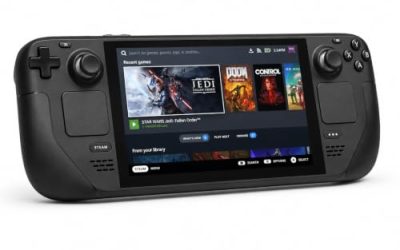
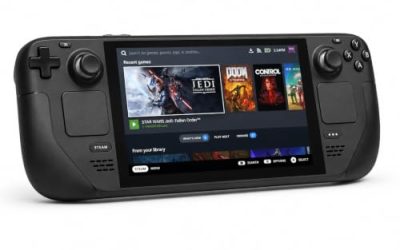
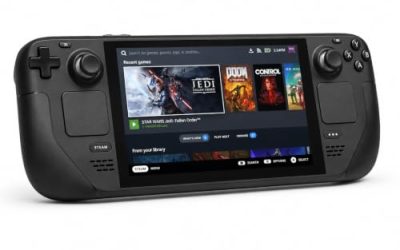
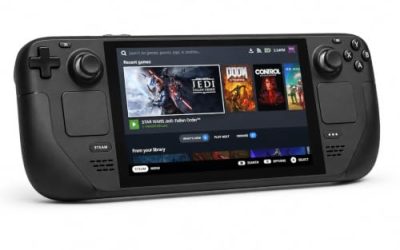
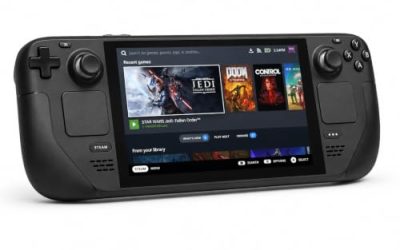
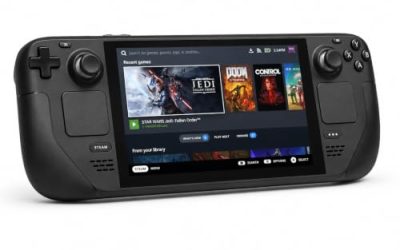
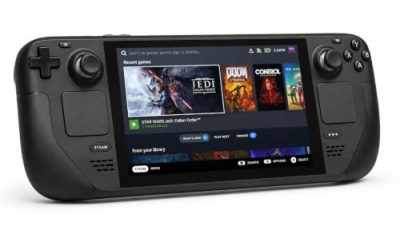
Valve Steam Deck OLED 512GB
- Display: 7.4-inch HDR OLED, 1280 by 800, up to 90 Hz
- Processor: AMD Zen 2 and RDNA 2 custom APU
- Memory: 16 GB LPDDR5
- Storage: 512 GB NVMe, plus a microSD slot
The handheld the Verified badge was written for. The game’s requirements are a rounding error next to the Deck’s APU, and Valve’s test sheet gives the Windows build a clean pass under proton-stable.
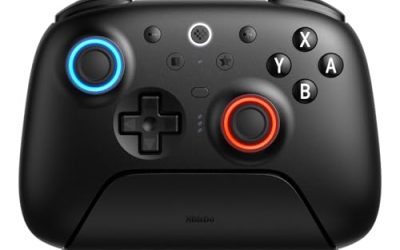
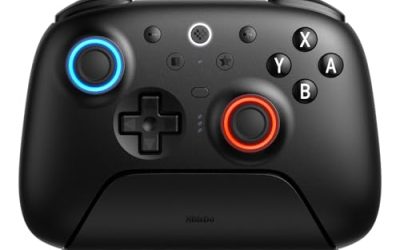
8BitDo Ultimate 2 Bluetooth Controller
- Connectivity: Bluetooth wireless and USB-C wired
- Joysticks: TMR electromagnetic, anti-drift design
- Triggers: Hall effect, with mode switching
- Extras: two remappable back buttons, motion control
The docked and desktop pad pick. Steam lists full controller support for the game, and this pad covers the couch case with modern sticks, triggers and back buttons.
Xbox Wireless Controller, Carbon Black
- Connectivity: Xbox Wireless and Bluetooth
- Port: USB-C for wired play
- Controls: hybrid D-pad, dedicated Share button
- Power: AA batteries or optional rechargeable pack
The safest guest pad in PC gaming: Steam Input support is universal, the glyphs match what most games display, and it pairs over Bluetooth or its own wireless standard. On the handheld, the test sheet’s note applies: an external pad may need a manual switch before it takes over.
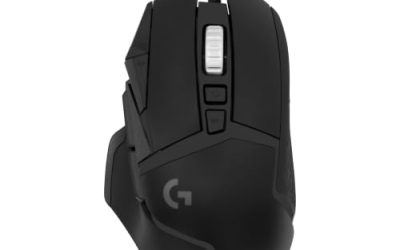
Logitech G502 HERO
- HERO optical sensor, up to 25,600 DPI
- 11 programmable buttons
- Adjustable weight system
- Wired USB connection
The remaster’s menus, map screens and inventory reward a precise pointer, and at a desk a wired mouse turns those trips into single clicks. Eleven programmable buttons cover the inputs a long session repeats.
Samsung T9 Portable SSD 2TB
- Capacity: 2 TB portable SSD
- Interface: USB 3.2 Gen 2×2, USB-C connector
- Maker-rated speeds: up to 2,000 MB per second read, 1,950 MB per second write
- Features: Dynamic Thermal Guard, maker-rated drop resistance
For moving a Linux game library between machines, or keeping an offline backup of installers, a fast USB-C drive is the simple answer. The headline figure needs a Gen 2×2 host port; on a lesser port the drive runs at that ceiling.
How to choose
Buy the Steam copy if Linux is the target: it is the edition Valve has Deck-tested and the one ProtonDB’s 60 reports describe. Treat the GOG edition as a Windows purchase; it is the same build without the Linux-side testing paper trail, sensible for a dual-boot machine and irrelevant to a Linux-only one. On Deck, expect the Verified behaviour the sheet describes, with the external-pad note in mind when docked. On desktop, start with the default Proton; if the picture shows the colour banding a few filings describe, pinning Proton 9.0-4 is the documented workaround. Any modern pad is in scope under the record’s full controller support.
Who should skip
Skip this collection if a native Linux build is a condition of purchase: none exists on any storefront, and the empty Linux tab is not a promise of one. Skip the GOG copy if it was bought as a Linux route, because that edition is Windows-only too. Mac players should also pass, since the Mac flag is false and its tab is the same empty shell. And anyone who wants the original nineties releases exactly as they shipped should look at the classic editions instead; this is a remaster, not an archival reissue.
FAQ
Is Tomb Raider I-III Remastered native on Linux?
No. Steam flags the game Windows only, its metadata lists windows as the sole operating system, the only launch entry starts a Windows executable, and the single content depot serves that build. The Linux requirements tab is an empty shell: headings over an empty list.
How well does it run under Proton?
Very well on the community record. ProtonDB settles the game at Platinum, with Platinum as both its best-reported and trending tier, across 60 reports at strong confidence. Most filings describe out-of-the-box runs; a few report colour banding on the newest Proton branch, fixed by pinning Proton 9.0-4.
Is it Steam Deck Verified?
Yes. Valve’s record resolves the game to Verified, all four checks passing, with proton-stable as the recommended runtime. Two caveats ride along: the test graded a pre-release build in January 2024, long before the current public build, and the sheet notes an external controller is not supported as the primary player’s device.
Does the GOG version give Linux players a native edition?
No. GOG’s own product page lists Windows as the only supported system, and its compatibility answer says the same in words. The GOG edition is the same Windows build sold DRM-free; on Linux it runs only through the same compatibility tools as the Steam copy.
Final verdict
Tomb Raider I-III Remastered is a Windows-only release whose Linux story is written entirely by other paperwork: a Platinum Proton file built from 60 reports, a Verified Deck badge graded before the game even launched, and a GOG edition confirming the same single build from a second storefront. Nothing in Steam’s record is ambiguous once the empty tabs are recognised as shells. Buy the Steam copy, run it under Proton, and treat any page that calls this collection native as misreading its own headings.
Product and ASIN Reference
| Product | ASIN |
|---|---|
| Valve Steam Deck OLED 512GB | B0CQ3RWQQZ |
| 8BitDo Ultimate 2 Bluetooth Controller | B0F194QFT2 |
| Xbox Wireless Controller, Carbon Black | B08DF248LD |
| Logitech G502 HERO | B07GBZ4Q68 |
| Samsung T9 Portable SSD 2TB | B0CHFS9K14 |