Tainted Grail: The Fall of Avalon is Questline’s first-person open-world RPG, a bleak retelling of Arthurian legend set on an island six centuries after the king’s fall. It left early access for its full release on 23 May 2025, published by Awaken Realms, and it is not the same product as Tainted Grail: Conquest, the earlier series entry with its own separate record. This article covers the Fall of Avalon app alone: Steam sells a Windows build, and nothing else.
Two signals point the wrong way: ProtonDB’s page carries a heading implying native support, and the series name invites confusion with a sibling that genuinely ships a Linux build. Layer by layer, though, every primary source agrees: flags, requirements tabs, depot list and Deck paperwork all describe a Windows binary that travels through Proton — and travels unusually well.
As an Amazon Associate, we earn from qualifying purchases.
Quick answer
Tainted Grail: The Fall of Avalon is not native on Linux: Steam flags the game Windows only, its Linux requirements tab is an empty shell, and the sold package holds a single Windows depot. The working route is Proton: ProtonDB settles it at Platinum across 93 reports, and Valve rates it Verified on Steam Deck.
What Steam’s record actually sells
Start with the flags. The record for app 1466060 lists Windows true, Mac and Linux false. The requirements tabs back that up asymmetrically: the Windows tab is genuinely populated at both tiers, from Windows 10 64-bit, an i5 8th-generation processor, 12 GB of RAM and a GTX 1060 6GB at minimum up to an i7 13th-generation chip, 16 GB and an RTX 2070 Super. The Mac and Linux tabs are empty shells — Minimum and Recommended headings with nothing under either.
The depot census closes the question. The package a purchase delivers holds exactly one content depot, 1466062, measuring 39.57 GiB on disk, and no depot in the record is configured for Linux or macOS. The registered assets agree: client icon, client TGA, icon and logos are present, but no Linux client icon exists in any form, and the extended OS field is an empty string. SteamDB’s detection reads a Unity build with IL2CPP and FMOD — one Windows executable, not a multi-platform release. The only extra branch is a Mono build described as a modding branch; it is not a Linux port.
The add-on shelf, checked one by one
A recurring failure mode in this catalogue is a soundtrack or artbook app flagging Linux while the base game does not, making family scans read as supported. The add-on array was read individually to rule that out: nine DLC apps, from the Sanctuary of Sarras expansion and Supporters Pack to four Bonus Content packs. Every one flags Windows true, Mac and Linux false.
The soundtrack is where the trap usually hides, so it gets a specific check: there is no standalone soundtrack app in the array at all. The soundtrack ships as a goodie inside the Supporters Pack, whose record is Windows-flagged like the rest. The family’s Linux-flag count is zero of ten records, and the demo app surfacing under the same name in store searches is a separate app this article does not cover.
The Proton file: Platinum, with one wrong heading
ProtonDB’s summary reads as well as a Windows-only title can: settled tier Platinum, best-reported Platinum, trending Platinum, 93 reports, strong confidence. That is the full summary read, not a headline scrape, and it places the game among the large open-world RPGs whose Windows builds run on Linux essentially as shipped.
One part of the page does need correcting. It carries a “Natively Supports” heading, and Steam’s data refutes it on every layer checked here: false flags, empty-shell requirements, a single Windows depot, no Linux client icon. The heading is a stray label; the Platinum file judges the Windows build under Proton, not a native port.
The individual filings add honest texture. Most reports describe out-of-the-box runs on current Proton builds. The recurring complaints are texture pop-in, slow texture streaming in new areas, occasional crashes some players fixed by switching to Proton Experimental or a GE-Proton build, and one filing where stock Proton ran at very low frame rates until GE-Proton restored normal performance. None of this dents the settlement, but a GE-Proton fallback is worth having installed.
The Steam Deck sheet
Valve rates the game Verified on Steam Deck, its strongest badge. A sourcing disclosure: Valve’s own compatibility endpoint returned empty and garbled responses this session, so the sheet here is read through SteamDB’s republication of Valve’s data. On it, all four checks pass — full functionality on the default controller configuration, Deck icons, legible text, a performant default graphics configuration — and SteamOS is separately rated Compatible. The recommended runtime Valve lists is a Proton 9.0 release candidate: the record itself confirming the tested build is the Windows binary. The game’s record lists full controller support, and the Deck configuration names gamepad as the supported input.
The caveat is the test’s age. Valve’s test is dated 15 May 2025, run against build 18397874, a pre-release build from the week before launch. The current public build is 26288436, dated 29 October 2026, so the badge grades a build the game left behind many updates ago. ProtonDB’s Deck filings soften the concern without removing it: Deck players report low graphics settings holding a steady frame rate, the expected pattern for a heavy open world on the handheld’s APU. Treat the badge as a strong launch-era signal, not a fresh certification.
Anti-cheat, accounts and the second storefront
There is no anti-cheat question to answer here. The Steam record lists the game as single-player, names no anti-cheat, carries no DRM notice and requires no third-party account. The Are We Anti-Cheat Yet database was read in full and holds no entry for this title in either direction; for a single-player game that silence documents an absence, and it is not a clearance to quote.
A second storefront does sell the game. GOG’s product record exists and is in stock, and its compatibility line reads Windows true, Mac false, Linux false — Steam’s shape exactly. The GOG edition is therefore a DRM-free copy of the same Windows build, not a Linux edition. It does change the practical route: one ProtonDB filing reports the GOG copy running through the Heroic Games Launcher on a GE-Proton build, so it is a workable Linux purchase with the same Proton file behind it.
Gear that fits the record
The picks follow the record’s shape: the tested handheld, two pads for the game’s full controller support, a desktop mouse, and fast storage.
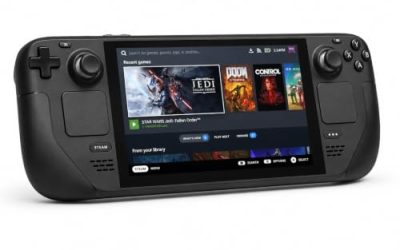
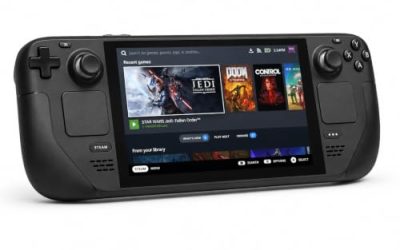
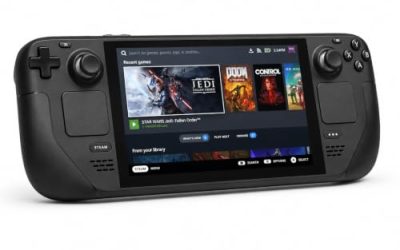
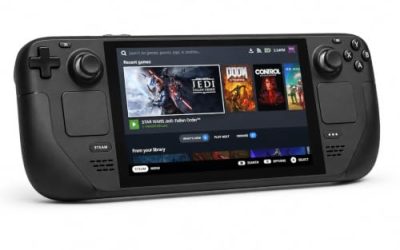
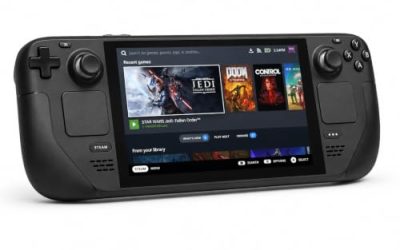
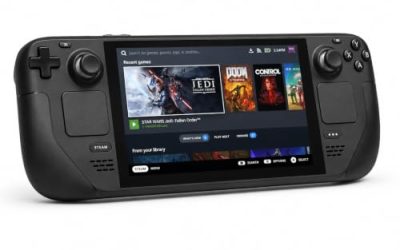
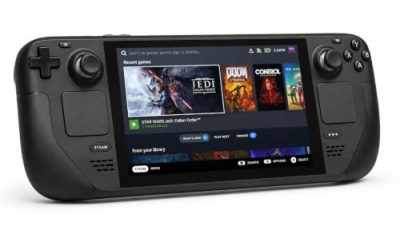
Valve Steam Deck OLED 512GB

The handheld the Verified badge was written for, and the one machine whose experience with this game carries an official test behind it.
Specs
- Display: 7.4-inch HDR OLED, 1280 by 800, up to 90 Hz
- Processor: AMD Zen 2 and RDNA 2 custom APU
- Memory: 16 GB LPDDR5
- Storage: 512 GB NVMe, plus a microSD slot
- Wireless: Wi-Fi 6E and Bluetooth
- Channel note: Valve sells the Deck mainly through its own store, so Amazon listings are third-party sellers
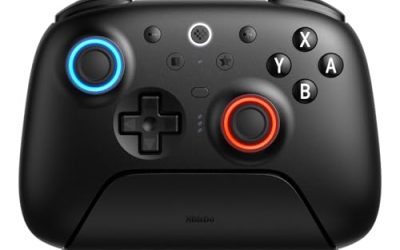
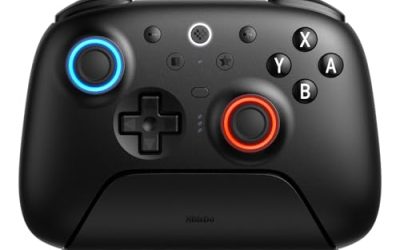
8BitDo Ultimate 2 Bluetooth Controller
The record lists full controller support, so a pad is a primary input here rather than a fallback. This one covers docked and desktop play, with back buttons for the inputs a long RPG session repeats.
Specs
- Connectivity: Bluetooth wireless and USB-C wired
- Joysticks: TMR electromagnetic, anti-drift design
- Triggers: Hall effect, with mode switching
- Extras: two remappable back buttons, motion control
- In the box: charging dock included
Xbox Wireless Controller, Carbon Black
The safest guest pad in PC gaming: Steam Input support is universal, the glyphs match what the game displays, and it pairs over Bluetooth or its own wireless standard.
- Connectivity: Xbox Wireless and Bluetooth
- Port: USB-C for wired play
- Controls: hybrid D-pad, dedicated Share button
- Power: AA batteries or optional rechargeable pack
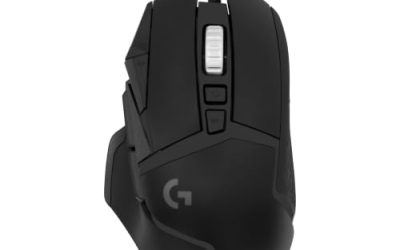
Logitech G502 HERO
Avalon’s menus, inventory grids and crafting screens are built for a pointer as much as a pad. A precise wired mouse turns the confirm, cancel and camera inputs of a fifty-hour RPG into single clicks.
Specs
- HERO optical sensor, up to 25,600 DPI
- 11 programmable buttons
- Adjustable weight system
- Wired USB connection
- On-board memory profiles
Samsung T9 Portable SSD 2TB
The game’s requirements strongly recommend an SSD, and the install is a large one. A fast USB-C drive covers moving a Linux library between machines or keeping offline backups of installers.
Specs
- Capacity: 2 TB portable SSD
- Interface: USB 3.2 Gen 2×2, USB-C connector
- Maker-rated speeds: up to 2,000 MB per second read, 1,950 MB per second write
- Features: Dynamic Thermal Guard, maker-rated drop resistance
How to choose
Buy the Steam copy for the route Valve has actually tested: it carries the Deck Verified sheet, and the ProtonDB Platinum file describes that edition. Buy the GOG copy if a DRM-free installer matters more; same Windows build, run through Heroic or Lutris on the same evidence. On hardware, respect the record’s floor: 12 GB of RAM minimum, and the requirements strongly recommend an SSD, which the texture-streaming filings make easy to believe. Keep a GE-Proton build installed as a fallback for the file’s few performance outliers. On Deck, set expectations by the filings, not the badge: low settings, steady frame rate.
Who should skip
Skip it if you buy native Linux builds only: there is none here, the ProtonDB heading notwithstanding, and no layer of the record hints at one in progress. Skip it if your PC sits below the published floor, particularly on memory. Skip the Deck as your only platform if you need a guarantee about the current build rather than a launch-era test, or if low settings on a large open world will spoil the game. And skip it if you arrived looking for Tainted Grail: Conquest — a different game, covered separately, to which none of these verdicts transfer.
FAQ
Is Tainted Grail: The Fall of Avalon native on Linux?
No. Steam flags the game Windows only, the Linux requirements tab is an empty shell, the sold package holds a single Windows depot, and no Linux client icon is registered. ProtonDB’s page carries a heading implying native support, but Steam’s record contradicts it on every layer.
How well does it run under Proton?
Very well by the community file. ProtonDB settles the game at Platinum, with Platinum as both its best-reported and trending tier, across 93 reports at strong confidence. Most filings describe out-of-the-box runs; the recurring notes are texture pop-in, occasional crashes, and rare performance outliers a GE-Proton build fixed.
Is it Steam Deck Verified?
Yes. Valve’s sheet, read through SteamDB’s republication after Valve’s endpoint returned garbled output, shows all four checks passing and SteamOS rated Compatible. The test is dated 15 May 2025 against a pre-release build, while the current public build is far newer, so read the badge as a launch-era verdict later filings have not contradicted.
Can I buy it on GOG instead?
Yes, and it changes the launcher, not the platform. GOG’s product record sells the game with Windows-only compatibility, so the GOG edition is the same Windows build in DRM-free form, run through Heroic or Lutris under Proton — a route at least one ProtonDB filing already documents.
Final verdict
Tainted Grail: The Fall of Avalon is a Windows game on every layer of its record — false Linux flags, empty-shell requirements, one Windows depot, no Linux icon, nine DLC apps in agreement. What rescues it for Linux players is the translation layer’s file: a Platinum settlement across 93 reports, a Deck Verified badge whose only weakness is its age, and a DRM-free GOG edition that runs through the standard launcher route. Buy it as a Proton title with an unusually strong record — Steam for the tested path, GOG for the installer — and it earns its place in a Linux library. Just do not let a stray heading sell it as something it is not.
Product and ASIN Reference
| Product | ASIN |
|---|---|
| Valve Steam Deck OLED 512GB | B0CQ3RWQQZ |
| 8BitDo Ultimate 2 Bluetooth Controller | B0F194QFT2 |
| Xbox Wireless Controller, Carbon Black | B08DF248LD |
| Logitech G502 HERO | B07GBZ4Q68 |
| Samsung T9 Portable SSD 2TB | B0CHFS9K14 |