Scrap Mechanic spent ten years as one of Steam’s longest-running Early Access projects, and the question Linux players kept asking across that decade never changed: is there a native build? Axolot Games’ machine-building sandbox left Early Access with its full release on 24 July 2026, and the finished record answers plainly. Steam flags the game for Windows alone, and nothing in the delivery layers underneath suggests otherwise.
That makes this a Proton story, and on that side the paperwork is genuinely strong: one of the deepest community files in this cluster, a Deck badge with a short, honest list of deductions, and only one misleading signal in the family, an add-on app that sells music rather than code.
As an Amazon Associate, we earn from qualifying purchases.
Quick answer
Scrap Mechanic is not native on Linux. Steam’s record flags the game Windows alone, its Linux requirements field is an empty shell, and no Linux depot exists; the purchase package delivers the Windows build only. The route is Proton: ProtonDB’s summary reads Gold across 288 reports, and Valve rates the game Playable on Steam Deck.
The record after ten years in Early Access
SteamDB’s history for app 387990 opens with an Early Access release date of 20 January 2016. The store record today carries a full release date of 24 July 2026, the genre list no longer includes Early Access, and the branch table shows the public build still moving through post-release patches in November 2026. The game in question is therefore the finished 1.0 product, and its platform answer was settled at that release: one operating system. It is a sandbox about building working machines from parts, alone or in online co-op, with Workshop support and cloud saves.
What Steam’s own record delivers
The platform flags on the appdetails record read Windows true, Mac false, Linux false. The Windows requirements are genuinely populated in both tiers: the minimum names Windows 10 in 64-bit form, a Core i5-1235U class processor, 8 GB of memory, Iris Xe class graphics and 30 GB of storage, while the recommended tier steps up to Windows 11, a Core i5-12500 or Ryzen 5 5600, 16 GB of memory and an RTX 3060 or RX 6700 XT. A real 1.0 spec sheet, not 2016 boilerplate.
The Mac and Linux requirements fields are the empty-shell shape: Minimum and Recommended headings rendered over empty lists, with no text under either, no distribution named, no driver guidance. The shell is a store template artefact, and the flags already give the ruling.
The depot table settles delivery. SteamDB lists two content depots: a shared data depot of 14.17 GiB and a Windows 64-bit executable depot of 5.02 GiB, a 19.18 GiB install, and no Linux or Mac depot in any form. The purchase layer agrees: the game’s single package, sub 73428, reads Windows true, Mac false, Linux false on Steam’s packagedetails record, so a normal purchase delivers the Windows build by construction.
The family sweep: one agreement, one soundtrack trap
The record’s DLC array holds exactly two apps, and store search confirms the family is just these three apps in total. The Fan Pack, app 4857560, flags Windows true and Mac and Linux false, agreeing with the game.
The second app is the trap. The Drilling Thunder Soundtrack, app 4899450, flags all three platforms true, including Linux, and a scan reading flags alone would report this game as Linux-supported on the strength of an album. The delivery layer gives the flags away: the soundtrack’s two depots, a standard album depot and an HQ audio depot, carry no operating system configuration at all, because they ship audio files that play identically everywhere. The ruling comes, as always, from the game and its purchase package: Windows only.
No anti-cheat complicates the Proton route. Steam’s record names no DRM notice and no third-party account requirement; SteamDB’s detected technologies are middleware only (the FMOD audio SDK, the FreeImage SDK, the Lua SDK); and Are We Anti-Cheat Yet, searched by name and by app id across its full dataset, carries no entry for this game. The sources stay separate, and none names a blocker.
The Proton file: Gold, deep and mostly calm
ProtonDB’s summary record was read in full this session, and it is a strong file. The headline tier reads Gold, the trending tier reads Gold, and the best-reported tier reaches Platinum, across 288 reports with strong confidence. For a physics-heavy sandbox, that depth is the reassurance: a long, consistent record, not a handful of lucky launches.
The report texture underneath is mostly calm, with a known set of wrinkles kept at report weight. A minority of filings describe tinker steps: custom GE-Proton builds, launch-option changes, installing Windows core fonts into the prefix after missing-text problems. Isolated reports mention audio crackling, a fullscreen crash that borderless window mode avoids, and performance drops once very large vehicles are on screen; online multiplayer is rated Good in the filings that cover it. The strong confidence carries the headline; the wrinkles are the minority experience. One check could not be completed: the game page’s requirements heading block did not surface in this session’s read, so nothing is claimed from it either way.
Steam Deck: Playable, on paperwork from 2023
Valve’s compatibility endpoint answered directly this session, and its verdict is Playable, the second tier: resolved category 2, with SteamOS separately rated Compatible. The deductions are plain: the default controller configuration is not fully functional, so some features need the touchscreen, the virtual keyboard or a community configuration; the game sometimes shows mouse, keyboard or non-Deck controller icons; entering text requires manually invoking the on-screen keyboard; and some in-game text is small. Against those, the one performance line passes: the default graphics configuration performs well. The recommended runtime is proton-8.0-4, so the badge certifies the Windows build under Proton. The sheet also records that single-player play requires an active internet connection.
The paperwork’s age is the caveat. The test was run on 30 September 2023 against build 8977956, an Early Access build; the public branch now serves a far newer build. The grade is the current store verdict and has not been withdrawn, but the badge reads best as a floor set by older paperwork, not a fresh test of the shipping build.
Gear that fits the record
The gear below follows the record’s shape: the handheld, two pads for the controller gaps the sheet names, a mouse for the building work, and library storage.
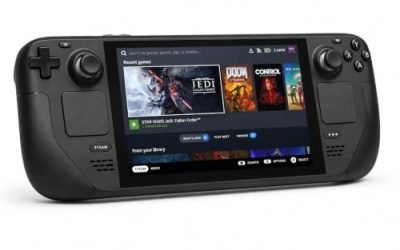
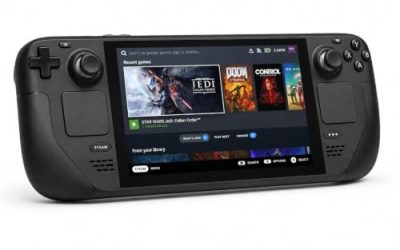
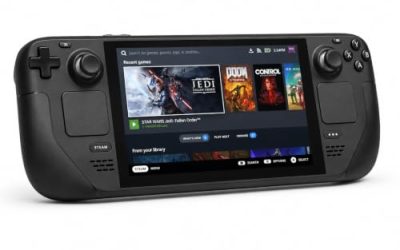
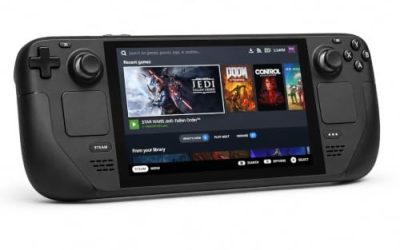
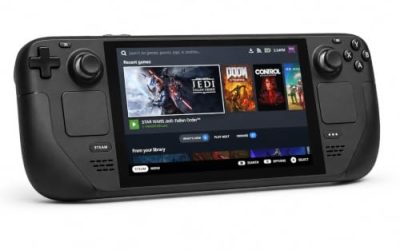
Valve Steam Deck OLED 512GB
The handheld the Playable badge was written for. The sheet’s deductions concern input and text size, not power: the default graphics configuration performs well.
Specs
- Display: 7.4-inch HDR OLED, 1280 by 800, up to 90 Hz
- Processor: AMD Zen 2 and RDNA 2 custom APU
- Memory: 16 GB LPDDR5
- Storage: 512 GB NVMe, plus a microSD slot
- Wireless: Wi-Fi 6E and Bluetooth
- Channel note: Valve sells the Deck mainly through its own store, so Amazon listings are third-party sellers
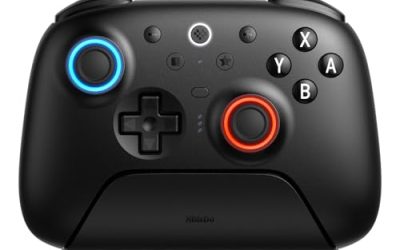
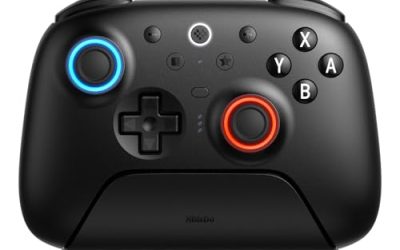
8BitDo Ultimate 2 Bluetooth Controller

The docked pad pick. The sheet warns that the default controller configuration leaves some functions out; two remappable back buttons give the awkward inputs a home without the touchscreen fallback.
Specs
- Connectivity: Bluetooth wireless and USB-C wired
- Joysticks: TMR electromagnetic, anti-drift design
- Triggers: Hall effect, with mode switching
- Extras: two remappable back buttons, motion control
- In the box: charging dock included
Xbox Wireless Controller, Carbon Black
The guest pad for co-op building sessions. The sheet notes the game sometimes displays non-Deck controller icons, and this is the layout most PC games draw when they draw a controller at all.
- Connectivity: Xbox Wireless and Bluetooth
- Port: USB-C for wired play
- Controls: hybrid D-pad, dedicated Share button
- Power: AA batteries or optional rechargeable pack
Logitech G502 HERO
At a desk this is pointer work: placing parts, wiring logic connections, working through part menus. A precise wired mouse with eleven programmable buttons covers the repeated confirm, rotate and camera inputs.
Specs
- HERO optical sensor, up to 25,600 DPI
- 11 programmable buttons
- Adjustable weight system
- Wired USB connection
- On-board memory profiles
Samsung T9 Portable SSD 2TB
The install runs to a little over 19 GB before Workshop creations accumulate: a fast USB-C drive serves builders who move a Steam library between machines. The headline figure needs a Gen 2×2 host port; on a lesser port the drive runs at that ceiling.
Specs
- Capacity: 2 TB portable SSD
- Interface: USB 3.2 Gen 2×2, USB-C connector
- Maker-rated speeds: up to 2,000 MB per second read, 1,950 MB per second write
- Features: Dynamic Thermal Guard, maker-rated drop resistance
How to choose
Choose the Steam copy, because it is the only PC edition on sale: GOG sells no edition, its product address there redirecting to the general catalogue, and Steam’s is the build both records describe. On a Linux desktop or laptop, install under Proton and start with the default tool: a Gold headline and trending tier across 288 reports says the standard route carries the game, and the tinker steps in a minority of filings are a fallback, not an entry fee. Treat fullscreen crashes and missing fonts, if they appear, as the known wrinkles the filings describe, with borderless window mode as the recorded workaround for the first. On Steam Deck, set expectations by the Playable sheet rather than the Verified standard: performance is fine at default settings, but budget for small text, manual keyboard calls and a controller configuration that may need a community layout. Ignore the soundtrack’s platform flags entirely; they describe an album, not a port.
Who should skip
Skip this one if you are shopping for a native Linux sandbox builder: after ten years and a full release, this game is not one, and no record layer hints at a port. Skip the Deck plan if small in-game text or manually invoked keyboards are deal-breakers: Valve’s sheet lists both. Skip it if you need single-player that works offline, since the same sheet states that single-player requires an active internet connection. And skip it if a Gold headline is not reassurance enough and you only buy unanimous-Platinum games.
FAQ
Is Scrap Mechanic native on Linux?
No. Steam’s record for app 387990 flags Windows alone, the Linux requirements field is an empty shell, no Linux depot exists, and the purchase package delivers the Windows build only.
Why does the soundtrack list Linux if the game does not?
Because it is a music app, not game code. The Drilling Thunder Soundtrack flags all three platforms, but its depots carry no operating system configuration at all: they deliver audio files.
How well does Scrap Mechanic run under Proton?
ProtonDB’s summary record, read in full, gives a Gold headline and trending tier with a Platinum best-reported tier, across 288 reports at strong confidence. Most filings describe a working game; a minority report tinker steps, missing fonts, audio crackling or a fullscreen crash that borderless window mode avoids.
Is Scrap Mechanic Steam Deck Verified?
No, it is one tier down: Playable. Valve’s sheet passes performance at the default configuration and lists four deductions covering controller configuration, mismatched icons, manual keyboard use and small text, plus a note that single-player requires an internet connection. The test dates from September 2023, before the 1.0 release.
Final verdict
Scrap Mechanic is the rare long-Early-Access story with a legible ending. The finished game ships for Windows alone, honestly at every decisive layer: a false Linux flag, an empty-shell requirements field, a depot table with no Linux entry and a purchase package that delivers the Windows build. The family’s one false signal, a soundtrack album, collapses the moment its depots are read. What Linux players get instead is a strong second route: a Gold Proton file with Platinum best reports across 288 filings, a Playable Deck badge whose deductions concern text and input rather than performance, and no anti-cheat named by any source. Buy the Steam copy, play it under Proton, and let the album’s flags sell music to somebody else.
Product and ASIN Reference
| Product | ASIN |
|---|---|
| Valve Steam Deck OLED 512GB | B0CQ3RWQQZ |
| 8BitDo Ultimate 2 Bluetooth Controller | B0F194QFT2 |
| Xbox Wireless Controller, Carbon Black | B08DF248LD |
| Logitech G502 HERO | B07GBZ4Q68 |
| Samsung T9 Portable SSD 2TB | B0CHFS9K14 |