Gloomwood, the stealth horror shooter from Dillon Rogers, David Szymanski and their collaborators at New Blood Interactive, is still an unfinished game. It entered Early Access on 5 September 2022, the Early Access tag is still on its genre list today, and no full-release date appears on the record. What the record does settle is the platform question: this is a Windows game, and every layer of Steam’s paperwork says so.
The Linux story is therefore a Proton story, and it is a good one. The community file sits at the top tier, Valve has awarded the game its strongest Steam Deck badge, and the one alternative storefront sells the same Windows build with no Linux flag of its own.
As an Amazon Associate, we earn from qualifying purchases.
Quick answer
Gloomwood is not native on Linux: Steam flags the Early Access stealth horror game for Windows only, with no Linux requirements tab and a single Windows depot. The route is Proton: ProtonDB’s headline tier is Platinum across 32 reports, and Valve rates the game Verified on Steam Deck. The Steam copy is the only edition with a Linux path.
The status at a glance
| Question | Answer from the record |
|---|---|
| Native Linux build | No — Steam flags read Windows only |
| Development status | Still in Early Access |
| Linux requirements tab | Absent — the field is an empty list |
| Add-on apps | None — the record lists no DLC array |
| ProtonDB record | Platinum headline, 32 reports |
| Steam Deck verdict | Verified, tested April 2026 |
| GOG edition | Exists, Windows only |
| Anti-cheat or launcher | None named on the record |
What Steam’s own record says
Steam’s appdetails record for Gloomwood (app 1150760) names four developers — Dillon Rogers, David Szymanski, Nate Berens and Thomas Porta — and a single publisher, New Blood Interactive. The release date reads 5 September 2022 with the coming-soon flag false, and the game is still on sale. The genre list — Action, Indie, Early Access — confirms it remains in active development.
The platform flags read Windows true, Mac false, Linux false. The requirements fields match: the Windows tab is genuinely populated in both tiers, while the Mac and Linux fields are empty lists outright — the absent-field shape, not the populated-but-empty shell. The published Windows minimum is modest: Windows 10 or later, a 2.4 GHz dual-core processor, 4 GB of RAM, a GeForce GTX 960 class graphics card and 1 GB of storage.
The depot census closes the question. SteamDB lists exactly one content depot, 1150761 at 2.92 GiB, with no operating-system split beside it: no Linux depot, no Mac depot, no shared depot and no ghost. The registered assets are clienticon, clienttga, icon, logo and logo_small — no LinuxClientIcon in any form, so neither the fossil-icon case nor the inverse-icon case arises. SteamDB’s detected technologies are the Unity engine and the Mono SDK: a Unity game travels through Proton on its Windows build or not at all.
The record lists no DLC array at all, so the soundtrack all-true trap cannot fire here; the family is the base game alone. Steam lists single-player, full controller support, DualShock and DualSense controller support, Steam Cloud and Family Sharing. No anti-cheat is named, no third-party DRM notice appears, and AreWeAntiCheatYet holds no entry for the game in either direction: a documentation silence, not a clearance.
The community file, and the heading that overpromises
ProtonDB’s game page for Gloomwood carries a heading reading “Natively Supports:” above the requirements summary. Against Steam’s record that heading is wrong: there is no native build to support anything, and this article follows Steam. It is the one place in the paper trail where a reader could come away believing a Linux build exists.
The tier beneath the heading is real, and it is the strongest one. One evidence note first: ProtonDB’s summary feed returned an error page for this app and for a control app during this session, so the settled and confidence figures the feed normally carries could not be read, and none are claimed. The headline figures from the game page itself read Platinum across 32 reports — a healthy file for an unfinished game, whose recent reports describe a game that installs and runs, with the friction in performance rather than launching.
The report colour is worth carrying honestly. The most detailed Deck report describes a frame rate that will not hold steady in the big open levels — the market district and the fishery under the lighthouse beam dip toward forty frames per second and sometimes below — while indoor levels such as the mines and the tavern push sixty. That reporter traced the dips to how the game handles lightmaps, and found that setting lightmap filtering to low stabilised the rate; a forty-frame cap was their resting point. Desktop reports on current Proton are warmer, several describing an out-of-the-box run, and the failures in the file are old: a freeze-and-restart report on a community Proton build, and a 2022 filing where the game installed but would not open.
The Steam Deck sheet
Valve rates Gloomwood Verified on Steam Deck, the top category, and SteamOS separately Compatible. The verdict and its checks were read from Valve’s own compatibility endpoint directly: all four Verified checks pass — the default controller configuration is fully functional, the game shows Steam Deck controller icons, in-game interface text is legible, and the default graphics configuration performs well. The one note, not a deduction, is that the game does not default to external Bluetooth or USB controllers for the primary player and may require manually switching the active controller through the Quick Access Menu.
The test paperwork, read through SteamDB’s republication of Valve’s sheet, dates the test to 10 April 2026 against build 22689832, with proton-stable as the recommended runtime. That runtime line is the honest centre of the badge: it certifies the Windows build under Proton, the only build there is. One freshness caveat: the public branch has since moved to build 23548171, dated June 2026, so the sheet grades a build one step behind the copy on sale today — normal paperwork lag for an Early Access game, but the reason the badge is a strong signal rather than a guarantee.
The storefront ruling
GOG does sell Gloomwood, so this ruling rests on GOG’s own product record rather than on any search result: product 1332747658, whose content system compatibility reads Windows true, Mac false, Linux false. The GOG copy is a DRM-free edition of the same Windows build — a legitimate alternative for a Windows player who prefers offline installers, but no Linux path. The Steam edition is therefore the buy for Linux and Deck players.
Gear that fits the record
The gear below follows the record’s shape: the handheld the badge was written for, two pads, a desktop mouse, and library storage.
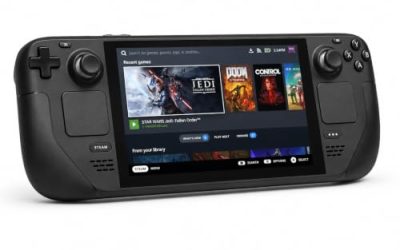
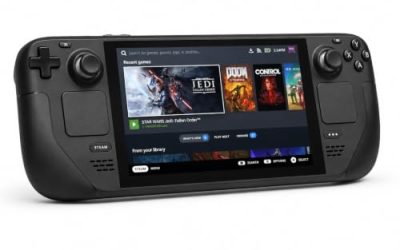
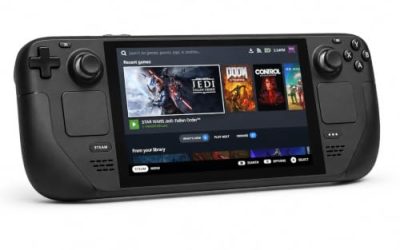
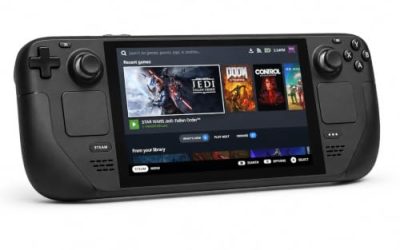
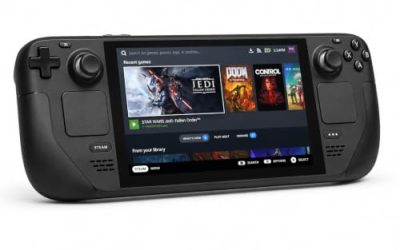
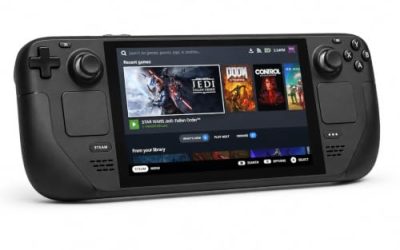
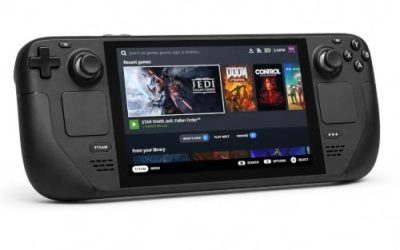
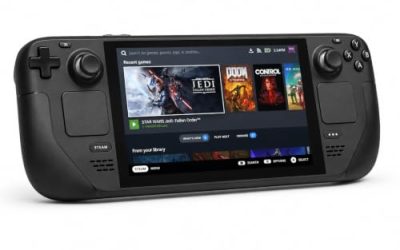
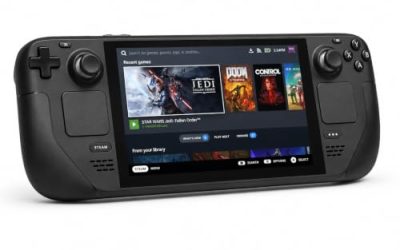
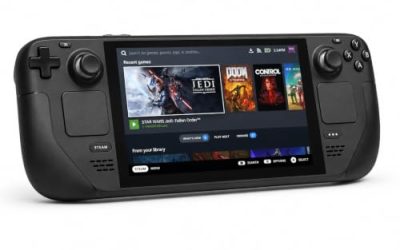
Valve Steam Deck OLED 512GB

The handheld the Verified badge was written for. Valve’s test sheet gives the Windows build a clean pass under proton-stable, and the game’s requirements sit far below the Deck’s APU.
Specs
- Display: 7.4-inch HDR OLED, 1280 by 800, up to 90 Hz
- Processor: AMD Zen 2 and RDNA 2 custom APU
- Memory: 16 GB LPDDR5
- Storage: 512 GB NVMe, plus a microSD slot
- Wireless: Wi-Fi 6E and Bluetooth
- Channel note: Valve sells the Deck mainly through its own store, so Amazon listings are third-party sellers
8BitDo Ultimate 2 Bluetooth Controller
The docked and desktop pad pick. Steam’s record lists full controller support for the game, and this pad covers the couch case with modern sticks, triggers and back buttons.
Specs
- Connectivity: Bluetooth wireless and USB-C wired
- Joysticks: TMR electromagnetic, anti-drift design
- Triggers: Hall effect, with mode switching
- Extras: two remappable back buttons, motion control
- In the box: charging dock included
Xbox Wireless Controller, Carbon Black
The safest guest pad in PC gaming: Steam Input support is universal and it pairs over Bluetooth or its own wireless standard. On the handheld, the test sheet’s note applies: an external pad may need a manual Quick Access Menu switch before it takes over.
- Connectivity: Xbox Wireless and Bluetooth
- Port: USB-C for wired play
- Controls: hybrid D-pad, dedicated Share button
- Power: AA batteries or optional rechargeable pack
Logitech G502 HERO
A stealth game lives in its inventory screens, and at a desk a precise wired mouse turns those trips into single clicks. Eleven programmable buttons cover the lean, interact and quick-slot inputs.
Specs
- HERO optical sensor, up to 25,600 DPI
- 11 programmable buttons
- Adjustable weight system
- Wired USB connection
- On-board memory profiles
Samsung T9 Portable SSD 2TB
For moving a Linux game library between machines, or keeping an offline backup of installers, a fast USB-C drive is the simple answer. The headline figure needs a Gen 2×2 host port; on a lesser port the drive runs at that ceiling.
Specs
- Capacity: 2 TB portable SSD
- Interface: USB 3.2 Gen 2×2, USB-C connector
- Maker-rated speeds: up to 2,000 MB per second read, 1,950 MB per second write
- Features: Dynamic Thermal Guard, maker-rated drop resistance
How to choose
Choose the Steam copy: it is the edition the Deck sheet and the community file both describe, and the GOG alternative carries no Linux flag. On desktop, install under Proton at its default setting; the tinkering in the file is performance tuning, not launch repair. On Steam Deck, go in with the community’s calibration rather than the badge’s optimism: cap the frame rate near forty in the open districts, drop lightmap filtering to low, and expect indoor levels to run far smoother than the market streets. If you dock with an external pad, make the Quick Access Menu switch Valve’s note describes.
Who should skip
Skip this one if you are shopping for a native Linux release: none exists, and the one heading that suggests otherwise is wrong. Skip it if Early Access itself is the problem — the game has been unfinished since 2022 and its districts are still growing. Skip the GOG copy if Linux is your platform: same Windows build, no compatibility records. And skip the Deck plan if a fluctuating frame rate in big levels would spoil a slow stealth game for you.
FAQ
Is Gloomwood native on Linux?
No. Steam’s record for app 1150760 flags Windows only, the Linux requirements field is an empty list, and the depot census holds a single Windows content depot of 2.92 GiB. The “Natively Supports:” heading on the community page is a stray classification Steam’s record contradicts on every layer.
How well does Gloomwood run under Proton?
The community headline tier is Platinum across 32 reports. Recent desktop filings on current Proton describe out-of-the-box runs; on Steam Deck the open districts can dip toward forty frames per second while indoor levels run far smoother, and lowering lightmap filtering is the fix the reports converge on.
Is Gloomwood Steam Deck Verified?
Yes. Valve’s own record gives the game its top category, Verified, with all four checks passing, tested in April 2026 under proton-stable. The badge certifies the Windows build under Proton, and the public build has moved once since the test, so treat it as a strong signal alongside the newer community reports.
Can I buy Gloomwood on GOG instead?
Yes, but it will not help a Linux player. GOG’s own product record reads Windows true, Mac false, Linux false: a DRM-free copy of the same Windows build, with no Linux edition behind it. The Steam copy is the one both compatibility records describe.
Final verdict
Gloomwood’s paperwork is easy to read once the one bad heading is set aside: a Windows-only Early Access game with no Linux tab, no Linux depot, no add-on apps to inflate a family scan, and a second storefront selling the same Windows build. What Linux players get instead is a top-tier Proton file and a Verified Deck badge earned under proton-stable — with the honest caveat, visible in the reports, that the open districts tax the handheld harder than the badge implies. Buy the Steam copy, tune the lightmaps, cap the frame rate, and sneak.
Product and ASIN Reference
| Product | ASIN |
|---|---|
| Valve Steam Deck OLED 512GB | B0CQ3RWQQZ |
| 8BitDo Ultimate 2 Bluetooth Controller | B0F194QFT2 |
| Xbox Wireless Controller, Carbon Black | B08DF248LD |
| Logitech G502 HERO | B07GBZ4Q68 |
| Samsung T9 Portable SSD 2TB | B0CHFS9K14 |