Door Kickers 2: Task Force North is KillHouse Games’ top-down real-time tactics game: pause, plan a breach, then watch the assault team execute it room by room. It spent over four years in Early Access from November 2020 before its full release on 10 February 2025. It is a different game from both the 2014 original and the side-scrolling Door Kickers: Action Squad — this article covers only this game’s Steam record, app 1239080.
That record sells two builds, and Linux is not one of them. The Mac version is genuinely there, depot and requirements tab included, which makes the Linux absence cleaner than most: no half-finished port hides in the paperwork, just a soundtrack file whose platform flags say more than the game itself does. What Linux players get instead is a Proton run with a top-tier community rating and a Steam Deck Verified badge — so the practical question is not whether the game runs, but which Proton version to pin.
As an Amazon Associate, we earn from qualifying purchases.
Quick answer
Door Kickers 2: Task Force North has no native Linux build: Steam’s record flags Windows and Mac only, the Linux requirements field is absent, and the depot list holds no Linux build. The Mac version is real. On Linux the game runs through Proton, where it holds a Platinum rating, and Valve rates it Steam Deck Verified.
What Steam’s record actually sells
The platform flags on the full record read windows true, mac true, linux false. The Windows requirements tab is populated at both tiers — Windows 10, a quad-core processor, 4 GB of RAM, integrated Intel HD 630 graphics or better, 2 GB of storage, and a note asking for a mouse with three buttons and a scroll wheel. The Mac tab is populated at both tiers too, naming macOS 10.14 with Apple M1 or a 2018-or-later Intel machine at minimum and an Apple M2 recommended. The Linux requirements field, by contrast, is an absent field: the record carries no Linux tab in any form, not even an empty shell.
The depot census settles what the flags suggest. The app holds exactly two content depots: depot 1239081, the main game content at 2.69 GiB, and depot 1239082, a macOS 64-bit build at 192.24 MiB, beside only the shared Windows Visual C++ redistributables. The extended OS data names 64-bit, Apple-silicon and notarized Mac variants — the paperwork of a real, maintained Mac build. There is no Linux depot in any form: no populated build, no zero-byte placeholder, no stranded depot. The registered assets are the standard client icon, icon and logo set, with no Linux client icon, live or fossil.
The one Linux flag in the family belongs to the soundtrack
The game’s DLC array holds exactly one entry, and it earns its own section because it is the only place Linux appears as a positive anywhere in this app family. App 1825400 is the Door Kickers 2 Soundtrack, a music product released the same day as the game, flagging windows, mac and linux all true. A soundtrack is a folder of audio files; its Linux flag means the files can be downloaded on a Linux machine, not that a Linux build of the game exists. Read the base game’s record on its own — flags, requirements, depots — and the ruling is unambiguous: not native.
Proton: a Platinum file with a version pin
ProtonDB’s summary for this app is fully readable and unusually settled: settled tier Platinum, best-reported tier Platinum, trending tier Platinum, across 58 reports with strong confidence. One caution belongs next to that headline. ProtonDB’s game page also carries a stray “Natively Supports” heading above its requirements panel, and on this record that heading is wrong — Steam’s own flags, requirements and depot list all say there is no native Linux build, and this article follows Steam. The Platinum describes the Windows build under Proton, nothing more.
The report file adds one practical wrinkle the tier alone hides. A recurring pattern in recent filings is a rendering fault on the newest Proton 10 builds: missions and menus render far too dark, in some reports effectively black, while pinning Proton 9.0-4 — or 9.0-3 — restores normal lighting. Other filers use a GE-Proton build for video and audio codecs the stock Proton lacks. None of this dents the Platinum consensus, but the version pin is the difference between a clean first launch and a troubleshooting session. Online co-op is rated excellent in the Deck filings, and the Workshop and level editor function under Proton.
The Steam Deck sheet
Valve’s own compatibility endpoint rates this game Verified, category 3, with all four checks passing: the default controller configuration is fully functional, the game shows Steam Deck controller glyphs, interface text is legible, and the default graphics configuration performs well. SteamOS is separately rated Compatible, and the recommended runtime is proton-stable. The single note on the sheet says the game does not default to external Bluetooth or USB controllers for the primary player, so a docked pad may need a manual switch in the Quick Access Menu.
Two honest caveats frame that badge. First, the paperwork predates the current build: Valve tested on 5 February 2025 against build 16442886, days before the full release, while the current public build is 20072026 from September 2025. Second, the controller story needs care. The store record carries no controller-support field and no controller category at all, so there is no store-side rating to quote; the only controller evidence in the record is Valve’s Deck sheet itself, whose configuration is written around a gamepad. Any stronger claim is not something this game’s paperwork states.
Anti-cheat and the other storefront
The record names no anti-cheat, and the community-maintained anti-cheat database AreWeAntiCheatYet, read in full at 1,167 entries, holds no entry for this game in either direction. That is documentation silence, not a clearance — but single-player plus online co-op against AI opponents is not the profile that attracts kernel-level anti-cheat, and the ProtonDB file reports multiplayer working rather than blocked.
On GOG there is nothing to rule on: the game’s natural GOG address resolves to the general catalogue, and GOG’s own catalogue records hold no product for this title. No DRM-free edition exists to buy, on any platform. Steam is the only storefront, and there the Linux route is Proton alone.
Gear that fits the record
The picks below follow the record’s shape: the handheld the badge was written for, two pads for docked and desktop play, the mouse the game’s own requirements ask for, and fast library storage.
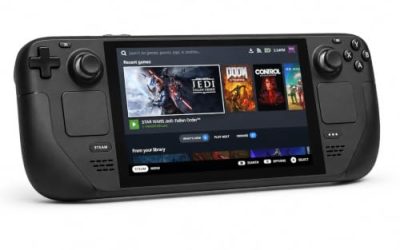
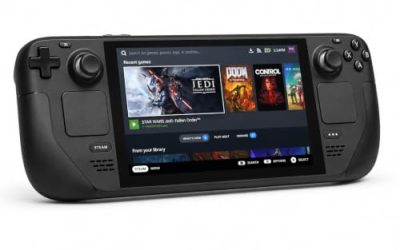
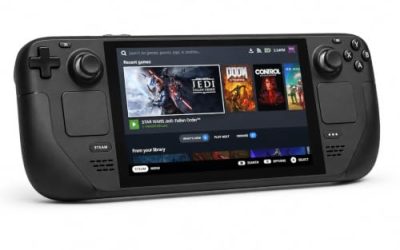
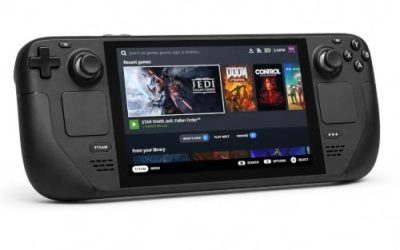
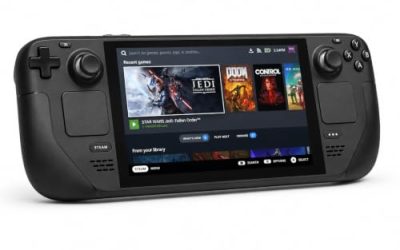
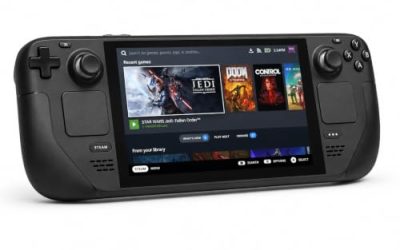
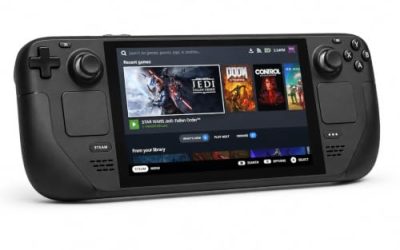
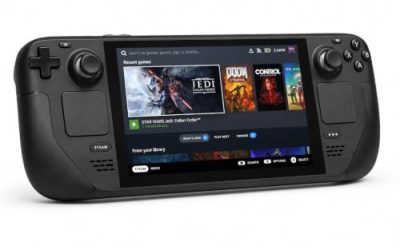
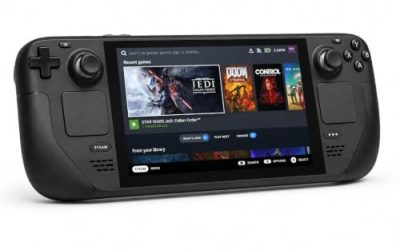
Valve Steam Deck OLED 512GB

The handheld the Verified badge was written for. The game’s published requirements are a rounding error next to the Deck’s APU, and Valve’s test sheet gives the Windows build a clean pass under proton-stable.
Specs
- Display: 7.4-inch HDR OLED, 1280 by 800, up to 90 Hz
- Processor: AMD Zen 2 and RDNA 2 custom APU
- Memory: 16 GB LPDDR5
- Storage: 512 GB NVMe, plus a microSD slot
- Wireless: Wi-Fi 6E and Bluetooth
- Channel note: Valve sells the Deck mainly through its own store, so Amazon listings are third-party sellers
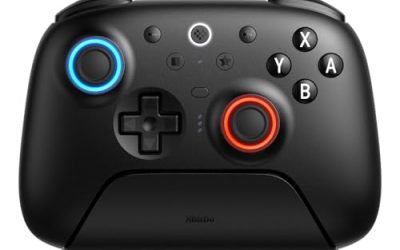
8BitDo Ultimate 2 Bluetooth Controller
The docked and desktop pad pick. Valve’s Deck sheet for this game is written around a gamepad configuration, and this pad covers the couch case with modern sticks and triggers plus back buttons.
Specs
- Connectivity: Bluetooth wireless and USB-C wired
- Joysticks: TMR electromagnetic, anti-drift design
- Triggers: Hall effect, with mode switching
- Extras: two remappable back buttons, motion control
- In the box: charging dock included
Xbox Wireless Controller, Carbon Black
The safest guest pad in PC gaming: Steam Input support is universal, the glyphs match what most games display, and it pairs over Bluetooth or its own wireless standard. On the handheld, the test sheet’s note applies: an external pad may need a manual Quick Access Menu switch.
- Connectivity: Xbox Wireless and Bluetooth
- Port: USB-C for wired play
- Controls: hybrid D-pad, dedicated Share button
- Power: AA batteries or optional rechargeable pack
Logitech G502 HERO
The game’s own published requirements ask for a mouse with three buttons and a scroll wheel, because breaching plans are drawn with a pointer. Eleven programmable buttons cover the inputs a long session repeats.
Specs
- HERO optical sensor, up to 25,600 DPI
- 11 programmable buttons
- Adjustable weight system
- Wired USB connection
- On-board memory profiles
Samsung T9 Portable SSD 2TB
For moving a Linux game library between machines, or keeping an offline backup of installers, a fast USB-C drive is the simple answer. The headline figure needs a Gen 2×2 host port; on a lesser port the drive runs at that ceiling.
Specs
- Capacity: 2 TB portable SSD
- Interface: USB 3.2 Gen 2×2, USB-C connector
- Maker-rated speeds: up to 2,000 MB per second read, 1,950 MB per second write
- Features: Dynamic Thermal Guard, maker-rated drop resistance
How to choose
Start with the Proton version, not the hardware. Set the compatibility tool to Proton 9.0-4 before the first launch, and only experiment with newer builds once it runs clean — the dark-rendering fault is a version problem, not a hardware one. On a Steam Deck, the default configuration already earned a Verified pass, so change nothing until something misbehaves. At a desk, honour the game’s own requirements note and play with a real three-button scroll-wheel mouse: the planning layer is pointer-driven, and a pad is a compromise there. Storage is the least urgent decision — the game installs to under 3 GB — so buy capacity for the whole library, not for this title.
Who should skip
Skip this game if you only buy native Linux builds on principle: there is none, there never has been one on this record, and the soundtrack’s Linux flag is not a down payment on a port. Skip it if you want a store-rated controller guarantee — the record carries no controller-support field, so pad play rests on Valve’s Deck sheet and Steam Input. Skip it if you buy on GOG exclusively, because no edition exists there. And skip it if pause-and-plan tactics sounds slow: the genre is deliberate, and no compatibility layer changes that.
FAQ
Is Door Kickers 2 native on Linux?
No. Steam’s record flags the game for Windows and Mac only, the Linux requirements field is absent, and the depot list contains a Windows build and a macOS build with no Linux depot in any form. The only Linux flag in the family belongs to the separate soundtrack product — a set of audio files, not the game.
How well does Door Kickers 2 run under Proton?
ProtonDB rates it Platinum — settled, best-reported and trending — across 58 reports with strong confidence. The one recurring fix is a version pin: the newest Proton 10 builds can render missions too dark on some systems, and Proton 9.0-4 is the known-good setting.
Is Door Kickers 2 verified on Steam Deck?
Yes. Valve rates it Verified with all four checks passing, and SteamOS separately Compatible. The test dates from February 2025 and grades an earlier build than the current public one, and the sheet notes that external controllers do not default to the primary player slot.
Can I buy Door Kickers 2 on GOG instead?
No. GOG holds no product record for this game and its natural store address resolves to the general catalogue, so there is no DRM-free edition on any platform. Steam is the only storefront.
Final verdict
Door Kickers 2 is a Windows and Mac game whose Linux story is written entirely by Proton — and on the evidence, Proton writes it well. The record is one of the cleanest non-native shapes in this series: a real Mac build proving the studio ships second platforms when it chooses to, an absent Linux field with no depot behind it, and a soundtrack flag that flatters the family without changing the ruling. Add a Platinum community file with one documented version pin and a Verified Deck badge whose only blemish is its age, and the recommendation is simple: buy it on Steam, pin Proton 9.0, and breach.
Product and ASIN Reference
| Product | ASIN |
|---|---|
| Valve Steam Deck OLED 512GB | B0CQ3RWQQZ |
| 8BitDo Ultimate 2 Bluetooth Controller | B0F194QFT2 |
| Xbox Wireless Controller, Carbon Black | B08DF248LD |
| Logitech G502 HERO | B07GBZ4Q68 |
| Samsung T9 Portable SSD 2TB | B0CHFS9K14 |