Touhou Luna Nights is Team Ladybug’s Metroidvania take on the Touhou universe, built around Sakuya Izayoi, the Scarlet Devil Mansion’s time-stopping maid. It left Early Access in February 2019 and has been a fixture of best-fangame lists ever since, which makes its Linux status a recurring question.
The short version is that there is no native Linux build, and there never has been one on the record. What the game has instead is one of the strongest Proton track records in its class: a unanimous top tier on ProtonDB and a Steam Deck Playable badge whose test paperwork still describes the exact build on sale today.
As an Amazon Associate, we earn from qualifying purchases.
Quick answer
Touhou Luna Nights is not native on Linux: Steam flags the game Windows only, its Linux requirements field is an absent empty list, and its sole content depot carries no platform split. The route in is Proton. ProtonDB settles it at Platinum across 69 reports with strong confidence, and Valve rates it Playable on Steam Deck, tested against the build still on sale.
What the Steam record actually ships
Steam’s appdetails record for Touhou Luna Nights (app 851100) names Team Ladybug and WSS playground as developers, WSS playground and Alliance Arts as publishers, and a release date of 25 February 2019, with the coming-soon flag false and a live purchase package still attached. The platform flags read Windows true, Mac false, Linux false: a finished, still-sold Windows game.
The requirements fields settle the tab question cleanly. The Windows tab is genuinely populated in both tiers — a period minimum of Windows 2000 through 10, a Core 2 Duo class processor, 2 GB of RAM and an OpenGL-compliant video card, the recommended tier repeating the same hardware. The Mac and Linux requirements fields are absent fields: empty lists, meaning no tab exists in any form, not even the empty shell of headings over blank lists.
The depot census is decisive. The record holds exactly one content depot, 851102, at 298.11 MiB, carrying no operating-system configuration at all — no Windows, Mac or Linux split, and no second depot in any form beside it. A native build cannot hide inside a single unsplit depot. The registered asset list agrees: clienticon, clienttga, icon and logo, with no LinuxClientIcon in any form — a clean absence, neither a fossil from a removed build nor an icon without a depot behind it.
Input is the one place the record asks for care. Steam’s own appinfo field rates controller support as partial, and the store categories repeat it: Partial Controller Support, beside Single-player, Steam Cloud and Family Sharing. No anti-cheat is named, no third-party DRM notice appears, and no external launcher is required.
The soundtrack is the family’s only Linux flag
The game’s record lists one add-on app: the Touhou Luna Nights Original Soundtrack (app 1142470, released October 2019), a music product. Its platform flags read Windows, Mac and Linux all true — the only Linux flag anywhere in this game’s family, and the only Mac flag too.
That is the soundtrack all-true trap in textbook form. A family scan that credits any member’s flags to the base game would report Touhou Luna Nights as a Windows, Mac and Linux release. The credit belongs to an audio package whose files play on anything; the game itself, the only app in the family that ships a build, flags Windows alone.
ProtonDB: Platinum across the board, and a heading that overclaims
ProtonDB’s summary record for app 851100, read directly this session, is unanimous: Platinum on the settled, best-reported and trending tiers, across 69 reports with strong confidence — about as settled as the database gets. ProtonDB does not classify the game as native, which agrees with Steam’s flags.
One part of the ProtonDB file does not agree with Steam. The game’s page carries the heading text “Natively Supports:” above its requirements display — the stray heading this project has tracked across many titles, a template artifact rendered regardless of the underlying record. Steam contradicts it on every layer: false flags, absent fields, a single unsplit depot. The article follows Steam.
The report colour underneath the tiers is consistent with Platinum: recent filings on current Proton describe out-of-the-box play on desktop and Deck alike, including full playthroughs. Desktop players on NVIDIA hardware repeatedly report that the game only launches once the distribution’s 32-bit NVIDIA driver package is installed — a system prerequisite, not a game fault. One recent filing on a custom GE-Proton build could not launch it at all — an outlier against the Platinum mass. Older Deck reports echo Valve’s findings below: the on-screen keyboard can be forced at the first screen if the Steam overlay is opened there.
Steam Deck: Playable, and the test still matches the build on sale
Valve rates Touhou Luna Nights Playable on Steam Deck, category 2 on its own compatibility endpoint, with SteamOS separately rated Compatible. Two checks pass outright: in-game interface text is legible, and the default graphics configuration performs well. Two deductions hold it below Verified: some functionality is not accessible under the default controller configuration, requiring the touchscreen, the virtual keyboard or a community layout; and the game sometimes shows mouse, keyboard or non-Steam-Deck controller icons. The fine print adds: supported input is gamepad, small text is not flagged, no manual keyboard invoke is required, and the recommended runtime is proton-stable. Test metadata was read through SteamDB’s republication of Valve’s sheet.
The dates are the unusual part. Valve’s test was recorded on 7 December 2022 against build 6049421 — and the public branch still stands at that build today, unmoved since January 2021. This badge grades the exact copy on sale, so the Playable verdict is current by build.
Storefronts and anti-cheat
There is no second storefront copy to weigh. The game’s natural GOG address resolves to the general games catalogue rather than a product page, and GOG’s catalogue records surface no product for this title — the ruling rests on the absent page and records, not on search silence alone. No GOG edition exists, so the Steam copy is the only PC edition sold.
On anti-cheat, the record is quiet in both directions: Steam names none for this single-player game, and the AreWeAntiCheatYet database — its full root games list, read in full this session — holds no entry for it. That is documentation silence, not a clearance; it means no anti-cheat stands between the Windows build and Proton, which matches the Platinum file.
Gear that fits the record
The gear below follows the record’s shape: the handheld Valve graded, two pads for a partial-controller-support game, a mouse for the keyboard-and-mouse route Valve’s deductions imply, and library storage.
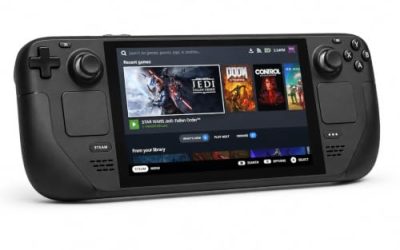
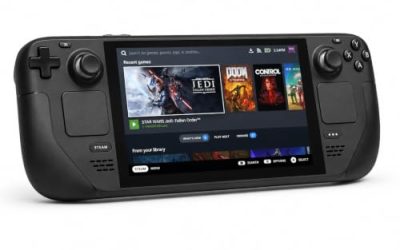
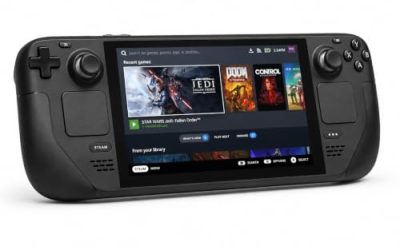
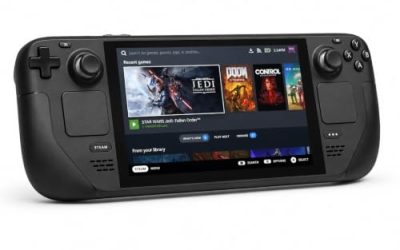
Valve Steam Deck OLED 512GB

The handheld the Playable badge was written for — and the rare case where the badge still grades the build on sale. Performance passes Valve’s sheet outright; the deductions concern controller configuration and glyphs, not frame rates.
Specs
- Display: 7.4-inch HDR OLED, 1280 by 800, up to 90 Hz
- Processor: AMD Zen 2 and RDNA 2 custom APU
- Memory: 16 GB LPDDR5
- Storage: 512 GB NVMe, plus a microSD slot
- Wireless: Wi-Fi 6E and Bluetooth
- Channel note: Valve sells the Deck mainly through its own store, so Amazon listings are third-party sellers
8BitDo Ultimate 2 Bluetooth Controller
The docked and desktop pad pick. Steam’s record rates the game’s controller support partial, so a pad that pairs cleanly with Steam Input — plus a community layout where the default one falls short — is the practical route.
Specs
- Connectivity: Bluetooth wireless and USB-C wired
- Joysticks: TMR electromagnetic, anti-drift design
- Triggers: Hall effect, with mode switching
- Extras: two remappable back buttons, motion control
- In the box: charging dock included
Xbox Wireless Controller, Carbon Black
The safest guest pad in PC gaming: Steam Input support is universal, and its glyphs are the ones most Windows games of this era draw when they draw pad icons at all — useful in a game Valve notes sometimes shows non-matching icons.
- Connectivity: Xbox Wireless and Bluetooth
- Port: USB-C for wired play
- Controls: hybrid D-pad, dedicated Share button
- Power: AA batteries or optional rechargeable pack
Logitech G502 HERO
Valve’s sheet says some functionality escapes the default controller configuration, which makes keyboard and mouse a first-class route rather than a fallback — and a Metroidvania’s map and menu screens reward a precise wired mouse.
Specs
- HERO optical sensor, up to 25,600 DPI
- 11 programmable buttons
- Adjustable weight system
- Wired USB connection
- On-board memory profiles
Samsung T9 Portable SSD 2TB
For moving a Linux game library between machines, a fast USB-C drive is the simple answer. The headline figure needs a Gen 2×2 host port; on a lesser port the drive runs at that ceiling instead.
Specs
- Capacity: 2 TB portable SSD
- Interface: USB 3.2 Gen 2×2, USB-C connector
- Maker-rated speeds: up to 2,000 MB per second read, 1,950 MB per second write
- Features: Dynamic Thermal Guard, maker-rated drop resistance
How to choose
Choose the Steam copy, because it is the only PC edition on sale and the exact build both records describe. On desktop or laptop, install under Proton and leave the compatibility tool at its default; the unanimous Platinum file says current builds run the game cleanly. NVIDIA desktop users should install their distribution’s 32-bit driver package before the first launch — the one prerequisite the report file repeats. On a Steam Deck, expect Playable rather than Verified: legible text and good performance, with a community controller layout ready if the default configuration leaves a function out of reach.
Who should skip
Skip this one if you are shopping for a native Linux Touhou game: this title is not it, and the only Linux flag in its family belongs to a soundtrack. Skip it if you want a DRM-free offline installer, because no GOG edition exists. Skip the Deck plan if Playable-grade paperwork is not enough for you and you only buy Verified titles. And skip it if partial controller support is a deal-breaker and you will not use Steam Input layouts or a keyboard for the gaps.
FAQ
Is Touhou Luna Nights native on Linux?
No. Steam flags the game Windows only, the Linux requirements field is an absent empty list, and the record holds a single content depot with no platform split. The Original Soundtrack add-on flags Linux, but that is an audio package, not the game.
How well does it run under Proton?
ProtonDB settles it at Platinum on all three tiers, across 69 reports with strong confidence. Most reports describe out-of-the-box play; NVIDIA desktop users may first need their distribution’s 32-bit driver package.
What does the Steam Deck Playable rating actually cost me?
Two things, per Valve’s sheet: some functionality is not reachable under the default controller configuration, so a touchscreen tap, the virtual keyboard or a community layout may be needed; and the game sometimes shows non-Deck controller icons. Text is legible, performance passes, and the test was run against build 6049421 — still the build on sale.
Is there a GOG or other DRM-free edition?
No. The game’s natural GOG address resolves to the general catalogue and no product record exists for it there. The Steam copy is the only PC edition sold.
Final verdict
Touhou Luna Nights is a Windows-only game with an exemplary Proton file. The record leaves no room for a hidden native build — false flags, absent fields, one unsplit depot — and the soundtrack’s Linux flag is a trap for family scans, not a port. Against that, a unanimous Platinum across 69 reports and a Playable badge that still grades the build on sale make this one of the lowest-risk Proton buys in its genre. Buy the Steam copy, install the 32-bit NVIDIA package first if that is your hardware, and play.
Product and ASIN Reference
| Product | ASIN |
|---|---|
| Valve Steam Deck OLED 512GB | B0CQ3RWQQZ |
| 8BitDo Ultimate 2 Bluetooth Controller | B0F194QFT2 |
| Xbox Wireless Controller, Carbon Black | B08DF248LD |
| Logitech G502 HERO | B07GBZ4Q68 |
| Samsung T9 Portable SSD 2TB | B0CHFS9K14 |