Tactical Breach Wizards, the turn-based tactics game from Suspicious Developments, sends a team of modern-day wizards through breach-and-clear missions built around defenestration and rewinds. It launched on Steam on 22 August 2024, and Linux players have asked the same question ever since: is there a native Linux version, or is Proton the only way in?
The record gives an unusually clean answer. Steam’s own data flags the game as Windows only, the Linux requirements field does not exist in any form, and the depot census finds a single Windows build with no Linux counterpart in the package. What the game offers instead is a strong compatibility route: a Platinum headline on its community file and a Steam Deck Verified badge, both earned under Proton.
As an Amazon Associate, we earn from qualifying purchases.
Quick answer
Tactical Breach Wizards has no native Linux build: Steam’s record flags Windows only, its Linux requirements field is absent, and its single content depot is a Windows build. Linux players use Proton instead, where the community file’s headline tier is Platinum across 45 reports, and Valve rates the game Steam Deck Verified.
What Steam’s record actually says
Start with the platform flags, because everything else agrees with them. The store record for app 1043810 reads windows true, mac false, linux false. The Windows requirements tab is genuinely populated, with a modest minimum specification. The Mac and Linux requirements fields are absent fields: empty lists with no tab in any form, not even the populated-but-empty shell some Windows-only games carry.
The depot census is just as plain. The game ships exactly one content depot, 1043811, at 2.36 GiB, and filtering the package to Windows reproduces that same total. A second registered depot, 3139300, carries no size and is marked unused; it is leftover registration paperwork, not a build. No Linux depot exists in any form: no full depot, no zero-byte placeholder, no ghost entry stranded outside the sold package. The registered assets agree — a client icon, a client tga, an icon and a logo, with no Linux client icon in any form, the clean kind of absence rather than a fossil or an inverse case. SteamDB’s technology detection identifies a Unity engine game on the Mono runtime, which fits the single-build picture.
The game’s own record lists full controller support, and that rating is what the controller sections below rely on. Nothing here suggests a port was planned and pulled; the Linux leg was never registered at all.
The add-on family, read one app at a time
The base record lists one piece of DLC, read on its own record rather than taken from search results. App 3065010 is the Tactical Breach Wizards: Special Edition Upgrade, and its flags read windows true, mac false, linux false, matching the base exactly. Its depot is named Fancy Extras, which describes what the upgrade is: extra content layered on the same Windows build, not a separate edition with its own platform story. There is no soundtrack app in this family, so the familiar trap in which a music app flags every platform true and inflates a family’s Linux count cannot fire here.
Proton: the route Linux players actually take
Since no native build exists, the practical question is how the Windows build behaves under Proton, and the community file is encouraging. ProtonDB’s summary feed was down during this check — it returned its error page for this app and for a control app alike — so the figures here are headline values from the game’s ProtonDB page rather than a full summary read: a Platinum headline tier across 45 reports. No settled, trending or confidence figures are claimed, because the feed that supplies them could not be read.
One part of that page needs naming directly. It carries a “Natively Supports:” heading, the stray tag ProtonDB attaches to many games whose Steam records say the opposite. It is wrong here: Steam flags the game Windows only, the Linux requirements field is absent, and there is no Linux depot. This article follows Steam’s record; treat the heading as a labelling error, not evidence of a native build.
The report text behind the headline is mostly calm. The newest filings, on Proton 10.0-3, describe out-of-the-box play on desktop Linux. Steam Deck filings describe full playthroughs, one holding a stable frame rate at a capped power draw, another praising the improved gamepad controls added after launch. Two Deck filings call some ability text small, while Valve’s own sheet grades the interface text legible; both observations stand. The problem filings are older and setup-specific: hard locks late in a long playthrough on one NVIDIA desktop, a menu freeze on one Ryzen APU configuration, and crashes on an older Fedora release the same reporter fixed by moving to a newer one. None repeats in the recent file.
Steam Deck: Verified, on paperwork that predates the current build
Valve’s own compatibility endpoint rates the game Verified, its top category, with all four checks passing: the default controller configuration is fully functional, the game shows Steam Deck controller glyphs, interface text is legible, and the default graphics configuration performs well. The sheet adds that no manual keyboard invocation is required and the small text flag is off. SteamOS is rated Compatible in its own column.
The badge’s paperwork, read through SteamDB’s republication of Valve’s test sheet, was written on 10 December 2024 against build 16662667, with a recommended runtime of proton-9.0-3RC. The current public build is 22422871, published in March 2026, so the test grades a superseded build rather than the exact copy on sale today. That makes this a supplement-candidate badge: the verdict is real, but the formal test has not been re-run against the current branch.
Anti-cheat and other storefronts
This is a single-player game, and its record names no anti-cheat system. The Are We Anti Cheat Yet database, read in full at its root games file across 1,167 entries, holds no entry for this game in either direction. That is documentation silence, not a clearance: nothing blocks Proton here because there is no multiplayer layer to protect.
There is no GOG edition. The natural product address resolves to GOG’s general games catalogue instead of a product page, the storefront’s embedded search returns nothing, and its catalogue records surface no product for this title — a ruling that rests on the absent page and the records, not on search silence alone.
Gear that fits a Proton tactics run
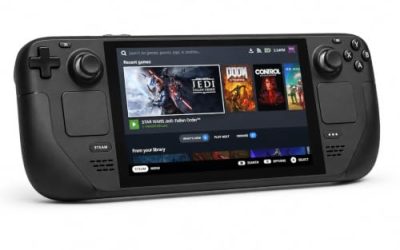
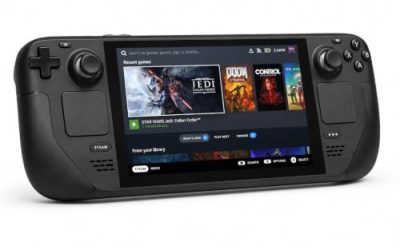
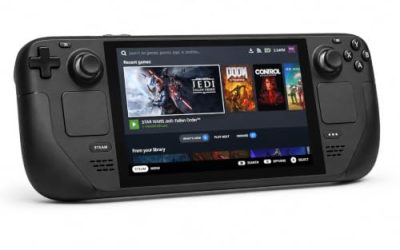
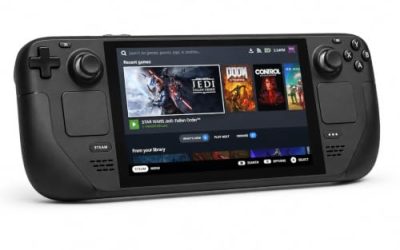
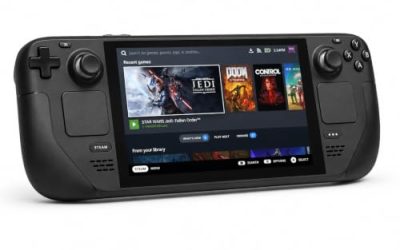
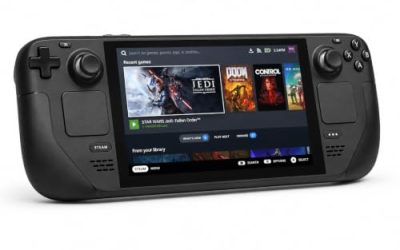
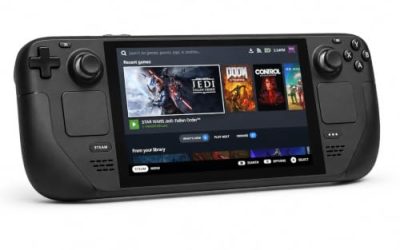
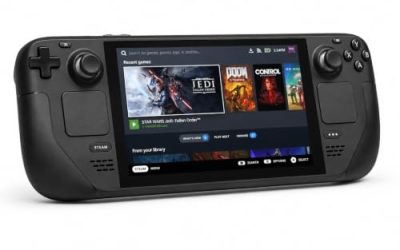
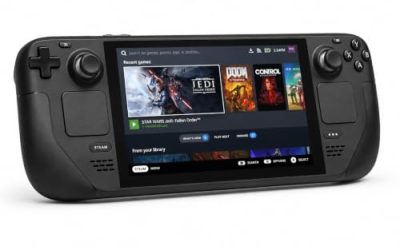
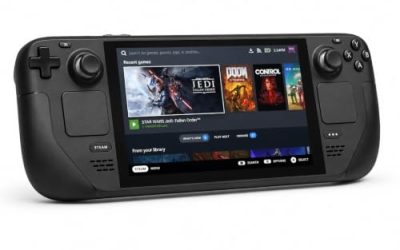
Valve Steam Deck OLED 512GB

The handheld the Verified badge was written for: Valve’s sheet passes the Windows build on all four checks, and the game’s own full controller support rating means the certified default configuration is the one the developers maintain.
Specs
- Display: 7.4-inch HDR OLED, 1280 by 800, up to 90 Hz
- Processor: AMD Zen 2 and RDNA 2 custom APU
- Memory: 16 GB LPDDR5
- Storage: 512 GB NVMe, plus a microSD slot
- Wireless: Wi-Fi 6E and Bluetooth
- Channel note: Valve sells the Deck mainly through its own store, so Amazon listings are third-party sellers
8BitDo Ultimate 2 Bluetooth Controller
The docked and desktop pad pick. Steam lists full controller support for the game, and this pad covers the couch case with modern sticks and triggers plus back buttons.
Specs
- Connectivity: Bluetooth wireless and USB-C wired
- Joysticks: TMR electromagnetic, anti-drift design
- Triggers: Hall effect, with mode switching
- Extras: two remappable back buttons, motion control
- In the box: charging dock included
Xbox Wireless Controller, Carbon Black
The safest guest pad: Steam Input support is universal, the glyphs match what most games display, and it pairs over Bluetooth or its own wireless standard. On the handheld, the test sheet’s note applies: an external pad may need a manual Quick Access Menu switch before it takes over.
– Connectivity: Xbox Wireless and Bluetooth
– Port: USB-C for wired play
– Controls: hybrid D-pad, dedicated Share button
– Power: AA batteries or optional rechargeable pack
– ASIN: B08DF248LD
Logitech G502 HERO
A game of grids, ranges and ability menus rewards a precise wired mouse: every tile selection becomes a deliberate click, and eleven programmable buttons cover the confirm, cancel, rewind and camera inputs a mission repeats.
Specs
- HERO optical sensor, up to 25,600 DPI
- 11 programmable buttons
- Adjustable weight system
- Wired USB connection
- On-board memory profiles
Samsung T9 Portable SSD 2TB
For moving a Linux game library between machines, a fast USB-C drive is the simple answer. The headline figure needs a Gen 2×2 host port; on a lesser port the drive runs at that ceiling instead.
Specs
- Capacity: 2 TB portable SSD
- Interface: USB 3.2 Gen 2×2, USB-C connector
- Maker-rated speeds: up to 2,000 MB per second read, 1,950 MB per second write
- Features: Dynamic Thermal Guard, maker-rated drop resistance
How to choose
Choose the Proton version first. The newest community filings run on Proton 10.0-3 without tweaks, while Valve’s test sheet names proton-9.0-3RC as its recommended runtime; start from either, with the current stable line the easier default. No launch options are worth copying, because the recent reports do not use any.
Choose the input next. The game’s own record promises full controller support, and the post-launch control revisions make the pad a genuine first choice rather than a compromise, on Deck or docked. Players who think in tiles may still prefer a mouse at a desk, where the grid and ability menus reward precise pointing.
Choose the edition last. The Special Edition Upgrade is the family’s only add-on, Windows-only exactly like the base game, and changes nothing about Linux compatibility. Decide it on whether the extras interest you, not on platform grounds.
Who should skip
Skip this one if a native Linux build is a condition of purchase: the record is not ambiguous, there is no port to wait for on any visible branch, and the Proton route is what is being sold to Linux players. Skip it also if you play on macOS, because there is no Mac build either, and if your library lives on GOG, because no edition exists there. Players who want a formal Deck test against the current build, rather than a December 2024 test of a superseded one, may prefer to wait for Valve to refresh the paperwork.
FAQ
Is Tactical Breach Wizards native on Linux?
No. Steam’s record for app 1043810 flags Windows only, the Linux requirements field is absent rather than populated, and the single content depot is a Windows build. The “Natively Supports:” heading on the game’s ProtonDB page is a labelling error Steam’s record contradicts on every layer.
How well does Tactical Breach Wizards run under Proton?
The community headline is Platinum across 45 reports. ProtonDB’s summary feed was down during this check, so no settled or confidence figures are claimed, but the recent report text describes out-of-the-box play on current Proton versions, including full Deck playthroughs.
Is Tactical Breach Wizards Steam Deck Verified?
Yes. Valve rates it Verified with all four checks passing, and SteamOS Compatible alongside. The test was performed in December 2024 against build 16662667 with a proton-9.0-3RC runtime recommendation; the current public build is newer, so the badge grades a superseded build.
Can I buy Tactical Breach Wizards on GOG instead?
No. GOG carries no product page for the game, its catalogue records surface nothing, and the address a listing would live at resolves to the general games catalogue. The Steam copy is the only PC edition on sale.
Final verdict
A Windows-only release whose record leaves nothing to argue about: no Linux tab, no Linux depot, no stray platform flag in its small add-on family, and a ProtonDB heading that claims otherwise and is simply wrong. What Linux players get instead is close to the best version of the Proton arrangement: a Platinum community headline, a Verified Deck badge, full controller support from the game’s own record, and no anti-cheat layer in the way. Buy the Steam copy, run it under a current Proton, and enjoy one of the strongest tactics games of its year.
Product and ASIN Reference
| Product | ASIN |
|---|---|
| Valve Steam Deck OLED 512GB | B0CQ3RWQQZ |
| 8BitDo Ultimate 2 Bluetooth Controller | B0F194QFT2 |
| Xbox Wireless Controller, Carbon Black | B08DF248LD |
| Logitech G502 HERO | B07GBZ4Q68 |
| Samsung T9 Portable SSD 2TB | B0CHFS9K14 |