Shattered Pixel Dungeon began as an open-source refinement of Watabou’s Pixel Dungeon and grew, under developer Shattered Pixel, into the branch of that family that never stopped moving: six heroes, procedurally generated floors, unidentified potions and scrolls, and permadeath that teaches through failure. It reached Steam on 23 March 2022, and for Linux players the interesting part is the paperwork, because this record is one of the rare ones where every layer points the same way.
Plenty of store pages wear a Linux flag that dissolves under inspection: the requirements tab turns out to be an empty shell, the depot census shows no Linux build, or the family’s only Linux flag belongs to a soundtrack. This article works through the full record for app 1769170 — flags, requirements, depots, the sold package, the single DLC, Valve’s Deck sheet, ProtonDB and GOG — to settle whether the native claim survives.
As an Amazon Associate, we earn from qualifying purchases.
Quick answer
Yes. Shattered Pixel Dungeon ships a genuine native Linux build: Steam’s record flags all three platforms, the Linux requirements tab is filled in, and a Linux depot of about 134 MB sits inside the package Steam sells. It is Steam Deck Verified with a native runtime, and ProtonDB rates it Platinum across eight reports, most filed against the native build itself.
The record, layer by layer
Start with the flags. Steam’s record lists Windows, macOS and Linux all as true, and the requirements tabs behind those flags are genuinely populated on all three platforms — no empty shells. The Windows tab asks for Windows 10 and OpenGL 2.0-class graphics; the macOS tab names macOS 10.12 Sierra and notes Rosetta 2 is currently required on Apple Silicon. The Linux tab is the one that matters: any distribution with glibc 2.17 or newer should work, OpenGL 2.0-compatible graphics, 250 MB of storage, and a recommended line naming SteamOS 3 and Ubuntu 24.04 LTS. A placeholder rarely names a glibc floor and two current distributions.
The depot census backs the tab. SteamDB’s listing shows three content depots, one per platform: depot 1769171 for Windows at 122.85 MiB, depot 1769172 for macOS at 128.23 MiB, and depot 1769173 for Linux at 134.12 MiB — the Linux build is the largest, not a stub. All three sit inside package 634693, the package Steam sells, and were updated together on 25 November 2026 alongside the current public build, 26876993. A registered LinuxClientIcon is present and, for once, backed by a real depot rather than standing as a fossil over an absent build.
Controller support is stated from the game’s own record only: it carries a full controller support field, and the store categories repeat it, adding DualShock and DualSense entries.
The soundtrack, and why its flags prove nothing on their own
The full DLC array contains exactly one entry, app 1939650, the Shattered Pixel Dungeon Soundtrack, released 5 April 2022. It is a music app flagging all three platforms true — the classic soundtrack shape that, on a Windows-only game, manufactures a fake Linux flag for the family. Here it changes nothing: the base game’s status rests on its own flags, requirements tab and Linux depot, and the soundtrack’s matching flags, while consistent, are not evidence and are not used as any here.
Steam Deck: Verified, with paperwork from 2022
Valve’s own compatibility endpoint resolves this app to category 3, Verified. All four checks pass: the default controller configuration is fully functional, the glyphs shown match the Deck, interface text is legible, and the default graphics configuration performs well. The sheet’s recommended runtime is native — Valve tested the Linux build itself, not a Proton fallback — and SteamOS is separately rated Compatible, with no manual keyboard invocation and no small-text deduction.
One qualification belongs in plain sight. The test metadata — published on SteamDB’s copy of Valve’s sheet, since the endpoint returns the verdict without the bookkeeping — dates the test to 26 October 2022, against build 9692423. The current public build is 26876993, from November 2026, so the badge grades a build from four years and many updates ago. That makes this a supplement candidate in this project’s terms: the verdict is real and the runtime it certifies is native, but the paperwork predates the copy on sale. Nothing suggests the build has been withdrawn since — the depot was updated with the others in November 2026 — so the gap concerns the test’s age, not the build’s existence.
Player filings add one wrinkle the badge does not capture. A Deck player in the ProtonDB file calls the controller layout inconvenient and the game best with touchscreen and mouse input, while another reports flawless play under a low power cap. Verified means the default configuration works — not that a grid-and-inventory roguelike feels native to a gamepad.
ProtonDB: a Platinum file built on the native build
The ProtonDB summary feed answered in full: settled tier Platinum, best-reported Platinum, trending Platinum, across 8 reports, with confidence rated low — a small file, however unanimous. Most reports were filed against the native Linux build itself rather than any Proton version, from SteamOS on the Deck and from desktops such as Linux Mint. The faults named are minor: audio not returning after the Deck wakes from sleep until the game restarts, and the controller-layout complaint covered above. No launch failures, no workarounds, no tinkering steps.
The game’s ProtonDB page also carries the “Natively Supports:” heading this project checks on every title, because on many games it sits over a Windows-only record. Here it agrees with Steam’s record on every layer — a case where the tag is simply correct.
The GOG edition carries Linux too
The storefront ruling is unusually generous. GOG sells the game, and GOG’s own product record (product 1441636983) lists compatibility as Windows, macOS and Linux all true, with the live page in stock. The DRM-free route is not a lesser edition — the exception in this cluster, where GOG editions so often stop at Windows.
On anti-cheat there is nothing to rule on. The record names none, the game is single-player only, and the Are We Anti Cheat Yet database, read in full, holds no entry for this game in either direction — its only “shattered” entry is Shattered Horizon, a different, older game. That is documentation silence about a game needing no clearance, not a verdict.
Gear that fits the record
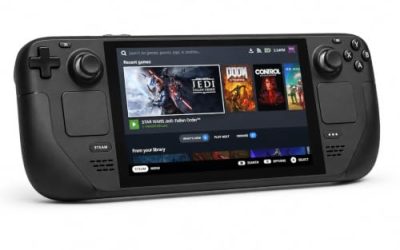
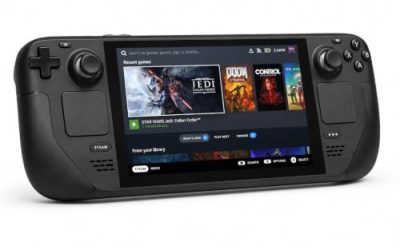
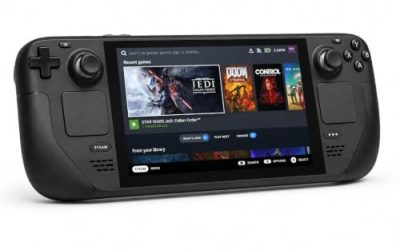
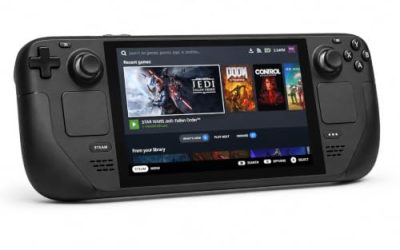
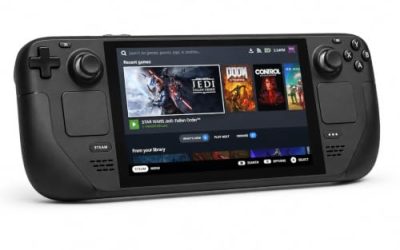
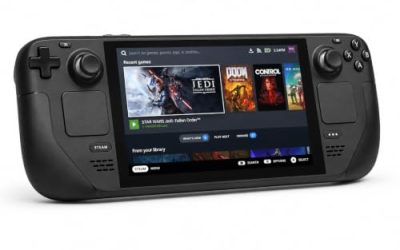
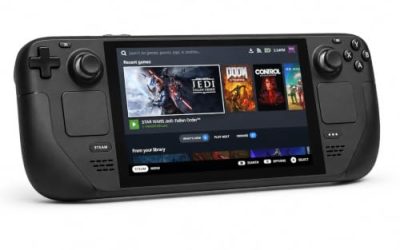
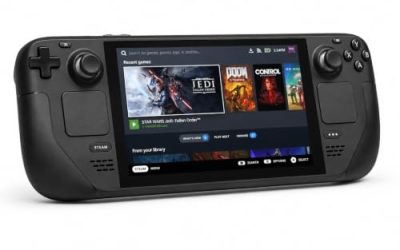
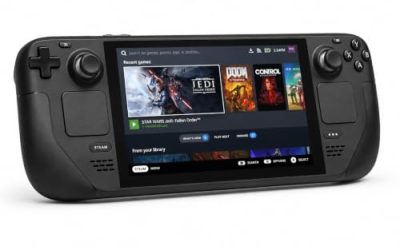
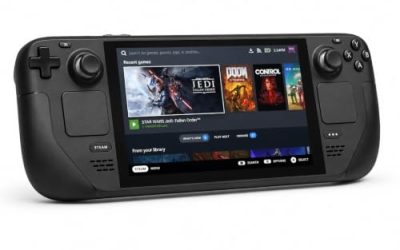
Valve Steam Deck OLED 512GB

The handheld this game’s Verified badge was written for, running the native Linux build rather than a compatibility layer. The game’s footprint is a rounding error next to the Deck’s hardware, and the legible-text pass suits a roguelike that lives in inventory grids.
Specs
- Display: 7.4-inch HDR OLED, 1280 by 800, up to 90 Hz
- Processor: AMD Zen 2 and RDNA 2 custom APU
- Memory: 16 GB LPDDR5
- Storage: 512 GB NVMe, plus a microSD slot
- Wireless: Wi-Fi 6E and Bluetooth
- Channel note: Valve sells the Deck mainly through its own store, so Amazon listings are third-party sellers
8BitDo Ultimate 2 Bluetooth Controller
The docked and desktop pad. The game’s own record claims full controller support, so a pad is a legitimate way to play at a desk or on a television, and this one adds back buttons that suit a menu-driven dungeon crawl’s confirm-and-cancel rhythm.
Specs
- Connectivity: Bluetooth wireless and USB-C wired
- Joysticks: TMR electromagnetic, anti-drift design
- Triggers: Hall effect, with mode switching
- Extras: two remappable back buttons, motion control
- In the box: charging dock included
Xbox Wireless Controller, Carbon Black
The familiar fallback pad: Steam Input coverage is universal, the glyphs are the ones most PC games draw, and it pairs over Bluetooth or its own wireless standard, docked or at a desk.
- Connectivity: Xbox Wireless and Bluetooth
- Port: USB-C for wired play
- Controls: hybrid D-pad, dedicated Share button
- Power: AA batteries or optional rechargeable pack
Logitech G502 HERO
At a desk, the ProtonDB filings make the case: several players prefer mouse input for this game’s grids and quickslots. A precise wired mouse with eleven programmable buttons turns inventory management and shop trips into single clicks.
Specs
- HERO optical sensor, up to 25,600 DPI
- 11 programmable buttons
- Adjustable weight system
- Wired USB connection
- On-board memory profiles
Samsung T9 Portable SSD 2TB
For carrying a Linux game library between machines, or keeping an offline backup of DRM-free installers from stores like GOG, a fast USB-C drive is the simple answer. The headline speed needs a Gen 2×2 host port; on a lesser port it runs at that port’s ceiling.
Specs
- Capacity: 2 TB portable SSD
- Interface: USB 3.2 Gen 2×2, USB-C connector
- Maker-rated speeds: up to 2,000 MB per second read, 1,950 MB per second write
- Features: Dynamic Thermal Guard, maker-rated drop resistance
How to choose
Choose the storefront first, because both routes deliver the native build. Steam is the paid supporter edition with achievements, cloud saves and the Deck badge’s tested configuration; GOG offers the same three-platform coverage without DRM, suiting players who archive installers. The developer also offers the game free through its own channels and on Flathub, from the same GPL-licensed source — the paid editions fund continued development, so the choice is about support and convenience, not which copy is real.
Choose the input second. On the Deck, start with the default configuration Valve verified, but keep the touchscreen in mind for inventory work; on a desktop, a mouse is the instrument the game’s own filings keep recommending, with a pad as a relaxed alternative. Choose the machine last, and barely at all: a 250 MB install with OpenGL 2.0 requirements runs on any Linux hardware still in service.
Who should skip
Skip the Steam edition if you object on principle to paying for a supporter copy of a game whose source is GPL-licensed and whose developer distributes builds free — the Flathub route exists and is legitimate. Skip the game itself if permadeath with unidentified consumables reads as frustration rather than tension, or if you want a roguelike built gamepad-first: the record supports pads fully, but the design’s centre of gravity is pointer and touch input.
FAQ
Is Shattered Pixel Dungeon native on Linux?
Yes. Steam’s record flags Linux true, the Linux requirements tab is populated with a glibc 2.17 floor and named distributions, depot 1769173 delivers a Linux build of about 134 MB inside package 634693, and most of ProtonDB’s eight reports were filed against that native build.
Is Shattered Pixel Dungeon Steam Deck Verified?
Yes. Valve’s endpoint resolves the app to Verified with all four checks passing and a native recommended runtime; SteamOS is separately rated Compatible. The test behind the badge dates to 26 October 2022 against build 9692423, while the current public build is 26876993 — old paperwork, though the Linux depot is still updated alongside the others.
Does the soundtrack DLC affect the Linux ruling?
No. The only DLC is the soundtrack, a music app whose all-true flags match the base game. On Windows-only titles that shape fakes a family Linux flag, which is why this project reads DLC records individually — but the base game’s status here stands on its own record.
Can I play it on Linux without buying the Steam edition?
Yes. The developer distributes the game free through its own channels, and it is also packaged on Flathub, from the same GPL-licensed source. The Steam and GOG editions are paid supporter routes — GOG’s record lists Linux support too — so buying funds development and adds store features; it is not the only door.
Final verdict
Shattered Pixel Dungeon is one of the cleanest native records in this cluster: flags, requirements, depots, package contents and the GOG edition all agree, the Deck badge certifies the native runtime, and the ProtonDB file is a small but unanimous Platinum built mostly on native filings. The caveats concern paperwork age and input taste, not existence — Valve’s test is from 2022, and pointer or touchscreen play may suit the game better than a pad. Buy it on Steam, buy it on GOG, or install it free: the build is genuinely native.
Product and ASIN Reference
| Product | ASIN |
|---|---|
| Valve Steam Deck OLED 512GB | B0CQ3RWQQZ |
| 8BitDo Ultimate 2 Bluetooth Controller | B0F194QFT2 |
| Xbox Wireless Controller, Carbon Black | B08DF248LD |
| Logitech G502 HERO | B07GBZ4Q68 |
| Samsung T9 Portable SSD 2TB | B0CHFS9K14 |