Our Short List of 3

- Display: 7.4-inch HDR OLED, 1280 by 800, up to 90 Hz
- Processor: AMD Zen 2 and RDNA 2 custom APU
- Memory: 16 GB LPDDR5
- Storage: 512 GB NVMe, plus a microSD slot

- Connectivity: Bluetooth wireless and USB-C wired
- Joysticks: TMR electromagnetic, anti-drift design
- Triggers: Hall effect, with mode switching
- Extras: two remappable back buttons, motion control

- Connectivity: Xbox Wireless and Bluetooth
- Port: USB-C for wired play
- Controls: hybrid D-pad, dedicated Share button
- Power: AA batteries or optional rechargeable pack
All 5 Picks at a Glance
| Product | Specs | Action |
|---|---|---|
| Valve Steam Deck OLED 512GB |
| Check price on Amazon |
| 8BitDo Ultimate 2 Bluetooth Controller |
| Check price on Amazon |
| Xbox Wireless Controller, Carbon Black |
| Check price on Amazon |
 Logitech G502 HERO |
| Check price on Amazon |
 Samsung T9 Portable SSD 2TB |
| Check price on Amazon |
SYNTHETIK 2 is Flow Fire Games’ sequel to SYNTHETIK: Legion Rising — a top-down roguelite shooter — in Early Access on Steam since 11 November 2021. Anyone checking its Linux status wants two answers: whether a native Linux build exists, and whether the Windows build behaves under Proton. Steam’s record answers both, in opposite directions.
The native answer is no. Every layer of the record for app 1471410 — flags, requirements tabs, depot census, registered assets — describes a Windows-only game. The Proton answer is far better: ProtonDB settles at Platinum with strong confidence, and Valve’s Steam Deck sheet rates the game Playable, with SteamOS marked Compatible. This article walks that record layer by layer, for SYNTHETIK 2 only; the first game is a separate app.
As an Amazon Associate, we earn from qualifying purchases.
Quick answer
No native build exists. Steam’s record for SYNTHETIK 2 (app 1471410) is Windows-only: the Linux flag is false, the Linux requirements tab is an empty shell, and the single sold depot is the Windows build. Linux play runs through Proton, where ProtonDB settles at Platinum across 31 reports, and Valve rates the game Playable on Steam Deck.
The record, layer by layer
Start with the platform flags. The record flags Windows true, Mac false and Linux false. Flags alone do not settle a ruling, so the rest of the record has to agree. Here it does, completely.
The requirements tabs tell the same story in a familiar shape. The Windows tab is genuinely populated: the published minimum asks for 64-bit Windows 10, an i3-6100, 8 GB of RAM, a GTX 970 and 9 GB of storage. The Mac and Linux tabs are populated-but-empty shells — Minimum and Recommended headings over empty lists. A shell is paperwork, not a build: nobody filled the template in or shipped against it.
The depot census is decisive. The record carries exactly one content depot, 1471411, named “Windows SYNTHETIK 2 Content”, at 9.03 GiB — and the purchase package the store sells, 518024, lists that same single depot and nothing else. No Linux, Mac, shared or ghost depot exists in any form. Whatever a buyer installs, on any platform, is that one Windows build.
The registered assets agree: a client icon, a client TGA, an icon and logos — and no Linux client icon in any form. That is a clean absence, not either misleading shape: no fossil icon surviving a withdrawn build, and no real build missing its icon.
Two smaller checks close the file. The record exposes no DLC array at all, so the family is the base game alone, and the soundtrack trap — a music app flagging Linux true beside a Windows-only game — has nothing to attach to. The controller field is the game’s own: the record lists partial controller support, with matching store categories. The pad advice below is graded against that partial rating.
Still in Early Access, and still moving
The game is not finished. The record’s genre list still carries Early Access, dated 11 November 2021 — the day the game first went on sale. The development branch is plainly alive: the public branch sits at build 23399302, built on 25 May 2026. The record could therefore change, and the ruling above describes it as it stands today. Nothing on it announces a Linux build in progress; if one ships, it will surface in exactly these layers.
Steam Deck: Playable, on old paperwork
Valve’s verdict — read through SteamDB’s republication of the Deck compatibility sheet, after Valve’s own endpoint returned unusable output in this session — is Playable, with SteamOS separately marked Compatible. The passing checks matter most: all functionality is accessible with the default controller configuration, the game shows Steam Deck controller icons, and the default graphics configuration performs well.
The deductions are comfort items, not blockers: entering text can require manually invoking the on-screen keyboard, and some in-game text is small and may be difficult to read. An external controller does not take the primary-player slot by default, which matters for docked co-op, and the sheet names proton-7.0-5 as the recommended runtime from its test era.
The date deserves emphasis. Valve tested on 15 December 2022 against build 10115086; the current public build, 23399302 from May 2026, is separated from it by years of updates, so the badge grades a copy that no longer exists in that form. Treat it as old paperwork awaiting a refresh, not a measurement of the current build; its deductions are interface issues, not performance failures.
ProtonDB: Platinum across the board
Where the Deck sheet is stale, the community record is current and unusually tidy. ProtonDB’s summary for app 1471410 reads: settled tier Platinum, best-reported tier Platinum, trending tier Platinum, across 31 reports, with confidence graded strong. All three tiers agreeing at the top of the scale leaves little to interpret: the Windows build under Proton runs at the level reserved for games that behave essentially as they do on Windows.
The practical picture is simple: install the Steam copy, leave the compatibility tool at its default, and play. The Platinum file was earned across many Proton versions and hardware combinations, so no launch option or pinned build defines the experience. That contrast is the whole story: nothing native exists, and almost nothing needs to, because the compatibility route carries a top-tier record.
Co-op, EOS and the anti-cheat question
SYNTHETIK 2 is built around online co-op, so the networking layer matters. SteamDB’s technology detection lists the Epic Online Services SDK alongside the Unity engine: EOS is the plumbing behind the co-op sessions, and its presence implies no anti-cheat layer. No anti-cheat product is named anywhere on the game’s own record.
The community documentation agrees by silence. The AreWeAntiCheatYet games file, read in full at 1,167 entries, holds no entry for SYNTHETIK 2 in either direction. That is documentation silence, not a clearance. The co-op mode’s Linux risk sits with ordinary Proton networking, and the Platinum file shows no pattern of connection failures.
The GOG question
There is no GOG edition of SYNTHETIK 2. GOG’s natural product address for it resolves to the general games catalogue, not a product page, and no product record for the sequel exists there. The contrast misleads searchers: GOG does sell the first SYNTHETIK, Legion Rising, as a Windows-only edition — but that listing belongs to the earlier game and does not extend to the sequel. For SYNTHETIK 2, the Steam copy is the only PC edition on sale.
Gear that fits a Proton twin-stick run
The picks follow the record’s shape: the handheld Valve graded, pads for a game claiming only partial controller support, a mouse, and fast storage for a Proton library.
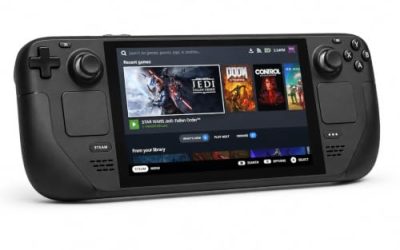
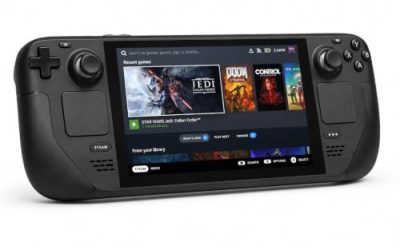
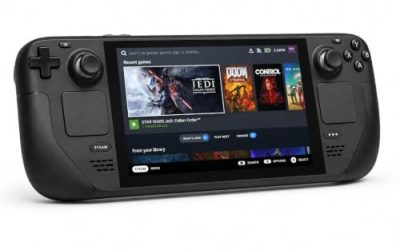
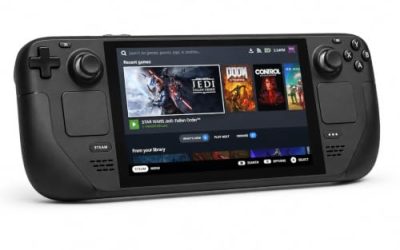
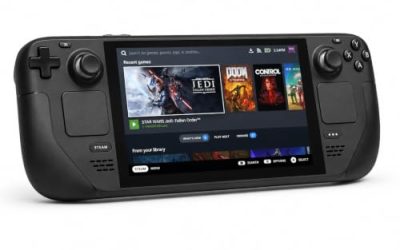
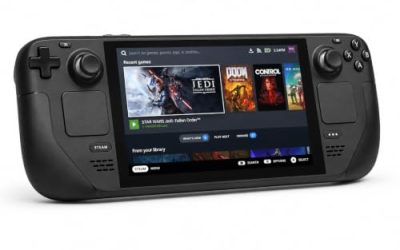
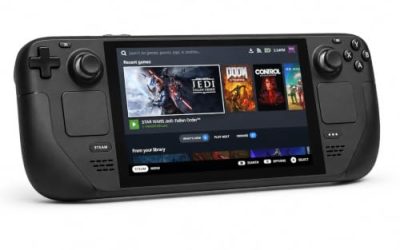
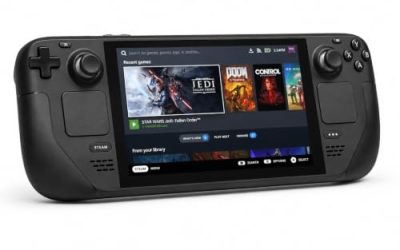
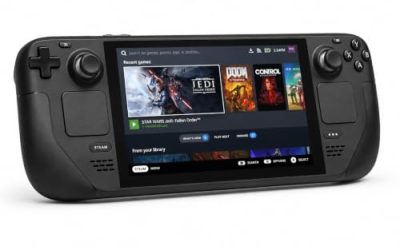
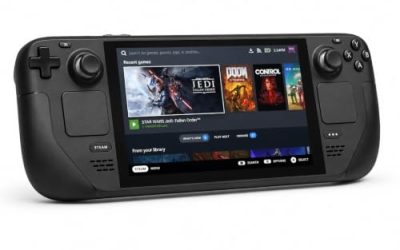
Valve Steam Deck OLED 512GB
- Display: 7.4-inch HDR OLED, 1280 by 800, up to 90 Hz
- Processor: AMD Zen 2 and RDNA 2 custom APU
- Memory: 16 GB LPDDR5
- Storage: 512 GB NVMe, plus a microSD slot
The handheld on Valve’s sheet. Its Playable badge carries small-text and keyboard deductions; the OLED panel’s clarity is the best available answer to the first, and the published requirements sit far below the APU’s output.
8BitDo Ultimate 2 Bluetooth Controller
- Connectivity: Bluetooth wireless and USB-C wired
- Joysticks: TMR electromagnetic, anti-drift design
- Triggers: Hall effect, with mode switching
- Extras: two remappable back buttons, motion control
The docked and co-op pad pick. The record claims only partial controller support, so a pad with modern sticks, remappable back buttons and a charging dock is the comfortable way through long runs.
Xbox Wireless Controller, Carbon Black
- Connectivity: Xbox Wireless and Bluetooth
- Port: USB-C for wired play
- Controls: hybrid D-pad, dedicated Share button
- Power: AA batteries or optional rechargeable pack
The safest guest pad in PC gaming: Steam Input support is universal, and it pairs over Bluetooth or its own wireless standard. On the handheld, the sheet’s note applies: an external pad may need a manual Quick Access Menu switch before it takes over.
Logitech G502 HERO
- HERO optical sensor, up to 25,600 DPI
- 11 programmable buttons
- Adjustable weight system
- Wired USB connection
In a twin-stick shooter the mouse is a genuine alternative to the pad — and this record promises only partial controller support anyway. Eleven programmable buttons cover the inputs a long run repeats, wired so latency stays out of the equation.
Samsung T9 Portable SSD 2TB
- Capacity: 2 TB portable SSD
- Interface: USB 3.2 Gen 2×2, USB-C connector
- Maker-rated speeds: up to 2,000 MB per second read, 1,950 MB per second write
- Features: Dynamic Thermal Guard, maker-rated drop resistance
For moving a Linux game library between machines or backing up installers, a fast USB-C drive is the simple answer. The headline figure needs a Gen 2×2 host port; on a lesser port the drive runs at that ceiling.
How to choose
Choose the Steam copy, because it is the only PC edition on sale. On desktop or laptop, install under Proton with the default compatibility tool; a settled Platinum tier at strong confidence says current builds need no ritual. On a Steam Deck, set expectations at Playable rather than Verified: the game runs and the default controller configuration is fully functional, but small text and the occasional manual keyboard invoke are part of the package, and the badge dates from December 2022. For input, trust the game’s own partial rating: a pad is fully workable, a mouse is arguably the genre’s natural tool, and the level editor will send you to a keyboard regardless.
Who should skip
Skip this one if you are shopping for a native Linux SYNTHETIK: neither series game sells a Linux build on Steam, and this record is Windows-only at every layer. Skip it if you only buy finished games — the record still carries the Early Access genre years after its November 2021 launch. Skip it if you want a DRM-free offline installer, because no GOG edition of the sequel exists. And skip the handheld plan if small on-screen text is a hard problem: it is one of the two deductions on Valve’s own sheet.
FAQ
Is SYNTHETIK 2 native on Linux?
No. Steam’s record for app 1471410 flags Windows only, the Linux requirements tab is an empty shell under its headings, and the only depot inside the sold package is the Windows build at 9.03 GiB. Linux play happens through Proton.
Is SYNTHETIK 2 still in Early Access?
Yes. The genre list still includes Early Access, with an Early Access release date of 11 November 2021. Development is visibly active — the public branch reached build 23399302 in May 2026 — but no full-release state appears.
How well does SYNTHETIK 2 run under Proton?
ProtonDB settles at Platinum, with best-reported and trending tiers also at Platinum, across 31 reports at strong confidence. Valve’s Deck sheet rates it Playable and marks SteamOS Compatible, though that test dates from December 2022 and grades a much older build.
Is SYNTHETIK 2 the same game as SYNTHETIK: Legion Rising?
No. Legion Rising is the first game — a separate app (528230) with its own record and ProtonDB file, and a Windows-only GOG edition. SYNTHETIK 2 is the sequel, app 1471410.
Final verdict
SYNTHETIK 2 is a Windows-only game whose Linux story is carried entirely by Proton — and carried well. The native ruling is unambiguous: false flags, shell requirements, one Windows depot in the sold package, no Linux assets anywhere. The compatibility ruling is equally clear the other way: a unanimous Platinum file at strong confidence, and a Playable badge faulted only for small text, keyboard invokes and its own age. Buy it for the Proton experience as it exists today, not for a native build the record gives no sign of — and credit the Deck badge as a December 2022 measurement of a game rebuilt many times since.
Product and ASIN Reference
| Product | ASIN |
|---|---|
| Valve Steam Deck OLED 512GB | B0CQ3RWQQZ |
| 8BitDo Ultimate 2 Bluetooth Controller | B0F194QFT2 |
| Xbox Wireless Controller, Carbon Black | B08DF248LD |
| Logitech G502 HERO | B07GBZ4Q68 |
| Samsung T9 Portable SSD 2TB | B0CHFS9K14 |