Easy Red 2, the World War II shooter built by solo developer Marco Amadei and published by his Corvostudio label, is one of the rare cases where the Linux answer is simply yes. The game left Early Access in January 2022, and it is still sold and still updated — the public branch took a new build in November 2026. Steam’s record carries a real Linux build beside the Windows and Mac ones.
That claim deserves the full paper trail, because this catalogue has seen every way a Linux flag can lie: empty requirement shells, soundtrack apps flagging Linux beside a Windows-only base game, depots that hold nothing. This piece reads the record layer by layer: flags, requirements, depots, expansions, anti-cheat paperwork, Proton file, Deck sheet and storefronts.
As an Amazon Associate, we earn from qualifying purchases.
Quick answer
Yes — Easy Red 2 is genuinely native on Linux. Steam flags all three platforms, publishes full Linux requirements at both tiers, and the Linux depot is the largest of the three builds at 16.82 GiB. Valve rates it Verified on Steam Deck with the native runtime named, and ProtonDB’s file reads Platinum across 18 reports.
The record, layer by layer
Start with the flags: Steam’s record for app 1324780 marks Windows, macOS and Linux all true. Flags alone settle nothing here, so the next layer is the requirements tabs — and all three exist in full. The Linux tab is populated at both tiers, not an empty shell or a minimum-only stub: the minimum asks for a 64-bit Linux system, a Celeron G530 or Athlon II X2 250 class processor, 1500 MB of RAM, a GeForce GT 710 or Radeon R5 240 class card, 10 GB of storage and 1 GB of video memory; the recommended tier steps up to a Core i3-2100 class processor, 4 GB of RAM and a GTX 750 Ti or Radeon R7 360 class card.
The depot census is where paper claims usually collapse, and here it does the opposite. Three content depots: Windows at 16.78 GiB, macOS at 16.69 GiB, and Linux at 16.82 GiB — the largest of the three. A Linux build that outweighs the Windows build is not a leftover or a stranded test artifact; it is a full parallel delivery of the same game. The registered assets agree: beside the standard client icon, the record carries a dedicated Linux client icon, the asset that accompanies a real Linux product.
Controller support needs no inference either: the game’s own record lists full controller support, and its store categories name DualShock, DualSense and Steam Input API support. That matters for the Deck sheet below.
The expansion family
The DLC array lists five expansions, each a campaign pack: Normandy, Stalingrad, Ardennes 1940 and 1944, Shanghai – Nanking, and Blood on the Danube. Two points matter for a Linux ruling. There is no soundtrack or music app anywhere in the array, so the familiar trap — a music app flagging Linux true beside a Windows-only base game — has nothing to fire on. And the expansions are delivered as inner depots of the base app; the expansion records read individually carry the same three-platform flags and populated Linux requirements.
Multiplayer and the anti-cheat question
Easy Red 2 is not single-player-only: the record lists online PvP, online co-op and cross-platform multiplayer. Multiplayer on Linux normally raises the anti-cheat question, and it deserves a straight answer. No anti-cheat is named anywhere on the record, and SteamDB’s detection reads the networking as Photon-based — a relay and matchmaking library, not a kernel-level anti-cheat. The community tracker’s full list at Are We Anti-Cheat Yet holds no entry for this game in either direction: documentation silence, not a clearance. What the evidence supports is narrower and stronger — the native build removes the usual failure mode, because there is no compatibility layer for an anti-cheat to object to, and ProtonDB’s file includes multiplayer reports describing online play working, including alongside Windows players.
The Proton file
ProtonDB’s summary record is fully readable and unusually tidy: settled Platinum, best-reported Platinum, trending Platinum, across 18 reports with moderate confidence. The heading check could also be completed: the game’s page labels it Native and carries the “Natively Supports” heading, and for once it agrees with Steam’s record on every layer. The filings mix Native and Proton reports — players with a working native build still file Proton reports when they prefer the Windows build’s behaviour. One detailed filing compares the two: the native build felt more stable, while the Windows build under Proton, on its Vulkan renderer, held frame rates better when a lot was happening on screen. An older Deck filing from the Proton 7 era notes a depth-of-field fault that predates the current build by years.
The Steam Deck sheet
Valve’s test sheet, read through SteamDB’s republication of Valve’s data after the direct endpoint returned unusable output this session, gives Easy Red 2 the top category: Verified, with SteamOS separately rated Compatible. All four checks pass — the default controller configuration is fully functional, controller icons are shown, in-game text is legible, and the default graphics configuration performs well. The configuration block adds the detail that settles the native question from Valve’s side: the recommended runtime is listed as native, Valve naming the Linux build as the tested article. One note stands: the game does not default to external Bluetooth or USB controllers on Deck, and may require manually switching the active controller through the Quick Access Menu.
One caveat belongs with the badge. Valve’s test ran in July 2024 against build 14977543; the current public build is 26375879, dated November 2026, with major updates in between. The badge is genuine, but the paperwork grades an older build than the one a buyer downloads today — the supplement-candidate shape this catalogue tracks, worth a fresh test.
The storefront ruling
There is no second PC storefront to compare. GOG holds no product for Easy Red 2 in any edition: the game’s natural product address there redirects to the general catalogue, and the store’s own search returns nothing. The Steam copy is the only PC edition on sale, and it is the build every record above describes.
Gear that fits the record
The gear below follows the record’s shape: the handheld Valve tested with the native runtime, two pads for docked and desktop play, a mouse for the mission editor and menu work, and fast storage.
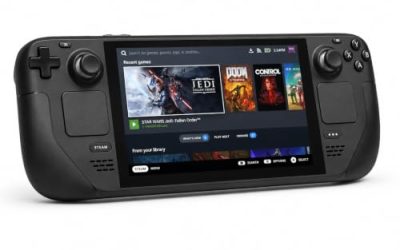
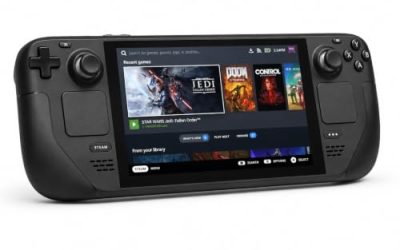
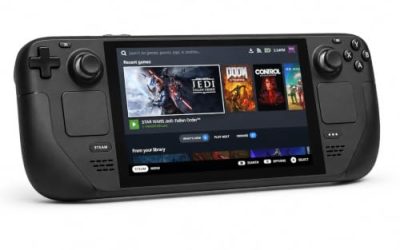
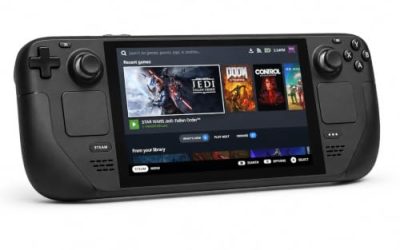
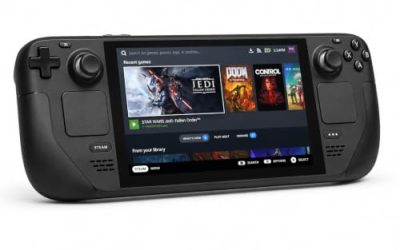
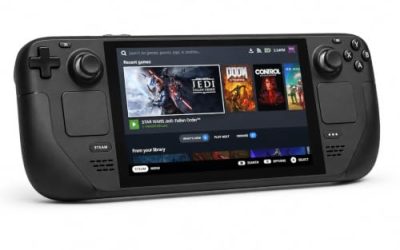
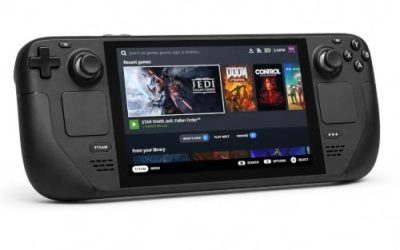
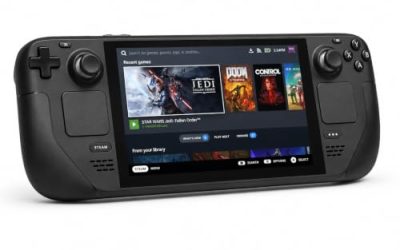
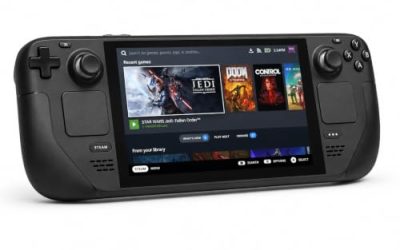
Valve Steam Deck OLED 512GB

The handheld the Verified badge was written for: Valve’s sheet names the native runtime, passes all four checks, and the published Linux requirements sit far below the Deck’s APU.
Specs
- Display: 7.4-inch HDR OLED, 1280 by 800, up to 90 Hz
- Processor: AMD Zen 2 and RDNA 2 custom APU
- Memory: 16 GB LPDDR5
- Storage: 512 GB NVMe, plus a microSD slot
- Wireless: Wi-Fi 6E and Bluetooth
- Channel note: Valve sells the Deck mainly through its own store, so Amazon listings are third-party sellers
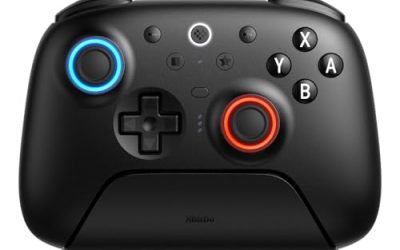
8BitDo Ultimate 2 Bluetooth Controller
The docked and desktop pad pick. The game’s own record lists full controller support with Steam Input, and this pad adds modern sticks, Hall effect triggers and back buttons.
Specs
- Connectivity: Bluetooth wireless and USB-C wired
- Joysticks: TMR electromagnetic, anti-drift design
- Triggers: Hall effect, with mode switching
- Extras: two remappable back buttons, motion control
- In the box: charging dock included
Xbox Wireless Controller, Carbon Black
The safest guest pad in PC gaming: Steam Input support is universal, the glyphs match what most games display, and it pairs over Bluetooth or its own wireless standard. On Deck, Valve’s note applies — an external pad may need the Quick Access Menu switch before it takes over.
- Connectivity: Xbox Wireless and Bluetooth
- Port: USB-C for wired play
- Controls: hybrid D-pad, dedicated Share button
- Power: AA batteries or optional rechargeable pack
Logitech G502 HERO
Easy Red 2 ships a mission editor and deep menus beside the shooting, and at a desk a precise wired mouse turns editor work and loadout screens into single clicks.
Specs
- HERO optical sensor, up to 25,600 DPI
- 11 programmable buttons
- Adjustable weight system
- Wired USB connection
- On-board memory profiles
Samsung T9 Portable SSD 2TB
For moving a Linux game library between desktop and laptop, or keeping an offline backup of installers, a fast USB-C drive is the simple answer. The headline figure needs a Gen 2×2 host port; on a lesser port the drive runs at that ceiling.
Specs
- Capacity: 2 TB portable SSD
- Interface: USB 3.2 Gen 2×2, USB-C connector
- Maker-rated speeds: up to 2,000 MB per second read, 1,950 MB per second write
- Features: Dynamic Thermal Guard, maker-rated drop resistance
How to choose
Choose the Steam copy — it is the only PC edition on sale — and on a Linux desktop or laptop, simply install it: the native build is the default, and no compatibility tool needs selecting. If a heavy battle scene exposes the frame-rate behaviour one ProtonDB filing describes, forcing the Windows build under Proton on its Vulkan renderer is a documented alternative with a Platinum file behind it. On Steam Deck, the Verified badge means install and launch; the one manual step is the Quick Access Menu switch if you pair an external pad. A pad is a first-class choice everywhere; a mouse earns its place for the mission editor.
Who should skip
Skip this one if you want a DRM-free offline installer, because no GOG edition exists. Skip it if your buying rule is that a Deck badge must grade the current build — Valve’s paperwork is from July 2024 and the branch has had major updates since. Skip it if you require a written anti-cheat verdict before playing online: none is named on the record and the community tracker is silent. And skip it if a solo-developed game’s inherent rough edges bother you — the ProtonDB file’s colour mentions them plainly.
FAQ
Is Easy Red 2 native on Linux?
Yes. Steam flags all three platforms, the Linux requirements tab is populated at both tiers, and the Linux depot is the largest of the three builds at 16.82 GiB. A dedicated Linux client icon is registered, and Valve’s Deck sheet names the native runtime.
Is Easy Red 2 Steam Deck Verified?
Yes. Valve gives the game its top category, Verified, with all four checks passing and SteamOS rated Compatible, tested in July 2024. The paperwork predates the current public build of November 2026, and external controllers may need a Quick Access Menu switch.
Does Easy Red 2 multiplayer work on Linux?
The record lists online PvP, online co-op and cross-platform multiplayer, names no anti-cheat, and uses Photon networking. The community anti-cheat tracker holds no entry in either direction — silence, not a clearance. ProtonDB’s file includes multiplayer reports describing online play working alongside Windows players.
Can I buy Easy Red 2 on GOG instead?
No. GOG holds no product for the game in any edition — its natural product address redirects to the general catalogue and the store’s own search returns nothing. The Steam copy is the only PC edition on sale.
Final verdict
Easy Red 2 is the cleanest shape this catalogue records: a native Linux build that agrees on every layer a ruling can check. The flags say yes, the Linux requirements are written out in full at both tiers, the Linux depot is the largest of the three platform builds, the client icon is registered, the expansion family carries no soundtrack flag to inflate the scan, and Valve’s Deck paperwork names the native runtime. The honest caveats are small and specific: the Deck test grades a July 2024 build rather than the current November 2026 branch, and the anti-cheat file is silence rather than a published verdict. Buy the Steam copy, install the native build, and play — no compatibility layer required.
Product and ASIN Reference
| Product | ASIN |
|---|---|
| Valve Steam Deck OLED 512GB | B0CQ3RWQQZ |
| 8BitDo Ultimate 2 Bluetooth Controller | B0F194QFT2 |
| Xbox Wireless Controller, Carbon Black | B08DF248LD |
| Logitech G502 HERO | B07GBZ4Q68 |
| Samsung T9 Portable SSD 2TB | B0CHFS9K14 |