Thronebreaker: The Witcher Tales is CD PROJEKT RED’s 2018 single-player card RPG, the story of Queen Meve of Lyria and Rivia told through exploration, choices and Gwent-style battles. It is its own Steam app, separate from The Witcher 3 and from the standalone GWENT game, and its record answers the Linux question plainly: Windows alone, with no Mac or Linux build sold.
The confusion around this title comes from the edges of the record rather than the record itself. The confusion around this title comes from the edges of the record rather than the record itself. One of its add-on apps flags all three platforms, and a community database page repeats that flag as a native-support heading. This piece separates those layers: the flags and depots on the game itself, the add-on sweep, the Proton file, the Deck test sheet and the GOG ruling. This piece separates those layers: the flags and depots on the game itself, the add-on sweep, the Proton file, Valve’s Deck test sheet and the GOG ruling.
As an Amazon Associate, we earn from qualifying purchases.
Quick answer
Thronebreaker: The Witcher Tales is not native on Linux. Steam flags the game Windows only, its Linux requirements field is an empty list, and no Linux depot exists. The working route is Proton: ProtonDB settles at Gold with Platinum best-reported and trending tiers across 73 reports, Valve rates it Verified on Steam Deck, and GOG sells a Windows-only edition.
What the game’s own record says
Start with the app itself, app 973760, developed and published by CD PROJEKT RED and released on Steam on 9 November 2018. Its platform flags read windows true, mac false, linux false. The requirements section agrees: the Windows tab is genuinely populated in both tiers, while the Mac and Linux requirements fields are empty lists — absent fields, with no shell text behind them.
The depot census closes the question. Steam delivers the game through one content depot of 6.56 GiB plus per-language voice depots and the DirectX June 2010 redistributable. There is no Linux depot, no Mac depot and no shared depot in the set, and the registered store assets run to clienticon, clienttga, icon and logo — no LinuxClientIcon in any form. SteamDB’s technology detection reads a Unity build with IL2CPP and Wwise audio. Every layer points the same way: one Windows build, delivered once.
The soundtrack trap: the family’s only Linux flag
The base game’s DLC array holds exactly two apps, and reading them individually matters. The first, app 980570, is the Bonus Content pack — artbook, concept art and graphic novel — and it matches the base game flag for flag: Windows true, Mac false, Linux false. The second, app 1232080, is the official soundtrack, typed as a music app rather than a game, and it flags all three platforms true, Linux included.
That single flag is the family’s only Linux mark, and it belongs to a folder of audio files. A soundtrack depot carries no executable and no build of the game, yet family-level scans that sweep every related app read it as platform support. The error is visible in the wild: the game’s ProtonDB page carries a “Natively Supports:” heading above its requirements panel, a claim Steam’s record contradicts on the flags, the requirements fields, the depots and the icon set at once. The ruling here follows Steam: the soundtrack’s flag is a paperwork artefact.
The Proton file: Gold, held back by cutscenes
With no native build, the Linux route is Proton, and the community file is deep and current. ProtonDB’s summary, read in full, settles the game at Gold, with Platinum as both the best-reported tier and the trending tier, across 73 reports with strong confidence. That gap has a specific cause the reports name repeatedly: the game’s video cutscenes fail on stock Proton, a Media Foundation gap, while the campaign itself plays. Filings on recent GE-Proton builds describe the full experience running cleanly once the videos render, and Deck filings on ordinary Proton builds describe a completely playable run with the cutscene caveat noted.
The older end of the file carries the usual early-Proton colour: a cluster of 2021 reports describes periodic crashes traced to esync and fixed by disabling it, and one Deck report flags small dialogue text during battles. None of that changes the shape of the verdict — a Gold settled tier with Platinum momentum is a strong result for a 2018 Windows build — but anyone starting today should expect the cutscene quirk on a default Proton selection and treat a GE-Proton build as the standard fix.
The Steam Deck sheet: Verified, on an older build
Valve’s own test sheet gives Thronebreaker its strongest handheld badge. Read through SteamDB’s republication of Valve’s data, because the store endpoint returned no usable output this session, the sheet resolves to category Verified with SteamOS separately rated Compatible. All four checks pass: every function is accessible on the default controller configuration, the game shows Steam Deck controller icons, interface text is legible, and the default graphics configuration performs well. The sheet names proton-stable as the recommended runtime and records no deductions at all.
The caveat is the paperwork’s age. Valve tested on 23 April 2022 against build 5034340, and the public branch has moved since, now sitting at build 23283572 with a May 2026 update timestamp. Nothing in the recent ProtonDB file suggests the current build behaves worse — the trending tier points the other way — but strictly, the Verified badge grades a superseded build. The game’s own record also lists full controller support, which matches the sheet’s default-configuration pass.
Anti-cheat and the second storefront
Thronebreaker is a single-player game with no competitive mode, and no anti-cheat is named anywhere on its record. The AreWeAntiCheatYet database, read in full at its repository root, holds no entry for this title in either direction — documentation silence, the expected state for an offline card campaign, and not a clearance or a warning.
The second storefront is the developer’s own. GOG sells Thronebreaker: The Witcher Tales, and its product record’s compatibility flags read windows true, osx false, linux false. The DRM-free edition is the same Windows build in a different wrapper: it changes nothing for a native install, and no storefront sells a Linux build of this game. The choice between Steam and GOG is a launcher preference, not a platform one.
Gear that fits the record
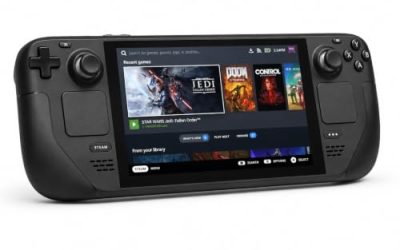
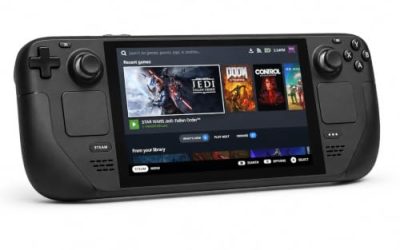
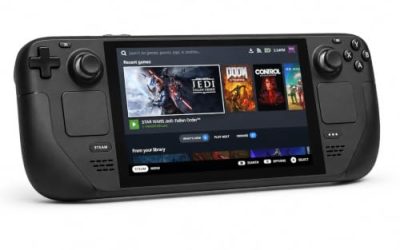
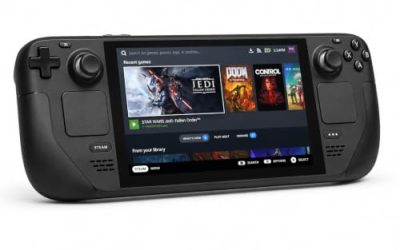
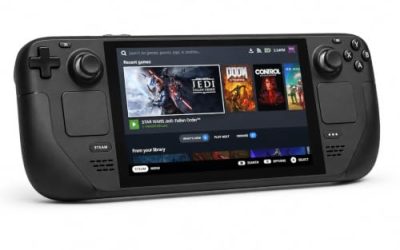
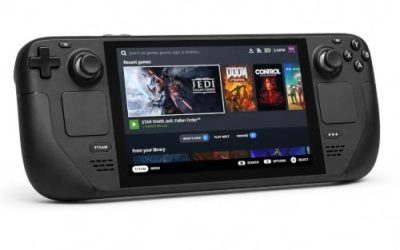
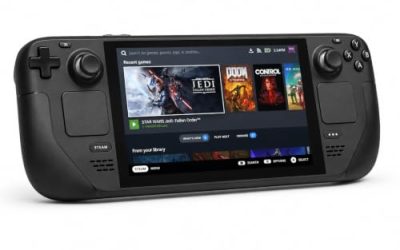
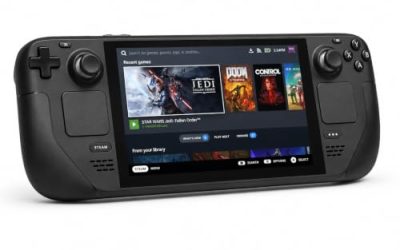
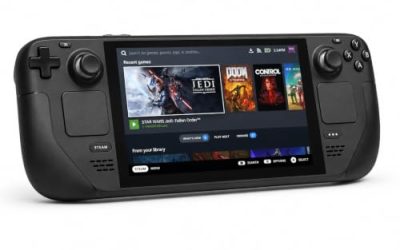
Valve Steam Deck OLED 512GB

The handheld the Verified badge was written for. The game’s published requirements are a rounding error next to the Deck’s APU, and Valve’s own test sheet gives the Windows build a clean pass under proton-stable.
Specs
- Display: 7.4-inch HDR OLED, 1280 by 800, up to 90 Hz
- Processor: AMD Zen 2 and RDNA 2 custom APU
- Memory: 16 GB LPDDR5
- Storage: 512 GB NVMe, plus a microSD slot
- Wireless: Wi-Fi 6E and Bluetooth
- Channel note: Valve sells the Deck mainly through its own store, so Amazon listings are third-party sellers
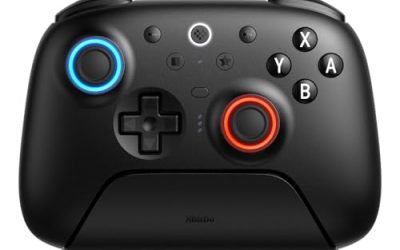
8BitDo Ultimate 2 Bluetooth Controller
The docked and desktop pad pick. Steam lists full controller support for the game, and this pad covers the couch case with modern sticks and triggers plus back buttons for menu shortcuts.
Specs
- Connectivity: Bluetooth wireless and USB-C wired
- Joysticks: TMR electromagnetic, anti-drift design
- Triggers: Hall effect, with mode switching
- Extras: two remappable back buttons, motion control
- In the box: charging dock included
Xbox Wireless Controller, Carbon Black
The safest guest pad in PC gaming: Steam Input support is universal, the glyphs match what most games display, and it pairs over Bluetooth or its own wireless standard. On the handheld, the test sheet’s note applies: an external pad may need a manual Quick Access Menu switch before it takes over.
- Connectivity: Xbox Wireless and Bluetooth
- Port: USB-C for wired play
- Controls: hybrid D-pad, dedicated Share button
- Power: AA batteries or optional rechargeable pack
Logitech G502 HERO
Thronebreaker’s camp and deck screens are menu-driven, and at a desk a precise wired mouse turns army management and card selection into single clicks. Eleven programmable buttons cover the confirm, cancel and camera inputs a long session repeats.
Specs
- HERO optical sensor, up to 25,600 DPI
- 11 programmable buttons
- Adjustable weight system
- Wired USB connection
- On-board memory profiles
Samsung T9 Portable SSD 2TB
For moving a Linux game library between a desktop and a laptop, or keeping an offline backup of installers, a fast USB-C drive is the simple answer. The headline figure needs a Gen 2×2 host port; on a lesser port the drive runs at that ceiling instead.
Specs
- Capacity: 2 TB portable SSD
- Interface: USB 3.2 Gen 2×2, USB-C connector
- Maker-rated speeds: up to 2,000 MB per second read, 1,950 MB per second write
- Features: Dynamic Thermal Guard, maker-rated drop resistance
How to choose
Buy the edition around the machine you will actually play on. For a Steam Deck, the Steam copy is the straightforward pick: the Verified sheet was written for it, the recommended runtime is the stable Proton branch, and the only preparation worth doing is selecting a GE-Proton build so the cutscenes play — for a story-led game, they matter. For a Linux desktop, either storefront’s copy runs under the same Proton layer; Steam keeps the compatibility tooling one click closer, while the GOG copy suits a Heroic or Lutris library.
On hardware, the choice is about input, not power. The game lists full controller support on its own record, so a pad-first setup is legitimate everywhere; pick the Deck for handheld play, the 8BitDo for a docked setup, the Xbox pad as the universal spare, and keep a mouse at the desk for camp management. Storage is a non-issue for this title alone — the full install with every voice depot is under 15 GiB.
Who should skip
Skip the purchase if you only buy native Linux builds on principle: there is no native port on any storefront, and the soundtrack’s platform flag does not change that. Skip it if broken cutscenes on a default install would sour a narrative game for you and you are unwilling to switch Proton builds once. Skip it if you came looking for GWENT’s multiplayer — this is a single-player campaign that borrows the card system, with no online ladder. And if small battle-dialogue text on a handheld screen bothers you, one Deck report raises exactly that; the desktop route avoids it.
FAQ
Is Thronebreaker native on Linux?
No. Steam flags the game Windows only, its Linux requirements field is an empty list, and the depot set contains no Linux build. The family’s only Linux flag sits on the separate soundtrack app, a music product, not the game.
How well does Thronebreaker run under Proton?
ProtonDB settles it at Gold across 73 reports with strong confidence, with Platinum as the best-reported and trending tier. The recurring caveat is cutscenes failing on stock Proton; recent GE-Proton reports describe the full game running cleanly.
Is Thronebreaker Steam Deck Verified?
Yes. Valve’s sheet resolves to Verified with all four checks passing and proton-stable as the recommended runtime. The test was run in April 2022 against an older build than the current public branch, so the badge’s paperwork predates today’s build.
Does GOG sell a Linux version of Thronebreaker?
No. GOG sells the game, but its product record flags Windows only, with Mac and Linux both false. The GOG edition is the same Windows build as Steam’s, and it runs on Linux through the same Proton route.
Final verdict
Thronebreaker: The Witcher Tales is a Windows-only release whose Linux story is written by Proton, and that story is a good one: a Gold settled tier trending Platinum, a Verified Deck badge with a clean sheet of checks, and no anti-cheat in the picture. The record’s one trap — a soundtrack app flagging Linux — is worth naming because family-level scans keep tripping over it. Buy the Steam copy, reach for a GE-Proton build so the cutscenes play, and leave the GOG edition to anyone who wants the DRM-free Windows installer.
Product and ASIN Reference
| Product | ASIN |
|---|---|
| Valve Steam Deck OLED 512GB | B0CQ3RWQQZ |
| 8BitDo Ultimate 2 Bluetooth Controller | B0F194QFT2 |
| Xbox Wireless Controller, Carbon Black | B08DF248LD |
| Logitech G502 HERO | B07GBZ4Q68 |
| Samsung T9 Portable SSD 2TB | B0CHFS9K14 |