Sands of Aura, Chashu Entertainment’s souls-like action RPG set in the ruined, sand-drowned world of Talamhel, left Early Access on 27 October 2023 without ever shipping a Linux build. Steam’s own record is unambiguous: the store flags the game for Windows alone, and the single content depot behind the sold package is a Windows build.
The wrinkles sit at the edges of the record. The game’s one add-on flags all three platforms, its Mac and Linux requirements fields exist but hold nothing, and a community compatibility page headlines its strongest tier while claiming native support Steam’s record denies. This piece reads each layer separately.
As an Amazon Associate, we earn from qualifying purchases.
Quick answer
Sands of Aura is not native on Linux: Steam flags the game Windows only, its Linux requirements field is an empty shell, and its single content depot is a Windows build. The route is Proton: ProtonDB’s page headlines Platinum across a small file of three reports, and Valve rates the game Verified on Steam Deck. The only Linux flag anywhere in the family belongs to the soundtrack.
What Steam’s record actually ships
Start with the flags, because everything else hangs off them. The store record for app 1119840 reads windows true, mac false, linux false. The Windows requirements tab is genuinely populated in both tiers: a 64-bit Windows 10 system, an Intel i5-4440 or AMD FX-8370 at minimum with 8 GB of RAM and a GTX 960 or R9 285, rising to a GTX 1060 or RX 580 in the recommended tier, and 22 GB of storage either way. That is a real Windows specification, carried over from the Early Access period.
The Mac and Linux requirements fields, by contrast, are empty shells. Both fields are present on the record, and both hold an empty list — no content of any kind. An empty shell says what an absent field would: no specification was ever published, because no build was ever behind it. SteamDB’s technology detection agrees, finding Unreal Engine and Windows-side middleware, and nothing else.
The depot census is decisive. Behind the sold package sits exactly one content depot, numbered 1119841 and labelled as the Windows 64-bit English content, at 18.23 GiB. Beside it the package carries only the shared Windows redistributables; there is no Linux, Mac, shared or ghost depot. The artwork agrees: clienticon, clienttga, icon, logo and a clienticns file are on the record, but there is no LinuxClientIcon — a clean absence, neither a fossil nor an inverse case.
The one Linux flag in the family belongs to the soundtrack
The full add-on sweep matters here because the family does contain a Linux flag — just not on the game. The record lists exactly one piece of DLC, app 2393300: the Sands of Aura Soundtrack, a music app released in November 2023. That soundtrack flags windows, mac and linux all true, the classic all-true pattern music apps carry because their files play anywhere.
So the family’s Linux-flag count is one of two records, and the one is a soundtrack. Anyone trusting a tool that aggregates flags across a game’s apps can walk away believing Sands of Aura supports Linux. It does not: the game itself is linux false on every layer checked, and the soundtrack’s flag describes audio files, not a build of the game.
The Proton file: a Platinum headline on a very small file
ProtonDB’s summary endpoint did not answer during this check — it returned an error page for this game and for a control title alike — so the figures here are the headline values on the game’s own ProtonDB page, not a full summary read. That page headlines Platinum on a file of three reports. Treat it accordingly: a strong signal about the reports that exist, a thin one about the game in general.
The reports themselves are old. The newest was filed on Proton 8.0-4 from an Arch Linux desktop and describes a clean run with no tweaking and no issues noticed, alongside two colour notes: rebinding the Move Forward key can break the boat controls, and one hard lock hit while scrolling a tutorial menu. An earlier filing on a custom GE-Proton build reported no problems at all. The oldest dates from the Early Access period on Proton 6.3-7 and notes that the instruction videos were not showing — a media-playback gap from a build of the game that no longer exists. Nothing in the file contradicts the Platinum headline; there is simply less of it than the headline implies.
One more heading on that page needs naming. The game’s ProtonDB page carries a “Natively Supports” heading, and it is wrong: Steam’s record contradicts it on the flags, the requirements, the depot census and the icon set. This article follows Steam. The heading is a stray label the page template attaches, not evidence of a port.
The Steam Deck sheet
Valve rates Sands of Aura Verified on Steam Deck, with SteamOS separately marked Compatible and proton-stable named as the recommended runtime. All four of the published checks pass: the default controller configuration is fully functional, the game shows Steam Deck controller icons, the in-game interface text is legible, and the default graphics configuration performs well. That squares with the game’s own record, which lists full controller support.
The paperwork’s age is the caveat, and it is a large one. Valve’s test is dated 11 March 2022 against build 8010257 — an Early Access build, tested more than a year and a half before the full release. The current public build is 23120278, updated in June 2026. The badge has never been re-issued against a release build, so read Verified as a statement about the game’s shape — controller-first, undemanding, legible — rather than a fresh test of the exact bytes sold today. On sourcing: Valve’s own compatibility endpoint returned no usable output during this check, so this sheet is read through SteamDB’s republication of Valve’s test data.
The storefront ruling
There is a second storefront, and it changes nothing for Linux. GOG sells Sands of Aura — its own product record, numbered 2091206730, is live — but that record’s compatibility flags read windows true, osx false, linux false. The DRM-free edition is the same Windows build Steam sells. No storefront sells a Linux or Mac copy of this game, so the choice between stores is about DRM preference, never platform support.
On anti-cheat, the honest statement is a silence. The game is a single-player action RPG with no anti-cheat named on its record, and the Are We Anti-Cheat Yet catalogue — read in full for this check — holds no entry for it in either direction. That is documentation silence, not a clearance; for a game with no online component, no anti-cheat layer stands between the Windows build and Proton in any case.
Gear that fits the record
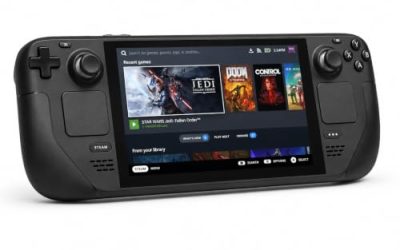
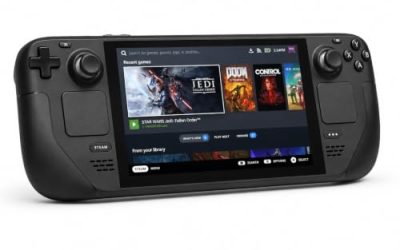
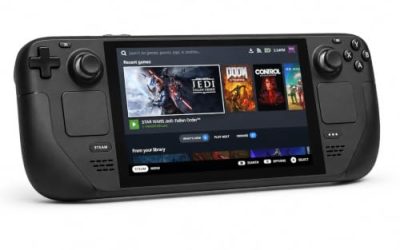
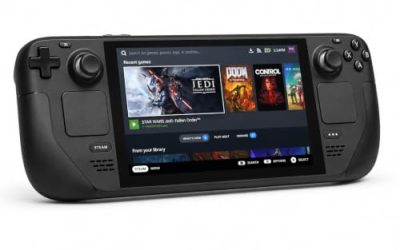
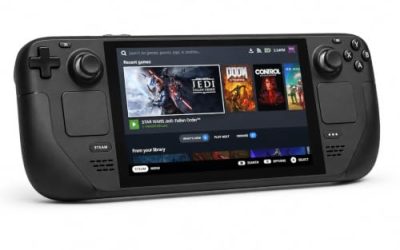
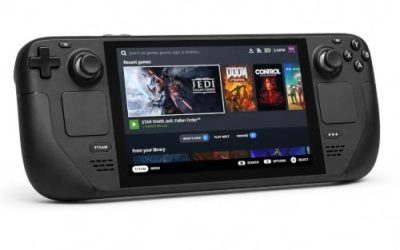
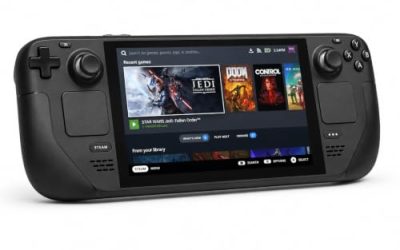
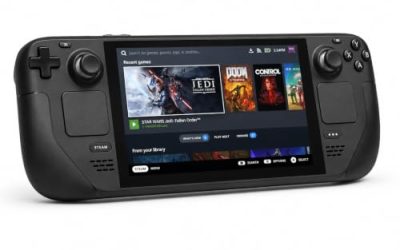
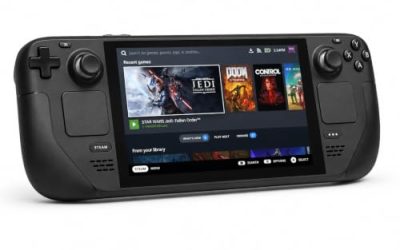
Valve Steam Deck OLED 512GB

The handheld the Verified badge was written for. The game’s published requirements sit far below the Deck’s APU, and Valve’s sheet passes the Windows build on every published check under proton-stable.
Specs:
- Display: 7.4-inch HDR OLED, 1280 by 800, up to 90 Hz
- Processor: AMD Zen 2 and RDNA 2 custom APU
- Memory: 16 GB LPDDR5
- Storage: 512 GB NVMe, plus a microSD slot
- Wireless: Wi-Fi 6E and Bluetooth
- Channel note: Valve sells the Deck mainly through its own store, so Amazon listings are third-party sellers
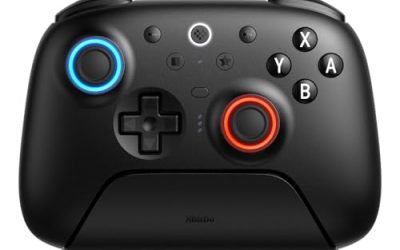
8BitDo Ultimate 2 Bluetooth Controller
The docked and desktop pad pick. The game’s own record lists full controller support, and this pad covers the couch case with modern sticks and triggers plus back buttons.
Specs
- Connectivity: Bluetooth wireless and USB-C wired
- Joysticks: TMR electromagnetic, anti-drift design
- Triggers: Hall effect, with mode switching
- Extras: two remappable back buttons, motion control
- In the box: charging dock included
Xbox Wireless Controller, Carbon Black
The safest guest pad in PC gaming: Steam Input support is universal, the glyphs match what most games display, and it pairs over Bluetooth or its own wireless standard.
- Connectivity: Xbox Wireless and Bluetooth
- Port: USB-C for wired play
- Controls: hybrid D-pad, dedicated Share button
- Power: AA batteries or optional rechargeable pack
Logitech G502 HERO
A souls-like lives on a pad, but menus and inventory reward a precise wired mouse at a desk. Eleven programmable buttons cover the confirm, cancel and camera inputs a long session repeats.
Specs
- HERO optical sensor, up to 25,600 DPI
- 11 programmable buttons
- Adjustable weight system
- Wired USB connection
- On-board memory profiles
Samsung T9 Portable SSD 2TB
For moving a Linux game library between a desktop and a laptop, or keeping an offline backup of installers, a fast USB-C drive is the simple answer. The headline figure needs a Gen 2×2 host port; on a lesser port the drive runs at that ceiling instead.
Specs
- Capacity: 2 TB portable SSD
- Interface: USB 3.2 Gen 2×2, USB-C connector
- Maker-rated speeds: up to 2,000 MB per second read, 1,950 MB per second write
- Features: Dynamic Thermal Guard, maker-rated drop resistance
How to choose
Choose either store’s copy on preference, because both sell the identical Windows build. On a Linux desktop or laptop, install through Steam and let Proton do the work: the community file reports clean runs on ordinary Proton builds with no tweaking. On Steam Deck, the Verified badge says the default configuration needs no attention, though it was earned by an Early Access build, so treat a first session as a check rather than a guarantee. For input, a pad is the game’s native shape — the record lists full controller support — and a mouse earns its place only for desk-bound menu work.
Who should skip
Skip this route if a native build is a hard requirement: there is none, and nothing on the record suggests one is coming. Skip it, too, if a three-report compatibility file feels too thin to buy on — the Platinum headline is real but the sample behind it is small and old. And if the soundtrack is what put a Linux flag in front of you, be clear about what it is: audio files that play anywhere, not a port of the game.
FAQ
Is Sands of Aura native on Linux?
No. Steam flags the game Windows only, its Linux requirements field is an empty shell, its single content depot is a Windows build, and there is no LinuxClientIcon on the record. The family’s only Linux flag belongs to the soundtrack app.
How well does Sands of Aura run under Proton?
ProtonDB’s page headlines Platinum across three reports, the newest describing a clean, untweaked run on Proton 8.0-4. The file is small and old, so treat the headline as encouraging rather than conclusive; the full summary figures could not be read because the summary endpoint did not answer.
Is Sands of Aura Steam Deck Verified?
Yes. Valve rates it Verified with SteamOS Compatible and proton-stable as the recommended runtime, and all four published checks pass. The test behind the badge, though, is dated March 2022 and ran against an Early Access build.
Can I buy Sands of Aura on GOG for Linux?
No. GOG sells the game, but its own product record flags that edition Windows only, with macOS and Linux both false. The GOG copy is the same Windows build Steam sells, offered DRM-free.
Final verdict
Sands of Aura on Linux is a Proton story with unusually tidy paperwork. The native question is closed on every layer — flags, an empty-shell requirements field, a one-depot census and a clean icon absence all say Windows only, and the family’s single Linux flag turns out to be a soundtrack. What remains is genuinely favourable: a Platinum headline on the community page, a Verified Deck badge whose checks all pass, full controller support, and no anti-cheat layer in the way. Buy it on either storefront, play it through Proton, and hold the two honest caveats in view: the Proton file is three reports deep, and the Deck badge was earned by a build from another era of the game.
Product and ASIN Reference
| Product | ASIN |
|---|---|
| Valve Steam Deck OLED 512GB | B0CQ3RWQQZ |
| 8BitDo Ultimate 2 Bluetooth Controller | B0F194QFT2 |
| Xbox Wireless Controller, Carbon Black | B08DF248LD |
| Logitech G502 HERO | B07GBZ4Q68 |
| Samsung T9 Portable SSD 2TB | B0CHFS9K14 |