Ultimate Fishing Simulator 2 is the sequel to a fishing simulator Linux players already know through a separate, older record, and the first question about it is whether the sequel follows the original onto Linux. The game left Early Access on 9 May 2025, developed by Silent Bear Studio and SHINING GAMES and published by Ultimate Games S.A. and PlayWay S.A. It is a distinct app from the 2018 original and from the third game in the series, and everything below is read from its own record only.
The short version is that the sequel repeats the original’s platform shape without inheriting its evidence. Steam sells a Windows build only, the one content depot holds Windows binaries, and the Linux route is Proton. What the sequel has of its own is a fresh Steam Deck test, dated November 2026 and run against the build still on sale. Two traps sit on the record: requirements tabs that look filled in until you open them, and a compatibility page heading that claims more than Steam does.
As an Amazon Associate, we earn from qualifying purchases.
Quick answer
Ultimate Fishing Simulator 2 has no native Linux build. Steam flags the game Windows only, its single content depot holds Windows binaries, and the Linux requirements tab is an empty shell. Linux players run the Windows build through Proton: ProtonDB’s headline tier is Gold from four reports, and Valve rates the game Playable on Steam Deck.
The Steam record: one flag, one depot, two hollow tabs
Steam’s platform flags for this app read Windows true, Mac false, Linux false, and every other layer lines up behind them. SteamDB’s depot table lists exactly one content depot, depot 1136381 at 36.56 GiB, whose manifest is filled with Windows executables and libraries. There is no Linux depot beside it and no Linux launch entry, and the current public build, 18886995 from June 2025, is the build that depot carries. The registered assets agree: no Linux client icon in any form, current or fossil.
The trap on this record is in the requirements fields. Both the Mac and Linux requirements carry proper Minimum and Recommended headings, which makes the store page look as though those platforms were specified. Open either tab and the lists under the headings are completely empty. A heading over an empty list is a template the developer never filled in, not a specification, and it appears twice, because the game’s one piece of DLC repeats it exactly.
That DLC array was read in full, and it is short: a single add-on, Delaware Bay, released in June 2025. It is typed as DLC, flags Windows only, and its Mac and Linux requirements are the same headings over empty lists. No music or soundtrack app exists in this game’s family, so the familiar soundtrack trap cannot fire here. The family’s paperwork is uniform: Windows content, hollow tabs elsewhere.
ProtonDB: a down feed, a Gold headline and a heading that overclaims
ProtonDB’s summary feed could not be read for this article. The summary endpoint returned an error page for this app, and the same error page for a well-known control app, which marks this as a feed outage rather than a missing record. So this article claims no settled, best-reported or trending tier and no confidence score. What can be stated is the headline on the game’s ProtonDB page itself: a Gold tier resting on four reports, quoted here as headline-only figures while the feed is down.
Those four reports are a thin but readable file. The newest describes a game fresh out of Early Access running well on a current GE-Proton build. A Steam Deck report from the Proton 7 era puts the game at roughly thirty to forty frames per second on low settings, with text small enough to strain reading.
The page also carries the stray heading this series keeps meeting: a “Natively Supports” label above the requirements area. Against Steam’s record it is simply wrong. The game natively supports Windows; on Linux it runs through Proton, and the heading is not evidence of a native build.
Steam Deck: Playable, and tested on the build you would download
Valve’s own endpoint returned empty responses throughout this session, so the test sheet below was read through SteamDB’s republication of Valve’s data. The category is Playable, with SteamOS marked Compatible. The test is dated 2 November 2026 and was run against build 18886995, still the current public build, so unlike many badges in this series the paperwork grades the exact bytes on sale today. The recommended runtime is a Proton 11 release candidate.
The deductions are the familiar Playable set. Some functionality is not accessible with the default controller configuration, pushing the player toward the touchscreen, the virtual keyboard or a community configuration. The game sometimes shows mouse, keyboard or non-Deck controller icons, entering text requires manually invoking the on-screen keyboard, some in-game text is small and may be difficult to read, and graphics settings need manual configuration to perform well. The sheet also confirms no internet is required for setup or single-player play. The picture matches the community Deck report above: playable, with configuration work and modest settings.
Anti-cheat, networking and the GOG question
No anti-cheat is named anywhere on Steam’s record for this game, and there is no DRM notice on the page. The technology SteamDB detects is engine and plumbing: the Unity engine, the Mono SDK, an Ansel photo-mode SDK, the Photon SDK that handles multiplayer networking, and support libraries. Photon is a networking layer, not an anti-cheat, and nothing on the record suggests a kernel-level blocker of the kind that stops other multiplayer games on Linux.
The AreWeAntiCheatYet database was read in full for this article, all 1,167 entries, and it holds no entry for this game in either direction. That is an absence of documentation, not a clearance: the game carries online PvP and co-op modes whose multiplayer is reported working in the community filings, but no anti-cheat database has anything to say about it.
On GOG there is no edition of this game to buy. The natural product address resolves to GOG’s general catalogue instead of a product page, which is how GOG answers for a title it does not sell. The first game’s GOG edition does exist, and GOG’s own product record for it lists Windows as its only operating system. The Steam copy is the only PC edition of the sequel.
Gear that fits the record
The picks below follow this game’s record: a Playable badge with manual graphics configuration in its notes, full controller support stated on the game’s own page (DualShock and DualSense pads are named on that record), and a 36.56 GiB install.
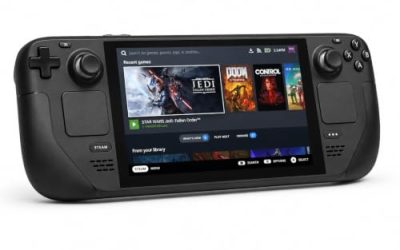
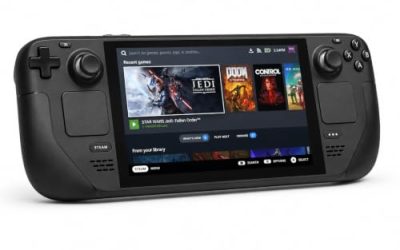
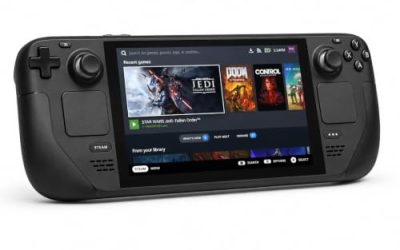
Valve Steam Deck OLED 512GB
The handheld Valve’s Playable test was written on, tested against the current build. Expect to set graphics options yourself and to meet small text; the badge promises a working game, not an effortless one.
Specs
- Display: 7.4-inch HDR OLED, 1280 by 800, up to 90 Hz
- Processor: AMD Zen 2 and RDNA 2 custom APU
- Memory: 16 GB LPDDR5
- Storage: 512 GB NVMe, plus a microSD slot
- Wireless: Wi-Fi 6E and Bluetooth
- Channel note: Valve sells the Deck mainly through its own store, so Amazon listings are third-party sellers
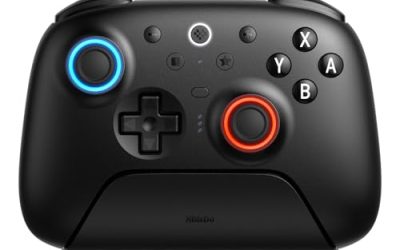
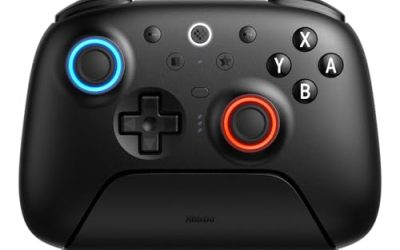
8BitDo Ultimate 2 Bluetooth Controller

The game’s own record lists full controller support, so a pad is the native shape of play at a desk or docked. This one adds back buttons for the menu shortcuts a tackle-heavy simulator repeats, and a dock that keeps it charged between sessions.
Specs:
- Connectivity: Bluetooth wireless and USB-C wired
- Joysticks: TMR electromagnetic, anti-drift design
- Triggers: Hall effect, with mode switching
- Extras: two remappable back buttons, motion control
- In the box: charging dock included
Xbox Wireless Controller, Carbon Black
Valve’s sheet warns that the game sometimes shows mouse, keyboard or non-Deck controller icons. A pad whose glyphs match the Windows build’s prompts removes that friction, and this is the safest second pad for a guest seat.
- Connectivity: Xbox Wireless and Bluetooth
- Port: USB-C for wired play
- Controls: hybrid D-pad, dedicated Share button
- Power: AA batteries or optional rechargeable pack
Logitech G502 HERO
On desktop, the fiddly parts of this game are menus, tackle boxes and graphics settings screens, and a precise wired mouse makes all three quicker.
Specs
- HERO optical sensor, up to 25,600 DPI
- 11 programmable buttons
- Adjustable weight system
- Wired USB connection
- On-board memory profiles
Samsung T9 Portable SSD 2TB
A 36.56 GiB install is not huge, but a library of simulators adds up, and a fast portable drive is the simple way to move that library between machines or keep an offline backup.
Specs
- Capacity: 2 TB portable SSD
- Interface: USB 3.2 Gen 2×2, USB-C connector
- Maker-rated speeds: up to 2,000 MB per second read, 1,950 MB per second write
- Features: Dynamic Thermal Guard, maker-rated drop resistance
How to choose
Choose the Steam copy, because it is the only PC edition on sale and the exact build both records describe. On a desktop or laptop, install under Proton and start with the default compatibility tool; the community file is thin, so read the most recent reports rather than leaning on the Gold headline alone, and be ready to try a GE-Proton build, as the newest filing did. On a Steam Deck, budget a few minutes for graphics settings and small text, and treat the Playable badge as a working game with homework attached. Do not carry the original game’s record across to this one: its ProtonDB file and Deck history belong to a different app, and the sequel’s thinner file is the one that describes your purchase.
Who should skip
Skip this one if you are shopping for a native Linux fishing game: this is not it, and neither is the original. Skip it if you want a DRM-free offline installer, because no GOG edition of the sequel exists. Skip the Deck plan if you only accept Verified badges with no configuration work, since Valve’s sheet explicitly requires manual graphics configuration and warns about small text. And skip it for now if a four-report community file feels too thin to spend on; the record will thicken.
FAQ
Is Ultimate Fishing Simulator 2 native on Linux?
No. Steam flags the game Windows only, its single content depot holds Windows binaries, and the Linux requirements field is a set of headings over an empty list. Linux play means the Windows build under Proton.
Is this the same record as the first Ultimate Fishing Simulator?
No. The 2018 original is a separate app with its own ProtonDB file, Deck history and GOG edition. The sequel’s record is thinner: a Gold headline from four reports and a Playable badge tested in November 2026.
How well does it run on Steam Deck?
Valve rates it Playable, tested on 2 November 2026 against the build still on sale. The sheet’s deductions are a default controller configuration that does not reach everything, non-Deck glyphs, manual keyboard invocation, small text and a requirement to configure graphics settings manually. A community Deck report describes modest frame rates at low settings.
Can I buy Ultimate Fishing Simulator 2 on GOG?
No. GOG sells no edition of the sequel; its product address resolves to the general catalogue.
Final verdict
Ultimate Fishing Simulator 2 is a Windows-only release whose record is unusually legible once you know its two tricks: requirements tabs with headings and nothing under them, repeated on the base game and its only DLC, and a ProtonDB heading that claims native support Steam’s flags deny. What Linux players actually get is a Proton route with a Gold headline on a thin four-report file, no anti-cheat named anywhere, and a Playable Steam Deck badge tested in November 2026 on the build on sale. Buy the Steam copy with your eyes open about the configuration work, and judge it by its own record, not its predecessor’s.
Product and ASIN Reference
| Product | ASIN |
|---|---|
| Valve Steam Deck OLED 512GB | B0CQ3RWQQZ |
| 8BitDo Ultimate 2 Bluetooth Controller | B0F194QFT2 |
| Xbox Wireless Controller, Carbon Black | B08DF248LD |
| Logitech G502 HERO | B07GBZ4Q68 |
| Samsung T9 Portable SSD 2TB | B0CHFS9K14 |