Our Short List of 3

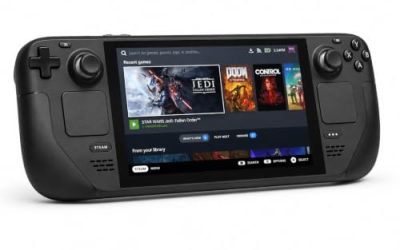
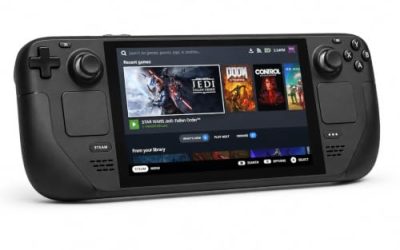
- Display: 7.4-inch HDR OLED, 1280 by 800, up to 90 Hz
- Processor: AMD Zen 2 and RDNA 2 custom APU
- Memory: 16 GB LPDDR5
- Storage: 512 GB NVMe, plus a microSD slot

- Connectivity: Bluetooth wireless and USB-C wired
- Joysticks: TMR electromagnetic, anti-drift design
- Triggers: Hall effect, with mode switching
- Extras: two remappable back buttons, motion control

- Connectivity: Xbox Wireless and Bluetooth
- Port: USB-C for wired play
- Controls: hybrid D-pad, dedicated Share button
- Power: AA batteries or optional rechargeable pack
All 5 Picks at a Glance
| Product | Specs | Action |
|---|---|---|
| Valve Steam Deck OLED 512GB |
| Check price on Amazon |
| 8BitDo Ultimate 2 Bluetooth Controller |
| Check price on Amazon |
| Xbox Wireless Controller, Carbon Black |
| Check price on Amazon |
 Logitech G502 HERO |
| Check price on Amazon |
 Samsung T9 Portable SSD 2TB |
| Check price on Amazon |
Ice Lakes is an ice fishing simulator from Finnish developer Iceflake Studios, published by Paradox Interactive in April 2016. Its Steam record claims all three desktop platforms, Windows, macOS and Linux alike. Claims like that are cheap: this series has opened records where the Linux flag sat over an empty requirements shell, a zero-byte depot or a leftover icon with no build behind it, and the flag turned out to be the only true sentence on the page.
So this record gets the full treatment rather than a glance at the flags: the requirements tabs, the depot table, the launch configuration, the icons, the add-on array, Valve’s Deck test sheet, the ProtonDB file and the second-storefront question. Ice Lakes is the rare case where the layers do not argue with each other, and the Deck badge turns out to have graded the native build itself rather than a compatibility layer.
As an Amazon Associate, we earn from qualifying purchases.
Quick answer
Yes. Ice Lakes ships a real native Linux build, and every layer of Steam’s record agrees: the Linux flag is set, the Linux requirements are filled in, a dedicated Linux depot carries the game files, the launch configuration points at a Linux executable, and Valve’s Deck test graded the native build itself. No Proton is required.
Five layers, one answer
Start with the flags, because they are the weakest evidence on any Steam record. Ice Lakes flags windows, mac and linux all true, and the requirements tabs behind them are genuinely filled in. The Linux minimum names Ubuntu 12.04 or later, a 2.0 GHz processor, 2 GB of memory, graphics in the Geforce 7800 GT class and 1 GB of storage: an era-correct spec sheet for a 2016 Unity title, written for this platform rather than copied from the Windows tab. The macOS tab is populated in the same specific way. Populated-but-empty shells, headings over blank lists, are the standard trap in this cluster; neither tab here is one.
The depot table is where paper support usually collapses, and here it does the opposite. Steam’s record holds three content depots of near-identical size: depot 393431 carries the Windows content at 1.62 GiB, depot 393433 carries the macOS content at 1.65 GiB, and depot 393432, labelled as the Linux depot, carries 1.67 GiB with a public manifest on the current branch. A Linux depot of matching size with live manifests is the hardest layer to fake, because it is the build itself, not paperwork about the build.
The launch configuration agrees. The record’s launch entries give Windows an executable named IceLakes.exe, macOS an application bundle, and Linux its own entry pointing at an executable named IceLakes.x86, scoped to Linux in the entry’s own configuration. The registered icons agree too: the record registers a dedicated LinuxClientIcon under its own file hash, a separate asset from the Mac icon. Where a Linux claim is hollow, that icon is missing or a fossil from a build that never shipped; here it is one more matching piece of a complete set.
The fifth layer is an absence. The record carries no DLC array at all, so the soundtrack trap, a music app flagging all three platforms true and polluting family-level scans, has nothing to attach to. What is sold is one app, three builds, and a record that describes all three honestly.
What Valve graded on Steam Deck
Valve’s test sheet rates Ice Lakes Playable on Steam Deck and Compatible on SteamOS, and the detail that matters most sits in the configuration block: the recommended runtime is listed as native. Valve graded the Linux build itself, not the Windows build travelling through Proton. The test is dated 28 July 2022 and was run against build 3054169, still the current public build; the public branch has not moved since August 2018, so the badge describes exactly the bytes on sale today.
The passes and deductions are the modest set a keyboard-and-mouse fishing game earns. All functionality is accessible with the default controller configuration, interface text is legible, and the default graphics configuration performs well. Against that, the game sometimes shows mouse, keyboard or non-Deck controller icons, and entering some text requires manually invoking the on-screen keyboard. No internet is required for setup or single-player. One sourcing note: Valve’s own endpoint returned unreadable data during this check, so the sheet was read through SteamDB’s republication of Valve’s data.
A two-report ProtonDB file
ProtonDB’s summary for this app was read in full, and it is thin: a settled tier of pending, a best-reported tier of Platinum, a trending tier of pending, drawn from just two reports, with confidence reading inadequate. The game’s ProtonDB page classifies it as Native and carries the Natively Supports heading, and for once that heading agrees with Steam’s own record instead of contradicting it.
The report colour deserves honesty rather than a gloss. One of the two filings, from a CachyOS machine with an NVIDIA card, reports that the native version did not run on that setup and that the player switched to a community Proton build; the same file rates online multiplayer Excellent. A sample of two cannot grade a build, and this article does not pretend otherwise. The settled position is Steam’s record plus Valve’s native-runtime Deck test; ProtonDB adds a Platinum best-reported tier and one documented case where a specific machine needed the Proton detour.
Multiplayer, anti-cheat and the VR footnote
The store categories list Online PvP and Cross-Platform Multiplayer, so the multiplayer question is a real one. Steam’s record names no anti-cheat for this game, and the AreWeAntiCheatYet database, read in full at 1,167 entries, holds no entry for Ice Lakes in either direction. That is an absence of documentation, not a clearance: nothing describes a kernel-level blocker, and the one ProtonDB report that touches online play rates it Excellent, but the paperwork file is simply empty.
Two smaller record notes complete the picture. The store lists VR support and a tracked-controller category, but the VR launch options on the record are scoped to Windows; the Linux launch entry is the standard desktop build. And the record carries no gamepad support rating of its own: the only controller evidence anywhere is Valve’s Deck sheet, which lists the supported input class as other and records the default controller configuration as fully functional. Anything stronger would be imported from another game’s page, and it is not claimed here.
No second storefront
GOG sells no edition of Ice Lakes. The natural product address redirects to the general games catalogue, and GOG’s catalogue records return only unrelated titles for the name. That ruling rests on the absent product page plus the catalogue records, not on search silence. The Steam copy is the only PC edition, and it is the build both compatibility records describe.
Gear that fits the record
The gear below follows the record’s shape: the handheld Valve graded the native build on, two pads for docked and desktop play, a mouse for a menu-driven game, and fast storage for a library that travels.
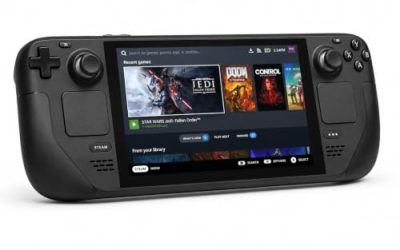
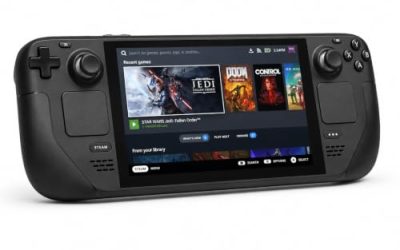
Valve Steam Deck OLED 512GB
- Display: 7.4-inch HDR OLED, 1280 by 800, up to 90 Hz
- Processor: AMD Zen 2 and RDNA 2 custom APU
- Memory: 16 GB LPDDR5
- Storage: 512 GB NVMe, plus a microSD slot
The handheld the Playable badge was written for, and in this case the badge graded the native Linux build with no compatibility layer in between. The game’s published Linux requirements are a rounding error next to the Deck’s APU; the only deductions on Valve’s sheet are glyph mismatches and manual keyboard calls for text entry.
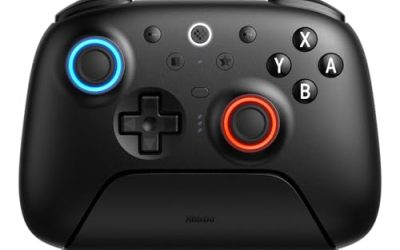
8BitDo Ultimate 2 Bluetooth Controller
- Connectivity: Bluetooth wireless and USB-C wired
- Joysticks: TMR electromagnetic, anti-drift design
- Triggers: Hall effect, with mode switching
- Extras: two remappable back buttons, motion control
The docked and desktop pad pick. Valve’s sheet records the default controller configuration as fully functional on this game, and this pad covers the couch case with modern sticks and triggers plus back buttons for repeated inputs.
Xbox Wireless Controller, Carbon Black
- Connectivity: Xbox Wireless and Bluetooth
- Port: USB-C for wired play
- Controls: hybrid D-pad, dedicated Share button
- Power: AA batteries or optional rechargeable pack
The safest guest pad in PC gaming: Steam Input support is universal, the glyphs match what most games display, and it pairs over Bluetooth or its own wireless standard.
Logitech G502 HERO
- HERO optical sensor, up to 25,600 DPI
- 11 programmable buttons
- Adjustable weight system
- Wired USB connection
Ice Lakes is a patient game of menus, sonar readings and rod management, and at a desk a precise wired mouse turns tackle-box trips into single clicks. Eleven programmable buttons cover the confirm, cancel and camera inputs a long session repeats.
Samsung T9 Portable SSD 2TB
- Capacity: 2 TB portable SSD
- Interface: USB 3.2 Gen 2×2, USB-C connector
- Maker-rated speeds: up to 2,000 MB per second read, 1,950 MB per second write
- Features: Dynamic Thermal Guard, maker-rated drop resistance
For moving a Linux game library between a desktop and a laptop, or keeping an offline backup of installers, a fast USB-C drive is the simple answer.
How to choose
Choose the Steam copy; it is the only PC edition sold, and it is the build every record above describes. On a Linux desktop or laptop, install and launch: the native build is the default, no compatibility tool needs selecting, and the published requirements are low enough that any machine of the last decade clears them. On Steam Deck, the Playable badge with a native runtime means the same install-and-launch shape, with the on-screen keyboard caveat for text entry. Keep the one ProtonDB dissent in proportion: if a specific machine refuses the native build, forcing a community Proton build is the documented fallback, not the expected route.
Who should skip
Skip it if you want VR fishing on Linux: the VR options on this record belong to the Windows build. Skip it if you need a living game: the public branch has been frozen since 2018, so the build is finished software, stable but no longer evolving. And skip it if online competition is the whole point and you require documented anti-cheat paperwork first; this record offers none, in either direction.
FAQ
Is Ice Lakes native on Linux, or does it need Proton?
It is native. Steam’s record carries a real Linux depot, a Linux launch entry and a populated Linux requirements tab, and Valve’s Deck test graded the native build. Proton is a fallback for individual machines.
How does Ice Lakes run on Steam Deck?
Valve rates it Playable and SteamOS Compatible, tested against the current public build. All functionality is accessible with the default configuration and text is legible; the deductions are occasional non-Deck glyphs and manual keyboard invocation.
Does the Linux build still receive updates?
No. The public branch has not changed since August 2018, and the 2022 Deck test was run against that same build. Treat the game as finished software.
Is there a GOG version of Ice Lakes?
No. GOG’s catalogue holds no product for this game, and the natural product address redirects to the general catalogue. Steam is the only storefront selling it.
Final verdict
Ice Lakes is one of the cleanest native records in this cluster: flags, requirements, depots, launch configuration and icons all agree, the icon is backed by a build rather than left behind by one, and Valve’s Deck badge graded the native runtime against the build still on sale. The honest caveats are small: a two-report ProtonDB file with one documented native failure on a single machine, an empty anti-cheat file, and VR that belongs to the Windows build. For a Linux player who wants an ice fishing sim that simply installs and runs, this is the straightforward buy in the genre.
Product and ASIN Reference
| Product | ASIN |
|---|---|
| Valve Steam Deck OLED 512GB | B0CQ3RWQQZ |
| 8BitDo Ultimate 2 Bluetooth Controller | B0F194QFT2 |
| Xbox Wireless Controller, Carbon Black | B08DF248LD |
| Logitech G502 HERO | B07GBZ4Q68 |
| Samsung T9 Portable SSD 2TB | B0CHFS9K14 |