Sprocket is Hamish Dunn’s Early Access tank designer, on Steam since 26 August 2021 and still actively developed — the experimental branch took a fresh build on 25 November 2026, and the public branch sits at build 26757044 from 18 November 2026. It is the kind of mouse-driven design sandbox Linux players ask about often, because a Unity title with modest demands looks like an easy port candidate.
The record says otherwise. Every layer of Steam’s own data — platform flags, purchase package, depot table, registered assets — describes a Windows-only game, and the places where a Linux version would normally announce itself are empty. What Linux players actually get is the Windows build through Proton, and on that front the community record is unusually strong: ProtonDB settles Sprocket at Platinum.
As an Amazon Associate, we earn from qualifying purchases.
Quick answer
No. Sprocket sells on Steam as a Windows-only build: the platform flags, the purchase package and the single content depot all stop at Windows, and the Linux requirements tab is an empty shell. The practical Linux route is Proton — ProtonDB settles it at Platinum from 29 reports — and Valve rates the Deck Playable.
What the Steam record actually sells
Start with the flags. The app record for 1674170 reads windows true, mac false, linux false, and the single purchase package (595215) repeats exactly that split. There is one edition of this game on Steam, and it is a Windows edition.
The depot table agrees. SteamDB lists exactly one content depot, 1674171, described as Windows 64-bit English Sprocket Content at 2.91 GiB, plus the shared Windows DirectX June 2010 redistributable. There is no Linux depot of any size, no macOS depot, and no per-OS executable split of the kind genuinely cross-platform Unity games use. The registered store assets tell the same story: clienticon, clienttga, icon, logo and logo_small are present, but there is no LinuxClientIcon in any form — neither a real one nor the leftover fossil kind that sometimes survives a cancelled port. The extended-OS field on the record is an empty string.
The launch layer adds nothing to argue with: SteamDB’s fetches exposed no discrete launch entries for this app, so the ruling rests on flags, package, depots and assets — four layers, all reading Windows-only.
The one trap: requirement tabs with nothing in them
Open the system requirements and the record looks, at a glance, more cross-platform than it is. The mac and linux requirements fields both exist, each carrying Minimum and Recommended headings — and under those headings sit completely empty lists. The Windows tab, by contrast, is fully specified.
That shape — headings over empty lists — is a populated-but-empty shell, a leftover of the store template rather than evidence of a port. A real Linux release fills those lists with a distribution, a processor line and storage figures, and backs them with a depot. Sprocket has neither.
The DLC question, answered by absence
Sprocket’s record exposes no DLC array at all — no expansions, no supporter packs, no soundtrack app attached to app 1674170. That removes the family’s most common false positive, a music app flagged for all three platforms while carrying no game build. The base record is the whole record, and it is unambiguous.
Proton: the route that actually works
With no native build on sale, Linux play means the Windows build under Proton, and Sprocket’s ProtonDB file is one of the strongest in this series. The summary reads settled Platinum, best-reported Platinum and trending Platinum, drawn from 29 reports, with confidence rated strong. All three tiers agreeing at the top means the file is not carried by a handful of old reports: recent filings and the settled verdict point the same way.
Two details frame expectations honestly. First, the game is still in Early Access and changes often — its branches record overhauls from a movement rework to an engine upgrade to Unity 6 — so a Proton report describes the build it was filed against, and the trending tier matters more than usual. It holds at Platinum. Second, SteamDB’s detected-technology list (Unity Engine, the NVIDIA DLSS SDK, UnityBurst and UnityIL2CPP) contains no anti-cheat component, and Steam’s record names none and carries no DRM notice. Nothing in this single-player stack stands between Proton and the build. The Are We Anti-Cheat Yet database, read in full at 1,167 entries, holds no entry for Sprocket in either direction.
One check could not be completed: the ProtonDB game page rendered only as a JavaScript shell in this session, so no claim is made about any heading it carries. The figures above come from the summary feed, which read in full.
Steam Deck: Playable, on February 2022 paperwork
Valve’s own endpoint returned empty responses throughout this session, so the Deck sheet was read through SteamDB’s republication of Valve’s data, which reproduces it in full.
The verdict is Playable, with SteamOS marked Compatible and the recommended runtime listed as proton-stable — Valve graded the Windows build through Proton, the only build there is. The passes are real: the game shows Steam Deck controller icons, and its default graphics configuration performs well. The deductions explain the Playable grade rather than a Verified one: some functionality is not accessible with the default controller configuration and needs the touchscreen, the virtual keyboard or a community configuration; entering text requires manually invoking the on-screen keyboard; and some in-game text is small. A further note warns that the game does not default to external Bluetooth or USB controllers on Deck, so a paired pad may need a manual switch in the Quick Access Menu.
The date on that sheet is the caveat that matters most. The test is timestamped 15 February 2022 against build 7546077; the current public build is 26757044, shipped 18 November 2026, after years of Early Access overhauls. The badge is therefore a 2022 judgement about a very different version of the game — useful as a floor, but not a description of the build on sale today.
A related silence is worth stating plainly: Steam’s record carries no controller-support rating at all — the field is absent from the app record and the purchase package reports full gamepad support as false. Sprocket is a designer built around a mouse; any pad use on Linux runs through Steam Input mapping rather than a native controller implementation, and the gear below is framed that way.
Gear for the Linux route
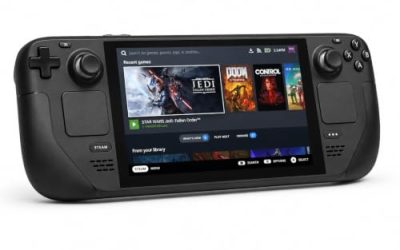
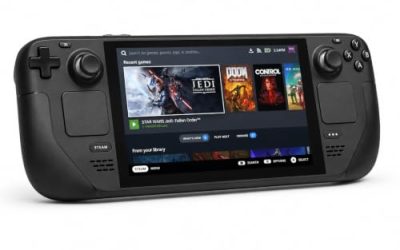
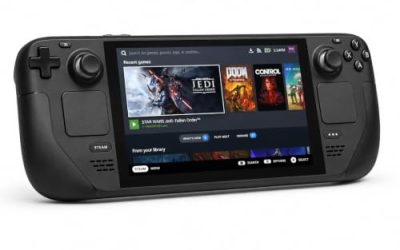
Steam Deck OLED

The handheld case, with the badge’s limits understood: Playable means the default configuration performs well but some functions fall back to the touchscreen or a community layout, and small text is part of the deal in a designer full of numeric fields. The 2022 test date says treat the grade as a starting point, not a guarantee.
Specs
- Display: 7.4-inch HDR OLED, 1280 by 800, up to 90 Hz
- Processor: AMD Zen 2 and RDNA 2 custom APU
- Memory: 16 GB LPDDR5
- Storage: 512 GB NVMe, plus a microSD slot
- Wireless: Wi-Fi 6E and Bluetooth
- Channel note: Valve sells the Deck mainly through its own store, so Amazon listings are third-party sellers
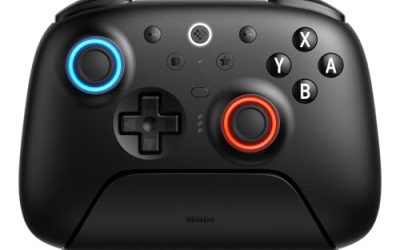
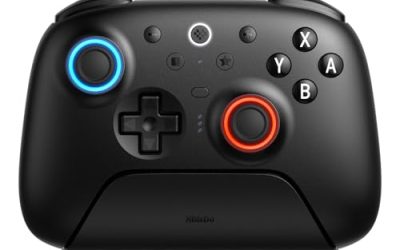
8BitDo Ultimate 2 Bluetooth Controller
For players who dock the Deck or play at a desk and want a pad for the driving side of the game, this is the modern option — with the framing the record demands: Sprocket has no native controller rating, so a pad here is a Steam Input device, and on Deck the sheet’s note about manually switching the active controller applies.
Specs:
- Connectivity: Bluetooth wireless and USB-C wired
- Joysticks: TMR electromagnetic, anti-drift design
- Triggers: Hall effect, with mode switching
- Extras: two remappable back buttons, motion control
- In the box: charging dock included
Xbox Wireless Controller, Carbon Black
The alternative pad, whose glyphs match what most Steam Input layouts assume. Same caveat as above: it earns its place as a mapped input for driving and camera work, not because the game’s record promises controller support — it does not.
- Connectivity: Xbox Wireless and Bluetooth
- Port: USB-C for wired play
- Controls: hybrid D-pad, dedicated Share button
- Power: AA batteries or optional rechargeable pack
Logitech G502 HERO
The designer’s real instrument. Sprocket is hours of placing armour plates, dragging components and reading numeric readouts, and that work belongs to a precise wired mouse. Eleven programmable buttons cover the inputs a long design session repeats.
Specs
- HERO optical sensor, up to 25,600 DPI
- 11 programmable buttons
- Adjustable weight system
- Wired USB connection
- On-board memory profiles
Samsung T9 Portable SSD 2TB
Early Access churn is the storage argument: Sprocket’s branches multiply (public, experimental and a shelf of archived versions), and a fast external drive keeps installs and a Linux library together when moving between machines.
Specs
- Capacity: 2 TB portable SSD
- Interface: USB 3.2 Gen 2×2, USB-C connector
- Maker-rated speeds: up to 2,000 MB per second read, 1,950 MB per second write
- Features: Dynamic Thermal Guard, maker-rated drop resistance
How to choose
Choose the Steam copy, because it is the only PC edition on sale: GOG’s catalogue holds no Sprocket product, so there is no DRM-free alternative to weigh. On a Linux desktop or laptop, install and leave the compatibility tool at its default; a settled Platinum with all three tiers agreeing is as strong a signal as this database gives. On a Steam Deck, expect a playable rather than seamless experience: budget for touchscreen or community-configuration moments and small text, and do not read the 2022 badge as covering the 2026 build. For input, buy the mouse first; add a pad only if the driving side matters to you, knowing it works through Steam Input mapping.
Who should skip
Skip Sprocket on Linux if a native build is a condition of purchase — there is none, on any storefront, and the empty requirement tabs are not a port in waiting. Skip it if you want a finished game: it remains in Early Access, its systems are still being overhauled, and any status describes a moving target. Skip the Deck as your only platform if small text and occasional touchscreen fallbacks would spoil a design-heavy game for you.
FAQ
Is there a native Linux version of Sprocket?
No. Steam’s flags, the purchase package and the depot table all read Windows-only, there is no Linux depot or Linux client icon, and the Linux requirements tab is an empty shell. The Linux route is the Windows build under Proton.
How well does Sprocket run under Proton?
ProtonDB settles it at Platinum, with the best-reported and trending tiers also at Platinum, across 29 reports at strong confidence. It is one of the cleanest Proton records in this catalogue, helped by a single-player stack with no anti-cheat named anywhere.
What does the Steam Deck Playable badge actually cover?
Valve tested the game on 15 February 2022 against build 7546077; the current public build is 26757044 from November 2026. The sheet — read through SteamDB’s republication after Valve’s endpoint returned empty responses — credits performant default graphics and Deck glyphs, and deducts for a default controller configuration that is not fully functional, manual keyboard invocation and small text.
Is Sprocket sold anywhere besides Steam?
Not on GOG: the product address redirects to the general catalogue and GOG’s catalogue records hold no Sprocket entry. Steam is the only PC storefront edition.
Final verdict
Sprocket on Linux is a Proton story, and a good one. The native question closes quickly — flags, package, depots and assets all say Windows-only, and the one apparent counter-signal, a Linux requirements tab, is an empty template shell. What remains is a Windows build that ProtonDB rates Platinum at strong confidence on current filings, in a single-player package with no anti-cheat layer to break. The honest caveats are about paperwork, not playability: the Deck’s Playable badge is a February 2022 test grading a game since rebuilt several times over, and the title is still in Early Access. Buy it on Steam for desktop Linux with confidence in the Proton route; treat the Deck as a workable second screen rather than the main workshop.
Product and ASIN Reference
| Product | ASIN |
|---|---|
| Steam Deck OLED | B0CQ3RWQQZ |
| 8BitDo Ultimate 2 Bluetooth Controller | B0F194QFT2 |
| Xbox Wireless Controller, Carbon Black | B08DF248LD |
| Logitech G502 HERO | B07GBZ4Q68 |
| Samsung T9 Portable SSD 2TB | B0CHFS9K14 |