Our Short List of 3

- Display: 7.4-inch HDR OLED, 1280 by 800, up to 90 Hz
- Processor: AMD Zen 2 and RDNA 2 custom APU
- Memory: 16 GB LPDDR5
- Storage: 512 GB NVMe, plus a microSD slot

- Connectivity: Bluetooth wireless and USB-C wired
- Joysticks: TMR electromagnetic, anti-drift design
- Triggers: Hall effect, with mode switching
- Extras: two remappable back buttons, motion control

- Connectivity: Xbox Wireless and Bluetooth
- Port: USB-C for wired play
- Controls: hybrid D-pad, dedicated Share button
- Power: AA batteries or optional rechargeable pack
All 5 Picks at a Glance
| Product | Specs | Action |
|---|---|---|
| Valve Steam Deck OLED 512GB |
| Check price on Amazon |
| 8BitDo Ultimate 2 Bluetooth Controller |
| Check price on Amazon |
| Xbox Wireless Controller, Carbon Black |
| Check price on Amazon |
 Logitech G502 HERO |
| Check price on Amazon |
 Samsung T9 Portable SSD 2TB |
| Check price on Amazon |
Tank Mechanic Simulator, the DeGenerals S.A. workshop game published by PlayWay S.A. and released on Steam on 20 February 2020, lets you rebuild wrecked Second World War tanks for your own museum. Linux players searching its store page find a confusing record: the flags list Windows and macOS, the Linux requirements tab exists but says nothing, and ProtonDB’s page opens with a heading that implies native support. This article reads every layer of that record and separates what is real from what is paperwork.
The short version is a split verdict. The Mac port is genuine at every layer Steam exposes. The Linux side is the opposite: no flag, no depot, no launch entry and no client icon, only an empty requirements shell. The practical route on Linux is the Windows build under Proton, which carries a Gold rating and a Playable badge on Steam Deck, though both deserve a closer look.
As an Amazon Associate, we earn from qualifying purchases.
Quick answer
Tank Mechanic Simulator has no native Linux build: Steam flags it for Windows and macOS only, its depots and launch entries cover those two systems, and its Linux requirements tab is an empty shell. The Mac port is real. On Linux the Windows build runs through Proton at Gold across 18 ProtonDB reports, and Valve rates it Playable on Steam Deck.
The platform record, layer by layer
Start with the flags, because everything else on this record agrees with them. Steam’s platform fields for app 407130 read windows true, mac true and linux false. That makes this game unusual in this series: most records examined here are Windows-only with varying flavours of Linux paperwork noise, while this one openly sells a second desktop platform.
The Mac side passes every test. The macOS requirements tab is genuinely populated in both tiers, naming macOS 10.13.6 or later with full processor, memory and graphics figures. SteamDB’s depot table holds a dedicated macOS content depot, 407132, at 13.12 GiB beside the Windows depot 407131 at 13.08 GiB. The launch configuration carries a macOS entry pointing at the TankMechanicSimulator app bundle, and the record’s extended OS field reads macos64 and macosnotarized.
The Linux side fails every one of those tests. There is no Linux depot in the table at all. The launch configuration holds exactly two game entries, one for Windows and one for macOS, plus a manual viewer. The registered store assets run from clienticon to logo_small, with no LinuxClientIcon. Nothing on the record delivers, launches or even decorates a Linux build.
The empty Linux tab, and the DLC check
One field deserves its own section: the most misleading element on this record. The Linux requirements field is present and structured, carrying a Minimum heading and a Recommended heading exactly like a real requirements tab. Under each heading sits a completely empty list: no operating system, no processor, no memory figure, nothing. This is the populated-but-empty shell, a template the store renders as if Linux data existed when none was ever entered. A reader skimming tabs could easily believe Linux support was documented and merely minimal.
The DLC array tells the same story four times. All four expansions were read individually: the Cromwell Mk.IV pack (4185020), the Shermans DLC (1065400), the First Supply DLC (1485420) and the Matilda Mk. II pack (5247110). Every one flags windows and mac true with linux false, and carries its own Windows and macOS depot pair. No expansion adds a Linux build, and no music app exists in this family, so the recurring soundtrack trap, in which a music app flags all three platforms and pretends to be a port, cannot fire here.
Steam Deck: Playable, on 2022 paperwork
Valve’s own compatibility endpoint returned empty responses throughout this session, so the test sheet below was read through SteamDB’s republication of Valve’s data. The sheet rates the game Playable, with SteamOS marked Compatible and proton-stable as the recommended runtime. The passes matter for a workshop game: default graphics perform well, and interface text is legible, with the small-text flag at zero. The deductions explain the Playable ceiling: some functionality needs the touchscreen, virtual keyboard or a community configuration rather than the default controller setup, and the game sometimes shows non-Deck controller icons. External pads do not take over by default and may need a manual Quick Access Menu switch.
The age of that sheet is the caveat. Valve’s test is timestamped 11 May 2022 against build 8515853; the current public build is 23833190, built in June 2026. The badge grades a build from more than four years ago, a supplement-candidate shape that no longer describes the exact bytes a buyer downloads. Treat Playable as a floor set in 2022.
ProtonDB: Gold, and a heading that gets it wrong
The ProtonDB summary feed read in full for this session. The settled tier is Gold, the best-reported tier is Platinum and the trending tier is Gold, across 18 reports, with confidence rated good. The newest filings, on current Proton builds, describe the game running well, with one widely repeated note: an uncapped frame rate can trigger a movement glitch, and the in-game FPS limiter set to 90, 60 or 30 settles it. A minority of older filings on dated Proton lines report the game failing to open, the normal pattern for a Gold file.
One element of the ProtonDB page does need naming. The page renders in full and carries the stray “Natively Supports” heading above its requirements block. That heading contradicts Steam’s record on every layer examined here: the flag is false, the depot does not exist, the launch entry does not exist and the requirements tab is empty.
Anti-cheat, DRM and controllers, from the record itself
Steam’s record names no anti-cheat and carries no DRM notice. The Are We Anti-Cheat Yet database, read in full at its current root file of 1,167 entries, holds no entry for this game in either direction: an absence of documentation rather than a clearance, and with no multiplayer there is no online gate to guard anyway. Controller support is partial, from the game’s own record: the store categories list Partial Controller Support and SteamDB repeats controller_support as partial. Expect a pad to handle driving and much of the workshop flow while some menus still want a pointer, exactly the split Valve’s Deck sheet describes.
GOG: no edition
There is no GOG edition to buy: the natural product address redirects to the general games catalogue rather than a product page, and GOG’s product records return nothing for this title, a ruling resting on the absent page plus records rather than search silence.
Gear that fits a Proton workshop game
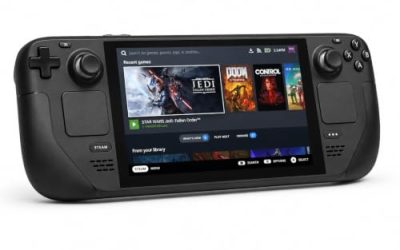
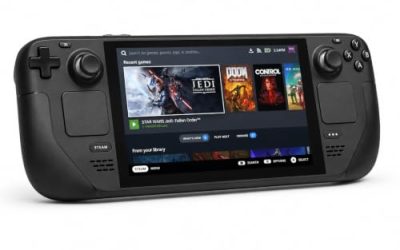
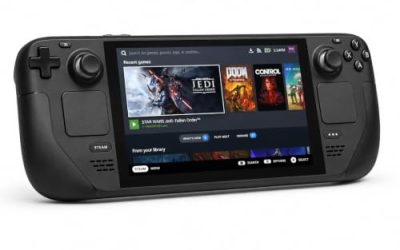
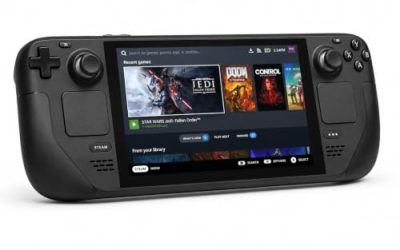
Valve Steam Deck OLED 512GB
- Display: 7.4-inch HDR OLED, 1280 by 800, up to 90 Hz
- Processor: AMD Zen 2 and RDNA 2 custom APU
- Memory: 16 GB LPDDR5
- Storage: 512 GB NVMe, plus a microSD slot
The handheld Valve’s Playable sheet was written around. The game’s demands are modest, and the sheet’s passes, performant default graphics and legible text, describe the experience it delivers.
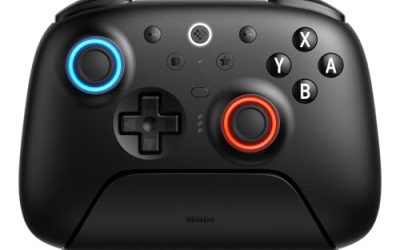
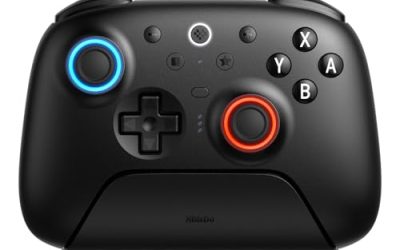
8BitDo Ultimate 2 Bluetooth Controller
- Connectivity: Bluetooth wireless and USB-C wired
- Joysticks: TMR electromagnetic, anti-drift design
- Triggers: Hall effect, with mode switching
- Extras: two remappable back buttons, motion control
The docked and desktop pad pick. The game’s own record rates controller support as partial, so a pad with remappable back buttons covers driving and workshop inputs while a mouse handles the rest.
Xbox Wireless Controller, Carbon Black
- Connectivity: Xbox Wireless and Bluetooth
- Port: USB-C for wired play
- Controls: hybrid D-pad, dedicated Share button
- Power: AA batteries or optional rechargeable pack
The safest spare pad available: Steam Input support is universal, and it pairs over Bluetooth or its own wireless standard. On the Deck, an external pad may need the manual Quick Access Menu switch first.
Logitech G502 HERO
- HERO optical sensor, up to 25,600 DPI
- 11 programmable buttons
- Adjustable weight system
- Wired USB connection
A workshop game lives in menus, part lists and fine pointer work, where partial controller support sends you back to a mouse. Eleven programmable buttons cover the confirm, cancel and camera inputs a long session repeats.
Samsung T9 Portable SSD 2TB
- Capacity: 2 TB portable SSD
- Interface: USB 3.2 Gen 2×2, USB-C connector
- Maker-rated speeds: up to 2,000 MB per second read, 1,950 MB per second write
- Features: Dynamic Thermal Guard, maker-rated drop resistance
The game and its four expansions total roughly thirty-one gigabytes on disk, and a fast USB-C drive is the simple way to move a Proton library between machines or keep a backup. The headline speed needs a Gen 2×2 host port; on a lesser port the drive runs at that ceiling.
How to choose
Choose the Steam copy, because it is the only PC edition on sale. On a Linux desktop or laptop, install it under Proton; the Gold settled tier with a Platinum best-reported tier says current builds run it well, and the one widely reported quirk, the uncapped-frame-rate movement glitch, is settled by the in-game FPS limiter. On a Mac, skip compatibility layers entirely and install the native build. On Steam Deck, expect legible text and performant defaults, with occasional touchscreen moments and a manual switch if you pair an external pad. For input, treat the mouse as the primary workshop tool and a pad as the driving companion: the record’s rating is partial support.
Who should skip
Skip this one if you are shopping for a native Linux release: there is none, and the empty Linux tab plus a stray database heading are the whole of the contrary evidence. Skip it if you want a DRM-free offline installer, because no GOG edition exists. Skip the Deck plan if partial controller support is a deal-breaker and you will not touch a touchscreen for the functions the default configuration cannot reach. And skip it if you need a freshly certified Deck verdict: the badge dates from May 2022.
FAQ
Is Tank Mechanic Simulator native on Linux?
No. Steam flags the game for Windows and macOS only, its depots and launch entries cover those two systems, and the Linux requirements tab is an empty shell. Linux play means the Windows build under Proton.
Does the Mac version actually exist?
Yes, at every layer. The macOS requirements are fully written out, SteamDB lists a dedicated macOS depot of 13.12 GiB, the launch configuration includes a macOS entry, and the record carries 64-bit notarised markers. All four DLC packs repeat the split.
How well does it run under Proton?
ProtonDB settles at Gold, with a Platinum best-reported tier and a Gold trending tier across 18 reports at good confidence. Recent reports describe it running well; the best-known quirk is a movement glitch at uncapped frame rates, settled by the in-game FPS limiter.
What does the Steam Deck Playable rating actually rest on?
Valve’s sheet, read here through SteamDB’s republication after Valve’s endpoint returned empty responses, rates it Playable with performant default graphics and legible text, deducted for controller-configuration gaps and non-Deck icons. The test dates from 11 May 2022, against a long-replaced build.
Final verdict
Tank Mechanic Simulator is a two-platform game wearing a third platform’s empty paperwork. The Mac port is one of the cleanest real ports in this series, while the Linux presence amounts to a false flag reading, an empty requirements shell and a database heading that should not be there. None of that makes it a bad buy for Linux players: the Windows build carries a Gold ProtonDB file with good confidence, a Playable Deck badge, and no anti-cheat gate in front of its single-player loop. Buy it as a Proton game with a real Mac sibling, set the frame-rate limiter, and it earns its place.
Product and ASIN Reference
| Product | ASIN |
|---|---|
| Valve Steam Deck OLED 512GB | B0CQ3RWQQZ |
| 8BitDo Ultimate 2 Bluetooth Controller | B0F194QFT2 |
| Xbox Wireless Controller, Carbon Black | B08DF248LD |
| Logitech G502 HERO | B07GBZ4Q68 |
| Samsung T9 Portable SSD 2TB | B0CHFS9K14 |