SpongeBob SquarePants: Battle for Bikini Bottom – Rehydrated is Purple Lamp’s remake of the 2003 platformer, published by THQ Nordic and released on Steam on 23 June 2020. SpongeBob, Patrick and Sandy run and jump through Bikini Bottom collecting golden spatulas, solo or in the co-op modes the record lists, in a bright, joke-driven cartoon platformer. Remakes of console games from that era often hide a Linux build in the paperwork, so the port question is worth asking properly.
This article answers it from the record alone: Steam’s store data, the depot table behind it, the one other app in its family, the community compatibility file, Valve’s Deck sheet and the GOG catalogue, each read directly. Where a heading or flag disagrees with what is delivered, the delivery wins.
As an Amazon Associate, we earn from qualifying purchases.
Quick answer
No. SpongeBob SquarePants: Battle for Bikini Bottom – Rehydrated has no native Linux build: Steam flags Windows only, its Linux requirements field is an empty shell, and the store package delivers a single Windows depot. Linux play runs through Proton, where the community file’s headline tier is Platinum across 130 reports, and Valve rates the Deck Playable.
What the store record actually ships
Steam’s platform flags are unambiguous: Windows true, Mac false, Linux false. The Windows requirements field is genuinely populated — 64-bit Windows 10, a processor at 2.8 GHz or higher, 4 GB of memory, a DirectX 11 card with 2 GB of video memory, and 8 GB of storage at minimum, with a recommended tier above it. The Linux requirements field is an empty shell: Minimum and Recommended headings over empty lists, the shape of a template generated and never filled. The Mac field has the same hollow shape.
The depot table closes the case. Behind the game sits exactly one content depot, depot 969991, at 7.68 GiB, and its own page lists the store packages among those containing it, so this is the build buyers receive. Its manifest is a Windows delivery — executable and library files around the game’s data archives — and its size equals the game’s total size on disk. No Linux or macOS depot exists in any branch, and the public branch stands on a build from December 2020: one depot, one platform, unchanged for years.
The app’s configuration reads osarch 64, with osextended an empty string, so no extended-OS value can be claimed; the record also carries no DRM notice and no external-account notice — gaps in the paperwork, stated as such.
The family tree holds one app, and it is the soundtrack
The game’s add-on array contains exactly one app, read individually. App 1263830 is the Rehydrated Soundtrack, typed as music. It flags all three platforms true — Windows, Mac and Linux — while its Linux requirements field is an empty list outright, not even a shell with headings. A bare flag on an audio product, with no requirements text and no game build behind it, is the soundtrack trap in its purest form: it describes audio delivery, nothing about a port. The family’s Linux-flag count stands at one of two records — on the music.
Anti-cheat: three sources, all quiet
Because the store record lists online co-op, the anti-cheat question is a live one, so three sources were checked and are kept separate. Steam’s record names no anti-cheat and carries no notices. The depot database’s detected-technology list names the Unreal Engine plus graphics and audio middleware — NVIDIA physics and cloth libraries, Ogg and Vorbis — engine plumbing, not enforcement software. And Are We Anti-Cheat Yet, the community anti-cheat dataset, carries no entry for this game under name or app id. No source describes an anti-cheat standing between a Linux player and this game.
The community file: a Platinum headline, read carefully
The community compatibility file needs two cautions before its headline can be used. First, its summary feed did not answer during this session — the summary address returned a page-not-found response — so no tier split and no confidence figure can be claimed here. What the game’s own page states plainly is its headline: a Platinum tier across 130 reports. That is the size of the claim, and a Platinum headline on a file that large marks the Windows build as a reliable Proton passenger.
Second, the page displays a heading presenting the game as natively supported above its requirements block. Steam’s record contradicts it on every layer — false flag, empty-shell field, one Windows depot — and the reports beneath it name Proton version after Proton version. This article follows Steam: the heading is stray page furniture, not evidence of a port. At report weight, the texture under the headline is mostly uneventful — recent reports describe out-of-the-box play on current Proton builds — with one recurring wrinkle: some reporters found the online multiplayer unreachable while single-player ran completely. Treat that as report texture, not a ruling.
Steam Deck: Playable, on paperwork that matches the build
Valve’s own compatibility endpoint returned no usable answer during this session, so the verdict and paperwork were read from the depot database’s republication of Valve’s compatibility data, disclosed here rather than hidden. The verdict is Playable. SteamOS is rated separately as Compatible.
The Playable sheet is a near miss rather than a failure: the default controller configuration is fully functional, the game shows Steam Deck controller icons, interface text is legible, and the default graphics configuration performs well. Two notes hold it below the top badge — minor audio issues on the handheld, and external controllers not taking over by default, so a docked player may need the Quick Access Menu switch. The paperwork was tested on 21 August 2026, on build 5916469 — the same build the public branch still serves — with a Proton release candidate as the recommended runtime. The badge certifies the Windows build under Proton, and the paperwork is not stale: the tested build is the build a buyer downloads today.
The GOG edition exists, and it is Windows-only
A GOG edition of this exact game exists, ruled from the store’s own product record, and its system compatibility line reads Windows true, Mac false, Linux false. The DRM-free route changes the storefront, not the platform: a Linux player buying there gets the same Windows build, carried by the same Proton layer.
Gear that fits a Proton platformer
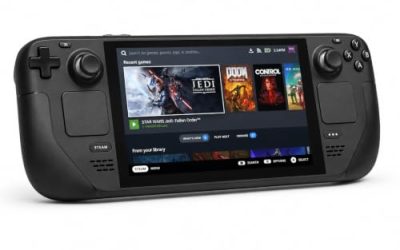
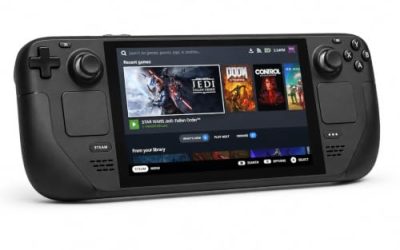
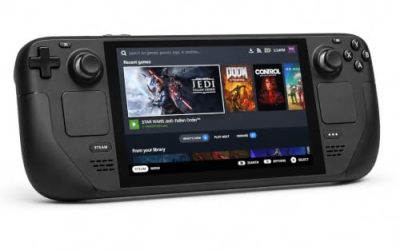
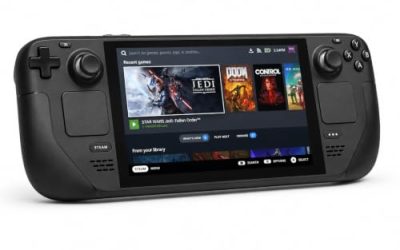
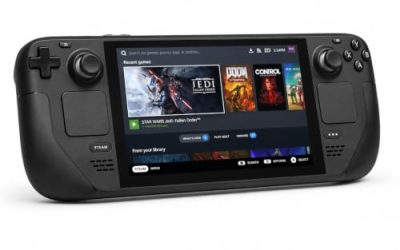
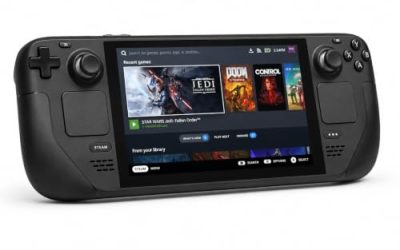
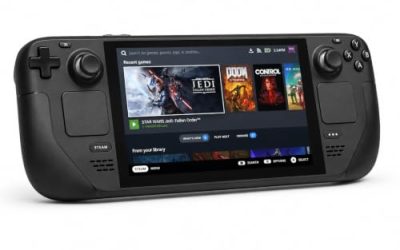
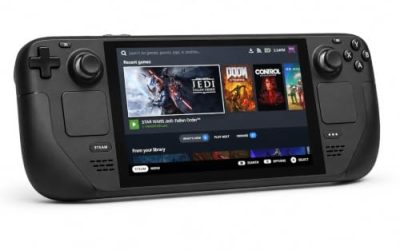
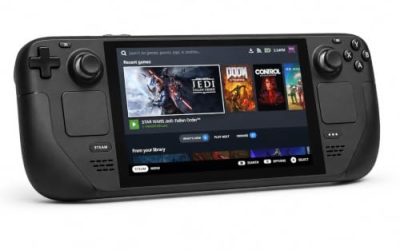
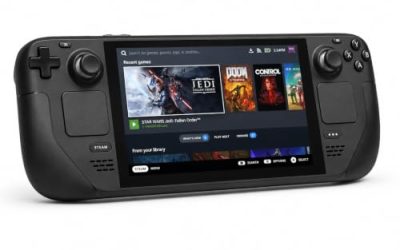
Valve Steam Deck OLED 512GB

The handheld the Playable badge was written for: Valve’s sheet passes the Windows build under Proton, notes the minor audio issues plainly, and was written against the very build the store still serves.
Specs
- Display: 7.4-inch HDR OLED, 1280 by 800, up to 90 Hz
- Processor: AMD Zen 2 and RDNA 2 custom APU
- Memory: 16 GB LPDDR5
- Storage: 512 GB NVMe, plus a microSD slot
- Wireless: Wi-Fi 6E and Bluetooth
- Channel note: Valve sells the Deck mainly through its own store, so Amazon listings are third-party sellers
8BitDo Ultimate 2 Bluetooth Controller

The docked and desktop pad pick. Steam lists full controller support for the game, and this pad covers the couch case with modern sticks and triggers plus back buttons.
Specs
- Connectivity: Bluetooth wireless and USB-C wired
- Joysticks: TMR electromagnetic, anti-drift design
- Triggers: Hall effect, with mode switching
- Extras: two remappable back buttons, motion control
- In the box: charging dock included
Xbox Wireless Controller, Carbon Black

The safest guest pad in PC gaming: Steam Input support is universal, the glyphs match what most games display, and it pairs over Bluetooth or its own wireless standard. On the handheld, the sheet’s note applies: an external pad may need a manual Quick Access Menu switch first.
- Connectivity: Xbox Wireless and Bluetooth
- Port: USB-C for wired play
- Controls: hybrid D-pad, dedicated Share button
- Power: AA batteries or optional rechargeable pack
Logitech G502 HERO

A platformer lives on the pad, but menus, settings and the desktop around the game are mouse work, and a precise wired mouse turns those trips into single clicks.
Specs
- HERO optical sensor, up to 25,600 DPI
- 11 programmable buttons
- Adjustable weight system
- Wired USB connection
- On-board memory profiles
Samsung T9 Portable SSD 2TB

For moving a Linux game library between machines, or keeping an offline backup of installers, a fast USB-C drive is the simple answer. The headline figure needs a Gen 2×2 host port; on a lesser port the drive runs at that ceiling.
Specs
- Capacity: 2 TB portable SSD
- Interface: USB 3.2 Gen 2×2, USB-C connector
- Maker-rated speeds: up to 2,000 MB per second read, 1,950 MB per second write
- Features: Dynamic Thermal Guard, maker-rated drop resistance
How to choose
Start from the route, because there is only one: the Windows build under Proton, on Steam or on GOG, is identical in platform terms, so choose the storefront on library habits rather than Linux hopes. On a desktop, leave Proton at its default first — the Platinum headline was earned largely on default settings. If online co-op is the point of the purchase, weigh the report texture about unreachable multiplayer first, and treat local play as the dependable mode. On the handheld, the Playable badge plus current paperwork makes the Deck this game’s natural home; budget for the minor audio note, and if you dock, remember the controller hand-off note. Storage is a non-issue: the whole game is under eight gigabytes.
Who should skip
Skip this one if a native build is a hard requirement — there is none, on any storefront, and the branch has not moved since 2020, so none is plausibly coming. Skip it if your plan centres on online co-op and you cannot tolerate the possibility, raised in community reports, that the online mode does not connect under Proton. And skip it if minor audio issues on a handheld would spoil the game for you; Valve’s sheet attaches that note to the badge rather than hiding it.
FAQ
Is there a native Linux version of Battle for Bikini Bottom Rehydrated?
No. Steam flags the game Windows-only, its Linux requirements field is an empty shell, and the store package delivers a single Windows depot of 7.68 GiB. The family’s only Linux flag sits on the separate soundtrack app, an audio product with an empty requirements field, not a port.
How well does it run on Linux through Proton?
The community file’s headline tier is Platinum across 130 reports, describing a Windows build that runs reliably under Proton for most players. Its summary feed did not answer during this session, so no finer tier split or confidence figure is claimed here; some reports describe unreachable online multiplayer while single-player runs fully.
What does the Steam Deck Playable badge rest on?
Valve’s sheet passes the default controller configuration, controller icons, legible text and default graphics performance, with two notes: minor audio issues, and external controllers not taking over by default. The paperwork, dated 21 August 2026, names the same build the branch still serves.
Does the GOG version change anything for Linux players?
No. A GOG edition exists, and its own product record lists Windows as its only operating system — the same Windows build through a different store, so a Linux player there is on the same Proton route as on Steam.
Final verdict
Battle for Bikini Bottom Rehydrated is a Windows-only release wearing two misleading decorations: an empty-shell Linux requirements field on its own page, and a native-support heading on its community page that the store record refutes. Strip those away and the picture is simple and, for a Proton player, good — a single settled Windows build, a Platinum community headline on a deep report file, no anti-cheat named by any source, and a Playable Deck badge whose paperwork matches the build on sale. Buy it as a Proton game, and it is exactly what the record says it is.
Product and ASIN Reference
| Product | ASIN |
|---|---|
| Valve Steam Deck OLED 512GB | B0CQ3RWQQZ |
| 8BitDo Ultimate 2 Bluetooth Controller | B0F194QFT2 |
| Xbox Wireless Controller, Carbon Black | B08DF248LD |
| Logitech G502 HERO | B07GBZ4Q68 |
| Samsung T9 Portable SSD 2TB | B0CHFS9K14 |