Our Short List of 3

- Tenkeyless layout with rotary knob
- QMK and VIA remapping support
- Hot-swappable K Pro Brown switches
- Wired USB-C connection

- HERO optical sensor, up to 25,600 DPI
- 11 programmable buttons
- Adjustable weight system
- Wired USB connection

- Capacity: 2 TB portable SSD
- Interface: USB 3.2 Gen 2×2, USB-C connector
- Maker-rated speeds: up to 2,000 MB per second read, 1,950 MB per second write
- Features: Dynamic Thermal Guard, maker-rated drop resistance
All 5 Picks at a Glance
| Product | Specs | Action |
|---|---|---|
| Keychron V3 |
| Check price on Amazon |
| Logitech G502 HERO |
| Check price on Amazon |
| Samsung T9 Portable SSD 2TB |
| Check price on Amazon |
 8BitDo Ultimate 2 Bluetooth Controller |
| Check price on Amazon |
 Xbox Wireless Controller, Carbon Black |
| Check price on Amazon |
Executive Assault 2 is Hesketh Studios’ space strategy hybrid: you command a fleet from the RTS layer, then drop into first-person combat aboard the ships you built. It left a long early access run with its full Steam release on 18 October 2023, and it is still actively patched. For Linux players the question is the usual one: is there a native build hiding anywhere in the record, and if not, what do the compatibility layers honestly offer?
The short answer is that there is no Linux build to find. Steam’s record flags the game for Windows and macOS only, the depot table holds exactly two content depots — one per supported system — and Valve has tested the game on Steam Deck and rated it Unsupported on the current build. What Linux players get instead is Proton, where the record is split: a Gold headline built on older reports, and a Bronze trend built on recent ones describing hangs at the loading screen.
As an Amazon Associate, we earn from qualifying purchases.
Quick answer
Executive Assault 2 is not native on Linux. Steam flags it Windows and Mac only, with no Linux depot or launch entry, and Valve rates it Unsupported on Steam Deck after a November 2026 test of the current build. On desktop Linux it runs through Proton: ProtonDB reads Gold from 10 reports, but the trending tier is Bronze, so expect tinkering rather than a clean install.
What the Steam record actually shows
Start with the platform flags, because everything else hangs off them. The app record reads windows true, mac true, linux false. That is not a paperwork gap: SteamDB’s depot table lists depot 510501, the Windows content depot at 11.56 GiB, and depot 510502, the macOS content depot at 11.53 GiB, and nothing else. The launch configuration follows the same two systems, and the macOS build is real — its requirements block is genuinely populated, asking for Catalina and an Intel i7. Two builds ship, and Linux is not one of them.
The one Linux-shaped artefact is the requirements field. The store data carries a Linux requirements block, but both its minimum and recommended lists are empty — headers with nothing under them. That is the populated-but-empty trap in its purest form: a shell that makes the page look as though a Linux tier exists, attached to a game with no Linux flag, depot or launch entry. An empty list is not a build, and this article rules from the depots and flags, not from the shell.
One more flag deserves naming: the app’s only DLC item, app 2682590, is the soundtrack — a music product whose own record, read individually, flags windows, mac and linux all true. Read carelessly that looks like a Linux version of something; it is storefront metadata for an audio release, and it changes nothing about the game itself.
Steam Deck: Unsupported, and freshly so
Deck verdicts in this series often carry a staleness warning — paperwork written against a build that no longer ships. This one needs the opposite note. Valve’s record resolves to Unsupported for the Deck, with SteamOS rated Unsupported separately, and the test behind it is dated 9 November 2026 against build 26108499 — still the current public build. The verdict describes the game as it exists today.
The test sheet explains the failure’s shape. The recorded result token is the one Valve uses when SteamOS does not support the title. The configuration notes record input as the “other” class — keyboard-and-mouse style input rather than a gamepad layout — with a manual keyboard invoke required and non-Deck glyphs shown, and the recommended runtime for the attempt was a release candidate build of Proton 11. A mouse-driven strategy interface, then, that Valve could not get into a supported state on the handheld. Desktop Linux is a different question, answered by ProtonDB below; the Deck badge itself is closed.
ProtonDB: Gold on paper, Bronze in the trend
The ProtonDB summary was read in full: settled tier Gold, best-reported Platinum, trending Bronze, 10 reports, moderate confidence. That spread is the story. The Gold and Platinum figures rest heavily on older reports — desktop players from the early access years describing the game running perfectly and multiplayer rated excellent, plus one Proton 8-era Deck report that waited out a long load.
The recent reports point the other way, which is what a Bronze trend means. The newest desktop report, on a current Mint install with Proton 10, records the game installing but not opening; a recent Deck report describes it hanging at the menu load across several Proton versions; an older Deck success needed a community layout and a custom GE-Proton build. The Gold is not a lie, but the current file leans toward tinkering.
One heading needs naming. The ProtonDB page renders in full and carries a “Natively Supports” heading above its requirements section. Steam’s record contradicts it on every layer, and every report under it is a Proton report about the Windows build — a labelling artefact, most plausibly fed by the empty Linux requirements shell on the store record. This article follows Steam: not native, whatever the heading says.
GOG and anti-cheat: two short answers
There is no GOG edition to weigh. The game’s natural GOG product address redirects to the general catalogue, and GOG’s catalogue search returns no product for it — the Steam copy is the only PC edition, so the Proton record above is the whole Linux story.
On anti-cheat, the answer is equally plain. The full Are We Anti-Cheat Yet database, all 1,167 entries at its repository root, was read for this article and holds no entry for this game, and nothing on the Steam record names an anti-cheat product. SteamDB’s technology detection lists the Unity engine and the Photon networking library behind the multiplayer — networking middleware, not a kernel anti-cheat gate.
Gear that fits the record
The record’s shape decides the gear: a desktop game with no controller support on its own record, an Unsupported Deck verdict and a mouse-driven interface. So the list is a keyboard, a mouse and library storage first — with two pads included as wider-library gear for games that do support them.
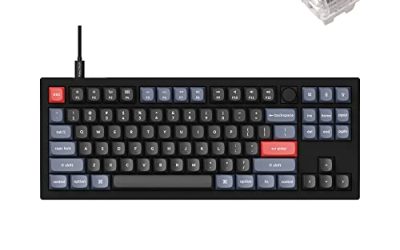
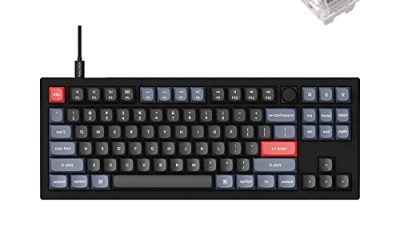
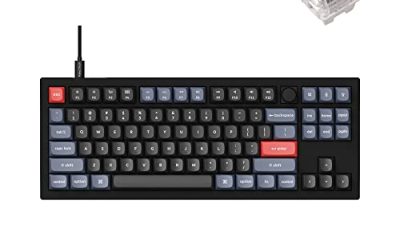
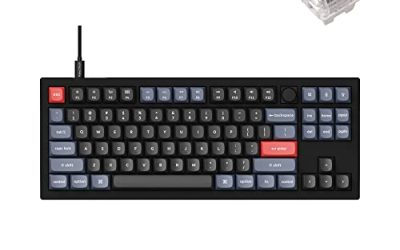
Keychron V3
- Tenkeyless layout with rotary knob
- QMK and VIA remapping support
- Hot-swappable K Pro Brown switches
- Wired USB-C connection
The keyboard pick for desktop sessions: a tenkeyless board with QMK and VIA support lets you remap keys at the keyboard level, which keeps working across every Linux install you plug it into — exactly what a hotkey-heavy RTS layer rewards.
Logitech G502 HERO
- HERO optical sensor, up to 25,600 DPI
- 11 programmable buttons
- Adjustable weight system
- Wired USB connection
The input this game is actually built around. Fleet orders, build queues and FPS movement all live on the mouse, and eleven programmable buttons hold the commands a long session repeats.
Samsung T9 Portable SSD 2TB
- Capacity: 2 TB portable SSD
- Interface: USB 3.2 Gen 2×2, USB-C connector
- Maker-rated speeds: up to 2,000 MB per second read, 1,950 MB per second write
- Features: Dynamic Thermal Guard, maker-rated drop resistance
The Windows build is an 11.56 GiB install, and a dual-boot or multi-machine setup moves libraries around often enough that fast portable storage pays for itself. The headline figure needs a Gen 2×2 host port; on a lesser port the drive runs at that ceiling.
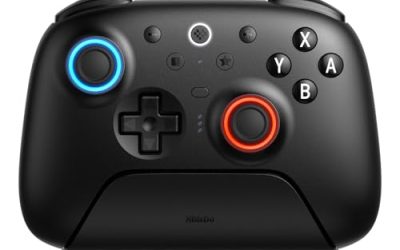
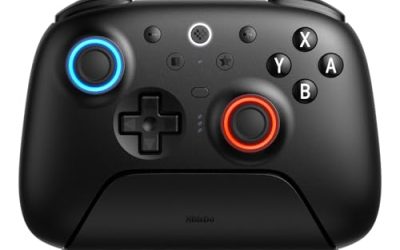
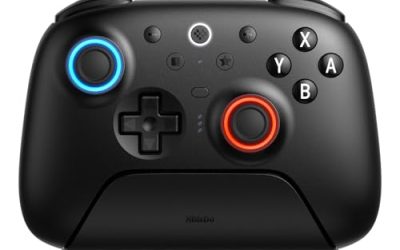
8BitDo Ultimate 2 Bluetooth Controller
- Connectivity: Bluetooth wireless and USB-C wired
- Joysticks: TMR electromagnetic, anti-drift design
- Triggers: Hall effect, with mode switching
- Extras: two remappable back buttons, motion control
Included for the rest of your library, and labelled that way on purpose: this game’s record lists no controller support, so this pad is for the games around it — docked sessions, platformers and racers that do read a gamepad — where its dock and back buttons make it the tidy default.
Xbox Wireless Controller, Carbon Black
- Connectivity: Xbox Wireless and Bluetooth
- Port: USB-C for wired play
- Controls: hybrid D-pad, dedicated Share button
- Power: AA batteries or optional rechargeable pack
The second library pad, with the same caveat: this title will not use it, but as a guest pad for the wider catalogue its Steam Input support is universal and the glyphs match what most games display.
How to choose
Choose your route first, because the two Linux routes are not equal. Desktop Linux with Proton is the only route with a working record behind it, and even there the smart setup follows the reports rather than the headline: be ready to try an older Proton version or a community build if the current default hangs at the loading screen, and treat the first long load as a known behaviour rather than a crash — more than one report describes the game continuing after a pause that looks like a freeze. The Deck route is closed by Valve’s own current test.
Choose your expectations by report age. The Gold tier averages years of reports, including an early access era with different builds; the Bronze trend is what the recent stretch looks like. If your tolerance is “install and play,” the recent file does not promise that. If it includes swapping Proton versions and reading report threads, the game has a long history of running well once coaxed into starting — and multiplayer reports are among the strongest in the file.
Who should skip
Skip it if you want a native Linux strategy game — this is not one, and nothing in the record suggests a port is coming; the developer’s second platform is macOS. Skip it if the Steam Deck is your machine: Valve tested the current build in November 2026 and rated it Unsupported. Skip it if you will not tinker — a Bronze trending tier and newest reports describing hangs at the menu load make it the wrong purchase for a no-fuss library. And skip it if you play on a controller: the record lists no controller support at all.
FAQ
Is Executive Assault 2 native on Linux?
No. Steam flags the game for Windows and macOS only, the depot table holds one content depot per supported system, and there is no Linux launch entry. The Linux requirements block is an empty shell, and the only true Linux flag in the family belongs to the soundtrack.
Can I play Executive Assault 2 on Steam Deck?
Valve rates it Unsupported, tested in November 2026 against the current public build, so the verdict is current rather than stale paperwork. Community reports line up with it: recent Deck attempts hang at the menu load, and older successes needed community layouts and custom Proton builds.
How well does Executive Assault 2 run under Proton on desktop Linux?
ProtonDB’s full summary reads Gold overall from 10 reports with moderate confidence, best-reported Platinum — but the trending tier is Bronze. Older reports describe smooth play and excellent multiplayer; the newest describe installs that hang at the loading screen on current Proton, so expect to experiment with versions.
Does Executive Assault 2 have anti-cheat that blocks Linux?
No anti-cheat is named anywhere in the record. The Are We Anti-Cheat Yet database holds no entry for the game, and its multiplayer runs on the Photon networking library rather than a kernel-level anti-cheat.
Final verdict
Executive Assault 2 on Linux is a Proton-only proposition with a split record. There is no native build — the flags, depots and launch entries agree, the empty requirements shell and the soundtrack’s stray flag notwithstanding — and no GOG edition to fall back on. A Gold ProtonDB headline says the game can run well; a Bronze trend and a fresh Unsupported Deck verdict say the current default experience is rougher. Buy it as a desktop tinkering project with a strong multiplayer file — not as a native port, not for the Deck, and not with a controller in hand.
Product and ASIN Reference
| Product | ASIN |
|---|---|
| Keychron V3 | B0B2DMMMG2 |
| Logitech G502 HERO | B07GBZ4Q68 |
| Samsung T9 Portable SSD 2TB | B0CHFS9K14 |
| 8BitDo Ultimate 2 Bluetooth Controller | B0F194QFT2 |
| Xbox Wireless Controller, Carbon Black | B08DF248LD |