Our Short List of 3

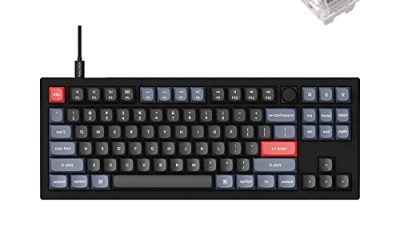
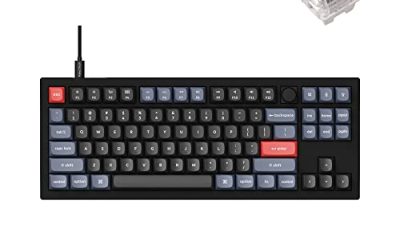
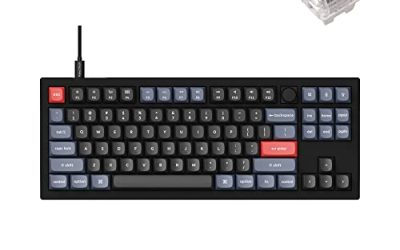
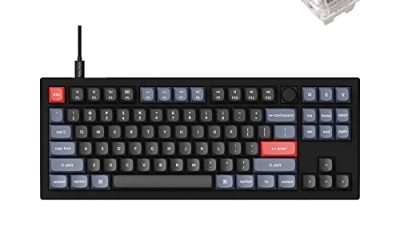
- Tenkeyless layout with rotary knob
- QMK and VIA remapping support
- Hot-swappable K Pro Brown switches
- Wired USB-C connection

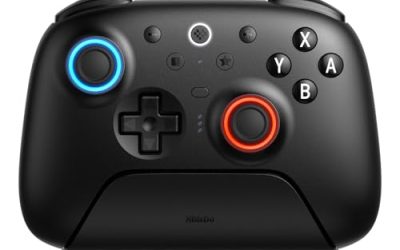
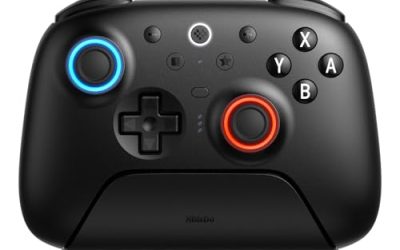
- Connectivity: Bluetooth wireless and USB-C wired
- Joysticks: TMR electromagnetic, anti-drift design
- Triggers: Hall effect, with mode switching
- Extras: two remappable back buttons, motion control

- Connectivity: Xbox Wireless and Bluetooth
- Port: USB-C for wired play
- Controls: hybrid D-pad, dedicated Share button
- Power: AA batteries or optional rechargeable pack
All 5 Picks at a Glance
| Product | Specs | Action |
|---|---|---|
| Keychron V3 |
| Check price on Amazon |
| 8BitDo Ultimate 2 Bluetooth Controller |
| Check price on Amazon |
| Xbox Wireless Controller, Carbon Black |
| Check price on Amazon |
 Logitech G502 HERO |
| Check price on Amazon |
 Samsung T9 Portable SSD 2TB |
| Check price on Amazon |
StarDrive is the 2013 real-time space strategy game from Zero Sum Games, a single-player 4X title built on Microsoft’s XNA framework. Linux players still ask whether a native version ever appeared, because the game’s ProtonDB page carries a heading that suggests one did. It did not.
Every layer of Steam’s own data says the same thing: Windows only. The store flags, the single content depot, the launch configuration and the redistributables all point at one Windows build, frozen since 2014. What Linux players actually have is a Proton route with a known framework hurdle, and this article walks through the record layer by layer.
As an Amazon Associate, we earn from qualifying purchases.
Quick answer
StarDrive has no native Linux version. Steam’s record for the 2013 Zero Sum Games strategy title is Windows-only on every layer: one Windows content depot, Windows-only platform flags, and no Linux launch entry. The Steam Deck has never been tested by Valve. Under Proton, nine ProtonDB reports settle at Silver, with the XNA framework the recurring hurdle.
What the Steam record actually says
Start with the store record for app 220660. The name, developer and release date confirm the pin: StarDrive, developed by Zero Sum Games, released 26 April 2013. The platform flags read windows true, mac false, linux false. The Linux requirements field is an empty list, and so is the Mac one: the record contains no Linux tab in any form, populated or otherwise. There is no DLC array on the app at all, so there is no add-on family to audit for a hidden Linux flag.
The one purchase package, package 26196, repeats the same platform set: windows true, mac false, linux false. Store page and package agree, which matters because package-level splits have contradicted app-level flags on other titles in this cluster. Here there is no split.
The record also lists no controller support. The categories are Single-player, Steam Trading Cards and Family Sharing, and the controller field is absent entirely. That is worth stating plainly: StarDrive is a mouse-and-keyboard strategy game on its own paperwork, and any pad in the gear section below is there for the wider library, not for this game.
The depot table: one Windows build, frozen in 2014
SteamDB’s depot table for the app holds exactly one content depot: depot 220661, named StarDrive Content, at 1.02 GiB. Around it sit small language depots of a few hundred bytes each for Russian, French, Polish and German text. There is no Linux depot, no macOS depot, and no launch entry for any system other than Windows.
The redistributables tell the same story in a different accent. The install pulls the Visual C++ 2010 redistributable, the .NET 4.0 redistributable, and both the XNA 3.1 and XNA 4.0 redistributables, every one a Windows component. SteamDB’s detected-technologies line names the XNA Engine and the SlimDX SDK. XNA was Microsoft’s managed game framework, discontinued without a Linux path, and its presence is the technical reason this game was never a plausible port candidate: the framework itself is the wall.
The public branch sits on build 222030, dated 27 March 2014. The build has not moved in over a decade, so nothing in the delivery record is provisional. What Steam sells today is the same Windows build it has sold since 2014, and the asset list underlines it: a standard client icon is registered, but there is no Linux client icon anywhere.
The ProtonDB file: Silver, and the XNA hurdle explains it
ProtonDB’s summary for the app was read in full. The settled tier is Silver, the best-reported tier is Platinum, the trending tier is Gold, across nine reports with moderate confidence. That spread, a Platinum ceiling over a Silver settlement, is the signature of a game that runs well once a specific obstacle is cleared and fails outright when it is not.
The report text names the obstacle repeatedly. StarDrive needs its XNA 4.0 framework component inside the Proton prefix before it will start, and several reporters describe installing it with protontricks as the step that turned a silent exit into a working game. Other reports describe the failure mode without the fix: the game closing after start with no error message, or crashing on launch under newer Proton builds. The Silver tier is not a performance judgement; it is the average of a fixable launch problem and the clean game behind it.
One label on that page needs correcting out loud. The ProtonDB game page renders in full and carries a Natively Supports heading above the system requirements. That heading is wrong for this game: the requirements it sits above are the Windows requirements, and Steam’s record carries no Linux build in any layer. The heading is a labelling artefact, not evidence of a port.
The Steam Deck: never tested, no verdict to give
Valve’s compatibility endpoint returns resolved category 0 for this app, with an empty item list, and the SteamOS category reads the same. In plain terms, Valve has never published a Deck test for StarDrive, and ProtonDB’s own header agrees, showing the Deck status as Unknown.
Category 0 means this article claims no verdict in either direction. The game is neither Verified nor Unsupported; it is untested, and any site that prints a badge for it is inventing one. The ProtonDB file does include reports filed from Deck hardware, and they split the same way the desktop reports do: the XNA step decides whether the game starts. That is report colour, not a Valve ruling. Because there is no badge, the gear section below is framed for the desktop, where the record is clear.
The GOG ruling: no edition exists
GOG was checked through its own records rather than by search alone. The store’s filtered search returns no StarDrive product, the catalogue API returns no record for the name, and the game’s natural product address redirects to the general games catalogue instead of a purchasable page. Three routes, one answer: GOG does not sell StarDrive, so there is no DRM-free edition and no second storefront to compare. The Steam copy is the only PC edition.
On anti-cheat there is nothing to rule on. StarDrive is single-player only, and the full Are We Anti-Cheat Yet games file, read at the repository root, holds no entry for it.
Gear that fits a desktop strategy game
The record points at a desk: a mouse-and-keyboard 4X game on a desktop or laptop, with a library drive for the wider collection. The keyboard leads, because the Deck slot in the usual set has no badge to stand behind here.
Keychron V3
- Tenkeyless layout with rotary knob
- QMK and VIA remapping support
- Hot-swappable K Pro Brown switches
- Wired USB-C connection
The keyboard pick for desktop sessions: a tenkeyless board with QMK and VIA support lets you remap keys at the keyboard level, which keeps working across every Linux install you plug it into.
8BitDo Ultimate 2 Bluetooth Controller
- Connectivity: Bluetooth wireless and USB-C wired
- Joysticks: TMR electromagnetic, anti-drift design
- Triggers: Hall effect, with mode switching
- Extras: two remappable back buttons, motion control
The desktop pad pick for the rest of the library. StarDrive’s own record lists no controller support, so this pad is not for this game; it covers the pad-native titles around it, with modern sticks and triggers.
Xbox Wireless Controller, Carbon Black
- Connectivity: Xbox Wireless and Bluetooth
- Port: USB-C for wired play
- Controls: hybrid D-pad, dedicated Share button
- Power: AA batteries or optional rechargeable pack
The safest guest pad in PC gaming: Steam Input support is universal, the glyphs match what most games display, and it pairs over Bluetooth or its own wireless standard. As with the pad above, it is library gear; StarDrive itself uses mouse and keyboard.
Logitech G502 HERO
- HERO optical sensor, up to 25,600 DPI
- 11 programmable buttons
- Adjustable weight system
- Wired USB connection
StarDrive’s empire management is menu-driven, and a precise wired mouse turns fleet orders and ship-design work into single clicks. Eleven programmable buttons cover the confirm, cancel and camera inputs a long session repeats.
Samsung T9 Portable SSD 2TB
- Capacity: 2 TB portable SSD
- Interface: USB 3.2 Gen 2×2, USB-C connector
- Maker-rated speeds: up to 2,000 MB per second read, 1,950 MB per second write
- Features: Dynamic Thermal Guard, maker-rated drop resistance
For moving a Linux game library between machines, or keeping an offline backup of installers, a fast USB-C drive is the simple answer. The headline figure needs a Gen 2×2 host port; on a lesser port the drive runs at that ceiling instead.
How to choose
Choose the Steam copy, because it is the only PC edition on sale and the exact build both records describe. On a desktop or laptop, install under Proton and be ready for the one known hurdle: the reports converge on the XNA 4.0 framework needing to be present in the prefix, and a protontricks install of that component is the documented fix when the game exits silently. Treat the Silver tier as a description of that setup step rather than of the game behind it; the best-reported Platinum tier shows the file once the step is done.
For input, plan on mouse and keyboard, because the game’s own record lists no controller support at all. For the Deck, go in with open eyes: Valve has never tested the game, there is no badge to rely on, and the reports from Deck hardware describe the same launch hurdle as the desktop file.
Who should skip
Skip this one if you are shopping for a native Linux strategy game: StarDrive is not one, and the heading on its ProtonDB page does not change the depot table. Skip it if you want a DRM-free offline installer, because no GOG edition exists. Skip it if you are unwilling to do any prefix tinkering, because the Silver file says a framework install stands between a fresh download and a running game for many players. And skip it on the Deck if an official Valve verdict is a condition of purchase, because none exists.
FAQ
Is StarDrive native on Linux?
No. Steam’s record is Windows-only at every layer: the platform flags, the single content depot, the launch configuration and the purchase package all exclude Linux, and the Linux requirements field is an empty list. The Natively Supports heading on the ProtonDB page is a labelling artefact that the record contradicts.
Why does StarDrive fail to start under Proton?
The recurring cause in the ProtonDB reports is the XNA 4.0 framework. StarDrive was built on Microsoft’s XNA, and its Steam install pulls XNA and .NET redistributables that a fresh Proton prefix may not satisfy. Reports describe installing the XNA component with protontricks as the fix; without it, the game commonly exits at launch.
Is StarDrive Steam Deck Verified?
Valve has never reviewed it. The compatibility record returns category 0 with no resolved items, which means untested rather than Verified or Unsupported. Reports from Deck hardware exist on ProtonDB and describe the same XNA launch hurdle as the desktop file, but there is no official badge.
Can I buy StarDrive on GOG instead?
No. GOG’s search, its catalogue API and the game’s natural product address were all checked, and none returns a purchasable StarDrive edition. Steam is the only storefront selling the game.
Final verdict
StarDrive on Linux is a Proton story with a paperwork trap on top. The native ruling is not close: one Windows depot, Windows-only flags on the app and its package, an empty Linux requirements field, a framework stack that only ever shipped for Windows, and a build frozen since 2014. The ProtonDB heading claiming native support is simply wrong. What Linux players get instead is a Silver-settled Proton file whose best reports reach Platinum once the XNA component is in place, an untested Deck record with no badge in either direction, and no GOG edition to fall back on.
Product and ASIN Reference
| Product | ASIN |
|---|---|
| Keychron V3 | B0B2DMMMG2 |
| 8BitDo Ultimate 2 Bluetooth Controller | B0F194QFT2 |
| Xbox Wireless Controller, Carbon Black | B08DF248LD |
| Logitech G502 HERO | B07GBZ4Q68 |
| Samsung T9 Portable SSD 2TB | B0CHFS9K14 |