Tails of Iron, the hand-drawn rat-versus-frog action RPG from Odd Bug Studio and United Label, released on September 17, 2021, carries one of the cleaner Linux records in the Steam catalogue: the store page flags Windows, macOS and Linux together, and every delivery layer underneath checks out — a real Linux content depot in the sold package, a Linux launch entry, and published Linux requirements at both tiers. Valve’s Steam Deck test sheet adds the finishing detail: the configuration it graded names the native runtime, not a compatibility layer.
The one layer that disagrees sits inside the game’s own family: the Crimson Knight DLC, a small armour add-on sold separately since December 2023, flags Windows only on its own record, against a base game flagging all three platforms. This article works through the record layer by layer, rules on which layers decide the native question, and places that flag where it belongs.
As an Amazon Associate, we earn from qualifying purchases.
Quick answer
Yes. Tails of Iron ships a genuine native Linux build on Steam: the record carries a Linux content depot of about 1.57 GiB, a Linux launch entry, and populated Linux system requirements at both tiers. Valve rates it Steam Deck Verified on the native runtime. One DLC, Crimson Knight, flags Windows-only against its own base game — a paperwork mismatch covered below.
The native build, layer by layer
Start with the depot census. SteamDB’s census of the sold package lists three content depots of near-identical weight: Windows about 1.58 GiB, macOS about 1.59 GiB, Linux about 1.57 GiB. A Linux depot the same size as the Windows one is a full build, not a placeholder — and the public branch is current, its latest build published in October 2025.
The launch configuration agrees: three default launch entries, one per platform — TOI.exe for Windows, the TOI.app bundle path for macOS, and TOI.x86_64 scoped to Linux. The requirements fields agree a third time: both Linux tiers are populated with real hardware, from a 2.8 GHz dual-core processor, 4 GB of memory and a GeForce GTX 660 class card at minimum up to a 3.2 GHz quad-core, 8 GB and a GeForce 960 class card recommended. Populated fields matter because the empty-shell pattern — a Linux heading over a blank list — is how unsupported games betray themselves; here the Linux fields match the Windows ones.
Two paperwork gaps deserve naming, as gaps rather than contradictions: the icon registry holds no dedicated Linux client icon, and the osextended string names only the Mac values, macos64 and macosapplesilicon. Neither delivers content; both are outweighed by the depot, launch entry and requirements. The record carries no DRM notice and no account notice. Controller support reads Partial, in the record’s own field and the store’s category list alike — a point the gear section respects rather than upgrades.
The Crimson Knight flag that points the other way
The family holds three add-ons, read individually here:
| Family member | Type | Windows | macOS | Linux |
|---|---|---|---|---|
| Tails of Iron (base game) | game | true | true | true |
| Crimson Knight DLC | dlc | true | false | false |
| Soundtrack | music | true | true | true |
| Artbook | dlc | true | true | true |
Three of the four records flag Linux true, and the two that can prove it with delivery data do: the base game, and the Artbook, whose inner depots include a genuine Linux depot of about 460 MiB. The Soundtrack’s all-true flags describe audio delivery and carry no weight either way — beside a native-flagged base there is no soundtrack trap, because the ruling borrows nothing from it.
Crimson Knight is the reverse shape: a content add-on flagging Linux false beside a base game that ships a Linux build. Its record lists no depots of its own, and no Linux depot for it appears anywhere in the family’s delivery data. The mismatch does not touch the base game’s ruling, which rests on the base app’s own layers; it means this add-on’s paperwork was never updated to match its family, and a buyer of that armour set relies on the base game’s depot, not on any flag the DLC record shows.
Steam Deck: Verified, on the native runtime
Valve’s ajax endpoint returned a redirect this session, so the test sheet was read through SteamDB’s republication of Valve’s own compatibility data. The verdict is Verified, with SteamOS separately rated Compatible, and all four checks pass: default controller configuration fully functional, Deck controller icons shown, interface text legible, default graphics configuration performing well. The configuration block adds: supported input is gamepad, no manual keyboard invocation, no internet needed for setup or single-player — and the recommended runtime is listed as native. Valve graded the Linux build itself.
Two qualifications belong beside the badge. The test was recorded on February 25, 2022, against build 8094144, while the current public build is 20410601 from October 2025 — the paperwork grades a superseded build, making the game a supplement candidate. And external Bluetooth or USB controllers do not default on Deck, and may need a manual Quick Access Menu switch.
What ProtonDB adds — and what it could not confirm
ProtonDB’s summary service returned an error for this game and for the control app used to test the endpoint, so no settled summary tier is claimed here; what follows is the headline layer only, disclosed as such. The game’s page classifies it as Native, carries the “Natively Supports” heading — for once in agreement with Steam’s record — and holds 35 reports.
The filing colour is more mixed than the classification suggests, reported as filings, not as a verdict. A solid run of Deck reports describe the native build working well. Against that, a cluster of recent reports describe it showing a black screen on their setups, those players running the Windows build through GE-Proton or Proton 9.0-4 instead, with cutscenes named as the part needing the community build. Both halves are user filings on varied hardware; the record-level facts are what the ruling stands on, and a player whose native build misbehaves has a documented fallback in the same library entry. On anti-cheat, every layer is silent: no notice on the record, no anti-cheat in the detected-technology list (the Epic Online Services SDK appears as a services layer in a single-player game), and the Are We Anti-Cheat Yet database, read in full, holds no entry for this title.
The GOG edition drops the Linux build
GOG does sell Tails of Iron, and its product record (1621159343) settles the platform question: the compatibility field reads Windows true, macOS false, Linux false. The GOG edition is a DRM-free copy of the Windows build only, dropping both the Mac and Linux builds Steam sells. A Linux buyer who wants the native version has exactly one storefront: Steam.
Gear that fits the record
The gear below follows the record’s shape: the handheld Valve graded on the native runtime, two pads for docked and desktop play — controller support here is Partial, and external pads do not default — a mouse, and library storage.
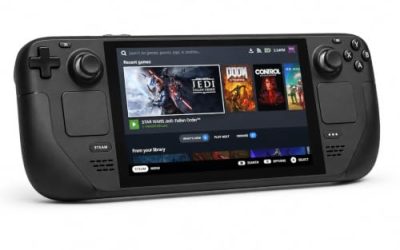
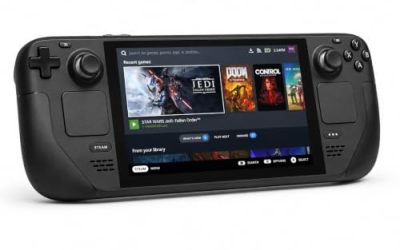
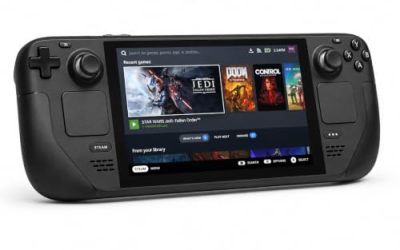
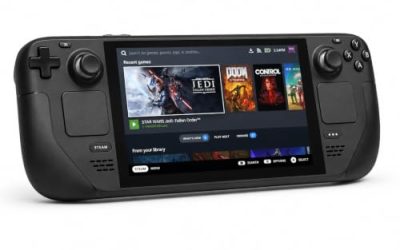
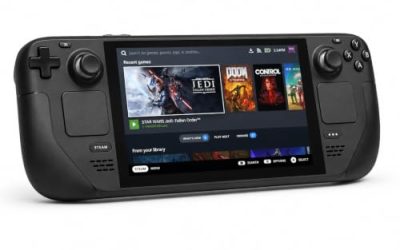
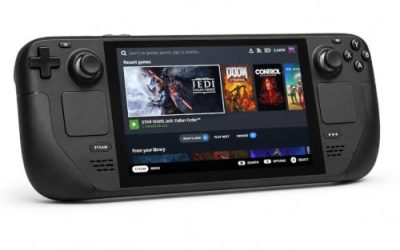
Valve Steam Deck OLED 512GB

The handheld the Verified badge was written for, graded on the native runtime rather than a compatibility layer. The game’s requirements sit far below the Deck’s APU, and Valve’s sheet passes the default configuration on every check.
Specs
- Display: 7.4-inch HDR OLED, 1280 by 800, up to 90 Hz
- Processor: AMD Zen 2 and RDNA 2 custom APU
- Memory: 16 GB LPDDR5
- Storage: 512 GB NVMe, plus a microSD slot
- Wireless: Wi-Fi 6E and Bluetooth
- Channel note: Valve sells the Deck mainly through its own store, so Amazon listings are third-party sellers
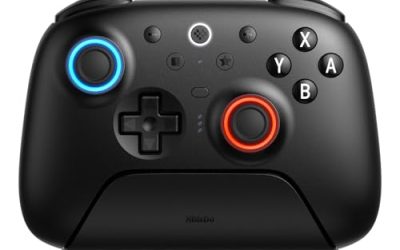
8BitDo Ultimate 2 Bluetooth Controller
The docked and desktop pad pick. The record rates controller support Partial, so a pad with back buttons and its own configuration options helps where pad handling needs support from the hardware side.
Specs
- Connectivity: Bluetooth wireless and USB-C wired
- Joysticks: TMR electromagnetic, anti-drift design
- Triggers: Hall effect, with mode switching
- Extras: two remappable back buttons, motion control
- In the box: charging dock included
Xbox Wireless Controller, Carbon Black
The safest guest pad in PC gaming: Steam Input support is universal, and it pairs over Bluetooth or its own wireless standard. On the handheld, an external pad may need a manual Quick Access Menu switch before it takes over.
- Connectivity: Xbox Wireless and Bluetooth
- Port: USB-C for wired play
- Controls: hybrid D-pad, dedicated Share button
- Power: AA batteries or optional rechargeable pack
Logitech G502 HERO
The game’s menus, forge screens and quest boards are pointer-friendly, and at a desk a precise wired mouse turns inventory trips into single clicks. Eleven programmable buttons cover the inputs a session repeats.
Specs
- HERO optical sensor, up to 25,600 DPI
- 11 programmable buttons
- Adjustable weight system
- Wired USB connection
- On-board memory profiles
Samsung T9 Portable SSD 2TB
For moving a Linux game library between machines or keeping an offline backup, a fast USB-C drive is the simple answer. The headline figure needs a Gen 2×2 host port; on a lesser port the drive runs at that ceiling.
Specs
- Capacity: 2 TB portable SSD
- Interface: USB 3.2 Gen 2×2, USB-C connector
- Maker-rated speeds: up to 2,000 MB per second read, 1,950 MB per second write
- Features: Dynamic Thermal Guard, maker-rated drop resistance
How to choose
Choose the Steam copy: it is the only edition with the native Linux build, since the GOG product is Windows-only. On a Linux desktop, launch the native build first — depot, launch entry and Valve’s grading all say it is the intended route — and keep the Proton fallback in mind only if your setup matches the black-screen filings, where GE-Proton and Proton 9.0-4 are the builds other players filed. On Steam Deck, the badge was earned on the native runtime, so no compatibility tool needs forcing; pair an external pad knowing it may need the Quick Access Menu switch. Treat the Crimson Knight flag as one add-on’s stale paperwork, not a verdict on the base game.
Who should skip
Skip the GOG edition if Linux is your platform: it sells the Windows build alone. Skip the game itself if Partial controller support is a deal-breaker and you play only on a pad — filings include controller quirks some players solved with community Proton builds. And if the black-screen reports match your hardware class, your route may be the Windows build under Proton rather than the native one; playable that way, but not the experience the record promises.
FAQ
Is Tails of Iron native on Linux?
Yes. The sold package contains a Linux content depot of about 1.57 GiB, the launch configuration holds a Linux entry pointing at TOI.x86_64, and the Linux requirements are populated at both tiers. Valve’s Deck sheet names the native runtime.
Why does the Crimson Knight DLC say Windows only?
Its own record flags Windows true and Linux false, against a base game flagging all three platforms. The DLC ships no depots of its own in the census, so the flag reads as paperwork never updated to match the family; the base game’s ruling rests on the base app’s depots and launch entry, not on any add-on’s flags.
Is Tails of Iron Steam Deck Verified?
Yes — Verified, with SteamOS rated Compatible, graded on the native runtime with all four checks passing. The test dates from February 2022, against an older build than today’s, and external controllers do not default.
Final verdict
Tails of Iron is genuinely native on Linux, and unusually, every layer that can prove it does: a full-weight Linux depot, a Linux launch entry, populated Linux requirements at both tiers, and a Steam Deck Verified sheet naming the native runtime. The blemishes are paperwork-class, not build-class — a missing Linux client icon, a Mac-only osextended string, and one DLC whose flags point the wrong way. ProtonDB’s headline agrees with the native classification even though its summary tier could not be read this session, and the filings add one caveat: some setups see a black screen on the native build and fall back to Proton. Buy it on Steam, native build first.
Product and ASIN Reference
| Product | ASIN |
|---|---|
| Valve Steam Deck OLED 512GB | B0CQ3RWQQZ |
| 8BitDo Ultimate 2 Bluetooth Controller | B0F194QFT2 |
| Xbox Wireless Controller, Carbon Black | B08DF248LD |
| Logitech G502 HERO | B07GBZ4Q68 |
| Samsung T9 Portable SSD 2TB | B0CHFS9K14 |