Our Short List of 3

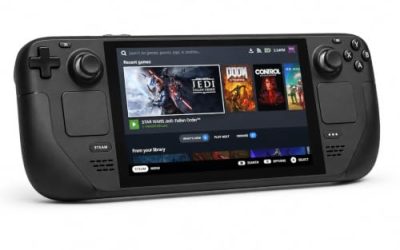
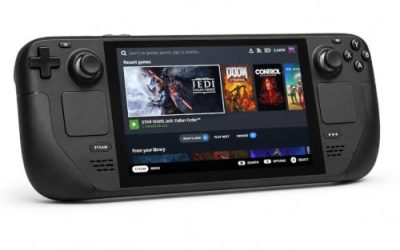
- Display: 7.4-inch HDR OLED, 1280 by 800, up to 90 Hz
- Processor: AMD Zen 2 and RDNA 2 custom APU
- Memory: 16 GB LPDDR5
- Storage: 512 GB NVMe, plus a microSD slot

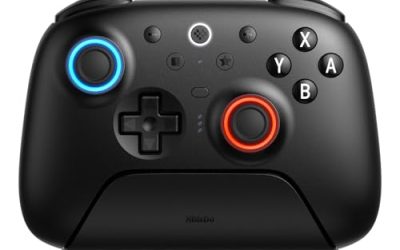
- Connectivity: Bluetooth wireless and USB-C wired
- Joysticks: TMR electromagnetic, anti-drift design
- Triggers: Hall effect, with mode switching
- Extras: two remappable back buttons, motion control

- Connectivity: Xbox Wireless and Bluetooth
- Port: USB-C for wired play
- Controls: hybrid D-pad, dedicated Share button
- Power: AA batteries or optional rechargeable pack
All 5 Picks at a Glance
| Product | Specs | Action |
|---|---|---|
| Valve Steam Deck OLED 512GB |
| Check price on Amazon |
| 8BitDo Ultimate 2 Bluetooth Controller |
| Check price on Amazon |
| Xbox Wireless Controller, Carbon Black |
| Check price on Amazon |
 Logitech G502 HERO |
| Check price on Amazon |
 Samsung T9 Portable SSD 2TB |
| Check price on Amazon |
Kathy Rain 2: Soothsayer, the point-and-click sequel from Clifftop Games and Raw Fury, landed on Steam on May 20, 2025 flagging Windows, Mac and Linux side by side. A three-platform flag row is a claim, not a delivery record, and this series checks claims against what the store actually ships. This time the paperwork underneath the flags is unusually complete: three full-size platform depots, three launch entries, a registered Linux client icon and published Linux requirements.
So this article is a verification exercise rather than an investigation. The sections below walk the delivery layers one by one, separate the soundtrack album’s flags from the game’s own, and unpack a ProtonDB Platinum tier built from two routes to the same game. The short version: the native build is real, sold on two storefronts, and the remaining caveats concern paperwork age, not existence.
As an Amazon Associate, we earn from qualifying purchases.
Quick answer
Kathy Rain 2: Soothsayer is genuinely native on Linux. Steam’s record carries a full-size Linux depot of about 3.3 GB, a Linux launch entry, populated Linux requirements and a registered Linux client icon, and Valve’s Deck sheet recommends the native runtime. It is Steam Deck Playable, ProtonDB Platinum across 14 reports, and GOG sells an edition whose compatibility record includes Linux.
Three depots, three launch entries
The native ruling rests on the game app’s own delivery layers, and every one points the same way. The depot table holds three content depots of the same weight class: Windows at about 3.32 GB, macOS at about 3.31 GB and Linux at about 3.30 GB, each with a current public manifest. A token or stranded Linux depot would show up as a size mismatch; instead the Linux payload matches what the other platforms receive.
The launch configuration matches the depots one for one: the Windows executable, the Mac app bundle, and a 64-bit Linux executable, so the Linux depot is wired into the install rather than parked beside it. The icon registry completes the set — alongside the standard client icons sits a dedicated Linux client icon, the registry entry that only exists when a publisher has done the Linux packaging paperwork. The record’s platform list names windows, macos and linux together.
The published requirements tell the same story. The Linux minimum tier is populated: Ubuntu 20.04, Ubuntu 18.04 or CentOS 7, a 64-bit processor with SSE2 support, 2 GB of RAM, an OpenGL 3.2 or Vulkan capable GPU, and 2 GB of storage. The recommended Linux tier is blank — a paperwork gap rather than a contradiction, since the minimum tier specifies a build the store also delivers. Flags, requirements, depot, launch entry, client icon: the complete native shape.
The soundtrack agrees, and proves nothing either way
The game’s family on Steam holds exactly two apps. The second is the Original Soundtrack, a music app flagging Windows, Mac and Linux all true, its fullgame pointer naming the base game. In a Windows-only family that shape is a trap this series flags often: an album whose flags make a family look Linux-supported when the game itself is not. Here the trap cannot fire: the album’s flags agree with the base game’s own, nothing is borrowed, and the native ruling rests entirely on the game app’s depots, launch entries, requirements and icon registry. Family Linux-flag count: 2 of 2.
What the ProtonDB Platinum is made of
ProtonDB’s summary reads Platinum on the settled tier, Platinum as best-reported and Platinum trending, across 14 reports with moderate confidence. The interesting part is what those reports describe, because they split into two groups. One is genuine native filings: desktop reports from Fedora and Nobara systems running the Linux build directly, one noting the native version is as up to date as the Windows version. The other is Steam Deck filings that ran the Windows build under Proton and reported flawless play.
Both groups are good news about different things: the Platinum tier certifies the game runs excellently on Linux systems by one route or the other, while the native filings corroborate the build Steam delivers. The file is not spotless — one Linux Mint filing describes audio problems on standard settings, resolved by switching to a beta Proton build, and one Deck filing notes a character flickering in one scene — but neither touches the native build’s existence. ProtonDB’s page classifies the game as Native, and here its “Natively Supports” heading agrees with Steam’s record.
The Steam Deck sheet: Playable, on the native runtime
Valve’s compatibility record, carried in the app’s own data, resolves to Playable rather than Verified. The passes are the substantive ones: the default controller configuration is fully functional, interface text is legible, and the default configuration is performant. The two notes are input paperwork: the controller glyphs shown do not match the Deck’s device, and text input does not automatically invoke the on-screen keyboard — a real consideration in a detective game with typing sections, where the keyboard must be summoned by hand. Filings describe the keyboard working fine once raised. The recommended runtime is native, meaning Valve graded the Linux build itself, and no internet is required for setup or single-player. SteamOS carries a separate Compatible rating on the same record.
Two limits frame the badge. First, the store record carries no controller-support field of its own, so input framing rests on Valve’s sheet and the filings: this is a point-and-click game whose natural input is a pointer, the Deck’s trackpad covers that, and one docked filing found an analog stick finicky as a cursor while the trackpad worked well. Second, the paperwork is dated: Valve tested on May 24, 2025 against build 18522195, while the current public build is 20240016, from October 2025 — a superseded build, so the badge sits on the supplement-candidate list.
Two storefronts sell the Linux build
GOG sells Kathy Rain 2: Soothsayer as product 1133886710, and its product record’s system compatibility reads Windows, Mac and Linux all true — a genuine second source for the native build, matching Steam’s delivery. A Linux buyer can choose the Steam package with cloud saves and achievements, or the GOG package with the same three-platform compatibility. The anti-cheat question that follows multiplayer games around does not arise here: the record carries no DRM notice and no account notice, the game is single-player, and the anti-cheat database AreWeAntiCheatYet, read in full, holds no entry for this app — documentation silence that fits a single-player adventure.
Gear that fits the record
The gear below follows the record’s shape: the handheld Valve graded natively, two pads for docked play, a mouse, and library storage.
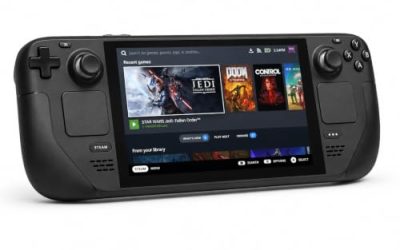
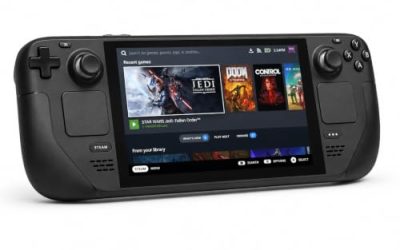
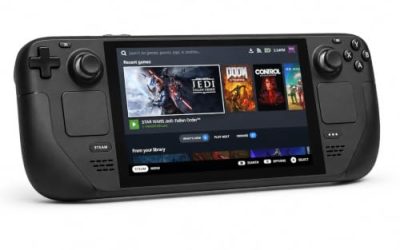
Valve Steam Deck OLED 512GB
- Display: 7.4-inch HDR OLED, 1280 by 800, up to 90 Hz
- Processor: AMD Zen 2 and RDNA 2 custom APU
- Memory: 16 GB LPDDR5
- Storage: 512 GB NVMe, plus a microSD slot
The handheld the Playable badge was written for. The game’s requirements are a rounding error next to the Deck’s APU, and Valve’s sheet graded the native Linux build itself.
8BitDo Ultimate 2 Bluetooth Controller
- Connectivity: Bluetooth wireless and USB-C wired
- Joysticks: TMR electromagnetic, anti-drift design
- Triggers: Hall effect, with mode switching
- Extras: two remappable back buttons, motion control
The docked and desktop pad pick. Valve’s sheet confirms the default controller configuration is fully functional, and this pad covers the couch case with modern sticks, triggers and back buttons.
Xbox Wireless Controller, Carbon Black
- Connectivity: Xbox Wireless and Bluetooth
- Port: USB-C for wired play
- Controls: hybrid D-pad, dedicated Share button
- Power: AA batteries or optional rechargeable pack
The safest guest pad in PC gaming: Steam Input support is universal, the glyphs match what most games display, and it pairs over Bluetooth or its own wireless standard. On the handheld, the test sheet’s note applies: an external pad may need a manual Quick Access Menu switch before it takes over.
Logitech G502 HERO
- HERO optical sensor, up to 25,600 DPI
- 11 programmable buttons
- Adjustable weight system
- Wired USB connection
A point-and-click adventure lives under a cursor, and at a desk a precise wired mouse is the natural way to play one. Eleven programmable buttons cover the examine, inventory and dialogue inputs a session repeats.
Samsung T9 Portable SSD 2TB
- Capacity: 2 TB portable SSD
- Interface: USB 3.2 Gen 2×2, USB-C connector
- Maker-rated speeds: up to 2,000 MB per second read, 1,950 MB per second write
- Features: Dynamic Thermal Guard, maker-rated drop resistance
For moving a Linux game library between machines, or keeping an offline backup of installers, a fast USB-C drive is the simple answer. The headline figure needs a Gen 2×2 host port; on a lesser port the drive runs at that ceiling instead.
How to choose
Start with the storefront. Steam delivers the native build with cloud saves and achievements attached; GOG delivers an edition whose compatibility record covers the same three platforms, for buyers who prefer a DRM-free library. Either way, what arrives is the Linux build itself, so no compatibility layer needs choosing or maintaining. On a Linux desktop, install and play; the published minimum asks for Ubuntu 20.04-class systems with a Vulkan or OpenGL 3.2 capable GPU, hardware a decade of machines clears easily. On Steam Deck, expect the Playable shape Valve describes: legible text, a working default configuration, and two habits — raise the on-screen keyboard manually for typing sections, and favour the trackpad over a stick for cursor work.
Who should skip
Skip this one only if a Verified badge is a hard requirement: the game is Playable, not Verified, and the two deductions are input notes rather than performance failures, but buyers who treat the top badge as a gate will not find it here yet. Skip the sequel-first purchase if the original Kathy Rain’s story matters and remains unplayed; this is a direct continuation. And skip any listing that describes this game as Windows-only or compatibility-layer by default; two storefronts’ records say otherwise.
FAQ
Is Kathy Rain 2: Soothsayer native on Linux?
Yes, genuinely. Steam’s record carries a full-size Linux depot of about 3.3 GB, a 64-bit Linux launch entry, populated Linux minimum requirements and a registered Linux client icon, and Valve’s Deck sheet recommends the native runtime. GOG’s record also lists Linux.
Is Kathy Rain 2 Steam Deck Verified?
It is rated Playable, one step below Verified. Valve’s sheet passes the default controller configuration, legible text and performance, with two notes: controller glyphs do not match the Deck device, and text input does not automatically invoke the keyboard. The test dates from May 24, 2025 and grades build 18522195; the current build is newer.
Does the soundtrack’s Linux flag prove the game is native?
No, and in this family it does not need to. The Original Soundtrack is a music app flagging all three platforms — in a Windows-only family, a trap. Here the game’s own depots, launch entries, requirements and icon registry carry the ruling; the album’s flags merely agree.
How does the game run under Proton instead?
Well, on the filed evidence. ProtonDB’s summary is Platinum across 14 reports with moderate confidence, mixing native desktop filings with Deck filings that ran the Windows build under Proton flawlessly. One filing reported audio problems on standard settings, fixed by switching to a beta Proton build.
Final verdict
Kathy Rain 2: Soothsayer is one of the clean cases. The native Linux build is delivered by Steam with every supporting layer in place — depot, launch entry, requirements, client icon — graded by Valve on the native runtime, corroborated by native filings inside a Platinum ProtonDB file, and sold again on GOG with Linux in the edition’s compatibility record. The caveats are paperwork-grade: a Playable rather than Verified badge, a test that predates the current build, and a blank recommended requirements tier. None touches the central fact: on Linux, this is a native game on two storefronts.
Product and ASIN Reference
| Product | ASIN |
|---|---|
| Valve Steam Deck OLED 512GB | B0CQ3RWQQZ |
| 8BitDo Ultimate 2 Bluetooth Controller | B0F194QFT2 |
| Xbox Wireless Controller, Carbon Black | B08DF248LD |
| Logitech G502 HERO | B07GBZ4Q68 |
| Samsung T9 Portable SSD 2TB | B0CHFS9K14 |