Our Short List of 3

- Tenkeyless layout with rotary knob
- QMK and VIA remapping support
- Hot-swappable K Pro Brown switches
- Wired USB-C connection

- Connectivity: Bluetooth wireless and USB-C wired
- Joysticks: TMR electromagnetic, anti-drift design
- Triggers: Hall effect, with mode switching
- Extras: two remappable back buttons, motion control

- Connectivity: Xbox Wireless and Bluetooth
- Port: USB-C for wired play
- Controls: hybrid D-pad, dedicated Share button
- Power: AA batteries or optional rechargeable pack
All 5 Picks at a Glance
| Product | Specs | Action |
|---|---|---|
| Keychron V3 |
| Check price on Amazon |
| 8BitDo Ultimate 2 Bluetooth Controller |
| Check price on Amazon |
| Xbox Wireless Controller, Carbon Black |
| Check price on Amazon |
 Logitech G502 HERO |
| Check price on Amazon |
 Samsung T9 Portable SSD 2TB |
| Check price on Amazon |
Astra Exodus is a turn-based science-fiction 4X strategy game from Atomic Kaiser, published by Slitherine Ltd. and released on 30 January 2020. It pairs a narrative-driven campaign about leading humanity home with top-down real-time tactical battles and a semi-randomized research grid, and it still receives Windows builds — the public branch moved again in October 2025. For Linux players, though, the interesting part of its Steam record is not what it ships. It is what the record keeps promising and never delivers.
Read quickly, the store page looks like a Linux game that forgot to tick a box: full Linux system requirements, a Linux client icon in the asset list, even a macOS requirements block. Read properly — platform flags, the sold package, and the depots underneath — the record tells a simpler story. Astra Exodus is a Windows-only release, and every Linux signal on the page is leftover paperwork with no build behind it.
As an Amazon Associate, we earn from qualifying purchases.
Quick answer
Astra Exodus has no native Linux build on Steam. The store record flags Windows only, the single sold package is Windows-only, and the only content depot is a Windows 64-bit build, so Linux players run the game through Proton. ProtonDB holds no summary record for it, and Valve has not reviewed it for Steam Deck.
What the record actually ships
Start with the layers that decide what lands on a hard drive. The app record’s platform flags read Windows true, macOS false, Linux false. The one package Steam sells for the game, package 279667, repeats exactly the same flags: Windows true, macOS false, Linux false. There is no second package, no platform-specific bundle, and no DLC array on the record at all — the appdetails DLC field is empty, so there are no add-ons hiding a stray Linux build either.
SteamDB’s depot table finishes the picture. The app carries two depots: a small production-files depot of under five megabytes, and depot 880752, named in its own configuration as the Windows 64-bit build, at 3.68 GiB. That is the whole install. There is no Linux depot, no macOS depot, and therefore nothing for a Linux launch entry to point at. The detected technology list — a Unity and Mono build — explains how a port could have been contemplated, but contemplation is not delivery. When the flags, the package, and the depots all agree, the ruling is not close: as sold on Steam, Astra Exodus is Windows-only.
The paperwork that points the other way
The reason this game needs an article at all is the paperwork stacked against that verdict. The record’s Linux requirements field is not an empty shell; it is fully populated in both tiers. The minimum tier names Ubuntu 12.04 in 64-bit, a 2.5 GHz quad-core processor, and period graphics hardware, while the recommended tier moves to Ubuntu 14.04 with 8 GB of RAM. The macOS requirements field is populated too, asking for OS X 10.8 or higher. SteamDB’s asset list adds a LinuxClientIcon entry and a macOS client icon file alongside the standard client icon.
None of it is backed by a build. This is the fossil pattern in its most complete form: requirements text and client icons survive on the record long after whatever port plan produced them, while the platform flags stay false and the depot list stays Windows-only. A populated requirements block is evidence that someone once filled in a form, not that a binary exists. Linux buyers should always weight the flags and depots above the text fields — and on those two layers, this record is unanimous.
ProtonDB and the Deck: two empty chairs
ProtonDB offers no rescue verdict either. The summary endpoint returns its not-found page for this app while answering normally for a control title in the same session, which means ProtonDB simply holds no summary record for Astra Exodus: no tier, no report count, and no confidence figure can honestly be quoted. The game page itself rendered only as a script shell during this check, so no heading claim is made for it either. Anyone selling you a ProtonDB tier for this game is inventing it.
Valve’s side is equally blank. The store browse record reports the game’s Steam Deck compatibility category as 0, which is Valve’s untested state: no Verified, no Playable, no Unsupported ruling exists. The honest summary is that this 2020 strategy title has passed under both community and Valve radar. A turn-based 4X with modest hardware demands is the kind of game Proton usually handles quietly, but “usually” is not a measurement, and this article will not dress it up as one. If you buy it for Linux, you are the test report.
Other storefronts and the anti-cheat question
There is no DRM-free escape hatch. GOG’s product search returns nothing for the title, its product API search is empty, and the game’s natural product address on GOG resolves to the general catalogue instead of a product page: no GOG edition exists in any operating system, let alone a Linux one. Steam is the only PC storefront record to rule on.
Anti-cheat is a non-issue here. The Are We Anti-Cheat Yet database, read in full at its current root file, carries no entry for Astra Exodus — the only Astra-named title in it is an unrelated game — and nothing on the Steam record names an anti-cheat. That fits the shape of the product: a single-player campaign plus shared and split-screen PvP categories, with no online competitive ladder for an anti-cheat to guard. Whatever blocks Linux play here, it is the missing port, not a compatibility layer dispute.
Gear for a desktop 4X setup
Because Valve has not tested the game on Deck, the sensible Astra Exodus setup is a Linux desktop or laptop running the Windows build through Proton, driven by mouse and keyboard — the record lists no controller support for the game, so the pads below are picks for the wider strategy library rather than inputs this title natively speaks. These are the five pieces worth shortlisting for that desk.
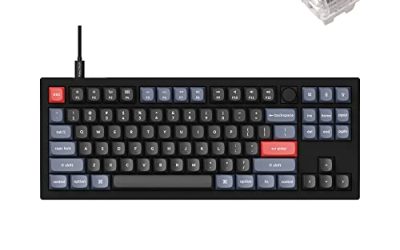
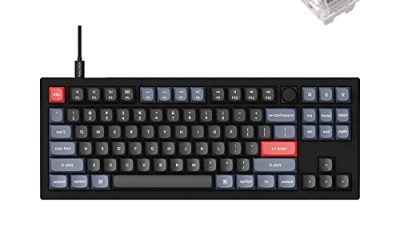
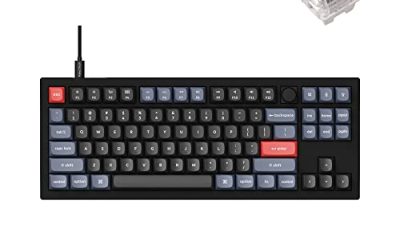
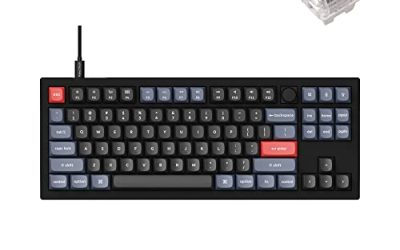
Keychron V3
- Tenkeyless layout with rotary knob
- QMK and VIA remapping support
- Hot-swappable K Pro Brown switches
- Wired USB-C connection
The keyboard pick for desktop sessions: a tenkeyless board with QMK and VIA support lets you remap keys at the keyboard level, which keeps working across every Linux install you plug it into.
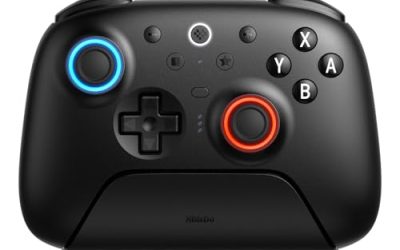
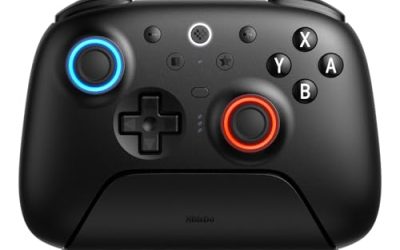
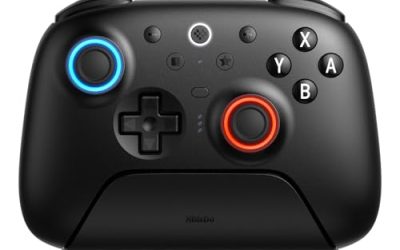
8BitDo Ultimate 2 Bluetooth Controller
- Connectivity: Bluetooth wireless and USB-C wired
- Joysticks: TMR electromagnetic, anti-drift design
- Triggers: Hall effect, with mode switching
- Extras: two remappable back buttons, motion control
The docked and desktop pad pick for the rest of the library, with modern sticks and triggers plus back buttons for menu shortcuts in the games that do speak controller.
Xbox Wireless Controller, Carbon Black
- Connectivity: Xbox Wireless and Bluetooth
- Port: USB-C for wired play
- Controls: hybrid D-pad, dedicated Share button
- Power: AA batteries or optional rechargeable pack
The safest guest pad in PC gaming: Steam Input support is broad, the glyphs match what most games display, and it pairs over Bluetooth or its own wireless standard.
Logitech G502 HERO
- HERO optical sensor, up to 25,600 DPI
- 11 programmable buttons
- Adjustable weight system
- Wired USB connection
Astra Exodus lives in menus, star maps, and research grids, and a precise wired mouse turns long empire-management sessions into single clicks. Eleven programmable buttons cover the confirm, cancel, and camera inputs a long session repeats.
Samsung T9 Portable SSD 2TB
- Capacity: 2 TB portable SSD
- Interface: USB 3.2 Gen 2×2, USB-C connector
- Maker-rated speeds: up to 2,000 MB per second read, 1,950 MB per second write
- Features: Dynamic Thermal Guard, maker-rated drop resistance
For moving a Linux game library between a desktop and a laptop, or keeping an offline backup of installers, a fast USB-C drive is the simple answer. The headline figure needs a Gen 2×2 host port; on a lesser port the drive runs at that ceiling instead.
How to choose
Choose the Steam copy, because it is the only PC edition on sale anywhere and the exact build every record above describes. On a Linux desktop or laptop, install it under Proton and start with the default compatibility settings; with no ProtonDB record to consult, the practical method is to try the current stable Proton first and step through older versions only if the launch misbehaves. Ignore the Linux requirements text on the store page when planning — it describes a build Steam does not sell. For input, plan around a mouse and keyboard: the record lists no controller support, so treat any pad as library gear. And keep your library portable with fast external storage if you split play between machines, since a 3.68 GiB install moves quickly but a full strategy shelf does not.
Who should skip
Skip this one if you are shopping for a native Linux 4X: despite the fullest Linux paperwork in its class, Astra Exodus is not one, and the requirements text will not turn into a port. Skip it if you want a DRM-free offline installer, because no GOG edition exists to buy. Skip it if you need a tested Steam Deck verdict before purchasing — Valve’s category for the game is untested, full stop. And skip it if an unmeasured Proton record worries you: there is no community summary to fall back on, so cautious buyers should wait for reports or buy with a refund window in mind.
FAQ
Is Astra Exodus native on Linux?
No. Steam’s platform flags, the single sold package, and the depot list all read Windows-only. The populated Linux requirements and the Linux client icon on the record are leftover paperwork with no Linux build behind them.
Why does the store page list Linux system requirements?
Because the record’s text fields were filled in for Linux and macOS at some point, while the platform flags were never switched on and no Linux depot was ever delivered. Requirements text alone does not make a port; the flags and depots decide what Steam installs.
Can I play Astra Exodus on Linux through Proton?
That is the only route, and it is an unmeasured one. ProtonDB holds no summary record for the game, so there is no tier or report count to quote. The game is a modest Unity-era turn-based strategy title, but no database verdict backs a compatibility promise.
Is Astra Exodus verified on Steam Deck?
No. Valve’s record places the game in the untested category, so there is no Verified, Playable, or Unsupported ruling. Any Deck play runs through Proton without a Valve test sheet behind it.
Final verdict
Astra Exodus on Linux is a paperwork mirage: the most complete Linux documentation trail a Windows-only game can leave, wrapped around a single Windows 64-bit depot. Rule it not native, expect no help from ProtonDB or Valve’s Deck programme, and treat a Linux purchase as a self-run Proton experiment on desktop hardware. Players who value the campaign enough to accept those terms get a still-updated 4X; everyone else should let the requirements text fool somebody else.
Product and ASIN Reference
| Product | ASIN |
|---|---|
| Keychron V3 | B0B2DMMMG2 |
| 8BitDo Ultimate 2 Bluetooth Controller | B0F194QFT2 |
| Xbox Wireless Controller, Carbon Black | B08DF248LD |
| Logitech G502 HERO | B07GBZ4Q68 |
| Samsung T9 Portable SSD 2TB | B0CHFS9K14 |