Our Short List of 3

- Display: 7.4-inch HDR OLED, 1280 by 800, up to 90 Hz
- Processor: AMD Zen 2 and RDNA 2 custom APU
- Memory: 16 GB LPDDR5
- Storage: 512 GB NVMe, plus a microSD slot

- Connectivity: Bluetooth wireless and USB-C wired
- Joysticks: TMR electromagnetic, anti-drift design
- Triggers: Hall effect, with mode switching
- Extras: two remappable back buttons, motion control

- Connectivity: Xbox Wireless and Bluetooth
- Port: USB-C for wired play
- Controls: hybrid D-pad, dedicated Share button
- Power: AA batteries or optional rechargeable pack
All 5 Picks at a Glance
| Product | Specs | Action |
|---|---|---|
| Valve Steam Deck OLED 512GB |
| Check price on Amazon |
| 8BitDo Ultimate 2 Bluetooth Controller |
| Check price on Amazon |
| Xbox Wireless Controller, Carbon Black |
| Check price on Amazon |
 Logitech G502 HERO |
| Check price on Amazon |
 Samsung T9 Portable SSD 2TB |
| Check price on Amazon |
Tiebreak is Big Ant Studios’ licensed tennis simulation, published by Nacon as the official game of the ATP and WTA tours. It spent the first half of 2024 in Early Access, reached its full release in August 2024, and has since grown into the Grand Slam Edition, adding the four majors to a roster the store description puts at more than 150 licensed professionals across 100 official tournaments. That makes its Linux status a fair question for Linux and Steam Deck players.
The short version: there is no native Linux build. Steam sells a Windows build only, so Linux play means Proton. The encouraging paperwork is real but dated: the Deck Verified badge dates from an Early Access build of February 2024, and the Gold tier rests on just three reports.
As an Amazon Associate, we earn from qualifying purchases.
Quick answer
TIEBREAK – Grand Slam Edition has no native Linux build. Steam’s record is Windows-only, so Linux play runs the Windows build through Proton. ProtonDB settles at Gold from three reports, and Valve rates the game Steam Deck Verified — though that badge was tested on an Early Access build from February 2024, long superseded.
What the Steam record actually ships
The platform flags are unambiguous: Windows true, Mac false, Linux false. The Windows requirements are genuinely populated at both tiers — at minimum a 64-bit Windows 10 or 11 system, an Intel i3 2100 or AMD FX 6300 class processor, 8 GB of memory, a GeForce GTX 770 or Radeon R9 270 class graphics card and 50 GB of storage. The Mac and Linux requirements fields are empty shells: headings present, lists blank at both tiers. A blank Linux field is store-template residue, not a specification for a build that exists.
The delivery data agrees. The depot census shows a single content depot of about 59.19 GiB with no operating-system split, accompanied only by the standard Windows redistributables (Visual C++ and DirectX packages). There is no Linux depot and no Mac depot. The icon registry holds the standard client, banner and community icons, with no Linux client icon registered, and the record’s extended operating-system field is an empty string. Every layer describes one Windows build and nothing else.
One smaller detail matters later: controller support is listed as partial on the game’s own record, though Valve’s Deck test configuration names the gamepad as the supported input — the gear framing below follows this game’s own record.
The add-on family: two packs, no stray flags
The base record’s downloadable content array holds exactly two entries, both read on their own records: the Vintage Pack (app 3051140) and the Djokovic Challenges Pack (app 3051150). Each is typed as downloadable content and flags Windows true, Mac false and Linux false. The family Linux-flag count is zero of three, with no stray flag for a scanner to misread.
The soundtrack trap — a music-typed add-on flagging Linux true and lending the base game a native flag it does not have — cannot fire here: no soundtrack or artbook app exists in this family. A family-level flag scan reports Tiebreak correctly: Windows only, three times over.
The Deck badge and its old paperwork
Valve rates Tiebreak Steam Deck Verified, and SteamOS separately Compatible. One sourcing note: Valve’s own compatibility endpoint returned a store redirect page rather than its data sheet, so the verdict, test date and build below come from SteamDB’s republication of Valve’s sheet. On that sheet all four checks pass — default controller configuration fully functional, Deck controller icons shown, interface text legible, default graphics configuration performing well — with the stable Proton branch as the recommended runtime. The one note: the game does not default to external Bluetooth or USB controllers on Deck, and may require switching the active controller through the Quick Access Menu.
The catch is the date. The test timestamp is 17 February 2024, against build 13267342 — an Early Access build, months before the August 2024 full release. The current public build is 26911473, built in late November 2026. The badge is genuine, but it grades code predating the 1.0 launch, the Grand Slam Edition expansion and two years of patches — paperwork never refreshed against a release build.
The Proton file: Gold on three reports
ProtonDB’s summary settles at Gold, with a best-reported tier of Platinum and a trending tier of Gold, across three reports, at low confidence — an encouraging tier on the thinnest sample a tier can rest on. The filing colour matches: one Steam Deck report describes the game working out of the box at a stable high frame rate on a standard Proton build, while another records it installing but not opening, with a custom GE-Proton build among its tinkering steps. The Windows build generally runs under Proton, with one documented failure shape in a very small file.
One heading check belongs here. ProtonDB’s game page carries a “Natively Supports” heading for Tiebreak, generated by the same empty-shell Linux requirements field described above. The heading disagrees with Steam’s record, which flags Linux false on every layer, and the Steam record is the authority: Tiebreak does not natively support Linux.
Anti-cheat and accounts: silence on every layer
Tiebreak is a multiplayer title, so the anti-cheat layer deserves a direct answer. The store record names none: there is no DRM notice of any kind, and SteamDB’s detected-technology list names networking and platform middleware — the Azure PlayFab Party SDK, Microsoft’s Game Development Kit SDK and the cURL library — not any anti-cheat product. The Are We Anti-Cheat Yet database, read in full at 1,167 entries, holds no entry for this game by store ID or by name. The correct summary is documentation silence.
The record’s category list covers single-player, online player-versus-player, shared and split-screen play and Remote Play Together — but carries no cross-platform multiplayer entry, and the store description makes no cross-play claim, so cross-platform play is not something the record documents. Valve’s test configuration records no internet requirement for single-player or first-time setup: the career and tournament modes are offline-capable on paper.
The storefront ruling
Steam is the only PC storefront carrying this game. GOG was ruled on from its own surfaces, not search results: its products endpoint returns no record for the title, its catalogue endpoint returns only unrelated products, and the natural GOG product addresses redirect to the general games catalogue. No GOG edition exists, in any operating system.
Gear that fits the record
The gear below follows this record’s shape: the handheld the badge was written for, pads framed by the game’s own partial controller listing and gamepad-first test configuration, a mouse for menu-heavy desktop sessions, and fast storage for a 59 GB install.
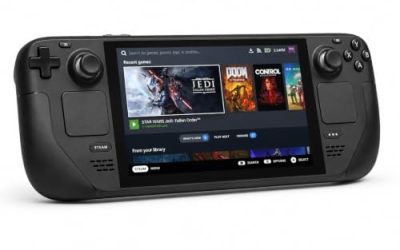
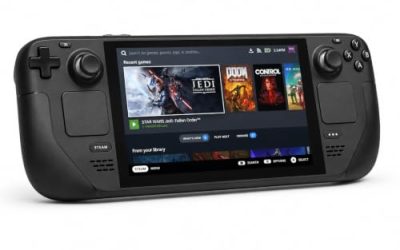
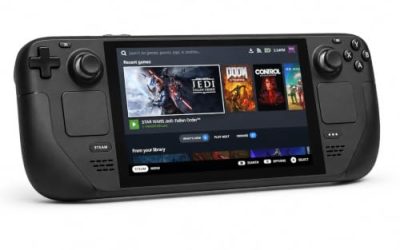
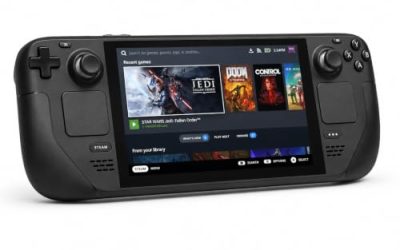
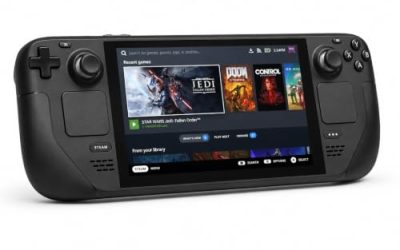
Valve Steam Deck OLED 512GB
- Display: 7.4-inch HDR OLED, 1280 by 800, up to 90 Hz
- Processor: AMD Zen 2 and RDNA 2 custom APU
- Memory: 16 GB LPDDR5
- Storage: 512 GB NVMe, plus a microSD slot
The handheld the Verified badge was written for. The game’s published requirements sit far below the Deck’s APU, and Valve’s sheet passes the Windows build cleanly under the stable Proton branch — though the badge grades an Early Access build.
8BitDo Ultimate 2 Bluetooth Controller
- Connectivity: Bluetooth wireless and USB-C wired
- Joysticks: TMR electromagnetic, anti-drift design
- Triggers: Hall effect, with mode switching
- Extras: two remappable back buttons, motion control
The docked and desktop pad pick. Tiebreak’s own record lists partial controller support while Valve’s test configuration is gamepad-first; this pad covers the couch case with modern sticks, triggers and back buttons.
Xbox Wireless Controller, Carbon Black
- Connectivity: Xbox Wireless and Bluetooth
- Port: USB-C for wired play
- Controls: hybrid D-pad, dedicated Share button
- Power: AA batteries or optional rechargeable pack
The safest guest pad in PC gaming: Steam Input support is universal, the glyphs match what most games display, and it pairs over Bluetooth or its own wireless standard. On the handheld, this game’s own test sheet note applies: an external pad may need a manual Quick Access switch before it takes over.
Logitech G502 HERO
- HERO optical sensor, up to 25,600 DPI
- 11 programmable buttons
- Adjustable weight system
- Wired USB connection
Tiebreak’s career mode is menu-driven, and at a desk a precise wired mouse turns calendar and roster trips into single clicks. Eleven programmable buttons cover the inputs a long session repeats.
Samsung T9 Portable SSD 2TB
- Capacity: 2 TB portable SSD
- Interface: USB 3.2 Gen 2×2, USB-C connector
- Maker-rated speeds: up to 2,000 MB per second read, 1,950 MB per second write
- Features: Dynamic Thermal Guard, maker-rated drop resistance
For moving a Linux game library between machines or keeping an offline backup, a fast USB-C drive is the simple answer. The headline figure needs a Gen 2×2 host port; on a lesser port the drive runs at that ceiling.
How to choose
Choose the Steam copy: it is the only PC edition on sale and the exact build both records describe. On a Linux desktop or laptop, install under Proton and leave the compatibility tool on its default stable branch; the Gold headline with a Platinum best-reported tier says the current build generally runs, and the small report count argues for a simple setup over custom builds. On a Steam Deck, the Verified badge means no configuration work is expected: install and launch, and only touch controller settings if you pair an external pad, which may need the Quick Access switch the test sheet notes. A pad is the natural input shape everywhere — Valve’s test configuration is gamepad-first.
Who should skip
Skip this one if a native Linux build is a hard requirement: none exists, and the empty Linux field is a template shell, not a promise. Skip it, for now, if your purchase depends on certainty — the ProtonDB file is three reports deep, one recording a launch failure, and the Deck badge has not been retested against a release build. Players who need documented cross-platform multiplayer should also pause: the record’s category list does not carry it. Everyone else is weighing a Windows build with kind paperwork and thin evidence, not a broken one.
FAQ
Is Tiebreak native on Linux?
No. The record flags Linux false, the Linux requirements field is an empty shell, the depot census holds a single Windows content depot, and no Linux client icon is registered. Linux play runs the Windows build through Proton.
Is Tiebreak Steam Deck Verified?
Yes, with a date attached. Valve’s sheet rates the game Verified and SteamOS Compatible, all four checks passing. But the test ran in February 2024 against an Early Access build, and the current public build is far newer — the badge grades superseded code.
How much should the Gold ProtonDB tier be trusted?
As a positive signal with a small sample: Gold settled, Platinum best-reported, three reports at low confidence. One report describes clean out-of-the-box play on Deck, another an install that would not open. The direction is good, the depth is not.
Can I buy Tiebreak on GOG instead?
No. GOG’s own product and catalogue endpoints hold no record for the game, and its natural GOG addresses redirect to the general catalogue. Steam is the only PC storefront selling it, only as a Windows build.
Final verdict
Tiebreak’s Linux status is simple at the top and nuanced underneath. There is no native build and no ambiguity: flags, requirements, depots and icons all describe a Windows-only release, and both packs repeat the same flags. The Proton route is genuinely promising — a Gold tier, a Platinum best report, a Verified Deck badge and no anti-cheat or account layer named anywhere. The reservation is evidence depth, not direction: the badge predates the full release and the Proton file is three reports thin. For Linux players who accept Proton as the price of licensed tennis, this is the genre’s most complete package — bought knowing which paperwork is old.
Product and ASIN Reference
| Product | ASIN |
|---|---|
| Valve Steam Deck OLED 512GB | B0CQ3RWQQZ |
| 8BitDo Ultimate 2 Bluetooth Controller | B0F194QFT2 |
| Xbox Wireless Controller, Carbon Black | B08DF248LD |
| Logitech G502 HERO | B07GBZ4Q68 |
| Samsung T9 Portable SSD 2TB | B0CHFS9K14 |