Our Short List of 3

- Display: 7.4-inch HDR OLED, 1280 by 800, up to 90 Hz
- Processor: AMD Zen 2 and RDNA 2 custom APU
- Memory: 16 GB LPDDR5
- Storage: 512 GB NVMe, plus a microSD slot

- Connectivity: Bluetooth wireless and USB-C wired
- Joysticks: TMR electromagnetic, anti-drift design
- Triggers: Hall effect, with mode switching
- Extras: two remappable back buttons, motion control

- Connectivity: Xbox Wireless and Bluetooth
- Port: USB-C for wired play
- Controls: hybrid D-pad, dedicated Share button
- Power: AA batteries or optional rechargeable pack
All 5 Picks at a Glance
| Product | Specs | Action |
|---|---|---|
| Valve Steam Deck OLED 512GB |
| Check price on Amazon |
| 8BitDo Ultimate 2 Bluetooth Controller |
| Check price on Amazon |
| Xbox Wireless Controller, Carbon Black |
| Check price on Amazon |
 Logitech G502 HERO |
| Check price on Amazon |
 Samsung T9 Portable SSD 2TB |
| Check price on Amazon |
Demonologist is Clock Wizard Games’ co-op ghost-hunting horror game, released on 25 September 2023 after an Early Access period that began the previous March. It sends up to four players into cursed locations to identify the haunting entity, and its online co-op raises the natural Linux question: is there a native build, and if not, does the Windows version behave under Proton?
Steam’s record is Windows-only at every layer checked — flags, requirements, depots, launch configuration and icons all agree — and no anti-cheat wall is named anywhere, so the practical question is polish, not permission: how well the Windows build runs through Proton, and what Valve’s Deck sheet promises.
As an Amazon Associate, we earn from qualifying purchases.
Quick answer
Demonologist has no native Linux build. Steam’s record for Clock Wizard Games’ co-op horror game flags Windows alone, its one content depot carries no Linux split, and the only launch entry is a Windows executable. Linux players run the Windows build through Proton: ProtonDB’s headline tier is Gold across 44 reports, and Valve rates the game Playable on Steam Deck.
The record: Windows-only at every layer
The base record (Steam app 1929610) flags Windows true, macOS false and Linux false, its delivery data naming Windows alone, 64-bit. The Windows requirements are genuinely populated: Windows 10 64-bit, an Intel i5 or new-generation i3 or AMD equivalent, 16 GB of RAM, a GeForce GTX 1060 6GB, DirectX 11, broadband internet and 20 GB of storage, with an SSD noted as required. Against that, the Linux requirements field is an empty shell — headings over empty lists at both tiers — and the macOS field is the same.
The depot census agrees. The game ships one content depot of about 47 GiB with no operating-system split, plus a second size-less depot marked unused, with only the shared Windows Visual C++ and DirectX redistributables attached. There is no Linux depot. The launch configuration holds exactly one entry, an executable named Demonologist.exe with no OS split. The icon registry holds the client icon, client targa and icon entries and no Linux client icon; the extended OS field is an empty string. Five layers — flags, requirements, depots, launch entries, icons — return the same answer: no Linux build is delivered with the game.
The family census is equally plain: no DLC array at all, and a store search on the game’s title returns only the game, a free demo and one unrelated idle game. The demo also flags Windows alone — family Linux-flag count 0 of 2 — and with no soundtrack or artbook app in the family, there is no stray album flag to misread as Linux support.
One input gap deserves naming. The store record carries no controller-support field at all, so no controller tier can be quoted from the record. The only input evidence is Valve’s Deck sheet, whose test configuration names the supported input class as “other”, with the primary player not on controller slot zero. The honest framing is keyboard-and-mouse-first input, with pads on Steam Input remapping rather than a declared tier.
The anti-cheat question: silence on every layer
For an online co-op game the anti-cheat layer matters as much as the native question. Here, every layer is silent. The store record carries no DRM notice and no third-party account notice. SteamDB’s technology detection names the Unreal Engine plus the Epic Online Services and Vivox voice SDKs — services and voice layers, not anti-cheat — and its record carries no anti-cheat entry. The community anti-cheat database holds no entry for this game, by store ID or by name.
The filings line up with that reading: online co-op repeatedly reported working, including lobbies with Windows players, with a minority needing GE-Proton for lobbies and microphone quirks recurring. Nothing describes an anti-cheat refusal — the multiplayer risk is the ordinary Proton kind, build choice and audio plumbing, not a hard wall.
ProtonDB: a Gold headline the summary feed could not confirm
ProtonDB’s summary feed did not answer during this check — the endpoint returned its not-found page for this app and for a control app alike, marking an endpoint-level failure rather than missing data. This article therefore uses headline figures only, from the game’s own ProtonDB page: a Gold headline tier across 44 reports. No settled, best-reported or trending split and no confidence figure is claimed.
The filing colour is the usual Gold mixture: recent filings on current builds describe the game running, with recurring workarounds — Proton Experimental, a forced DirectX 11 path against Unreal Engine crashes after updates, GE-Proton where lobbies misbehave — and older filings include poor-performance reports on weaker hardware. Works, with known levers: that is what a Gold headline means in practice.
One heading on the ProtonDB page needs calling out. The page displays a “Natively Supports” heading, which a skimming reader could take as a native-Linux claim. It is generated by the mere existence of Steam’s empty-shell Linux requirements field, and it contradicts the record itself — flags Linux false, no Linux build delivered. This article follows Steam’s record; the heading should be ignored for this game.
The Steam Deck sheet: Playable, graded on an Early Access build
Valve’s own compatibility endpoint returned an empty response during this check, so this verdict is read from SteamDB’s republication of Valve’s test sheet, disclosed here. The sheet rates Demonologist Playable on Steam Deck, with SteamOS separately Compatible and the stable Proton build as the recommended runtime. The deductions are input- and text-shaped: some functionality is not accessible under the default controller configuration and needs the touchscreen, the virtual keyboard or a community configuration; the game sometimes shows mouse, keyboard or non-Deck controller icons; and some in-game text is small. Default graphics are recorded as performing well.
Valve’s test, dated 12 April 2023, ran against an Early Access build, months before the September 2023 full release. The current public build dates from November 2026, so the Playable rating describes an old build’s behaviour, not the code on sale today. The badge is real, but treat the sheet as historical paperwork never refreshed for the released game.
The storefront ruling: Steam is the only PC edition
There is no GOG edition of Demonologist. GOG’s catalogue query returns only an unrelated title as a fuzzy match, its products endpoint returns no record, and the natural product address redirects to the general games catalogue. Steam is the only PC storefront selling the game, and its Windows-only build is the only version any PC player can buy.
Gear that fits the record
The picks follow the record: the handheld the badge was written for, two pads for Steam Input remapping, a wired mouse, and fast storage for a 47 GiB install.
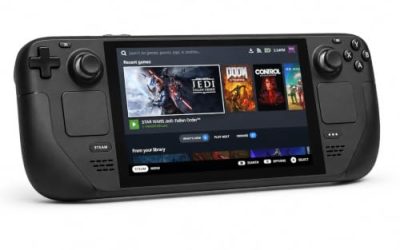
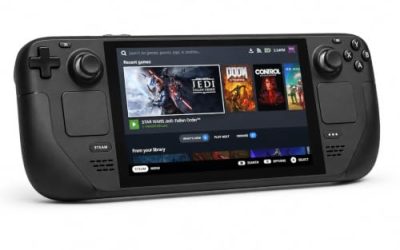
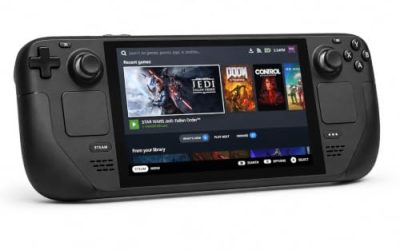
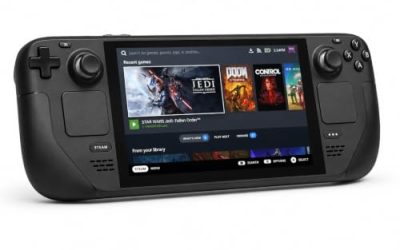
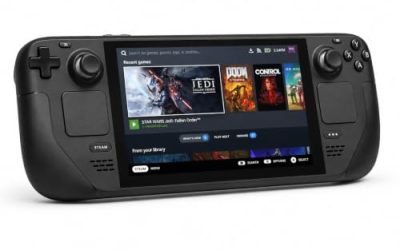
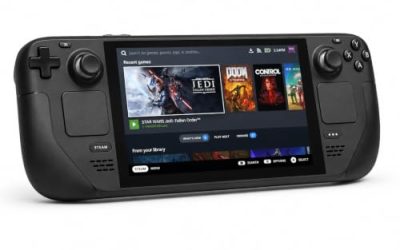
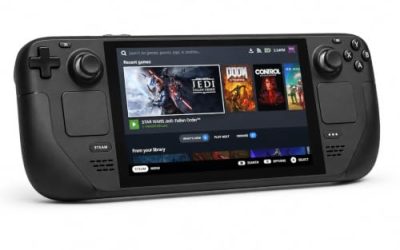
Valve Steam Deck OLED 512GB
- Display: 7.4-inch HDR OLED, 1280 by 800, up to 90 Hz
- Processor: AMD Zen 2 and RDNA 2 custom APU
- Memory: 16 GB LPDDR5
- Storage: 512 GB NVMe, plus a microSD slot
The handheld Valve’s Playable sheet was written for. Performance is not the issue — default graphics are recorded as performing well — so the OLED screen and battery are the upgrade for a dark game. Caveats: the badge grades an Early Access build, and community controller configurations are part of the deal.
8BitDo Ultimate 2 Bluetooth Controller
- Connectivity: Bluetooth wireless and USB-C wired
- Joysticks: TMR electromagnetic, anti-drift design
- Triggers: Hall effect, with mode switching
- Extras: two remappable back buttons, motion control
For players who prefer a pad despite the keyboard-and-mouse-first record: the game declares no controller tier, so pads run through Steam Input’s remapping layer, and this one’s back buttons and modern sticks make that translation comfortable.
Xbox Wireless Controller, Carbon Black
- Connectivity: Xbox Wireless and Bluetooth
- Port: USB-C for wired play
- Controls: hybrid D-pad, dedicated Share button
- Power: AA batteries or optional rechargeable pack
The default guest pad for Steam Input remapping: it pairs over Bluetooth, its layout is the one most community configurations assume, and it doubles as a general PC pad elsewhere.
Logitech G502 HERO
- HERO optical sensor, up to 25,600 DPI
- 11 programmable buttons
- Adjustable weight system
- Wired USB connection
The input this game’s record actually points at: Valve’s sheet names the supported input class as “other”, not a controller. A precise wired mouse covers the menu work, evidence handling and fine aiming a ghost hunt repeats for hours.
Samsung T9 Portable SSD 2TB
- Capacity: 2 TB portable SSD
- Interface: USB 3.2 Gen 2×2, USB-C connector
- Maker-rated speeds: up to 2,000 MB per second read, 1,950 MB per second write
- Features: Dynamic Thermal Guard, maker-rated drop resistance
The game’s requirements note an SSD as required, and the install runs to about 47 GiB. A fast portable drive keeps a Proton library movable between machines, or holds a second copy without a re-download.
How to choose
Choose the Steam copy — it is the only PC edition — and plan on Proton from the start. On desktop, begin with the stable Proton build Valve’s sheet recommends, and know the two levers the filings repeat: Proton Experimental or a GE-Proton build if lobbies fail, and a forced DirectX 11 path if Unreal Engine crashes appear after an update. Budget for the published Windows requirements — a GTX 1060-class card and 16 GB of RAM. On Steam Deck, expect Playable rather than polished: install a community controller configuration or keep a keyboard and mouse nearby. Check co-op microphone routing early; distorted or missing mic input is a recurring complaint.
Who should skip
Skip Demonologist if you only buy native Linux builds — there is none here, and nothing in the record hints at one coming. Skip it if you want a gamepad-first experience: the record declares no controller tier, and Valve’s sheet steers you toward other input. Skip it if your group needs frictionless online play on day one; co-op works in the filings, but lobby and microphone quirks are part of the Gold-tier picture. And do not treat the Steam Deck badge as a buying argument — it grades a pre-release build from April 2023, not today’s game.
FAQ
Is Demonologist native on Linux?
No. The record flags Linux false, the Linux requirements field is an empty shell, the single content depot has no Linux split, the only launch entry is a Windows executable, and no Linux client icon is registered. The game runs on Linux only through Proton.
Does Demonologist’s multiplayer work on Linux?
No anti-cheat is named on any layer, and ProtonDB filings repeatedly describe online co-op working, including lobbies with Windows players. Some filings needed a GE-Proton build for lobbies, and microphone problems recur — expect possible tinkering rather than a hard block.
Is Demonologist Steam Deck Verified?
No — it is rated Playable, one tier below Verified, with deductions for controller-configuration gaps, non-Deck glyphs and small text. The test ran in April 2023 against an Early Access build, so it does not grade the current release.
Can I buy Demonologist on GOG instead?
No. GOG holds no product record for the game: its catalogue query returns only an unrelated title, its products endpoint returns nothing, and the natural product address redirects to the general catalogue. Steam is the only PC edition.
Final verdict
Demonologist is a clean example of a Windows-only record with a workable Proton story. The flags, the empty requirements shell, the single unsplit depot and the lone Windows launch entry all say the same thing, and no anti-cheat is named anywhere. ProtonDB’s headline Gold across 44 reports — headline-only here, because the summary feed failed during this check — and a long filing history of working co-op say the Windows build is a reasonable way to play on Linux today. The Playable badge is genuine but stale, graded on an Early Access build. Buy it on Steam for desktop Proton play with a keyboard and mouse; do not buy it expecting a native port or a pad-first experience.
Product and ASIN Reference
| Product | ASIN |
|---|---|
| Valve Steam Deck OLED 512GB | B0CQ3RWQQZ |
| 8BitDo Ultimate 2 Bluetooth Controller | B0F194QFT2 |
| Xbox Wireless Controller, Carbon Black | B08DF248LD |
| Logitech G502 HERO | B07GBZ4Q68 |
| Samsung T9 Portable SSD 2TB | B0CHFS9K14 |