Nightdive Studios rebuilt the 1995 shooter, and Linux players asking about STAR WARS: Dark Forces Remaster usually expect a tangle of caveats: a soundtrack app pretending to be a port, a DRM notice with fine print, a Deck badge graded on an old build. This record has almost none of that — it is one of the emptiest game records on Steam, and that emptiness makes the Linux answer easy to read.
There is no native Linux build, and nothing in the record pretends otherwise. What it offers instead is one Windows edition running through Proton, with a Platinum filing record and a Steam Deck Verified badge. Every complication these articles usually untangle is absent here.
As an Amazon Associate, we earn from qualifying purchases.
Quick answer
No. STAR WARS: Dark Forces Remaster has no native Linux build: Steam’s record flags Windows only, its Linux requirements field is an empty shell, and no Linux depot or client icon exists. The Windows build runs through Proton instead — ProtonDB rates it Platinum, and Valve grades it Steam Deck Verified, with no DLC, DRM notice, or anti-cheat entry attached.
The platform flags, and the empty shells beneath them
The base record for app 2292260 flags windows true, mac false and linux false. Nightdive Studios and LucasArts develop it; Nightdive Studios and Atari publish. It released on February 28, 2024, is still sold, and its release state is final.
The requirements fields tell the same story at both tiers. The Windows minimum is genuinely populated: a 64-bit Windows 7 system, a dual-core Intel or AMD chip at 2.0 GHz, 2 GB of memory, a graphics processor with DirectX 11 or Vulkan 1.1 support and 420 MB of storage. The recommended tier is populated too, stepping up to Windows 10 and 4 GB of memory. Against that, the Mac and Linux requirements fields are empty shells at both tiers — the Minimum and Recommended headings print over blank lists. An empty shell is a form never filled in, not a specification: the first sign no Mac or Linux build was ever prepared for this app.
What the depots hold
The depot census of the sold package is just as plain: two content depots — depot 2292261, about 1.88 GiB, carries no operating-system split in its configuration, and depot 2292262, about 7.53 MiB, is tagged Windows 64-bit. The only redistributables are the shared Windows Visual C++ packages. There is no Linux depot and no Mac depot in the package, and total size on disk is about 1.89 GiB.
The icon registry agrees: a client icon, a client tga and a store icon — and no Linux client icon registered. The record’s osextended field is an empty string, and its osarch value is 64, matching the 64-bit Windows requirement. The launch-entry list could not be surfaced this session, so no launch-entry claim is made either way; the ruling rests on flags, requirements, depots and icons, all pointing the same direction.
Nothing attached: no DLC, no notices, no anti-cheat entry
The family is where false Linux signals usually hide; this record’s family is the base game alone. The base record carries no dlc array at all, and a store search sweep for the title returns only this app and STAR WARS Jedi Knight: Dark Forces II, the separate 1997 sequel — its own base game, not an add-on for this one. The family Linux-flag count is therefore 0 of 1: no soundtrack app, artbook or bonus pack in or outside the array lends the game a flag it does not have.
The notice fields are empty too: no DRM notice and no external account notice — no third-party launcher, no linked account, no activation limit named anywhere on the record. The anti-cheat layer is silence on all three levels this series checks. Steam’s record names no anti-cheat; SteamDB’s record view names none either (its detected technologies are the KEX Engine, the SDL SDK and the XAudio2 SDK — engine and library detections, not anti-cheat software); and the Are We Anti-Cheat Yet database, read in full at 1,167 entries, holds no entry for this app by store ID or by name.
Steam Deck: Verified, on pre-release paperwork
Valve’s own compatibility record resolves this app to Verified. All four checks pass: the default controller configuration is fully functional, the game shows Steam Deck controller glyphs, interface text is legible, and the default graphics configuration performs well. SteamOS is separately rated Compatible. The verdict was read from Valve’s endpoint directly; the test metadata comes from SteamDB’s republication of Valve’s sheet, which records a test date of January 16, 2024 against build 13130956, with a recommended runtime of proton-8.0RC.
Two honest caveats follow. First, the test predates the February 28, 2024 release by about six weeks, and the current public build is 14217601 — so the badge grades a pre-release build, not the code on sale today, and the paperwork is a supplement candidate for a retest. Second, the ProtonDB filings below include clean Steam Deck reports on current builds, so nothing suggests the grade has gone stale. Input is settled by the record itself: its controller-support field reads full, and the Deck test configuration names gamepad as the supported input.
ProtonDB: Platinum, and a heading that disagrees
ProtonDB’s summary is fully read and unusually tidy: settled tier Platinum, best-reported Platinum, trending Platinum, across 13 reports with moderate confidence. Thirteen reports is a modest sample, but the filings agree with each other, and desktop and Steam Deck reports alike describe out-of-the-box runs on current Proton versions. The recurring colour is minor: one filing notes the music arriving a fraction late — a quirk of the remaster’s music system, not Proton — and one warns that a specific community Proton build garbles the key-binding screen where Valve’s own does not.
ProtonDB’s game page also carries the stray heading this series keeps meeting — a “Natively Supports:” line above the requirements area, despite the Linux false flag and the empty Linux field. The heading is wrong — it is generated from the empty-shell field, not from any Linux build — and this article follows Steam’s record.
The GOG edition
GOG does sell this remaster, and the ruling comes from GOG’s own product record, not from a search listing. The product record (id 1801749856) carries the title STAR WARS: Dark Forces Remaster, a release date of February 28, 2024 — the same day as the Steam launch — and a description matching Nightdive’s KEX Engine rebuild. Its supported operating systems list contains exactly one entry: Windows. So the DRM-free edition is the same Windows build — and that record describes the 2024 remaster only, kept separate from the 1995 original’s own storefront history.
The hardware for playing it
The game is small and pad-first, so the hardware story is comfort rather than power — these are the standard picks for a Deck Verified title in this series.
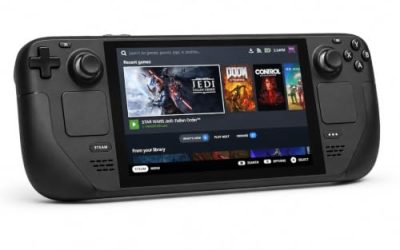
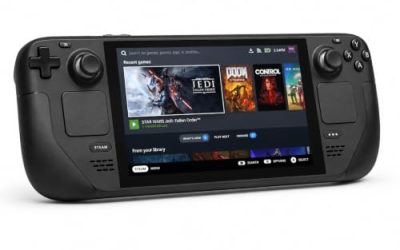
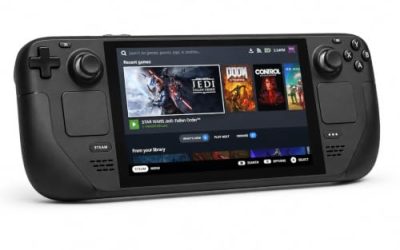
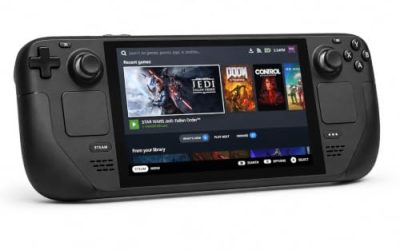
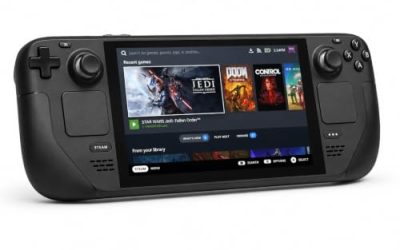
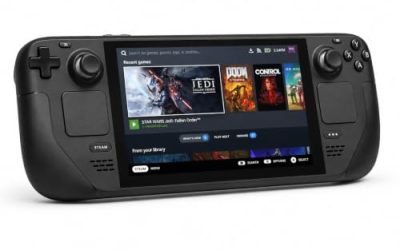
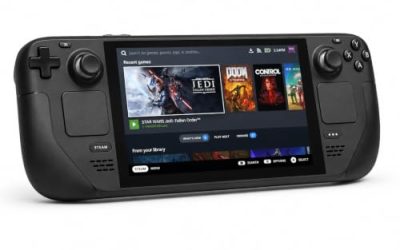
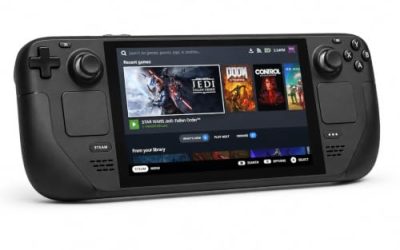
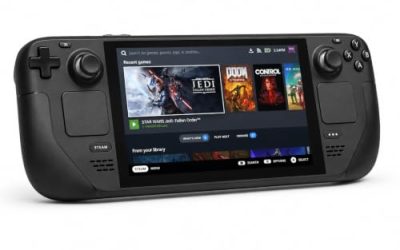
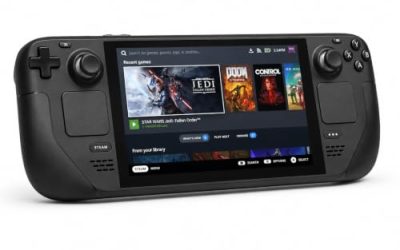
Steam Deck OLED

The Verified badge makes the handheld the path of least resistance: install, launch, and the default configuration Valve graded does the rest. The OLED screen suits a dark, sprite-based shooter.
Specs
- Display: 7.4-inch HDR OLED, 1280 by 800, up to 90 Hz
- Processor: AMD Zen 2 and RDNA 2 custom APU
- Memory: 16 GB LPDDR5
- Storage: 512 GB NVMe, plus a microSD slot
- Wireless: Wi-Fi 6E and Bluetooth
- Channel note: Valve sells the Deck mainly through its own store, so Amazon listings are third-party sellers
8BitDo Ultimate 2 Bluetooth Controller
For docked play, the record’s full controller support means any modern pad maps cleanly; this one adds back buttons for weapon cycling and map checks, pairs over Bluetooth and charges on its own dock.
Specs
- Connectivity: Bluetooth wireless and USB-C wired
- Joysticks: TMR electromagnetic, anti-drift design
- Triggers: Hall effect, with mode switching
- Extras: two remappable back buttons, motion control
- In the box: charging dock included
Xbox Wireless Controller, Carbon Black
The safest guest pad in PC gaming: Steam Input support is universal, the glyphs match what most games display, and it pairs over Bluetooth or its own wireless standard. On the handheld, an external pad may need a manual Quick Access Menu switch before it takes over.
- Connectivity: Xbox Wireless and Bluetooth
- Port: USB-C for wired play
- Controls: hybrid D-pad, dedicated Share button
- Power: AA batteries or optional rechargeable pack
Logitech G502 HERO
A 1995 shooter was born under a mouse; on a Linux desktop the original scheme is a wired mouse plus keyboard. Eleven programmable buttons cover the weapon keys and the automap, with a wired connection that keeps latency out of the equation.
Specs
- HERO optical sensor, up to 25,600 DPI
- 11 programmable buttons
- Adjustable weight system
- Wired USB connection
- On-board memory profiles
Samsung T9 Portable SSD 2TB
The remaster needs no storage planning; this drive earns its place moving a whole Linux game library between desktop, laptop and docked Deck. The headline figure needs a Gen 2×2 host port; on a lesser port the drive runs at that ceiling.
Specs
- Capacity: 2 TB portable SSD
- Interface: USB 3.2 Gen 2×2, USB-C connector
- Maker-rated speeds: up to 2,000 MB per second read, 1,950 MB per second write
- Features: Dynamic Thermal Guard, maker-rated drop resistance
How to choose
Choose Steam for Deck play or ProtonDB’s Platinum filing record; choose GOG for a DRM-free installer on a Windows machine. On Linux there is no edition choice to make, because both storefronts sell the same Windows build and neither sells a Linux one. On a Linux desktop, install under Proton and start with Valve’s default compatibility tool — the filings show stock Proton handling it without tinker steps. On the Deck, no configuration work is expected.
Who should skip
Skip this remaster if you only buy games with a native Linux build on principle — the record is unambiguous, and no port has been announced. Skip it if you already own the 1995 original and are satisfied running that copy through a source port; the 2024 app covered here is a different product with a different record. Skip the Deck paperwork worry, though: the pre-release test date is a grading detail, not a playability warning.
FAQ
Is there a native Linux version of Dark Forces Remaster?
No. Steam flags the app Windows-only, the Linux requirements field is an empty shell at both tiers, the sold package contains no Linux depot, and no Linux client icon is registered. The ProtonDB page’s “Natively Supports:” heading is generated from that empty field and does not describe a real build.
How does it run on Linux and Steam Deck?
Through Proton. ProtonDB settles the game at Platinum across 13 reports with moderate confidence, including clean Steam Deck filings, and Valve grades it Steam Deck Verified. The Verified test ran in January 2024 on a pre-release build, so treat the badge as grading that paperwork and the ProtonDB filings as the current-build evidence.
Is there any DLC, account requirement or anti-cheat to deal with?
None of the three. The record has no dlc array and no add-on apps in or outside it, the notice fields name no DRM and no external account, and no anti-cheat entry exists for this single-player game on Steam, SteamDB or the Are We Anti-Cheat Yet database.
Does the GOG version change the Linux answer?
No. GOG’s own product record for the remaster lists Windows as its only supported operating system, so the DRM-free edition is the same Windows build as Steam’s.
Final verdict
STAR WARS: Dark Forces Remaster is not native on Linux, and its record makes that verdict effortless: Windows-only flags, populated Windows requirements beside empty Mac and Linux shells, a two-depot package with no Linux content, no Linux client icon, and an empty osextended field. Around that core sits nothing else: no DLC family, no notices, no anti-cheat entry, and a Windows-only GOG edition. What Linux players get instead is a healthy Windows build: Platinum on ProtonDB, and a Deck Verified badge whose only flaw is paperwork predating launch. For Kyle Katarn’s first mission on a Linux machine or a Deck, Proton is the whole story, and a short one.
Product and ASIN Reference
| Product | ASIN |
|---|---|
| Steam Deck OLED | B0CQ3RWQQZ |
| 8BitDo Ultimate 2 Bluetooth Controller | B0F194QFT2 |
| Xbox Wireless Controller, Carbon Black | B08DF248LD |
| Logitech G502 HERO | B07GBZ4Q68 |
| Samsung T9 Portable SSD 2TB | B0CHFS9K14 |