Our Short List of 3

- Display: 7.4-inch HDR OLED, 1280 by 800, up to 90 Hz
- Processor: AMD Zen 2 and RDNA 2 custom APU
- Memory: 16 GB LPDDR5
- Storage: 512 GB NVMe, plus a microSD slot

- Connectivity: Bluetooth wireless and USB-C wired
- Joysticks: TMR electromagnetic, anti-drift design
- Triggers: Hall effect, with mode switching
- Extras: two remappable back buttons, motion control

- Connectivity: Xbox Wireless and Bluetooth
- Port: USB-C for wired play
- Controls: hybrid D-pad, dedicated Share button
- Power: AA batteries or optional rechargeable pack
All 5 Picks at a Glance
| Product | Specs | Action |
|---|---|---|
| Valve Steam Deck OLED 512GB |
| Check price on Amazon |
| 8BitDo Ultimate 2 Bluetooth Controller |
| Check price on Amazon |
| Xbox Wireless Controller, Carbon Black |
| Check price on Amazon |
 Logitech G502 HERO |
| Check price on Amazon |
 Samsung T9 Portable SSD 2TB |
| Check price on Amazon |
A Linux flag on a Steam record is a claim, not a proof. Plenty of games carry the flag because a soundtrack, a leftover field or a delivery quirk lent it to them, and the only way to separate those from a real port is to read the record layer by layer — depots, launch entries, requirements, icons and the runtime Valve names in its Deck test. MARVEL Cosmic Invasion, Tribute Games’ co-op beat-’em-up published by Dotemu and Gamirror Games on December 1, 2025, flags Linux. This article runs the full check.
The result is the clean kind. Every functional layer corroborates the flag: a Linux content depot with real size, a Linux launch entry beside the Windows one, a populated Linux minimum specification, and a Deck test configuration whose recommended runtime is the native build itself. Two paperwork gaps exist, but neither touches delivery.
As an Amazon Associate, we earn from qualifying purchases.
Quick answer
Yes — MARVEL Cosmic Invasion ships a real native Linux build. Steam’s record carries a Linux depot and a Linux launch entry beside the Windows ones, a populated Linux minimum spec, and Valve’s Deck test names a native runtime. ProtonDB classifies the game Native with a Platinum file.
The flag, and what has to corroborate it
The store record flags the game for Windows and Linux, and not for macOS; its platform list in the delivery data reads windows and linux, 64-bit. Flags alone settle nothing in this cluster, so the layers below are the ruling: if the depot census, the launch configuration, the requirements fields and Valve’s test sheet each describe a Linux build, the flag is a port; if any describes an empty shell, it is paperwork. Here, each layer describes the build.
Layer one: the depot census
The sold package holds a textbook depot split. The bulk of the game sits in a shared content depot of about 625 MB carrying no operating-system restriction, so both platforms draw their assets from it. Beside it sits a separate Linux depot, about 65 MB in the current public branch, whose delivery configuration names Linux and 64-bit architecture explicitly. That depot holds the Linux executables, and its size is real — not a zero-byte placeholder or a size-less ghost entry of the kind that has sunk other native claims in this series. The remaining depots are the standard Windows redistributables, and there is no macOS depot anywhere in the census, matching the false macOS flag.
Layer two: the launch configuration and the requirements fields
The launch configuration holds two entries. The Windows entry runs an executable named Game.exe. The second is scoped to Linux and runs an executable named simply Game, with no extension — the shape a native binary takes. A stray flag can be lent to a record; a scoped launch entry cannot.
The requirements fields tell the same story with one honest gap. The Linux minimum is genuinely populated: Arch Linux with kernel 6.16.8 as the operating system line, an Intel Core2 Duo E8600 or AMD Phenom II X2 550 processor, 8 GB of memory, a GeForce GT 1030 or Radeon R7 240 with 2 GB, 1 GB of storage, and a note targeting 2160p at 60 frames per second. The Windows fields are populated at both tiers. The gap is the Linux recommended tier, an empty shell — a heading over a blank list — so Linux buyers get a floor but no recommended target. The macOS fields are empty shells at both tiers, exactly what a false macOS flag produces. The technology detections round it out: the game is built on the FNA engine with the SDL library, a cross-platform stack by design.
Layer three: the icon registry, and the second gap
The icon registry holds the standard client icon, its TGA variant and the store icon — and no Linux client icon is registered. That is the second paperwork gap: it affects which icon the client displays for the Linux install, not what gets delivered — a gap seen before on genuine native builds. The record’s extended OS string is also empty. Unfinished paperwork on a finished port.
The family sweep: four apps, four Linux flags
Family scans usually exist to catch a flag that belongs to an add-on rather than the game. This family runs the other way. The base record’s add-on array holds two content packs, each read on its own record: The Siege of Castle Doom and the Cyclops and The Thing pack both flag Windows and Linux, neither flags macOS. Outside the array sits a free demo app, and it flags Linux too. The family Linux-flag count is four of four, and every carrier is the game itself — there is no soundtrack app in this family at all, so the usual trap shape has nothing to attach to. Controller support reads full on the base game’s own record field.
The Deck sheet: Verified, on the native runtime
Valve’s own compatibility record closes the verification. The Steam Deck category is Verified, with all four checks passing: controller configuration, glyphs, legible text and performance. The decisive line sits in the test configuration: the recommended runtime is listed as native, meaning Valve graded the Linux build itself rather than the Windows build under Proton. SteamOS separately rates the game Compatible.
One date caveat applies. Valve tested the game on December 9, 2025, eight days after launch, against the build current then; the public branch has since moved on. The badge therefore grades a superseded build and the sheet belongs on the paperwork-supplement list — Verified and native, but only a fresh test would describe the code a buyer downloads today.
The ProtonDB file: a Native classification with a split file
ProtonDB classifies this game as Native, and its page carries the “Natively Supports” heading — which, for once in this series, agrees with Steam’s record instead of contradicting it. The summary reads Platinum on the settled, best-reported and trending tiers alike, across 13 reports with moderate confidence.
The filings split into two groups. The native filings report an uneventful game: clean runs on desktop Linux and on the Steam Deck, locked at 60 frames per second. A visible slice of the file was instead written against the Windows build under Proton, and those filings share one recurring fault line — controller detection, worked around by disabling Steam Input or switching Proton builds. Read the Platinum headline as covering both groups: the native route has the quiet file, and the tinkering belongs to the route nobody needs to take.
The storefront ruling: Steam only
There is no second PC edition to confuse the ruling. GOG’s catalogue returns only unrelated products for this title, its product search returns nothing, and the natural product address redirects to the general games catalogue — no GOG record exists in any form. Steam is the only PC storefront selling it. On anti-cheat the record is silent at every layer: no DRM notice, no account notice, no entry in the community anti-cheat database matched by store number, and the one online-services library in its technology list is a services layer, not an anti-cheat.
Gear that fits the record
The gear below follows the record’s shape: the handheld, two pads for co-op, a mouse, and library storage.
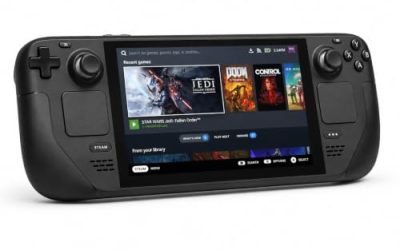
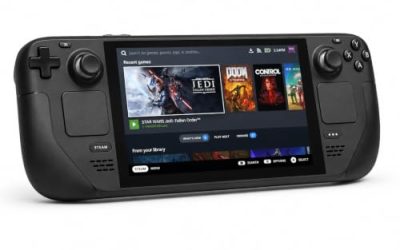
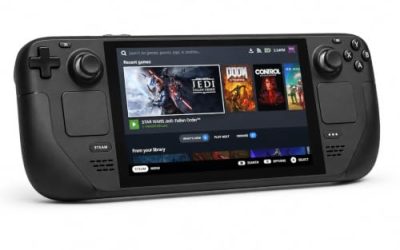
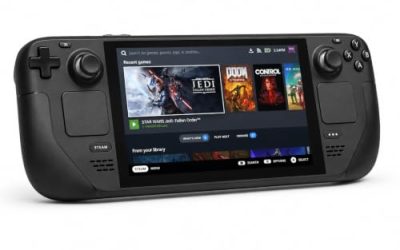
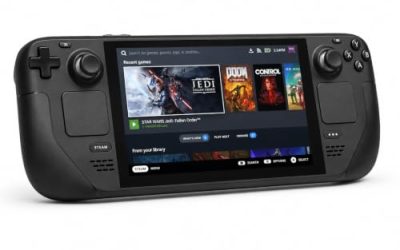
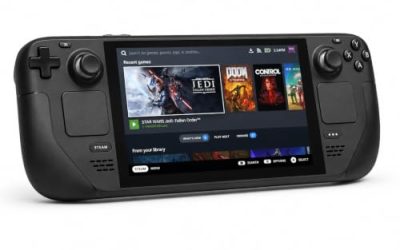
Valve Steam Deck OLED 512GB
- Display: 7.4-inch HDR OLED, 1280 by 800, up to 90 Hz
- Processor: AMD Zen 2 and RDNA 2 custom APU
- Memory: 16 GB LPDDR5
- Storage: 512 GB NVMe, plus a microSD slot
The handheld the Verified badge was written for — the machine where Valve graded the native build itself.
8BitDo Ultimate 2 Bluetooth Controller
- Connectivity: Bluetooth wireless and USB-C wired
- Joysticks: TMR electromagnetic, anti-drift design
- Triggers: Hall effect, with mode switching
- Extras: two remappable back buttons, motion control
The docked and desktop pad pick: full controller support is on the record, and this pad covers couch co-op with modern sticks, triggers and back buttons.
Xbox Wireless Controller, Carbon Black
- Connectivity: Xbox Wireless and Bluetooth
- Port: USB-C for wired play
- Controls: hybrid D-pad, dedicated Share button
- Power: AA batteries or optional rechargeable pack
The safest guest pad in PC gaming: Steam Input support is universal, the glyphs match what most games display, and it pairs over Bluetooth or its own wireless standard.
Logitech G502 HERO
- HERO optical sensor, up to 25,600 DPI
- 11 programmable buttons
- Adjustable weight system
- Wired USB connection
A beat-’em-up lives on a pad, but desktop players still spend real time in menus between stages, and a precise wired mouse turns those trips into single clicks.
Samsung T9 Portable SSD 2TB
- Capacity: 2 TB portable SSD
- Interface: USB 3.2 Gen 2×2, USB-C connector
- Maker-rated speeds: up to 2,000 MB per second read, 1,950 MB per second write
- Features: Dynamic Thermal Guard, maker-rated drop resistance
For moving a Linux game library between machines or backing up installers, a fast USB-C drive is the simple answer. The headline figure needs a Gen 2×2 host port; on a lesser port the drive runs at that ceiling.
How to choose
Choose the Steam copy, because it is the only PC edition on sale and the exact build every record above describes. On Linux, install it and launch it: the native build is the default and no compatibility tool needs selecting. Leave Proton alone for this one — the filings that needed tinkering were forcing the Windows build. On a Steam Deck, the Verified badge means no configuration work is expected; its only dated element is the test’s age. For input, a pad is the natural shape of the game, and extra pads are the obvious upgrade for its co-op roster.
Who should skip
Skip this one if you buy on GOG exclusively: no edition exists there. Skip it if you need a published recommended Linux specification before buying — the recommended tier is an empty shell, and only the minimum is written down. Skip it on macOS: the flag reads false and the depots agree. And if your rule is that a Deck badge must grade the build currently on sale, this sheet was written eight days after launch against an earlier build.
FAQ
Is MARVEL Cosmic Invasion native on Linux?
Yes. The record carries a Linux content depot of about 65 MB, a Linux launch entry beside the Windows one, a populated Linux minimum specification, and a Deck test configuration whose recommended runtime is native. The two gaps — no Linux client icon and an empty recommended tier — are paperwork, not delivery.
Do the add-on packs support Linux too?
Yes. Both content packs in the base record’s array flag Linux on their own records, and the free demo outside the array flags it as well. The family count is four of four, and no soundtrack app exists in the family to lend a misleading flag.
Is MARVEL Cosmic Invasion Steam Deck Verified?
Yes. Valve rates it Verified with all four checks passing, and the test configuration names the native runtime, so the badge grades the Linux build. The test dates from December 9, 2025 and covers an earlier build than the one now on the public branch.
Can I buy MARVEL Cosmic Invasion on GOG?
No. GOG holds no product record for this game: its catalogue and product searches return nothing for the title, and the natural product address redirects to the general catalogue. The Steam copy is the only PC edition.
Final verdict
MARVEL Cosmic Invasion is native on Linux, and the verification is boring in the best way: the flag, the depot census, the launch configuration, the minimum specification and Valve’s runtime field all describe the same Linux build. The caveats are small — an empty recommended tier, a missing Linux client icon, a Deck sheet grading a launch-window build. Buy the Steam copy and play the build the record actually sells.
Product and ASIN Reference
| Product | ASIN |
|---|---|
| Valve Steam Deck OLED 512GB | B0CQ3RWQQZ |
| 8BitDo Ultimate 2 Bluetooth Controller | B0F194QFT2 |
| Xbox Wireless Controller, Carbon Black | B08DF248LD |
| Logitech G502 HERO | B07GBZ4Q68 |
| Samsung T9 Portable SSD 2TB | B0CHFS9K14 |