Our Short List of 3

- Display: 7.4-inch HDR OLED, 1280 by 800, up to 90 Hz
- Processor: AMD Zen 2 and RDNA 2 custom APU
- Memory: 16 GB LPDDR5
- Storage: 512 GB NVMe, plus a microSD slot

- Connectivity: Bluetooth wireless and USB-C wired
- Joysticks: TMR electromagnetic, anti-drift design
- Triggers: Hall effect, with mode switching
- Extras: two remappable back buttons, motion control

- Connectivity: Xbox Wireless and Bluetooth
- Port: USB-C for wired play
- Controls: hybrid D-pad, dedicated Share button
- Power: AA batteries or optional rechargeable pack
All 5 Picks at a Glance
| Product | Specs | Action |
|---|---|---|
| Valve Steam Deck OLED 512GB |
| Check price on Amazon |
| 8BitDo Ultimate 2 Bluetooth Controller |
| Check price on Amazon |
| Xbox Wireless Controller, Carbon Black |
| Check price on Amazon |
 Logitech G502 HERO |
| Check price on Amazon |
 Samsung T9 Portable SSD 2TB |
| Check price on Amazon |
The Rogue Prince of Persia is Evil Empire’s roguelite take on the Prince of Persia name, published by Ubisoft: an acrobatic action platformer built around wall-running combat, a time-loop story and runs that reset on death. It spent over a year in Early Access from May 2024 before version 1.0 landed on 20 August 2025, arriving as a Windows-only release — and nothing in its record has changed that since.
So the Linux question has a short answer and a longer, more useful one. The short answer is that no native Linux build exists. The longer one is that the Windows build carries a strong community compatibility file and Valve’s top handheld badge, so Linux players are not looking at a dead end. This article reads every layer of the record and rules on each.
As an Amazon Associate, we earn from qualifying purchases.
Quick answer
No. The Rogue Prince of Persia is not native on Linux: Steam’s record for app 2717880 flags Windows only, both content depots are Windows-configured, and the single launch entry runs the Windows executable. Linux players run that build through Proton, where ProtonDB rates it Gold across 21 reports and Valve rates it Steam Deck Verified.
What the record actually ships
Start with the platform flags, which here agree with everything underneath them. The store record lists Windows true, Mac false and Linux false, and the operating-system list reads windows alone. The Windows requirements are genuinely filled in — a Core i5-4460 or Ryzen 3 1200, 8 GB of memory and a GTX 950 class card at minimum — while the Mac and Linux requirements fields are empty shells: headings over blank lists. An empty shell is a template the publisher never completed, not a specification, and it matters later: it generates a misleading heading on the game’s ProtonDB page.
The depot census settles the question the flags raise. The sold package delivers two content depots, roughly 1.08 GB and 1.29 GB, both configured for Windows in their own depot records. There is no Linux depot, no Mac depot and no shared cross-platform depot. The launch configuration holds exactly one entry: the game’s Windows executable, tagged for Windows, set as default. A native build would need a Linux depot and a Linux launch entry; this record has neither.
The icon registry tells the same story in miniature: the standard client icon, its TGA variant and the community icon are present, but there is no Linux client icon, the asset a native release registers. The extended operating-system field is an empty string. Layer by layer, the record describes one build for one OS: Windows.
One more record fact: the game’s own controller-support field reads full, with DualShock and DualSense support listed in its categories — framing taken from this game’s record only. This is also a different game from The Lost Crown, whose record lives under its own app; nothing from that record is used here.
The family scan: one activation app, no soundtrack
The base record carries no DLC array at all, and a store search for the title returns the game and nothing else — no soundtrack, no artbook, no expansion wearing a Linux flag it could lend the family. Because add-on apps can also sit outside a base record’s array, the extended record was checked too, and it names exactly one family app: app 3956130, The Rogue Prince of Persia Ubisoft Activation. Read on its own record, it is an activation helper — a legacy key-linking app tied to the base game, not store-visible, carrying no platform flags and no build anyone plays.
That closes the census: the family holds the game plus one activation utility, its Linux-flag count is zero, and the soundtrack trap cannot fire — there is no album app in or out of the array. The game’s own record also carries no DRM notice and no linked-account notice, so the article asserts neither.
A Verified badge earned before version 1.0
Valve rates The Rogue Prince of Persia Verified on Steam Deck, its top category, and SteamOS separately Compatible. One evidence note: Valve’s own compatibility endpoint returned empty and garbled responses this session, so the verdict and its paperwork were read through SteamDB’s republication of Valve’s sheet for this app, the fallback route this project has used before.
All four checks pass: the default controller configuration is fully functional, the game shows Steam Deck controller icons, interface text is legible, and the default graphics configuration performs well. The recommended runtime is proton-stable, the honest line for a Windows-only game: the badge certifies the Windows build under Proton, and Proton is not a fallback here, it is the only route that exists.
The paperwork underneath needs one caveat. The test is dated 14 November 2024, against build 16166281 — an Early Access build, graded nine months before version 1.0 shipped. The current public build is 24299434, so the badge has never been re-graded on the game as sold today. That makes this a supplement candidate: the verdict is real, but it describes an earlier branch of the code.
ProtonDB’s Gold file, and the heading that gets it wrong
ProtonDB’s summary record reads Gold on the settled tier, Platinum on the best-reported tier and Gold on the trending tier, across 21 reports with good confidence. The filings underneath are mostly clean desktop runs on current Proton versions, on NVIDIA and AMD hardware alike. The Deck filings are more split: several describe smooth play, while a few report performance drops after the Second Act update and a soft image at native resolution that sharpening trades against frame rate. Gold, honestly read, means a game that runs well with the occasional rough edge — and that is what the file shows.
The game’s ProtonDB page also carries the stray heading this series keeps meeting: a “Natively Supports” label above the requirements area, generated from that empty-shell Linux requirements field — a heading printed over a blank list. It is wrong: Steam’s record flags Linux false at every layer checked here, and the article follows Steam.
The anti-cheat documentation, for completeness, is silent. The Are We Anti-Cheat Yet database was read in full — 1,167 entries — and holds no entry for this app by store ID or by name. For a single-player game that silence is expected, and the record names no anti-cheat of its own.
The storefront ruling
There is no second copy to weigh. GOG’s catalogue search returns only unrelated titles for this name, its embedded store search returns no product at all, and the game’s natural GOG product address redirects to the general catalogue — the behaviour of an address for a product that does not exist. No GOG edition exists, so the Steam copy is the only PC edition on sale. One quirk of that copy, straight from the record: the publisher has marked the game ineligible for Steam Family Sharing.
Gear that fits the record
The picks below follow the record’s shape: the handheld the Verified badge was written for, two pads for docked and desktop play, a mouse for desktop sessions, and fast library storage.
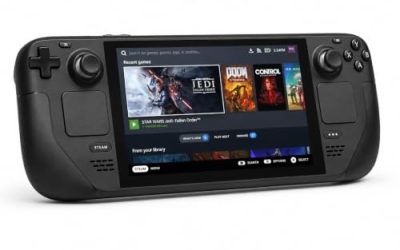
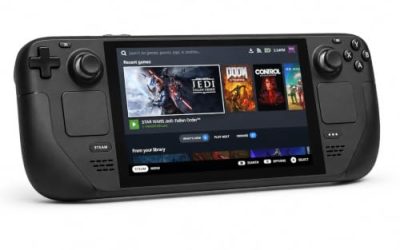
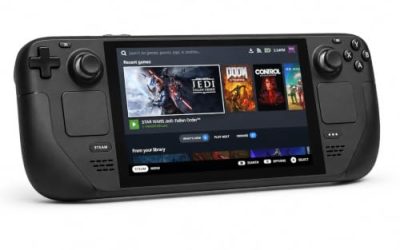
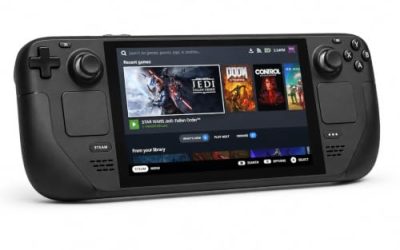
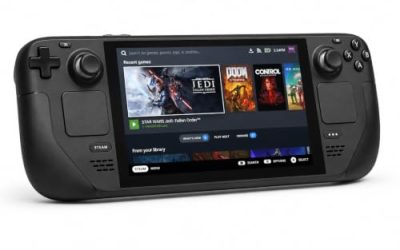
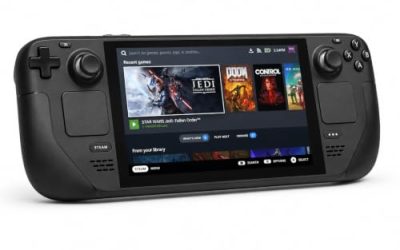
Valve Steam Deck OLED 512GB
- Display: 7.4-inch HDR OLED, 1280 by 800, up to 90 Hz
- Processor: AMD Zen 2 and RDNA 2 custom APU
- Memory: 16 GB LPDDR5
- Storage: 512 GB NVMe, plus a microSD slot
The handheld the badge was written for. The game’s minimum specification is modest next to the Deck’s APU, and Valve’s sheet gives the Windows build a clean pass under proton-stable — with the paperwork caveat above kept in view.
8BitDo Ultimate 2 Bluetooth Controller
- Connectivity: Bluetooth wireless and USB-C wired
- Joysticks: TMR electromagnetic, anti-drift design
- Triggers: Hall effect, with mode switching
- Extras: two remappable back buttons, motion control
The docked and desktop pad pick. The game’s record lists full controller support, and this pad covers the couch case with modern sticks, triggers and back buttons.
Xbox Wireless Controller, Carbon Black
- Connectivity: Xbox Wireless and Bluetooth
- Port: USB-C for wired play
- Controls: hybrid D-pad, dedicated Share button
- Power: AA batteries or optional rechargeable pack
The safest guest pad in PC gaming: Steam Input support is universal, the glyphs match what most games display, and it pairs over Bluetooth or its own wireless standard.
Logitech G502 HERO
- HERO optical sensor, up to 25,600 DPI
- 11 programmable buttons
- Adjustable weight system
- Wired USB connection
At a desk, a precise wired mouse covers the menu side of a long session, and eleven programmable buttons hold the inputs the game repeats between runs.
Samsung T9 Portable SSD 2TB
- Capacity: 2 TB portable SSD
- Interface: USB 3.2 Gen 2×2, USB-C connector
- Maker-rated speeds: up to 2,000 MB per second read, 1,950 MB per second write
- Features: Dynamic Thermal Guard, maker-rated drop resistance
For moving a Linux game library between machines, or keeping an offline backup of installers, a fast USB-C drive is the simple answer. The headline figure needs a Gen 2×2 host port; on a lesser port the drive runs at that ceiling.
How to choose
Choose the Steam copy, because it is the only PC edition on sale and the exact build both records describe. On desktop or laptop, install under Proton and start with the default compatibility tool; the Gold file says current builds run the game well, and most filings changed nothing. On a Steam Deck, the Verified badge means no configuration work is expected — install and launch — but read it as an Early Access-era grade and let newer reports set performance expectations. For input, follow the record: this is a gamepad game on every platform.
Who should skip
Skip this one if you are shopping for a native Linux Prince of Persia: this game is not it, and no depot, launch entry or flag in its family says otherwise. Skip it if you want a DRM-free offline installer, because no GOG edition exists. Skip it if the Family Sharing exclusion matters to your household. And skip it if you only trust badges graded on current code — this Verified stamp predates version 1.0, even though the community file behind it is current.
FAQ
Is The Rogue Prince of Persia native on Linux?
No. Steam’s record for app 2717880 flags Windows only, both content depots are Windows-configured, and the only launch entry runs the Windows executable. The Linux requirements field is an empty shell, and no Linux depot or client icon exists in the record.
How well does it run under Proton?
ProtonDB’s summary reads Gold on the settled and trending tiers and Platinum on the best-reported tier, from 21 reports with good confidence. Desktop filings are mostly clean runs; Deck filings are more mixed on performance after later updates.
Is The Rogue Prince of Persia Steam Deck Verified?
Yes. Valve’s sheet gives the game its top category, Verified, with all four checks passing and proton-stable as the recommended runtime. The test dates to November 2024 against an Early Access build, so the badge grades an earlier branch than the one on sale.
Can I buy it on GOG instead?
No. GOG’s own catalogue and store searches return no product for the game, and its natural GOG address redirects to the general catalogue. The Steam copy is the only PC edition.
Final verdict
The Rogue Prince of Persia is a Windows-only release whose record is unusually easy to read: no Linux flag anywhere in the family, no soundtrack app to inflate a scan, and an empty requirements shell doing its one mischief on a ProtonDB heading. What Linux players get instead is a solid Proton route — a Gold community file with a Platinum best-reported tier, full controller support on the game’s own record, and a Verified Deck badge with an honest date attached. Buy the Steam copy and play it under Proton.
Product and ASIN Reference
| Product | ASIN |
|---|---|
| Valve Steam Deck OLED 512GB | B0CQ3RWQQZ |
| 8BitDo Ultimate 2 Bluetooth Controller | B0F194QFT2 |
| Xbox Wireless Controller, Carbon Black | B08DF248LD |
| Logitech G502 HERO | B07GBZ4Q68 |
| Samsung T9 Portable SSD 2TB | B0CHFS9K14 |