Our Short List of 3

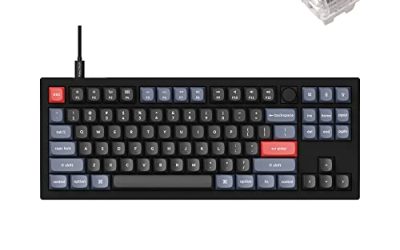
- Tenkeyless layout with rotary knob
- QMK and VIA remapping support
- Hot-swappable K Pro Brown switches
- Wired USB-C connection

- Connectivity: Bluetooth wireless and USB-C wired
- Joysticks: TMR electromagnetic, anti-drift design
- Triggers: Hall effect, with mode switching
- Extras: two remappable back buttons, motion control

- Connectivity: Xbox Wireless and Bluetooth
- Port: USB-C for wired play
- Controls: hybrid D-pad, dedicated Share button
- Power: AA batteries or optional rechargeable pack
All 5 Picks at a Glance
| Product | Specs | Action |
|---|---|---|
| Keychron V3 |
| Check price on Amazon |
| 8BitDo Ultimate 2 Bluetooth Controller |
| Check price on Amazon |
| Xbox Wireless Controller, Carbon Black |
| Check price on Amazon |
 Logitech G502 HERO |
| Check price on Amazon |
 Samsung T9 Portable SSD 2TB |
| Check price on Amazon |
Nobody Wants to Die is a neo-noir detective adventure from Critical Hit Games, published by PLAION and Deep Silver, released on 17 July 2024 — a single-player, story-first game with full controller support, set in a future New York where bodies are rented and discarded. Linux players asking whether it runs natively get an answer with a twist: the only Linux flag anywhere in this game’s family does not belong to the game at all.
This article rules from Steam’s own record, layer by layer: the platform flags, the requirements fields, the depot census, the icon registry, and the family’s one other app — the soundtrack. It then reads Valve’s Steam Deck sheet and the ProtonDB summary, and closes with the other storefront.
As an Amazon Associate, we earn from qualifying purchases.
Quick answer
No. Nobody Wants to Die has no native Linux build: Steam’s record flags Windows only, its single content depot is a Windows build, and the Linux requirements field is an empty shell. The family’s only Linux flag sits on the soundtrack app, which sells audio files, not a port. On desktop Linux the Windows build runs through Proton at a Platinum rating; Valve rates the Steam Deck Unsupported.
The status at a glance
| Question | Answer |
|---|---|
| Native Linux build | No |
| Steam platform flags | Windows only |
| Linux requirements field | Empty shell |
| Content depots | One, Windows, about 26.4 GiB |
| Family Linux flags | 1 of 2 — the soundtrack |
| ProtonDB rating | Platinum, 50 reports, strong |
| Steam Deck | Unsupported (performance) |
| GOG edition | Exists, Windows only |
| Anti-cheat listing | No entry |
What Steam’s own record says
The base game’s record is unambiguous at every layer. The platform flags read windows true, mac false, linux false. The Windows requirements are genuinely populated at both tiers: the minimum names Windows 10 64-bit, a Core i3-8100 or Ryzen 5 2600X, 8 GB of memory, a GTX 1660 Super, RX Vega 56 or Arc A750, DirectX 12 and 30 GB of storage; the recommended tier steps up to a Core i5-10400 or Ryzen 5 3600, 16 GB and an RTX 3070 Ti class card. The Mac and Linux requirements fields, by contrast, are empty shells — the standard headings rendered over blank lists that were never filled in at all.
The depot census is just as plain. The game ships exactly one content depot, about 26.4 GiB with no operating-system split, accompanied only by the two shared Windows redistributables. There is no Linux depot and no Mac depot. The icon registry holds the standard clienticon, clienttga and icon entries and nothing else — no Linux client icon is registered, and the record’s extended OS field is an empty string. SteamDB’s detected technologies name no anti-cheat, and the community anti-cheat tracker holds no entry for this app either — documentation silence, stated as such, not a compatibility promise. The record carries no DRM notice and no linked-account notice. Controller support is listed as full on the game’s own record.
The soundtrack trap
The family holds exactly two apps: the game, and the Nobody Wants to Die Soundtrack (app 2996830, type music), inside the game’s DLC array. Read on its own record, the soundtrack flags windows true, mac true and linux true — all three. It is the family’s only Linux flag, and the only Mac flag too.
That flag means nothing for the game. A soundtrack app delivers audio files, and audio files are platform-agnostic: the same recordings play identically on every system, so music apps routinely carry every platform flag regardless of what the game itself ships. The base game’s record describes the software you would install and run, and every one of its layers says Windows only. Any catalogue or search snippet presenting this family as Linux-supported because the soundtrack flags Linux is repeating the trap. The verdict follows the game, not the album.
The Proton file
ProtonDB’s summary for this app is a full read, and a strong one: settled tier Platinum, best-reported Platinum, trending Platinum, across 50 reports with strong confidence — the highest grade the site gives.
One element of the game’s ProtonDB page does not survive contact with the record: it carries a stray “Natively Supports:” heading above the requirements area. That heading is generated from the requirements fields the store record exposes, and here it is an artefact of the empty-shell Linux field — a blank template that makes the page look prepared for a Linux build that does not exist. This article follows Steam’s record, not the heading.
The filings underneath the grade are honest about the rough edges. The recurring fault is video playback: several reports note that in-game videos fail on the default Proton build, and that a community GE-Proton build or Proton Experimental restores them — in one filing, the missing videos included the ending sequence itself. Other filings mention engine stutter, an ultrawide image that arrives zoomed and cropped until a configuration file is adjusted, and timed prompts that would not accept typed numbers until a controller was used. None of that dents the tier; it is a Platinum with one known errand.
The Steam Deck sheet
Valve’s own compatibility endpoint answers directly for this app: the resolved category is Unsupported, and the sheet’s single resolved item is the graphics-performance result — the note that the game’s graphics settings cannot be configured to run well on Steam Deck. This is a performance ruling, not a compatibility block or an anti-cheat gate; nothing on the sheet says the game fails to start. SteamOS compatibility is recorded separately as Compatible: the game starts and runs, with one note that external controllers do not default.
The test metadata, read through SteamDB’s republication of Valve’s sheet, dates the test to 23 September 2026 against build 14922697 with proton-stable as the recommended runtime. That number matters: the public branch’s current build is also 14922697 — the launch build, set on release day in July 2024 and never replaced. Valve’s Unsupported therefore grades exactly the code on sale today, not a superseded branch; the game has never been patched into Deck shape. Community filings do show it running on Deck hardware with heavy tuning — frame-rate caps, the built-in upscaler on its performance setting, configuration edits — consistent with a performance ruling rather than a hard failure.
The storefront ruling
GOG sells this game, and its own records were read directly rather than through search. The product record (id 1484887196, slug nobody_wants_to_die) lists system compatibility as windows true, osx false, linux false. So the DRM-free edition exists and is the same Windows build; it is not a Linux edition in disguise. GOG also sells the soundtrack as its own product, plus a bundle of the two — and no GOG record in this family carries a Linux flag. ProtonDB filings include players running the GOG copy through the Heroic Games Launcher without problems, matching the Platinum picture generally.
Gear for a desktop-only game
Because Valve’s sheet rules the Deck out on performance, the sensible setup is a desktop: a keyboard for the prompts, a pad for the long story stretches (the record lists full controller support), and fast storage for the 26 GiB install.
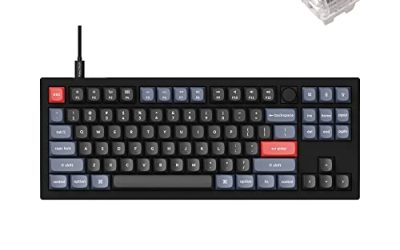
Keychron V3
- Tenkeyless layout with rotary knob
- QMK and VIA remapping support
- Hot-swappable K Pro Brown switches
- Wired USB-C connection
The keyboard pick for desktop sessions: QMK and VIA support lets you remap keys at the keyboard level, which keeps working across every Linux install you plug it into.
8BitDo Ultimate 2 Bluetooth Controller
- Connectivity: Bluetooth wireless and USB-C wired
- Joysticks: TMR electromagnetic, anti-drift design
- Triggers: Hall effect, with mode switching
- Extras: two remappable back buttons, motion control
The desktop pad pick, with modern sticks and triggers plus back buttons for menu shortcuts.
Xbox Wireless Controller, Carbon Black
- Connectivity: Xbox Wireless and Bluetooth
- Port: USB-C for wired play
- Controls: hybrid D-pad, dedicated Share button
- Power: AA batteries or optional rechargeable pack
The safest guest pad in PC gaming: Steam Input support is universal, the glyphs match what most games display, and it is the practical answer to the filings that found typed answers unreliable during the game’s timed prompts.
Logitech G502 HERO
- HERO optical sensor, up to 25,600 DPI
- 11 programmable buttons
- Adjustable weight system
- Wired USB connection
A detective game spends its hours in menus, evidence boards and dialogue wheels; at a desk a precise wired mouse turns those into single clicks.
Samsung T9 Portable SSD 2TB
- Capacity: 2 TB portable SSD
- Interface: USB 3.2 Gen 2×2, USB-C connector
- Maker-rated speeds: up to 2,000 MB per second read, 1,950 MB per second write
- Features: Dynamic Thermal Guard, maker-rated drop resistance
For moving a Linux game library between machines, a fast USB-C drive is the simple answer. The headline figure needs a Gen 2×2 host port; on a lesser port the drive runs at that ceiling instead.
How to choose
Choose the Steam copy if you want the ProtonDB file’s exact subject: 50 reports, a Platinum consensus, and one known fix — if in-game videos fail to play, switch to a community GE-Proton build or Proton Experimental before judging the game. Choose the GOG copy if you prefer a DRM-free installer; it is the same Windows build and changes nothing about Linux support. Either way, plan on a desktop: the published recommended tier (an RTX 3070 Ti class card, 16 GB of memory) is the honest target for the higher presets, and filings warn that even strong hardware prefers normal settings to avoid micro-stutter. Treat any listing advertising this game as Linux-supported — soundtrack flag or ProtonDB heading — as a misreading of the paperwork.
Who should skip
Skip the purchase if a native build is a condition: there is none, and the empty-shell requirements field is a template, not a roadmap. Skip it if the Steam Deck is your only machine: Valve’s Unsupported is a performance ruling on the current, only build, and the community workarounds are tuning projects, not a setup. Skip it if you will not touch Proton settings at all — the Platinum grade assumes the video fix is applied when needed.
FAQ
Is Nobody Wants to Die native on Linux?
No. The base game’s record flags Windows only, its single content depot is a Windows build, and its Linux requirements field is an empty shell. The family’s only Linux flag belongs to the soundtrack app, which delivers platform-agnostic audio files and says nothing about the game.
Why does the soundtrack list Linux if the game does not?
Because music apps ship files every system can play, they routinely carry all three platform flags. The flag describes the album’s delivery, not a port. The game’s own record is uniformly Windows only, and it is the record that counts.
How well does it run on Linux through Proton?
ProtonDB settles it at Platinum across 50 reports with strong confidence, best-reported and trending tiers also at Platinum. The known caveat is in-game video playback, which can fail on the default Proton build and is fixed by a community GE-Proton build or Proton Experimental.
Is Nobody Wants to Die Steam Deck Verified?
No — Valve rates it Unsupported on a performance ground: the graphics settings cannot be configured to run well on the Deck. The test ran against build 14922697, still the current public build, so the ruling describes the game as sold today.
Final verdict
Nobody Wants to Die is a Windows game on Linux paper only where the paperwork misleads: a soundtrack that flags every platform because audio plays anywhere, and an empty requirements template that makes a database page claim native support. Underneath both artefacts the record is clean and consistent — Windows-only flags, one Windows depot, no Linux icon, no Linux build. On a Linux desktop that hardly matters, because Proton carries the game at Platinum with one documented video fix. On the Steam Deck it matters entirely, because Valve’s ruling was written against the build still on sale. Buy it for the desktop, in either storefront’s Windows edition, and ignore the album’s flags.
Product and ASIN Reference
| Product | ASIN |
|---|---|
| Keychron V3 | B0B2DMMMG2 |
| 8BitDo Ultimate 2 Bluetooth Controller | B0F194QFT2 |
| Xbox Wireless Controller, Carbon Black | B08DF248LD |
| Logitech G502 HERO | B07GBZ4Q68 |
| Samsung T9 Portable SSD 2TB | B0CHFS9K14 |