Our Short List of 3

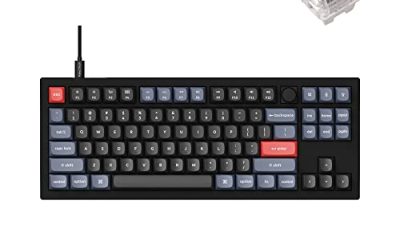
- Tenkeyless layout with rotary knob
- QMK and VIA remapping support
- Hot-swappable K Pro Brown switches
- Wired USB-C connection

- Connectivity: Bluetooth wireless and USB-C wired
- Joysticks: TMR electromagnetic, anti-drift design
- Triggers: Hall effect, with mode switching
- Extras: two remappable back buttons, motion control

- Connectivity: Xbox Wireless and Bluetooth
- Port: USB-C for wired play
- Controls: hybrid D-pad, dedicated Share button
- Power: AA batteries or optional rechargeable pack
All 5 Picks at a Glance
| Product | Specs | Action |
|---|---|---|
| Keychron V3 |
| Check price on Amazon |
| 8BitDo Ultimate 2 Bluetooth Controller |
| Check price on Amazon |
| Xbox Wireless Controller, Carbon Black |
| Check price on Amazon |
 Logitech G502 HERO |
| Check price on Amazon |
 Samsung T9 Portable SSD 2TB |
| Check price on Amazon |
Alien: Rogue Incursion VR is Survios’ action-horror take on the Alien universe, released on Steam on 19 December 2024. You play ex-Colonial Marine Zula Hendricks on the planet Purdan, and the design is built around a headset: the store record files the game as VR Only, with tracked motion controllers as its input, and its Windows requirements name the Meta Quest 2, Meta Quest 3, Index and Rift S as the supported headsets.
That VR-only shape decides the Linux question before compatibility layers even enter it. Steam’s record sells exactly one build of this game, and it is a Windows build. What follows reads that record layer by layer. A separate flat-screen edition of this game exists on Steam under its own app; nothing from its record is used here.
As an Amazon Associate, we earn from qualifying purchases.
Quick answer
Alien: Rogue Incursion VR is not native on Linux. Steam flags the Survios title for Windows alone, its Linux requirements field is an empty shell, and its one content depot holds a Windows build. The Linux route is Proton through a VR streaming layer: ProtonDB settles at Gold across seven reports, and Valve rules the game Unsupported on Steam Deck because the Deck does not support VR games.
The record, layer by layer
Steam’s appdetails record for app 1850050 lists the platforms as Windows true, Mac false, Linux false, and the requirements fields confirm it. The Windows tab is genuinely populated at both tiers: Windows 10, a Core i7-10700K or Ryzen 7 5800X, 16 GB of memory and a GeForce RTX 2080 Super or Radeon RX 6700-XT at minimum, DirectX 12, and 45 GB of storage. The Linux requirements field, by contrast, is the empty shell this series knows well: Minimum and Recommended headings printed over lists with nothing in them; the Mac field is the same shell. An empty shell is a formatting leftover, not a specification.
The depot census, read on SteamDB, is just as plain. The package carries one content depot, 1850051, holding 40.15 GiB with no operating-system split, alongside the two shared Windows redistributable depots. There is no Linux depot and no Mac depot. The icon registry holds clienticon, clienttga and icon and nothing else: no LinuxClientIcon is registered. The osextended field is an empty string, and the detected technology list is engine and middleware only (Unreal Engine, the OpenXR SDK, audio libraries), with no anti-cheat named anywhere.
The add-on census needs one careful sentence. The base record carries no DLC array at all, and a family store search surfaces no soundtrack or artbook app, so the familiar soundtrack trap cannot fire here. One family app does sit outside the array: a Deluxe Bonuses app whose only footprint is an inner depot marked Unused, with no size recorded. It returns no readable store record, sells nothing separately, and delivers no content in the current package. The family Linux-flag count for this title is zero.
What VR-only means for a Linux attempt
The record is explicit about the hardware contract: its category list leads with VR Only and Tracked Controller Support, its internal flags mark OpenVR and VR-only support as on, and the Windows requirements carry the VR Support line naming the four headsets above. The record’s controller-support field for ordinary gamepads is absent: no pad, keyboard or mouse changes the tracked-controller input this game is built on.
On Linux, then, the attempt is a chain with two links. Proton has to carry the Windows build, and a VR runtime has to carry the headset: the filings describe streaming to Quest headsets through ALVR or WiVRn, or playing on a wired Index. The question is whether a Windows VR build, a compatibility layer and a streaming runtime hold together for a full session.
ProtonDB: a thin Gold file
ProtonDB’s summary record answers in full: settled Gold, Platinum on the best-reported tier, Gold on the trending tier, across 7 reports at low confidence. Seven reports is a thin file, and the low-confidence label is part of the answer — this tier describes a small, self-selected group of VR enthusiasts, not a broad sample. One correction belongs here too: the game’s ProtonDB page carries a “Natively Supports” heading above its requirements area, generated from the empty-shell Linux requirements field. Steam’s flags say Windows only, and this article follows Steam.
The filings are mixed in an instructive way. Several describe the game running through ALVR or WiVRn on Quest hardware and through a wired Index, on stock and custom Proton builds. The recurring tinker steps are first-launch chores: the Unreal Engine prerequisites installer has to be run once, sometimes from the desktop before the headset view works, and Quest players build a custom SteamVR controller binding because the game expects the Quest Link runtime’s route to the pause menu, which the Linux streaming path does not provide. Performance complaints recur (anti-aliasing trade-offs, reprojection doing heavy work), and one filing describes the picture shaking with every head movement and calls the game broken on Linux. Gold here means workable for prepared VR players, not smooth for everyone.
Steam Deck: ruled out by category
Valve has reviewed this game on Steam Deck, and the verdict is Unsupported. The resolved item on the test sheet is categorical rather than performance-based: Steam Deck does not support VR games. The test is dated 7 January 2025, and the sheet records no tested build, which fits a category ruling rather than a build grading. The separate SteamOS compatibility field reads Unknown.
A disclosure on sourcing: Valve’s own compatibility endpoint returned empty responses throughout this session, so the verdict and sheet contents above were read from SteamDB’s republication of Valve’s test sheet. Nor is this a superseded-build paperwork case: no future build of a VR-only game changes a category answer.
Anti-cheat, accounts and the second storefront
There is little to report, and the article reports exactly that. The record carries no drm_notice, no external-account notice and no always-online requirement. The anti-cheat tracking list maintained by the Are We Anti-Cheat Yet project, read in full at its repository root (1,167 entries), holds no entry for this app by store ID or by name — documentation silence for a single-player game. On GOG, the ruling is none: GOG’s catalogue holds no product record for this game, its catalogue queries return unrelated Alien-licensed games, and the natural product addresses redirect to the general games catalogue. Steam is the only PC storefront selling this edition, and it sells the Windows build only.
The desktop around the headset
Because the Deck is ruled out and the game takes tracked VR controllers, the picks below are the desktop kit around a Linux VR attempt: input and storage for the PC that runs SteamVR. None changes this game’s input contract, and none substitutes for a supported headset.
Keychron V3
- Tenkeyless layout with rotary knob
- QMK and VIA remapping support
- Hot-swappable K Pro Brown switches
- Wired USB-C connection
The keyboard for the desk the VR rig sits on: setup and binding edits happen on a flat screen, and remaps that live in the keyboard itself survive every reinstall.
8BitDo Ultimate 2 Bluetooth Controller
- Connectivity: Bluetooth wireless and USB-C wired
- Joysticks: TMR electromagnetic, anti-drift design
- Triggers: Hall effect, with mode switching
- Extras: two remappable back buttons, motion control
Not for this title, whose record names tracked VR controllers only. This is the pad for the flat games sharing the same Linux library: modern sticks, Hall effect triggers and a dock that keeps it charged.
Xbox Wireless Controller, Carbon Black
- Connectivity: Xbox Wireless and Bluetooth
- Port: USB-C for wired play
- Controls: hybrid D-pad, dedicated Share button
- Power: AA batteries or optional rechargeable pack
The second pad for the same flat library: the glyphs most PC games display, painless pairing, and a shape every guest already knows. A library pick, not a Rogue Incursion input.
Logitech G502 HERO
- HERO optical sensor, up to 25,600 DPI
- 11 programmable buttons
- Adjustable weight system
- Wired USB connection
The desktop mouse for SteamVR dashboard work, store pages and the flat sessions between VR ones. Eleven programmable buttons cover the inputs a desktop session repeats.
Samsung T9 Portable SSD 2TB
- Capacity: 2 TB portable SSD
- Interface: USB 3.2 Gen 2×2, USB-C connector
- Maker-rated speeds: up to 2,000 MB per second read, 1,950 MB per second write
- Features: Dynamic Thermal Guard, maker-rated drop resistance
A 40 GiB VR install is one game; a VR library is a storage plan. A fast USB-C drive moves installs between machines and keeps an offline backup of the library.
How to choose
Choose the Steam copy, the only PC edition on sale and the exact build both records describe. Before buying, clear the hardware gate the record itself sets: a headset from its supported list (Quest 2, Quest 3, Index or Rift S), a GPU at or above the published minimum, and on Linux a working SteamVR streaming path to that headset. Treat the Gold tier as a promise of workable, not flawless, and weigh the filings’ performance notes first. If any link in that chain is missing, the honest answer is to wait rather than buy and hope.
Who should skip
Skip this one if you are shopping for a native Linux game: no Linux build exists, and the empty requirements shell is not a port in progress. Skip it if your only machine is a Steam Deck, where Valve’s Unsupported ruling is categorical for VR titles. Skip it if you own no supported headset, or if your headset path on Linux is unproven. Skip it if a seven-report, low-confidence Gold file is not evidence enough for you; that caution is reasonable. And skip the Steam copy if you want a DRM-free installer, because no GOG edition exists.
FAQ
Is Alien: Rogue Incursion VR native on Linux?
No. Steam’s record for app 1850050 flags Windows true and Mac and Linux false, the Linux requirements field is an empty shell, the single content depot is a Windows build, and no LinuxClientIcon is registered. The “Natively Supports” heading on the ProtonDB page is generated from that empty field and contradicts the record.
How does it run under Proton?
ProtonDB settles at Gold, Platinum on its best-reported tier, across 7 reports at low confidence. The filings describe play through ALVR or WiVRn to Quest headsets and through a wired Index, with first-launch prerequisites installs as the recurring tinker step. One filing reports severe image shake and calls the game broken.
Can I play it on Steam Deck?
No. Valve’s test sheet rates the game Unsupported, with the resolved item stating that Steam Deck does not support VR games, tested on 7 January 2025 with no build recorded. That is a category ruling on a VR-only title, not a performance grade a later build can overturn.
Is the Deluxe Bonuses app a Linux clue?
No. That family app sits outside the base record’s DLC array, returns no readable store record, and contributes only an inner depot marked Unused with no size. It sells nothing and ships no build of any platform. The separate flat-screen edition is a different app with its own record; nothing here is drawn from it.
Final verdict
Alien: Rogue Incursion VR is a Windows-only VR title whose record leaves little room for misreading: one flag set, one populated requirements tab, one content depot, no Linux icon, no add-on app with a flag to borrow, and no second storefront. The Linux story is therefore a Proton story: a thin, low-confidence Gold file built by VR players streaming to headsets, with real tinker steps. Buy the Steam copy if your headset and streaming path are already proven on Linux; otherwise every layer says the same thing: not yet, and not on the Deck at all.
Product and ASIN Reference
| Product | ASIN |
|---|---|
| Keychron V3 | B0B2DMMMG2 |
| 8BitDo Ultimate 2 Bluetooth Controller | B0F194QFT2 |
| Xbox Wireless Controller, Carbon Black | B08DF248LD |
| Logitech G502 HERO | B07GBZ4Q68 |
| Samsung T9 Portable SSD 2TB | B0CHFS9K14 |