Our Short List of 3

- Display: 7.4-inch HDR OLED, 1280 by 800, up to 90 Hz
- Processor: AMD Zen 2 and RDNA 2 custom APU
- Memory: 16 GB LPDDR5
- Storage: 512 GB NVMe, plus a microSD slot

- Connectivity: Bluetooth wireless and USB-C wired
- Joysticks: TMR electromagnetic, anti-drift design
- Triggers: Hall effect, with mode switching
- Extras: two remappable back buttons, motion control

- Connectivity: Xbox Wireless and Bluetooth
- Port: USB-C for wired play
- Controls: hybrid D-pad, dedicated Share button
- Power: AA batteries or optional rechargeable pack
All 5 Picks at a Glance
| Product | Specs | Action |
|---|---|---|
| Valve Steam Deck OLED 512GB |
| Check price on Amazon |
| 8BitDo Ultimate 2 Bluetooth Controller |
| Check price on Amazon |
| Xbox Wireless Controller, Carbon Black |
| Check price on Amazon |
 Logitech G502 HERO |
| Check price on Amazon |
 Samsung T9 Portable SSD 2TB |
| Check price on Amazon |
CloverPit, Panik Arcade’s roguelite built around a slot-machine cabinet, looks at first glance like a game that might support Linux. Its Steam page carries a Linux system-requirements tab, and ProtonDB’s game page displays a native-support heading. Both signals collapse on inspection: the tab is a heading over an empty list, and every delivery layer underneath it ships Windows code only.
That makes this a Proton story rather than a port story. The community compatibility file is unusually strong for a small indie release, Valve has tested the game on Steam Deck and awarded its highest badge, and the single add-on app follows the same Windows-only pattern as the base game. This piece reads each layer separately: flags, requirements, depots, the add-on record, the Deck sheet, the ProtonDB file and the storefront ruling.
As an Amazon Associate, we earn from qualifying purchases.
Quick answer
CloverPit has no native Linux build. Steam’s record flags Windows only, its Linux requirements field is an empty shell, and the single content depot is Windows-configured. Linux play runs through Proton: ProtonDB settles at Platinum across 67 reports, and Valve rates the game Steam Deck Verified, though that badge was tested on a pre-launch build.
What Steam’s record actually ships
Start with the platform flags, because they settle the headline question on their own. The base record for app 3314790 reads windows true, mac false, linux false. The Windows requirements tab is genuinely populated, asking for a 64-bit version of Windows 10 or newer and modest hardware. The Mac and Linux requirements fields exist but hold nothing: each is a pair of headings, minimum and recommended, over an empty list. That empty shell is the entire basis for the native-support heading ProtonDB’s page generates, and it is paperwork, not a specification. No Linux requirements exist for this game, because no Linux build exists to attach them to.
The depot census removes any remaining doubt. SteamDB lists exactly one content depot, depot 3314791, configured for Windows, at 383.57 MiB on disk. The Windows-filtered size total equals the unfiltered total, so there is no Linux-scoped depot, no Mac depot and no shared depot. SteamDB’s detected-technology list reads as a standard Windows Unity delivery — the Unity engine with its Mono and Burst components — with no Linux runtime anywhere in the file census.
The registry agrees. The registered assets are the standard trio of clienticon, clienttga and icon; there is no LinuxClientIcon, the asset a genuine Linux release registers. The osextended field, which native releases use to declare extended platform data, is an empty string. Taken together — flags, empty shells, a single Windows depot, no Linux icon, an empty osextended — the record leaves no room for a stranded or unlisted Linux build. This is a Windows-only release whose store page simply carries an unpopulated Linux tab.
The one add-on, read on its own record
The base record’s add-on array holds a single entry, app 4341120, CloverPit: Unholy Fusion. Read individually, its record repeats the base game’s shape exactly: windows true, mac false, linux false. There is no soundtrack app anywhere in this family, so the pattern in which a music app carries the family’s only Linux flag cannot arise here. The family’s Linux-flag count is zero of two records.
The Deck badge predates the launch build
Valve’s own compatibility endpoint resolves this game to category 3, Verified, the strongest badge the programme awards. All four checks pass: the default controller configuration is fully functional, the game shows Steam Deck controller icons, interface text is legible, and the default graphics configuration performs well. SteamOS is separately rated Compatible. The sheet carries a single note, about peripherals rather than the game itself: CloverPit does not default to external Bluetooth or USB controllers on Deck, so a docked player may need to switch the active controller manually through the Quick Access Menu.
One qualification on the paperwork: the test metadata here is read through SteamDB’s republication of Valve’s test sheet. Valve tested the game on 4 September 2025 against build 19784549, with a Proton 10.0 beta build as the recommended runtime. The game did not launch until 26 September 2025, so the badge grades pre-release code. The current public build is 22785177, built in April 2026, several updates removed from the one Valve examined. Later filings cover the current branch and stay at the top tier, but the Verified stamp has never been re-issued against the build on sale today.
ProtonDB: Platinum, with a memory footnote
ProtonDB’s summary record for this app is complete and unambiguous at the top line: the settled tier is Platinum, the best-reported tier is Platinum, the trending tier is Platinum, across 67 reports, with confidence rated strong. Most filings describe an uneventful out-of-the-box run on current Proton builds. The heading check matters here, though: the game’s ProtonDB page displays a “Natively Supports” heading above its requirements area. That heading is generated from the same empty Linux requirements shell described earlier and contradicts Steam’s own flags. It is a known false signal on this database, and this article follows Steam: not native, running through Proton.
The filings also carry one recurring fault worth naming. Several reports, across different Proton versions and distributions, describe memory consumption climbing during long sessions until the system slows or the game closes, with restarting the game clearing the condition. A smaller number describe launch-time memory errors resolved by adding a runtime component through protontricks, and one Deck filing reports a crash when the handheld is offline. None of this displaces the Platinum summary, but a player planning marathon sessions should expect the occasional restart, and the honest summary of the file is Platinum with a memory footnote.
Anti-cheat and the other storefronts
There is no anti-cheat layer to clear. The base record carries no DRM notice and no third-party account notice, SteamDB names no anti-cheat technology for the app, and the game is a single-player release. The AreWeAntiCheatYet database, read in full at 1,167 entries, holds no entry matched to this app’s store ID and none under its name; for a single-player game that silence is the expected state of the documentation, recorded here as silence rather than as a clearance.
On storefronts, GOG sells no edition of CloverPit in any form. The ruling rests on GOG’s own surfaces: its catalogue API returns only unrelated fuzzy matches for the title, and the natural product address for the game redirects to the general games catalogue rather than resolving to a product page. No GOG product record exists. The Steam copy is the only PC edition.
Gear that fits this record
The gear below follows the shape of the record: the handheld the badge was written for, two pads for docked and desktop play, a mouse for desktop sessions, and fast portable storage.
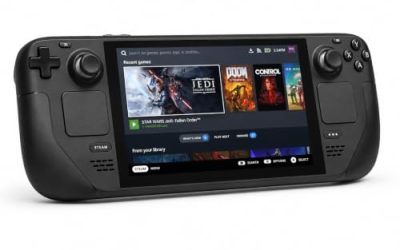
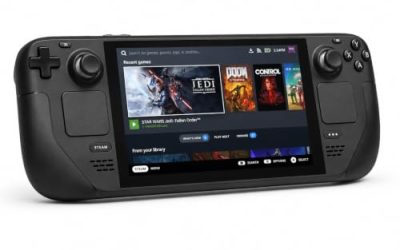
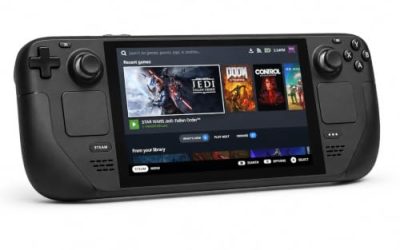
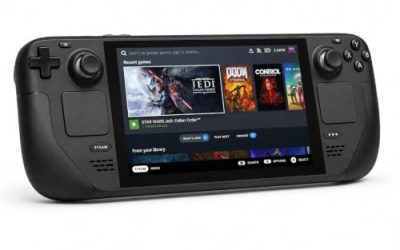
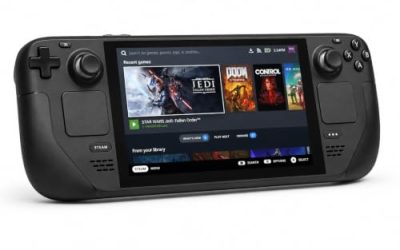
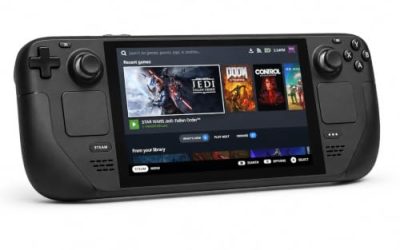
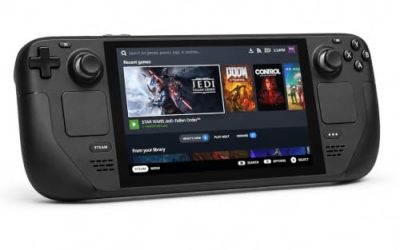
Valve Steam Deck OLED 512GB
- Display: 7.4-inch HDR OLED, 1280 by 800, up to 90 Hz
- Processor: AMD Zen 2 and RDNA 2 custom APU
- Memory: 16 GB LPDDR5
- Storage: 512 GB NVMe, plus a microSD slot
The handheld Valve’s test sheet describes. The badge was graded on a pre-launch build, but current-branch ProtonDB filings include Deck reports at the same top tier.
8BitDo Ultimate 2 Bluetooth Controller
- Connectivity: Bluetooth wireless and USB-C wired
- Joysticks: TMR electromagnetic, anti-drift design
- Triggers: Hall effect, with mode switching
- Extras: two remappable back buttons, motion control
The game’s own record field rates controller support as full, and the Deck sheet confirms the default configuration works. For docked or desktop play, this pad covers long sessions with modern sticks, triggers and back buttons.
Xbox Wireless Controller, Carbon Black
- Connectivity: Xbox Wireless and Bluetooth
- Port: USB-C for wired play
- Controls: hybrid D-pad, dedicated Share button
- Power: AA batteries or optional rechargeable pack
The reference pad for Steam Input: glyphs match what games display, pairing is painless, and it is the controller most guests already know.
Logitech G502 HERO
- HERO optical sensor, up to 25,600 DPI
- 11 programmable buttons
- Adjustable weight system
- Wired USB connection
CloverPit’s interface is pointer-driven at a desk, and a precise wired mouse is the natural tool for it. Eleven programmable buttons cover the repeated confirm and menu inputs of a long session.
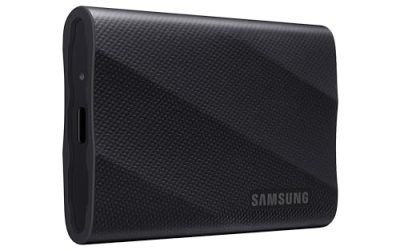
Samsung T9 Portable SSD 2TB
- Capacity: 2 TB portable SSD
- Interface: USB 3.2 Gen 2×2, USB-C connector
- Maker-rated speeds: up to 2,000 MB per second read, 1,950 MB per second write
- Features: Dynamic Thermal Guard, maker-rated drop resistance
A 384 MB game needs no storage help, but a travelling Linux library does. The headline speeds need a Gen 2×2 host port; on a lesser port the drive runs at that port’s ceiling.
How to choose
Choose the Steam copy, because it is the only PC edition on sale and the build every record in this article describes. On a desktop or laptop, install it under Proton and start with the default compatibility tool; the filings cluster on current Proton builds with no required tinkering. If a long session starts to slow down, a restart clears the memory behaviour several filings describe, and players who hit launch-time memory errors have a documented protontricks route. On Steam Deck, the Verified badge means the expected experience is install-and-play; the only setup note is the external-controller one, which matters only when docked. For input, the game’s own record rates controller support as full, so a pad is a first-class way to play on every machine.
Who should skip
Skip this entirely if a native Linux build is a condition of purchase: there is none, on any storefront, and the empty requirements tab is not a promise that one is coming. Skip it if the recurring memory behaviour in the filings would spoil long, unrestarted sessions for you, since it is documented across several Proton versions. And do not take the Deck paperwork at face value if you require a badge graded on the shipping build — Valve’s test predates the launch build, even though later filings cover the current one.
FAQ
Is CloverPit native on Linux?
No. Steam’s record flags the game Windows only, its Linux requirements field is an empty shell, the single content depot is Windows-configured, and no LinuxClientIcon is registered. The native-support heading on its ProtonDB page is generated from that empty field and contradicts the record; Linux play runs through Proton.
How well does CloverPit run under Proton?
ProtonDB’s full summary settles at Platinum on all three tiers, across 67 reports at strong confidence. Most filings describe out-of-the-box runs on current Proton builds; several describe memory consumption climbing during long sessions, cleared by a restart, so the tier comes with that footnote.
Is CloverPit Steam Deck Verified?
Yes — Valve’s endpoint resolves the game to Verified, all four checks passing, SteamOS separately Compatible. The qualification is in the paperwork: the test ran on 4 September 2025 against a pre-launch build, while the current public build dates from April 2026. The badge has not been re-issued against the shipping build, though current-branch filings remain at Platinum.
Can I buy CloverPit on GOG instead?
No. GOG’s catalogue API returns no product for this title and the game’s natural GOG address redirects to the general catalogue, so no GOG edition exists on any platform. The Steam copy is the only PC edition sold.
Final verdict
CloverPit is a Windows-only release wearing two misleading pieces of Linux paperwork: an unpopulated requirements tab on Steam and a native-support heading on ProtonDB that the tab generates. Underneath, the Proton reality is strong — a Platinum file across 67 reports, a Verified Deck badge, full controller support on the game’s own record, and no anti-cheat or account layer anywhere. Buy the Steam copy for Proton play on desktop or Deck, expect an occasional restart on very long sessions, and do not mistake the empty Linux tab for a port.
Product and ASIN Reference
| Product | ASIN |
|---|---|
| Valve Steam Deck OLED 512GB | B0CQ3RWQQZ |
| 8BitDo Ultimate 2 Bluetooth Controller | B0F194QFT2 |
| Xbox Wireless Controller, Carbon Black | B08DF248LD |
| Logitech G502 HERO | B07GBZ4Q68 |
| Samsung T9 Portable SSD 2TB | B0CHFS9K14 |