FBC: Firebreak is Remedy Entertainment’s three-player online co-op title, released on 17 June 2025, and it never received a Linux build. Steam’s record flags the game for Windows alone, the one content depot is a Windows 64-bit build, and the only add-on app flags Windows too. For a single-player game that would nearly settle the matter. For an online game it settles only half of it, because the second question is whether anything in the multiplayer stack objects to running under Proton.
This piece reads the records in that order: the build itself, the multiplayer question answered from the anti-cheat documentation, the two compatibility files a Linux player relies on, and the storefront ruling.
As an Amazon Associate, we earn from qualifying purchases.
Quick answer
FBC: Firebreak is not native on Linux: Steam’s record flags Windows only, its Linux requirements field is an empty shell, and the single content depot is a Windows build. The route is Proton: ProtonDB settles at Platinum across 19 reports, and Valve rates the game Verified on Steam Deck. No GOG edition exists.
The status at a glance
| Question | Answer from the record |
|---|---|
| Native Linux build | No — Steam flags read Windows only |
| Linux requirements tab | Empty shell — headings over empty lists |
| Content depots | One, Windows 64-bit |
| Add-on app | Deluxe Upgrade, Windows only |
| Anti-cheat named on the record | None |
| AWACY documentation | No entry for this app |
| ProtonDB record | Platinum settled, Gold trending, 19 reports |
| Steam Deck verdict | Verified, tested 12 June 2025 |
| GOG edition | None |
What Steam’s record says about the build
The appdetails record for FBC: Firebreak (app 2272540) names Remedy Entertainment as developer and publisher, released 17 June 2025 with the coming-soon flag false. Its platform flags read Windows true, Mac false, Linux false. The Windows requirements tab is genuinely populated. The Mac and Linux fields follow the empty-shell pattern: Minimum and Recommended headings over empty lists. A shell names no distribution, no kernel and no driver, because there is no build for it to describe.
The depot census, read on SteamDB, removes any remaining doubt. The game ships exactly one content depot, 2272541, configured as Windows 64-bit English at 23.42 GiB, also the game’s total size on disk. Beside it sit only the two standard Windows redistributables, VC 2022 and DirectX June 2010. There is no Linux depot, no Mac depot and no shared depot. The registered assets are a client icon, a client tga and an icon; no Linux client icon is registered, and the extended OS string is empty.
The add-on array holds a single app, read individually: the Deluxe Upgrade (3625720), which flags Windows true, Mac false, Linux false. No soundtrack app exists in this family, so the familiar trap, where an album carries the family’s only Linux flag, cannot fire. The family’s Linux-flag count is zero across both records, and every layer agrees: this is a Windows-only release.
One field matters for the gear below: the record’s own controller-support field reads full, repeated in the store categories alongside DualSense support.
The multiplayer question, answered from the documents
An online co-op game lives or dies on Linux by its anti-cheat arrangements, so this section reports only what the documents name. The store record names no anti-cheat at all: no anti-cheat field entry, no DRM notice, no third-party account notice. SteamDB’s technology scan detects the Nakama server SDK and the Vivox voice SDK among its middleware, alongside rendering libraries such as DLSS, FSR and PhysX. Those are networking and voice components, not anti-cheat systems.
The dedicated tracker, Are We Anti Cheat Yet, keeps a community status file for games whose multiplayer could block Linux play. Read in full for this piece, all 1,167 entries, it holds no entry matched to this app’s store ID and none under this game’s name in either direction. That is documentation silence, stated plainly: the tracker neither certifies the game nor lists it as broken. The store categories confirm cross-platform multiplayer, and the ProtonDB filings below include online sessions played from Linux desktops.
The Proton file, including its newest warning
ProtonDB’s summary record was read in full. It settles at Platinum, its best-reported tier is also Platinum, its trending tier is Gold, and the file rests on 19 reports with confidence rated good. Nineteen reports is a modest file, so the tiers are stated with that count attached rather than as a verdict on every system.
The game’s ProtonDB page also carries the stray heading this series keeps meeting: a “Natively Supports” line above the requirements area, generated by the populated-but-empty Linux requirements shell on the store record. It is wrong. Steam’s record contradicts it on every layer, and this article follows Steam.
The filings are mostly clean. Several describe seamless out-of-the-box sessions on current Proton versions, and the older complaints have dated fixes: a font-rendering fault that made menus illegible was resolved by the 1.5.1 hotfix, per the reporter who filed it. The newest filing cuts the other way: the most recent report, from a player with 422 hours on Proton 10.0-3, says the 1.9.5 update crashes the game whenever a co-op session is joined or joined by others, and its headline says Remedy is investigating. That is one reporter’s account, not a settled tier change, but the latest word in the file is a warning.
The Steam Deck sheet
Valve’s own compatibility record, read from Valve’s endpoint, resolves this game to its top category: Verified. All four checks pass: the default controller configuration is fully functional, the game shows Steam Deck controller glyphs, interface text is legible, and the default graphics configuration performs well. SteamOS is rated separately as Compatible. The one note is structural rather than technical: singleplayer gameplay requires an active internet connection, worth knowing before travel.
The test metadata comes from SteamDB’s republication of Valve’s sheet, since the endpoint carries no dates: tested 12 June 2025, five days before release, against build 18762497, with a Proton 9.0-4 release candidate as the recommended runtime. That is not the build sold today; the current public branch is build 26689601, from November 2026, so the badge grades launch-week code. Community Deck filings are mixed on performance, so Deck owners should expect to tune rather than simply launch.
The storefront ruling
There is no second copy to weigh. The game’s natural GOG address redirects to the store’s general games catalogue, GOG’s embed search returns no product for the title, and its catalogue search returns only unrelated games. No GOG edition exists on any platform, so the Steam copy is the only PC edition and the buy.
Gear that fits the record
The gear below follows the record’s shape: the handheld the badge was written for, two pads, a mouse for menu work, and library storage.
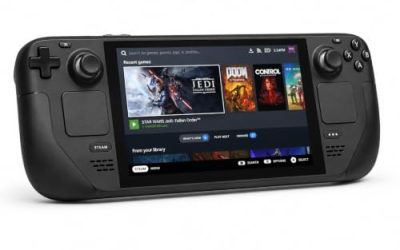
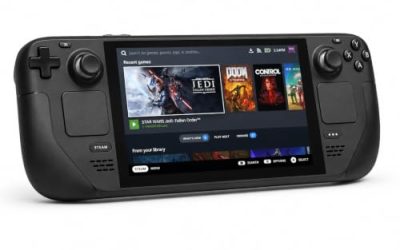
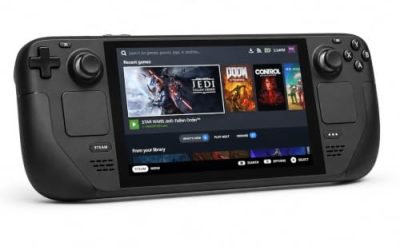
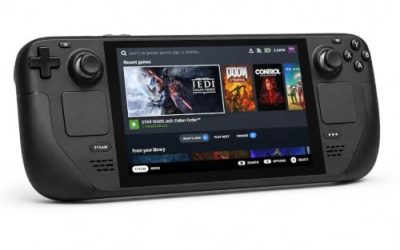
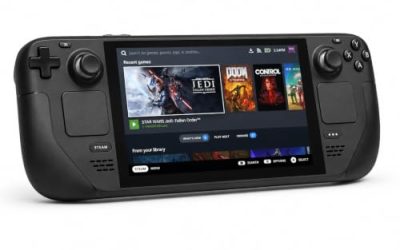
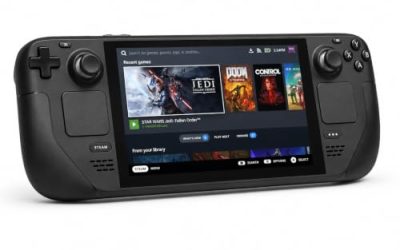
Valve Steam Deck OLED 512GB

The handheld the Verified badge was written for: Valve’s test sheet gives the Windows build a clean pass under the Proton 9 release candidate it names.
Specs
- Display: 7.4-inch HDR OLED, 1280 by 800, up to 90 Hz
- Processor: AMD Zen 2 and RDNA 2 custom APU
- Memory: 16 GB LPDDR5
- Storage: 512 GB NVMe, plus a microSD slot
- Wireless: Wi-Fi 6E and Bluetooth
- Channel note: Valve sells the Deck mainly through its own store, so Amazon listings are third-party sellers
8BitDo Ultimate 2 Bluetooth Controller
The docked and desktop pad pick. Steam’s record for this game lists full controller support, and this pad covers the couch case with modern sticks, triggers and back buttons.
Specs
- Connectivity: Bluetooth wireless and USB-C wired
- Joysticks: TMR electromagnetic, anti-drift design
- Triggers: Hall effect, with mode switching
- Extras: two remappable back buttons, motion control
- In the box: charging dock included
Xbox Wireless Controller, Carbon Black
The safest guest pad in PC gaming: Steam Input support is universal, the glyphs match what most games display, and it pairs over Bluetooth or its own wireless standard. For a three-player co-op title, a spare pad every guest knows is the practical pick.
- Connectivity: Xbox Wireless and Bluetooth
- Port: USB-C for wired play
- Controls: hybrid D-pad, dedicated Share button
- Power: AA batteries or optional rechargeable pack
Logitech G502 HERO
Firebreak’s menus and loadout screens are the desk-bound part of the game, and a precise wired mouse turns those trips into single clicks. Eleven programmable buttons cover the inputs a long session repeats.
Specs
- HERO optical sensor, up to 25,600 DPI
- 11 programmable buttons
- Adjustable weight system
- Wired USB connection
- On-board memory profiles
Samsung T9 Portable SSD 2TB
For moving a Linux game library between a desktop and a laptop, a fast USB-C drive is the simple answer. The headline figure needs a Gen 2×2 host port; on a lesser port the drive runs at that ceiling instead.
Specs
- Capacity: 2 TB portable SSD
- Interface: USB 3.2 Gen 2×2, USB-C connector
- Maker-rated speeds: up to 2,000 MB per second read, 1,950 MB per second write
- Features: Dynamic Thermal Guard, maker-rated drop resistance
How to choose
Choose the Steam copy: it is the only PC edition on sale and the exact build both records describe. On a Linux desktop, install under Proton and start with a current stable or experimental build; the Platinum file was earned on recent versions. On Steam Deck, the Verified badge means the default configuration should work as shipped, but it grades a June 2025 build, so treat the handheld preset as a starting point. For input, a pad is the record’s own shape: full controller support is on the store record, and Valve’s configuration block assumes a gamepad. Keep the ProtonDB page bookmarked if co-op is your reason for buying; the file is where a fix for the newest report’s co-op fault will show up first.
Who should skip
Skip this one if you are shopping for a native Linux game: there is no Linux build, and the “Natively Supports” heading is a formatting artefact, not a port. Skip it if you need offline play, because Valve’s sheet notes that even singleplayer requires an active internet connection. Skip it if your reason for buying is Linux co-op this week and you cannot tolerate version risk: the newest report describes the current update breaking co-op joins on Linux, and until newer filings replace it, that report is the state of the file. And skip the GOG hunt; no edition exists there.
FAQ
Is FBC: Firebreak native on Linux?
No. Steam’s record flags Windows only, the Linux requirements field is an empty shell, the single content depot is a Windows 64-bit build, and the one add-on app flags Windows too.
Does FBC: Firebreak use anti-cheat that blocks Linux?
The store record names no anti-cheat, and the community tracker’s full status file holds no entry for this app in either direction. Its detected middleware is a server SDK and a voice SDK. Linux players file working online sessions on ProtonDB, so nothing in the documents shows the multiplayer path gated against Proton.
Yes. Valve’s record gives the game its top category, Verified, all four checks passing, tested on 12 June 2025 against build 18762497 under a Proton 9.0-4 release candidate. The current public build is newer, so the badge grades launch-week code. Its one note: singleplayer requires an active internet connection.
Can I buy FBC: Firebreak on GOG instead?
No. GOG’s product address for the title redirects to its general catalogue, and both of GOG’s own searches return no product for it.
Final verdict
FBC: Firebreak is a Windows-only release whose Linux story is written entirely by Proton, and on paper that story is strong: a Platinum community file, a Verified Deck badge with a clean four-check pass, full controller support on the record, and no anti-cheat named anywhere. The honest caveats are freshness ones: the badge grades a pre-launch build, and the newest filing reports the current update breaking co-op joins on Linux. Buy the Steam copy, play it under a current Proton, and read the top of the ProtonDB file before organising a session around it.
Product and ASIN Reference
| Product | ASIN |
|---|---|
| Valve Steam Deck OLED 512GB | B0CQ3RWQQZ |
| 8BitDo Ultimate 2 Bluetooth Controller | B0F194QFT2 |
| Xbox Wireless Controller, Carbon Black | B08DF248LD |
| Logitech G502 HERO | B07GBZ4Q68 |
| Samsung T9 Portable SSD 2TB | B0CHFS9K14 |