Verdun, BlackMill Games’ multiplayer First World War shooter from April 2015, is an older WW1 Game Series title, and age usually cuts against Linux support. Verdun is the opposite case — every layer of the current record still lines up behind its Linux flag, and its depot was updated in step with the Windows and macOS depots in October 2025.
So this is a delivery question, not a compatibility-layer one: the game ships its own Linux build. Verdun is treated strictly as its own app; series siblings Isonzo and Tannenberg are separate games.
As an Amazon Associate, we earn from qualifying purchases.
Quick answer
Yes. Verdun is native on Linux. Steam flags Windows, Mac and Linux all true, the Linux requirements tab is fully written, and a Linux depot of just under 8 GB sits inside the package Steam sells today. No Proton is needed on desktop, and Valve rates the native build Playable on Steam Deck.
The status at a glance
| Question | Answer from the record |
|---|---|
| Native Linux build | Yes — every delivery layer agrees |
| Linux requirements tab | Fully populated at both tiers |
| Linux depot | Depot 242863, 7.99 GiB, inside the sold package |
| Linux client icon | Registered on the record |
| Steam Deck verdict | Playable, tested July 2022, native runtime |
| ProtonDB record | Gold headline, Platinum best, 24 reports |
| Anti-cheat named | None — networking middleware only |
| GOG edition | None |
Layer one: the flags and the requirements tab
Steam’s appdetails record for Verdun (app 242860) lists the platforms as Windows true, Mac true, Linux true, with BlackMill Games as both developer and publisher and a release date of 28 April 2015. The record is live and sold, its default package group carrying two packages.
Unlike the empty-shell fields of unsupported games, Verdun’s Linux requirements tab is written out in full at both tiers. The minimum names Ubuntu 18.04 or later, 64-bit only — other distributions are noted as likely to work, unsupported — a Core i5-2500K or Phenom II X4 940, 4 GB of RAM, a GTX 960M or Radeon HD 7750 class card with 1 GB of video memory, broadband and 8 GB of storage. The recommended tier raises memory to 8 GB and video memory to 4 GB.
Layer two: the depot census and the sold package
Flags and text can both outlive a build, so the decisive read is the depot census. SteamDB’s record shows one full content depot per platform: 242865 for Windows 32-bit at 8.09 GiB, 242864 for Windows 64-bit at 8.11 GiB, 242862 for macOS at 8.02 GiB, and 242863, configured as Linux under the name WW1Series_LinuxPlayer, at 7.99 GiB. The Linux depot matches its siblings in size — no stub or emptied shell. The only other depot is a 0 B all-platforms marker, not a build.
Membership matters as much as existence, and it checks out. The store package Steam sells, package 28512, lists depot 242863 among its contents, last updated 21 October 2025, in step with the package’s other depots. The public branch build stands at 20426217, built that month, so the Linux build is maintained rather than stranded. One layer could not be read this session: the per-OS launch-entry list, which SteamDB’s text rendering does not expose. No launch-entry claim is made; the ruling rests on the flags, the tab, the depot in the sold package and the icon.
Layer three: the icon, the soundtrack and the controller field
A LinuxClientIcon is registered on the record, the asset a native release carries for the Linux client. Stray-flag games do not usually have one, and withdrawn builds tend to lose theirs — a third, independent layer pointing the same way.
Verdun’s DLC array holds a single entry, app 1247200, the Original Soundtrack, a music product from December 2020 flagging Windows, Mac and Linux all true. In a Windows-only family that would be the soundtrack trap, an album’s flag credited to the game. Here it changes nothing: the base game carries its own Linux flag and depot, so the ruling is made on the game alone.
Controller support is stated from the game’s own record only: it reads partial controller support, with DualShock and DualSense support listed alongside. Keyboard and mouse remain the primary input shape on desktop.
The multiplayer plumbing
Verdun is a multiplayer-only game, so the anti-cheat question matters. The store record names no anti-cheat, carries no third-party DRM notice and requires no external account or launcher. SteamDB’s technology detection lists the Unity engine with the Epic Online Services and Photon SDKs — networking and session middleware, not anti-cheat, and no verdict is claimed from them.
The dedicated tracker record is silent as well. The AreWeAntiCheatYet games file, read in full across its 1,167 entries, holds no entry for app 242860 in either direction. That silence is coherent for a native build: the tracker documents Windows anti-cheat under Proton, a route Verdun’s Linux build never takes.
The Proton file, for completeness
ProtonDB’s summary record for app 242860, read directly this session, gives a Gold settled tier, a Platinum best-reported tier and a Gold trending tier, across 24 reports with good confidence. Two honest qualifications belong with those numbers. Its fields do not separate native filings from Windows-build Proton filings, so the tiers describe a mixed history, not the native route alone. And 24 reports is thin for a game of this age; read the good confidence rating with that count attached. None of it changes the buying advice: Proton is the fallback here, not the route. ProtonDB’s game page could not be rendered this session, so no heading claim is made; these figures are the summary record’s alone.
The Steam Deck sheet
Valve rates Verdun Playable on Steam Deck, the middle category, and SteamOS separately Compatible. The configuration block is the telling part: the recommended runtime reads native, confirming the tested route is the Linux build, not the Windows build under Proton. The verdict and its checks were read through SteamDB’s republication of Valve’s record, this project’s fallback route.
The performance item passes. Every deduction sits on the input and interface side: the default controller configuration is not fully functional, so some functions need the touchscreen, virtual keyboard or a community configuration; the game sometimes shows mouse, keyboard or non-Deck controller icons; some text entry requires manually invoking the on-screen keyboard; and some in-game text is small and may be difficult to read. A note adds that external Bluetooth or USB controllers do not take over by default and may need a Quick Access Menu switch. The test paperwork dates the check to 1 July 2022 against build 8798814, long superseded by the current public build — read the badge as a floor.
The storefront ruling
There is no second storefront copy to weigh. GOG’s catalogue and embed searches return no Verdun product, and the natural GOG product address redirects to the general games catalogue. No GOG edition exists, so the Steam copy is ruled the only PC edition on sale.
Gear that fits the record
The gear below follows the record’s shape: the handheld Valve tested, pads for the docked case, a mouse for the desktop shape, and library storage.
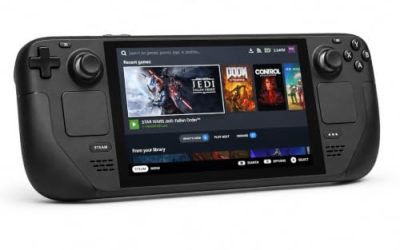
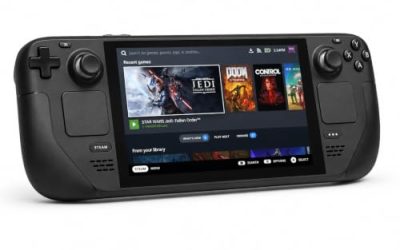
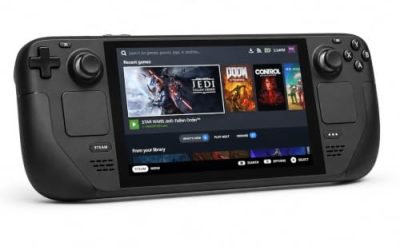
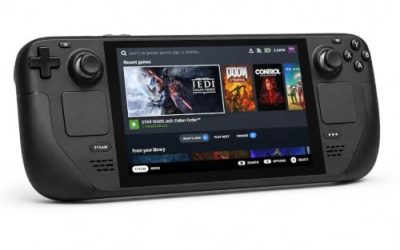
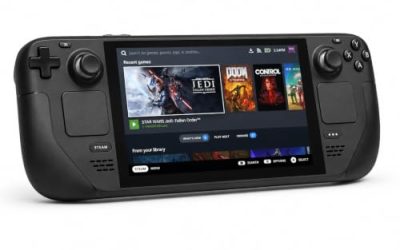
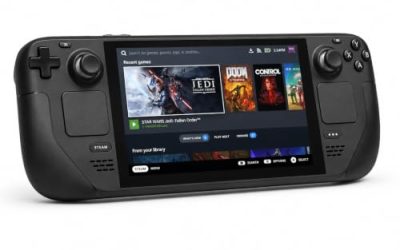
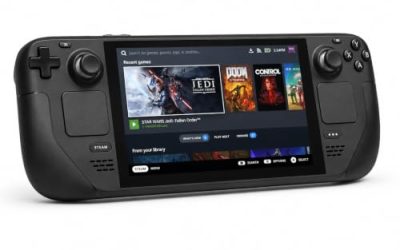
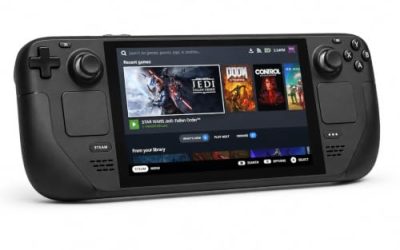
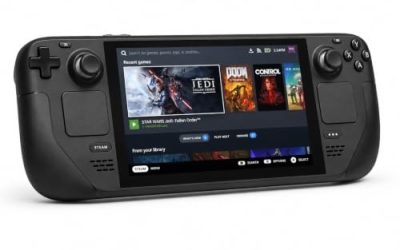
Valve Steam Deck OLED 512GB

The handheld the Playable badge was written for. Valve’s sheet names the native runtime and passes the performance item, so the Deck runs the same Linux build a desktop install delivers.
Specs
- Display: 7.4-inch HDR OLED, 1280 by 800, up to 90 Hz
- Processor: AMD Zen 2 and RDNA 2 custom APU
- Memory: 16 GB LPDDR5
- Storage: 512 GB NVMe, plus a microSD slot
- Wireless: Wi-Fi 6E and Bluetooth
- Channel note: Valve sells the Deck mainly through its own store, so Amazon listings are third-party sellers
8BitDo Ultimate 2 Bluetooth Controller
The docked and desktop pad pick. Verdun’s record reads partial controller support with a gamepad-shaped Deck configuration, and this pad covers the couch case, with back buttons for inputs the default layout handles awkwardly.
Specs
- Connectivity: Bluetooth wireless and USB-C wired
- Joysticks: TMR electromagnetic, anti-drift design
- Triggers: Hall effect, with mode switching
- Extras: two remappable back buttons, motion control
- In the box: charging dock included
Xbox Wireless Controller, Carbon Black
The safest guest pad in PC gaming: Steam Input support is universal, and it pairs over Bluetooth or its own wireless standard. On the handheld, the test sheet’s note applies: an external pad may need a manual Quick Access Menu switch before it takes over.
- Connectivity: Xbox Wireless and Bluetooth
- Port: USB-C for wired play
- Controls: hybrid D-pad, dedicated Share button
- Power: AA batteries or optional rechargeable pack
Logitech G502 HERO
Verdun’s record keeps keyboard and mouse first-class, and at a desk a precise wired mouse fits a deliberate game of sight lines and menus. Eleven programmable buttons cover the repeated inputs.
Specs
- HERO optical sensor, up to 25,600 DPI
- 11 programmable buttons
- Adjustable weight system
- Wired USB connection
- On-board memory profiles
Samsung T9 Portable SSD 2TB
For moving a Linux game library between machines, a fast USB-C drive is the simple answer. The headline figure needs a Gen 2×2 host port; on a lesser port the drive runs at that ceiling.
Specs
- Capacity: 2 TB portable SSD
- Interface: USB 3.2 Gen 2×2, USB-C connector
- Maker-rated speeds: up to 2,000 MB per second read, 1,950 MB per second write
- Features: Dynamic Thermal Guard, maker-rated drop resistance
How to choose
Choose the Steam copy: it is the only PC edition on sale, and its package contains the Linux depot. On desktop or laptop, install the native build and skip compatibility-tool settings entirely; the Linux minimums are modest, and the supported shape is Ubuntu 18.04 or later in 64-bit. On Steam Deck, expect the Playable experience Valve describes — performance is fine, but budget a few minutes for controller configuration and on-screen keyboard use. Treat the pad as the secondary input shape and keyboard and mouse as the primary one.
Who should skip
Skip this one if you want a controller-first experience: the record rates controller support partial and Valve’s sheet deducts for exactly that. Skip it if you want a single-player game — the record describes a multiplayer-only title demanding a stable, fast connection. Skip the ProtonDB tiers as a reason to buy, because the file is thin and mixes two routes; the native delivery evidence is the reason. And skip it if you were hoping for a DRM-free copy, because no GOG edition exists.
FAQ
Is Verdun native on Linux?
Yes. Steam flags Linux true, the requirements tab is fully populated, a Linux depot of 7.99 GiB sits inside the package Steam sells, a LinuxClientIcon is registered, and Valve’s Deck paperwork names the native runtime.
Does Verdun need Proton?
No. The native build is the route on desktop and Steam Deck alike. ProtonDB’s Gold file, Platinum on its best-reported tier across 24 reports, describes a mixed history, the Windows build under Proton included — a fallback reference, not the way in.
Is Verdun Steam Deck Verified?
No, one step down: Valve rates it Playable, with SteamOS separately Compatible. Performance passes and the recommended runtime is the native build; the deductions are input and text issues, from a July 2022 test on a superseded build.
Can I buy Verdun on GOG instead?
No. GOG’s own searches return no product for the game and the natural product address redirects to the general catalogue. The Steam copy is the only PC edition on sale, and it carries the Linux build.
Final verdict
Verdun is the cleanest kind of native case: an old game whose Linux support is a maintained delivery, not a leftover flag. The store flags all three platforms, the Linux tab is written in full, the Linux depot sits inside the package on sale today, updated in step in October 2025, and Valve’s Deck sheet recommends the native runtime. The honest caveats concern input, not existence: partial controller support, a Playable badge graded on a 2022 build, and a thin ProtonDB file that mixes routes. Buy the Steam copy, install the native build, and bring a keyboard and mouse.
Product and ASIN Reference
| Product | ASIN |
|---|---|
| Valve Steam Deck OLED 512GB | B0CQ3RWQQZ |
| 8BitDo Ultimate 2 Bluetooth Controller | B0F194QFT2 |
| Xbox Wireless Controller, Carbon Black | B08DF248LD |
| Logitech G502 HERO | B07GBZ4Q68 |
| Samsung T9 Portable SSD 2TB | B0CHFS9K14 |