The Surge 2, Deck13’s 2019 action RPG set in the collapsing streets of Jericho City, never received a Linux build. Steam’s record is unambiguous on every layer this project checks: the platform flags read Windows only, the Linux requirements field is a pair of empty headings, and the depot list contains nothing but Windows content. No add-on app in the family softens that reading.


So the useful question is the Proton one. Deck13’s Fledge engine has a history of travelling unevenly through compatibility layers, which makes the community file worth reading closely. That file is two-sided: a settled mid-tier medal with a much stronger top end, plus a Steam Deck test sheet carrying the strongest badge Valve gives. This piece reads each record on its own terms: the flags, the requirements fields, the depot census, the add-on apps, the ProtonDB summary, the Deck sheet and the second storefront.
As an Amazon Associate, we earn from qualifying purchases.
Quick answer
The Surge 2 has no native Linux build. Steam flags the game Windows only, its Linux requirements field is an empty shell, and every content depot is a Windows depot. The route is Proton: ProtonDB settles the game at Gold across 54 reports, and Valve rates it Verified on Steam Deck.
Reading the Steam record layer by layer
Start with the flags, because here they agree with everything underneath them. The store record lists Windows as true and both macOS and Linux as false. The requirements tabs tell the same story in more detail. The Windows tab is genuinely populated: a 64-bit Windows 7, 8 or 10 system, an AMD FX-8320 or Intel i5-4690K, 8 GB of memory and a Radeon R9 280 or GeForce GTX 950. The macOS and Linux tabs, by contrast, are empty shells — the Minimum and Recommended headings are present, and there is nothing under either of them. That populated-but-empty field matters later, because it generates a misleading heading on the game’s ProtonDB page.
The depot census closes the question. SteamDB’s listing shows the base content depot at 13.46 GiB, a patch-content depot at 3.31 GiB, depots for executables, libraries, audio and video, configuration and media, size-less unused language depots, an install script depot, and the expansion depot at 9.61 GiB — every one configured Windows 64-bit, with only the Windows VC 2017 and DirectX June 2010 redistributables attached. Total size on disk is 28.13 GiB, and not one byte of it is a Linux or shared build. The registered icons are the ordinary client set; no Linux client icon exists, and the extended-OS field is an empty string.
Two smaller points complete the record. The game’s own controller field reads full support, and the store categories repeat that, including DualShock support — that claim comes from this game’s record alone. And there is no anti-cheat layer to audit: this is a single-player game, its record names no anti-cheat and carries no DRM notice, and the AreWeAntiCheatYet list, read in full, holds no entry for this app — documentation silence, stated as such.
The seven add-ons change nothing
A Linux flag hiding in a game’s family is a recurring trap in this series, so all seven apps in The Surge 2’s DLC array were read individually: the Season Pass, The Kraken Expansion, the URBN Gear Pack, the Public Enemy Weapon Pack, the Future Shock Weapon Pack, the JCPD Gear Pack and Jericho’s Legacy Gear Pack. Every one flags Windows true and macOS and Linux false. There is no soundtrack app in the family at all, so the usual trap — an all-platforms album beside a Windows-only game — cannot fire here. The family’s Linux-flag count is zero out of eight records.
ProtonDB: Gold settled, Platinum at the top
ProtonDB’s summary for this app was read in full, and it describes a split file. The settled tier is Gold, while both the best-reported tier and the trending tier read Platinum, across 54 reports with strong confidence. In plain terms: the typical filed outcome lands a step below flawless, while the best recent outcomes — and the direction the file is moving — sit at the top medal. On a 2019 DirectX 11 title, settled Gold usually means a game that runs well with an occasional wrinkle, and the filings match that reading.
One heading on the ProtonDB game page needs naming. The page carries a “Natively Supports:” heading above its requirements panel, which a skimming reader could take as a native-support claim. It is not one: the heading is generated by that empty-shell Linux requirements field on the Steam record. Steam’s record contradicts any native reading on every layer, so this article follows Steam.
The filing colour is honest in both directions. Recent reports on Proton 9 and 10 describe full playthroughs, downloadable content included, running essentially out of the box. One Arch Linux filing counts roughly two crashes per playthrough, tied to finisher executions in the opening area, and several reports note this engine’s known traversal stutter. The oldest filings, from the Proton 6 and early 7 era, were far rougher — black textures, crashes after the intro video. The settled Gold is the average of a file that has improved as Proton matured, not a warning about current builds.
Steam Deck: Verified against the build you still download
Valve’s own compatibility record rates The Surge 2 Verified on Steam Deck. All four headline checks pass: the default controller configuration is fully functional, the game shows Steam Deck controller icons, interface text is legible, and the default graphics configuration performs well. SteamOS is separately rated Compatible. The verdict comes from Valve’s endpoint directly; the test metadata comes from SteamDB’s republication of Valve’s sheet: Valve tested the game on 19 March 2022 against build 4835537, with the stable Proton branch as the recommended runtime.
That build number makes this badge stronger than most of its age: build 4835537 is still the current public branch build, with no newer public build since March 2020, so the Verified result grades exactly the build a buyer downloads today. The community Deck filings broadly agree: full playthroughs on the handheld, with one report settling on capped frame rates in open areas for stability.
The GOG copy is a second Windows build
GOG sells The Surge 2, and its product record settles what that means for Linux: the compatibility field reads Windows true, macOS false, Linux false. So the storefront choice is between two copies of the same Windows build — the Steam copy, which both compatibility records above describe, or the DRM-free GOG copy, which runs through the same Proton layer. Neither is native.
Gear that fits the record
The gear below follows the record’s shape: the handheld the Verified badge was written for, two pads for docked and desktop play, a mouse for menu-heavy sessions, and library storage.
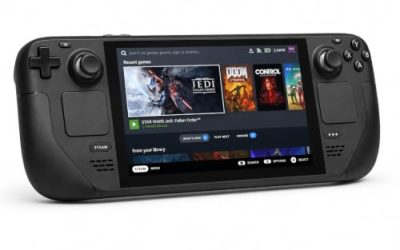
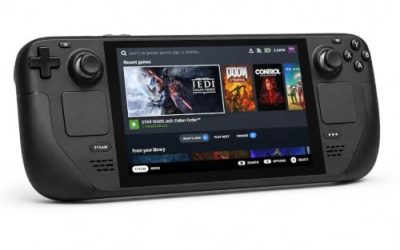
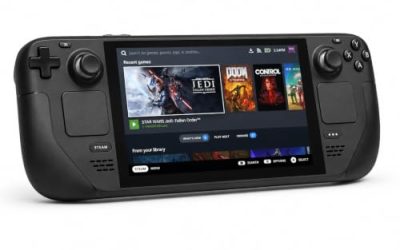
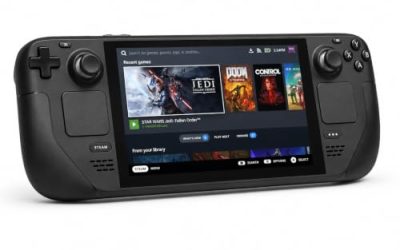
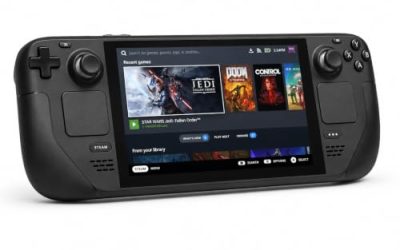
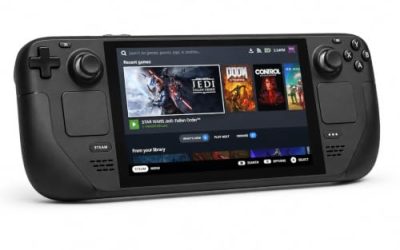
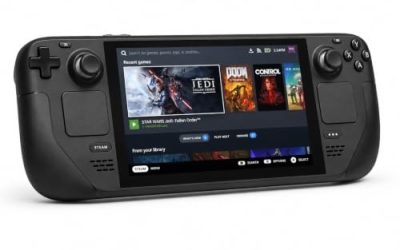
Valve Steam Deck OLED 512GB
The handheld the Verified badge was written for. The game’s published requirements are a rounding error next to the Deck’s APU, and Valve’s test sheet gives the Windows build a clean pass under the stable Proton branch.
Specs
- Display: 7.4-inch HDR OLED, 1280 by 800, up to 90 Hz
- Processor: AMD Zen 2 and RDNA 2 custom APU
- Memory: 16 GB LPDDR5
- Storage: 512 GB NVMe, plus a microSD slot
- Wireless: Wi-Fi 6E and Bluetooth
- Channel note: Valve sells the Deck mainly through its own store, so Amazon listings are third-party sellers
8BitDo Ultimate 2 Bluetooth Controller
The docked and desktop pad pick. Steam lists full controller support for the game, and this pad covers the couch case with modern sticks and triggers plus back buttons.
Specs
- Connectivity: Bluetooth wireless and USB-C wired
- Joysticks: TMR electromagnetic, anti-drift design
- Triggers: Hall effect, with mode switching
- Extras: two remappable back buttons, motion control
- In the box: charging dock included
Xbox Wireless Controller, Carbon Black
The safest guest pad in PC gaming: Steam Input support is universal, the glyphs match what most games display, and it pairs over Bluetooth or its own wireless.
- Connectivity: Xbox Wireless and Bluetooth
- Port: USB-C for wired play
- Controls: hybrid D-pad, dedicated Share button
- Power: AA batteries or optional rechargeable pack
Logitech G502 HERO
A pad-first game, but its menus, inventory and gear screens are quicker with a mouse at a desk. Eleven programmable buttons cover the confirm, cancel and camera inputs a long session repeats.
Specs
- HERO optical sensor, up to 25,600 DPI
- 11 programmable buttons
- Adjustable weight system
- Wired USB connection
- On-board memory profiles
Samsung T9 Portable SSD 2TB
For moving a Linux game library between machines, or keeping an offline backup of installers, a fast USB-C drive is the simple answer. The headline figure needs a Gen 2×2 host port; on a lesser port the drive runs at that ceiling.
Specs
- Capacity: 2 TB portable SSD
- Interface: USB 3.2 Gen 2×2, USB-C connector
- Maker-rated speeds: up to 2,000 MB per second read, 1,950 MB per second write
- Features: Dynamic Thermal Guard, maker-rated drop resistance
How to choose
Choose the Steam copy if the Deck is part of the plan: the Verified badge, the test sheet and the ProtonDB file all describe the Steam build, and Steam’s own Proton is the tested path. Choose the GOG copy if a DRM-free installer matters more; the build is the same Windows code. On a desktop, leave Proton on its default stable branch first — the runtime Valve tested and the one recent filings cluster around — and try newer branches only if the settled-Gold wrinkles show up. For storage, plan around a footprint of a little over 28 GB.
Who should skip
Skip this one if you are shopping for native Linux games on principle: there is no native build here, on Steam or anywhere else, and the one heading suggesting otherwise is an artefact of an empty requirements field. Skip it if a settled Gold tier is not reassurance enough — the settled medal says the average filed experience has a wrinkle in it, and the crash reports around finisher animations are specific enough to take seriously. Skip the Deck version if small interface text bothers you in handheld play; Valve marks the text legible, but one community filing found it small at times.
FAQ
Is The Surge 2 native on Linux?
No. Steam flags the game Windows only, the Linux requirements field is an empty shell, every content depot is a Windows depot, and all seven add-on apps flag Windows only as well. The GOG edition is also Windows only. The ProtonDB page’s “Natively Supports” heading is generated by that empty requirements field and does not describe a real build.
How well does The Surge 2 run under Proton?
ProtonDB settles the game at Gold across 54 reports with strong confidence, with both the best-reported and trending tiers at Platinum. Recent filings describe full playthroughs, downloadable content included, with occasional crashes and the engine’s known stutter as the recurring notes.
Is The Surge 2 Steam Deck Verified?
Yes. Valve rates it Verified, with all four headline checks passing, and SteamOS separately Compatible. The test dates from 19 March 2022, but it ran against build 4835537, still the current public build — so the badge describes the version sold today.
Does The Surge 2 have full controller support on Linux?
The game’s own Steam record lists full controller support, including DualShock support, and Valve’s Deck sheet confirms the default controller configuration is fully functional.
Final verdict
The Surge 2 is a clean Windows-only case with an unusually trustworthy paper trail. Steam’s record contradicts native support on every layer, the family sweep finds no Linux flag anywhere to inherit, and the one misleading heading traces back to an empty requirements field. Against that, ProtonDB settles at Gold with Platinum at the top and the trend line, and Valve’s Verified badge was earned against the very build still on the public branch. Buy the Steam copy for the tested path, keep Proton on the stable branch, and expect a solid run with the occasional documented wrinkle.
Product and ASIN Reference
| Product | ASIN |
|---|---|
| Valve Steam Deck OLED 512GB | B0CQ3RWQQZ |
| 8BitDo Ultimate 2 Bluetooth Controller | B0F194QFT2 |
| Xbox Wireless Controller, Carbon Black | B08DF248LD |
| Logitech G502 HERO | B07GBZ4Q68 |
| Samsung T9 Portable SSD 2TB | B0CHFS9K14 |