Tokyo Xtreme Racer, Genki’s revival of its Tokyo highway racing series, left Early Access in September 2025 as a Windows-only release, and nothing in Steam’s record has changed that since. The store flags the game for Windows alone, the Linux requirements field is an empty shell, and the package’s single content depot is the Windows build. There is no native Linux version of this game to find.
The confusion risk sits in the add-on shelf: the one Linux flag anywhere in this app family belongs to the soundtrack album, not to the racer. Strip that away and the picture is simple. The Windows build carries a Platinum headline on ProtonDB, Valve rates the game Playable on Steam Deck, and no other storefront sells a Linux copy. This piece reads each record on its own terms: the flags, the depot census, the add-on apps, the Proton file and the Deck test sheet.
As an Amazon Associate, we earn from qualifying purchases.
Quick answer
Tokyo Xtreme Racer has no native Linux build: Steam flags the game Windows only, its Linux requirements field is an empty shell, and the only Linux flag in the family belongs to the soundtrack album. The Windows build runs under Proton with a Platinum ProtonDB headline across 82 reports, and Valve rates the game Playable on Steam Deck.
The status at a glance
| Question | Answer from the record |
|---|---|
| Native Linux build | No — Steam flags read Windows only |
| Linux requirements tab | Empty shell — headings over empty lists |
| Depot census | One content depot, the Windows build |
| Add-on apps | Two rival packs Windows only; soundtrack flags all three platforms |
| ProtonDB record | Platinum headline, 82 reports |
| Steam Deck | Playable, tested March 2025 |
| GOG edition | None |
Why the record rules out a native build
Start with the flags, because here they agree with everything underneath them. Steam’s record for app 2634950 reads windows true, mac false, linux false. The Windows requirements tab is genuinely populated; the macOS and Linux requirements fields exist only as headings over empty lists, the populated-but-empty shape that generates stray compatibility headings elsewhere. A field with headings and no content is not a Linux tab in any meaningful sense.
The depot census settles what the flags suggest. The sold package delivers exactly one content depot, 2634951, at 10.56 GiB, and the size total filtered to Windows equals the unfiltered total: no second platform build hides in the package. The only other depots attached are the Windows redistributables every Unreal Engine release carries: the VC 2019 and VC 2022 runtimes and the DirectX June 2010 set. No Linux depot, no macOS depot, no shared depot. The registered store assets agree: client icon, client tga and icon are present, and no LinuxClientIcon is registered. The osextended field is an empty string.
The one Linux flag belongs to the soundtrack
Read the add-on apps individually and the family’s only Linux flag turns up exactly where this project has learned to expect it. The DLC array holds three apps. Tokyo Xtreme Racer Guest Rival Vol. 1 (3959440) flags Windows only. Guest Rival Vol. 3 (4781590) flags Windows only. The third entry, the Original Soundtrack (4350890), is a music app, and it flags windows, mac and linux all true. That album is the sole Linux flag in the entire family.
A soundtrack is not a game build. The album’s flag describes audio files delivered through Steam’s music player; it says nothing about an executable for any platform. Anyone scanning this family at the flag level would conclude that Tokyo Xtreme Racer supports Linux, and they would be wrong: the game, its content packs and its depot census are Windows-only on every layer. This article rules on the base game alone, and the base game has no Linux build.
ProtonDB: a Platinum headline, read with one caveat
ProtonDB’s game page gives Tokyo Xtreme Racer a Platinum headline across 82 reports, and the visible filings back the medal up. Recent reports are dominated by out-of-the-box runs on current Proton 10 builds: no tinkering needed, smooth frame rates at high presets, ultrawide resolutions working once set in the options. The caveats are specific rather than structural. One report describes frame pacing problems on the DX12 path that the -dx11 launch option removes. One desktop report traces audio crackling on a dedicated sound card to a latency setting, fixed with the PULSE_LATENCY_MSEC=60 launch option. One Deck report targets a stable frame rate at the low preset. Nothing in the file describes a game that fails to start.
Two honesty notes belong with that headline. First, ProtonDB’s summary endpoint could not be read for this app in this session, through either route tried, so this article claims only the page’s own headline figures: the Platinum tier and the 82-report count. The best-reported and trending splits and the confidence score are not stated, because they were not read. Second, the game page carries the stray “Natively Supports:” heading, generated by the same populated-but-empty Linux field documented above. Steam’s record contradicts that heading on every layer, so this article follows Steam: the heading is wrong, and the Platinum file describes the Windows build running under Proton, not a native port.
Steam Deck: Playable, on Early Access paperwork
Valve’s own test sheet, read via SteamDB’s republication of Valve’s data after Valve’s endpoint returned no result for this app, rates the game Playable on Steam Deck, with SteamOS separately marked Compatible. The passing items are the functional core: all functionality is accessible with the default controller configuration, the game shows Steam Deck controller icons, and the default graphics configuration performs well. The single deduction is small in-game text. The sheet also notes that external Bluetooth or USB controllers do not take over by default and may need a manual Quick Access Menu switch.
The paperwork needs its date read aloud. Valve tested the game on 14 March 2025 against build 17193823, with a Proton 9.0 release candidate as the recommended runtime. That test predates the full release: the game was still in Early Access in March 2025, launched in full in September 2025, and the current public build is 26803437, built in November 2026. The Playable badge therefore grades a superseded Early Access build, not the game as it ships today. Nothing in the ProtonDB file suggests the full release regressed on Deck, but the badge itself is a supplement candidate: an old test standing in for a newer build.
The gear that fits a Proton racing setup
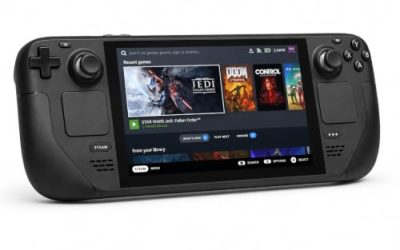
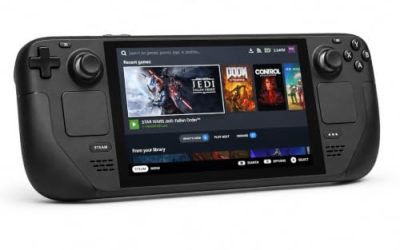
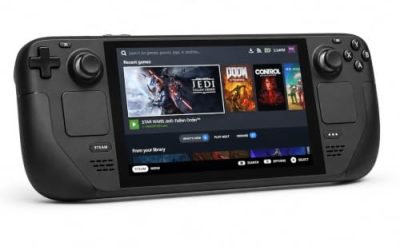
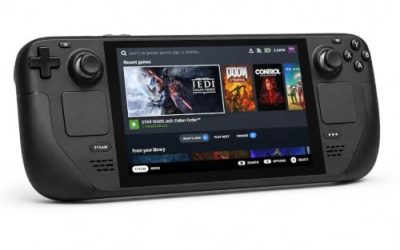
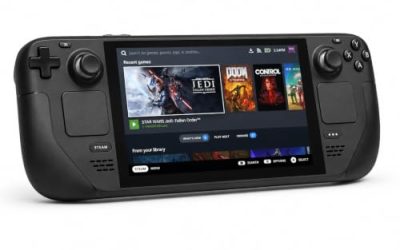
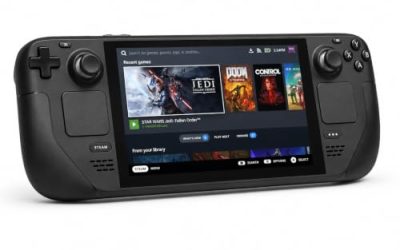
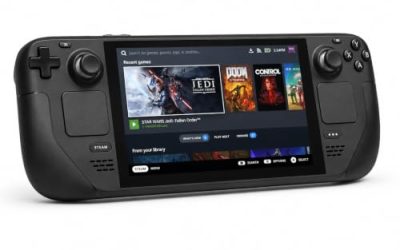
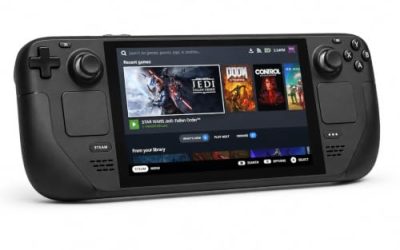
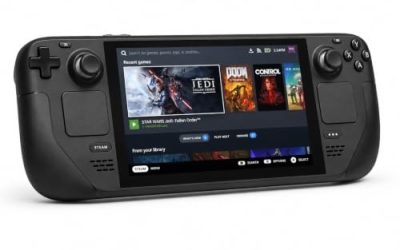
Valve Steam Deck OLED 512GB

The handheld route is the tested one: Valve’s Playable badge and the post-launch Deck filings describe the same experience, a Windows build under Proton with the default configuration doing the work. The one reading-comfort caveat is the small-text deduction on the test sheet.
Specs
- Display: 7.4-inch HDR OLED, 1280 by 800, up to 90 Hz
- Processor: AMD Zen 2 and RDNA 2 custom APU
- Memory: 16 GB LPDDR5
- Storage: 512 GB NVMe, plus a microSD slot
- Wireless: Wi-Fi 6E and Bluetooth
- Channel note: Valve sells the Deck mainly through its own store, so Amazon listings are third-party sellers
8BitDo Ultimate 2 Bluetooth Controller
The docked and desktop pad pick. Steam lists full controller support for the game, and this pad covers the couch case with modern sticks and triggers plus back buttons for menu shortcuts.
Specs
- Connectivity: Bluetooth wireless and USB-C wired
- Joysticks: TMR electromagnetic, anti-drift design
- Triggers: Hall effect, with mode switching
- Extras: two remappable back buttons, motion control
- In the box: charging dock included
Xbox Wireless Controller, Carbon Black
The safest guest pad: Steam Input support is universal, the glyphs match what games display, and it pairs over Bluetooth or its own wireless standard. On the handheld, the test sheet’s note applies: an external pad may need a manual Quick Access Menu switch before it takes over.
- Connectivity: Xbox Wireless and Bluetooth
- Port: USB-C for wired play
- Controls: hybrid D-pad, dedicated Share button
- Power: AA batteries or optional rechargeable pack
Logitech G502 HERO
A highway racer lives on a pad, but the desktop side of a Linux games library is menu work: settings screens, mod folders and store pages. A precise wired mouse covers that half of the session, and its buttons take the confirm and camera inputs a long evening repeats.
Specs
- HERO optical sensor, up to 25,600 DPI
- 11 programmable buttons
- Adjustable weight system
- Wired USB connection
- On-board memory profiles
Samsung T9 Portable SSD 2TB
For moving a Linux game library between machines, or keeping an offline backup of installers, a fast USB-C drive is the simple answer. The headline figure needs a Gen 2×2 host port; on a lesser port the drive runs at that ceiling instead.
Specs
- Capacity: 2 TB portable SSD
- Interface: USB 3.2 Gen 2×2, USB-C connector
- Maker-rated speeds: up to 2,000 MB per second read, 1,950 MB per second write
- Features: Dynamic Thermal Guard, maker-rated drop resistance
How to choose
Choose the Steam copy, because it is the only PC edition on sale and the exact build both records describe. On a Linux desktop or laptop, install it under Proton and start with the default compatibility tool; the Platinum headline says the current build needs no tinkering for most systems. Keep the two documented fixes in reserve: the -dx11 launch option if frame pacing feels uneven on the DX12 path, and the latency launch option if a dedicated sound card crackles. On Steam Deck, read the badge correctly: Playable with a small-text deduction, earned on an Early Access build, so treat the first session as a settings check rather than a guarantee. For input, use a pad everywhere; the game’s own record lists full controller support.
Who should skip
Skip this one if you are shopping for a native Linux racer: this game is not it, and the Linux flag in its family belongs to a music album. Skip it if you want a DRM-free offline installer, because no GOG edition exists to buy. Skip the Deck plan if small in-game text on a handheld screen is a deal-breaker, because that deduction is on the official sheet. And skip it if an Early Access-era Deck test is not reassurance enough.
FAQ
Is Tokyo Xtreme Racer native on Linux?
No. Steam’s record for app 2634950 flags Windows only, the Linux requirements field is an empty shell, and the package’s single content depot is the Windows build. The only Linux flag in the family belongs to the soundtrack album, not the game.
How well does Tokyo Xtreme Racer run under Proton?
ProtonDB’s page gives the Windows build a Platinum headline across 82 reports, and the visible filings are mostly out-of-the-box runs on current Proton versions. The documented caveats are a DX12 frame pacing issue with a launch-option fix and one audio latency report.
Is Tokyo Xtreme Racer Steam Deck Playable?
Yes, with dated paperwork. Valve’s test sheet rates the game Playable, with SteamOS separately Compatible, tested in March 2025 against an Early Access build; the current public build is far newer. The deduction is small in-game text.
Can I buy Tokyo Xtreme Racer on GOG instead?
No. GOG’s catalogue holds no product record for this game, and its natural store address resolves to the general catalogue rather than a product page. The Steam copy is the only PC edition on sale.
Final verdict
Tokyo Xtreme Racer is a Windows-only release whose paper trail needs one careful read: ignore the soundtrack album’s Linux flag and the stray heading it helps generate, and what remains is consistent on every layer. Steam sells one Windows build, the depot census delivers one Windows build, and the community has run that build under Proton to a Platinum headline across 82 reports. Valve’s Playable badge is real but old, earned during Early Access. Buy the Steam copy, play it under Proton, and do not let an album’s flags sell you a native port that does not exist.
Product and ASIN Reference
| Product | ASIN |
|---|---|
| Valve Steam Deck OLED 512GB | B0CQ3RWQQZ |
| 8BitDo Ultimate 2 Bluetooth Controller | B0F194QFT2 |
| Xbox Wireless Controller, Carbon Black | B08DF248LD |
| Logitech G502 HERO | B07GBZ4Q68 |
| Samsung T9 Portable SSD 2TB | B0CHFS9K14 |